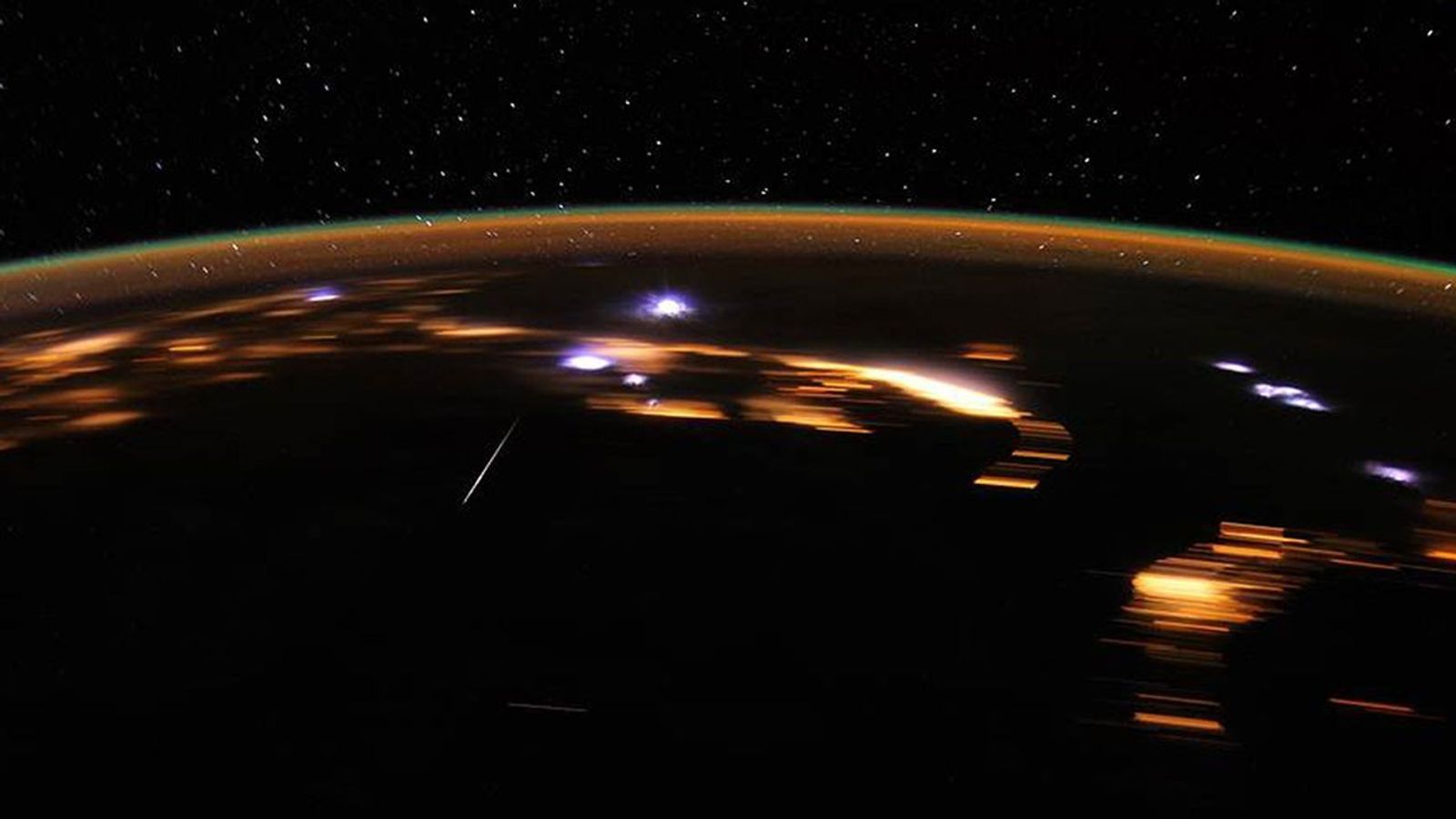


The night sky is set to deliver one of spring’s most anticipated celestial events as the Lyrid meteor shower returns this week.
One of the oldest recorded meteor showers, the Lyrids peak Wednesday (April 22), offering stargazers a rare treat: a chance to witness “shooting stars” — and possibly bright “fireballs” — in dark, moonless skies.
The Lyrids officially run from April 14 through April 30, but their activity will peak in intensity during daylight on April 22 in North America and Europe, according to the American Meteor Society, when around 10 to 20 meteors per hour are expected. That creates two opportunities to catch the Lyrids: the predawn and post-sunset hours of April 22. The most favorable conditions are expected in the early morning hours, particularly around 5 a.m., when the radiant point — located in the constellation Lyra — rises higher in the sky.
Astronomical timing is working in favor of skywatchers this month. The new moon occurs on April 17, so it will still be a crescent by the time the Lyrids peak on April 22. That means the moon will be out of the sky before sunrise that day. Although it will be in the sky after dark later that day, the moon will set in the western sky as Lyra rises in the east, so it won’t interfere.
While the Lyrid meteor shower’s rate of “shooting stars” doesn’t compare to more intense meteor showers like August’s Perseids and December’s Geminids, the Lyrids are known for their fast and bright “fireball” meteors that leave a persistent train, as well as for occasional bursts of activity — as many as 100 Lyrid meteors were reported per hour in 1803, 1922, 1945 and 1982, according to NASA. However, such outbursts are almost impossible to predict.
The Lyrids are the result of dust and debris left in the inner solar system by Comet C/1861 G1 (Thatcher), which orbits the sun every 415.5 years. When Earth passes through the comet’s debris field each year, it causes meteors to burn up in our planet’s atmosphere, giving the impression of “shooting stars” moving across the night sky. Comet Thatcher was last in the inner solar system in 1861, according to NASA. It isn’t due to return until around 2276.
For the best chance of seeing Lyrid meteors, check the weather forecast and a light pollution map for a location away from city lights. Allow your eyes to adjust to the darkness, and remain patient, as meteors can appear unpredictably in any part of the sky.
Meteor showers are best seen with the naked eye, but you’ll need some special gear if you want to photograph them.