





Archaeologists working in a 14th-century monastery in Barcelona were surprised to find 25 skeletons when they opened eight graves — including the remains of a medieval queen.
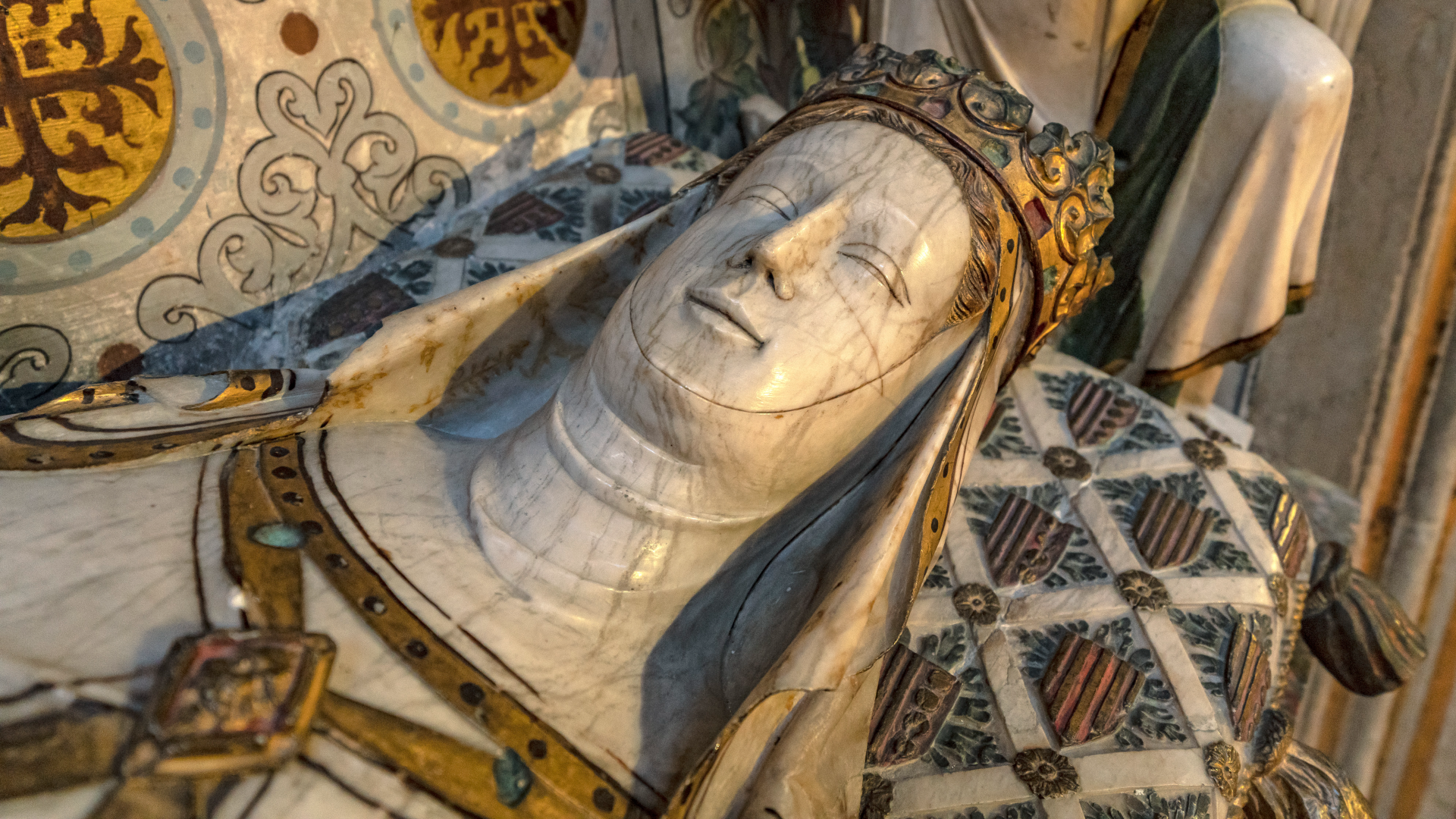
Seven centuries after Queen Elisenda of Montcada, the wife of James II of Aragon and Valencia, founded the Royal Monastery of Santa Maria Pedralbes in Barcelona, a team of experts opened her tomb to learn more about her life and about the living conditions of the 14th-century female monastic community, according to a May 28 translated statement from the Culture Institute of Barcelona.
The investigation of the tombs revealed that the queen was buried in austere clothing in a small wooden box, but also that the tombs of Elisenda’s closest circle of companions included men who had been stabbed to death and a woman who died halfway through pregnancy.
Experts found a wooden box containing Queen Elisenda’s remains.
(Image credit: Culture Institute of Barcelona)
Elisenda of Montcada was 30 years old when she married the 55-year-old James II just one month after the death of his third wife, becoming stepmother to his 10 children. James II, also called James the Just, was the king of Aragon and Valencia in what is now east Spain from 1291 until his death in 1327. When James was ill toward the end of his life, Elisenda founded a monastery for the Order of the Poor Clares, a group of cloistered Catholic nuns, in Barcelona. After James II died, Elisenda lived in a small palace next to the Pedralbes monastery until her death in 1364.
As part of the commemoration of the 700th anniversary of the founding of the Pedralbes monastery in 1326, researchers opened eight historic graves of people associated with the early years of the monastery, including the tombs of Queen Elisenda and the monastery’s first two abbesses.
When the researchers opened Elisenda’s tomb, they found a box of her bones in one corner of a larger space between the church and the cloister that was partitioned into two by a low wall. This arrangement was likely created on purpose to represent the queen as both a sovereign next to the church and as a penitent next to the cloister, reinforcing her dual political and spiritual roles, according to the statement.

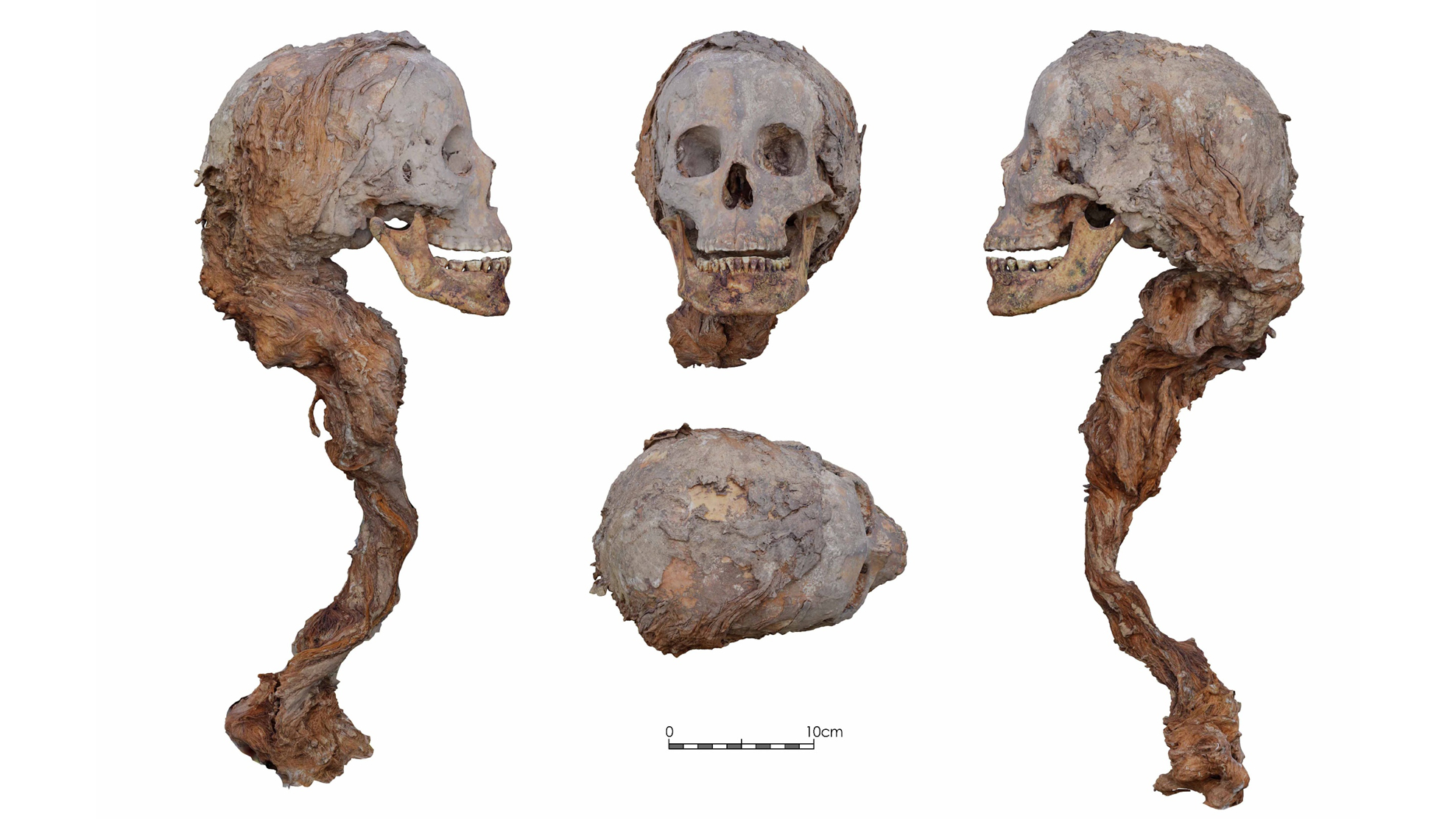
A partially mummified head of a 14th-century woman who was buried in a tomb in the Pedralbes monastery that was thought to belong to the knight Artau de Foces.
(Image credit: Culture Institute of Barcelona)
An initial analysis of the queen’s bones revealed she was about 70 years old when she died, which lines up with historical information about the monarch, with her remains showing evidence of osteoarthritis associated with aging. Although the queen was buried in a plain monastic habit, there were traces of a gold-embroidered silk textile in the tomb as well as the aromatic herbs rosemary and myrtle.
Get the world’s most fascinating discoveries delivered straight to your inbox.
In the tomb of Sobirana Olzet, the monastery’s first abbess, researchers found bones consistent with what is known about her life. But they also noticed a traumatic injury to her face that happened shortly before or at the time of her death. An investigation into the injury, which appears to have been made by a knife, is ongoing.
Another tomb, originally thought to belong to the knight Artau de Foces, actually contained the bones of five people, the researchers discovered: two adult women and three children. No male bones corresponding to Artau were found in the tomb. The long ponytail of one woman was preserved and still attached to her skull.

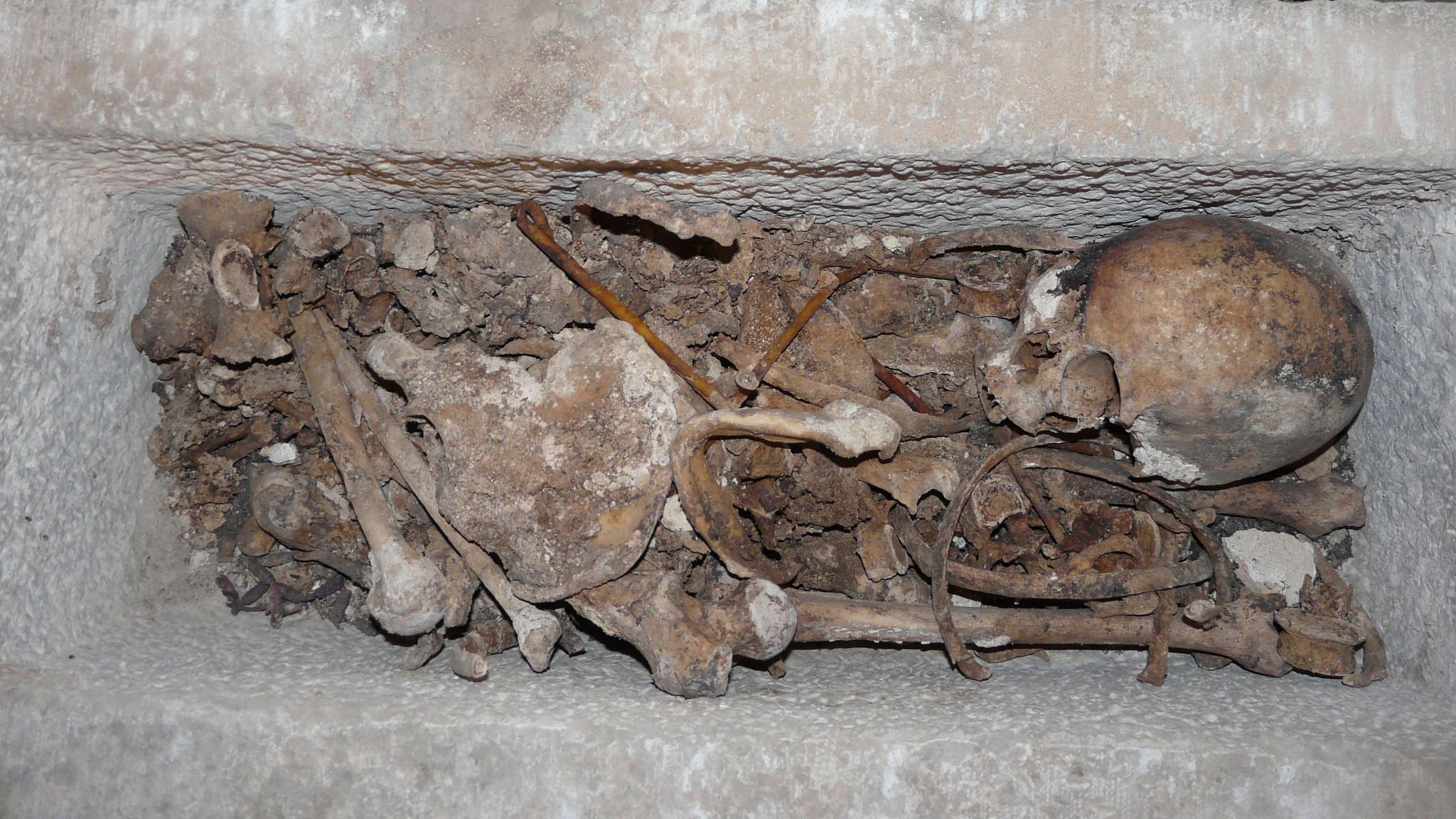
Skeletal remains of Sobirana Olzet, the first abbess of the monastery of Pedralbes. Experts identified an injury to her face sustained around the time of death.
(Image credit: Culture Institute of Barcelona)
And in the tomb that was thought to belong to Francesca Saportella, the second abbess of Pedralbes and the queen’s niece, researchers found the bones of at least nine people who were placed in the tomb in different time periods. This included four male skulls, all of which had stab wounds, and the mummified torso of a woman with the remains of a 20- to 23-week fetus in the birth canal. Papers and parchment recovered from this tomb, including sheet music, are currently being conserved and studied.
“The study of the foundational graves offers a unique opportunity to delve deeper into the first decades of the monastery’s life, a decisive period for understanding its evolution and its role within medieval Catalan society,” the Culture Institute of Barcelona wrote in the statement.
So far, the researchers have found that the majority of these early tombs contained high-status adult women, many of whom were quite elderly and had signs of physical aging, such as osteoarthritis. These findings are consistent with what is historically known about the early burials at the monastery and the lives of nuns.

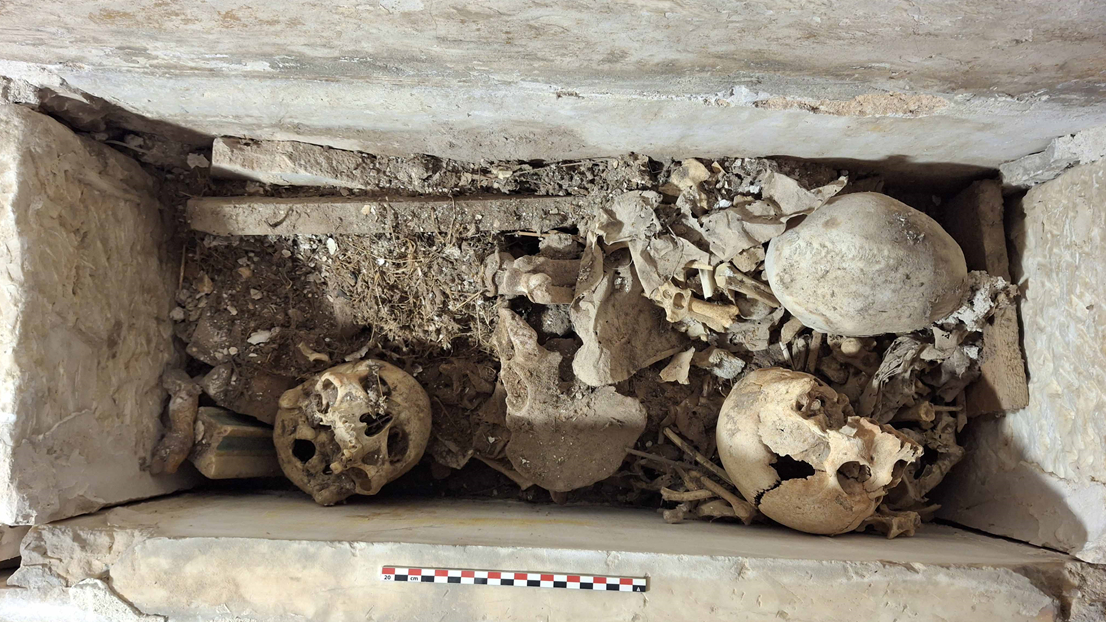
The tomb of Francesca Saportella, the monastery’s second abbess and the queen’s niece, actually contained at least nine people, including four male skulls that all had stab wounds and a pregnant woman.
(Image credit: Culture Institute of Barcelona)
But genetic analysis has only just begun — at the moment, only 6% of the queen’s genome has been sequenced, according to the statement. The team plans to use DNA from bone and tooth samples to confirm the identities of the skeletons in the tombs, establish family relationships among them, and investigate the possible presence of ancient pathogens. Definitive results from the archaeological analysis of the bones, textiles, papers and plant remains are expected in mid-2027.
“The challenge for the next year will be to transform these first findings into a complete historical interpretation that allows us to better understand not only who these people were, but also how they lived, how they died and how they were remembered,” the Culture Institute of Barcelona wrote.
What do you know about the bones in your body? Test your knowledge with our human skeleton quiz!