



Follow us
Add us as a preferred source on Google
Subscribe to our newsletter
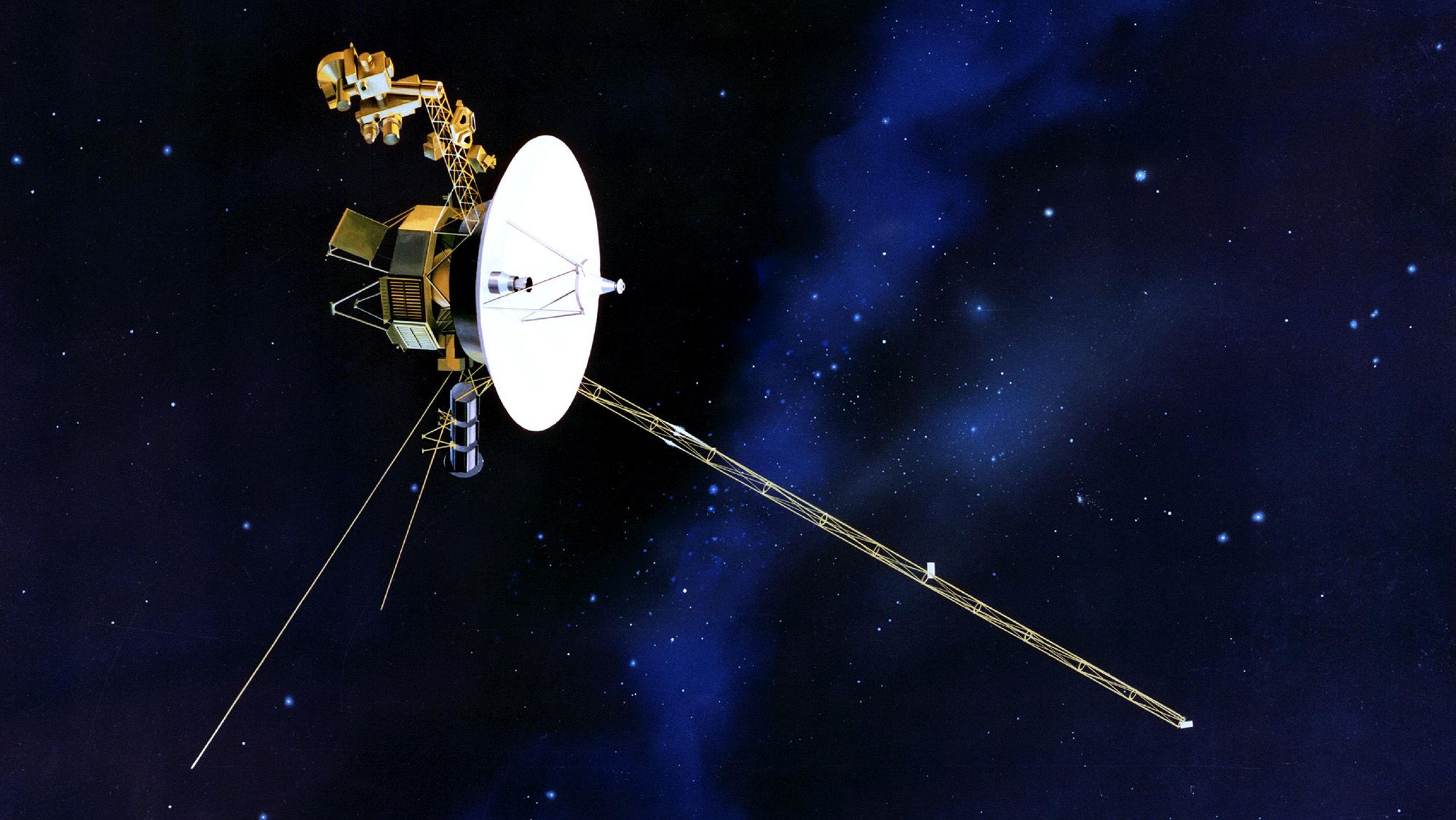
Early Wednesday (Nov. 18), NASA’s Voyager 1 spacecraft hit a new space exploration milestone: The probe, which launched in 1977, became the first spacecraft to reach one light-day from Earth.
The milestone is largely symbolic, but it comes with practical consequences: While Voyager 1 cruises through interstellar space at roughly 16.1 billion miles (25.9 billion kilometers) from our planet, it now takes a full 24 hours for radio signals moving at the speed of light to get from Voyager 1 to Earth, and vice versa.
The growing space between Voyager and Earth makes it increasingly hard to troubleshoot problems on the nearly 50-year-old probe. But with Voyager 1 still collecting data with two of its science instruments, which are expected to stay powered up into the 2030s, NASA scientists say one thing is certain: The spacecraft isn’t done surprising us.
“What Voyager has taught me is to expect the unexpected,” Linda Spilker, who joined the Voyager team in 1977 and is the mission’s current project scientist, told Live Science in an interview. “So many times the ideas and theories we had, Voyager was able to prove them wrong.”
Here, we look back at some of Voyager 1’s most groundbreaking discoveries, told through its incredible photos.
Leaving home
NASA’s Voyager 1 probe launches atop a Titan/Centaur-6 launch vehicle from the Kennedy Space Center in Florida.
(Image credit: NASA/JPL)
NASA’s Voyager 2 probe launched before Voyager 1, on Aug. 20, 1977. Voyager 1 took off a few weeks later, on Sept. 5. (The two spacecraft took slightly different routes through the solar system, allowing Voyager 1 to reach interstellar space first after a gravity boost from Jupiter and Saturn.)
Spilker, who joined NASA right out of college, attended the historic Voyager 2 launch and recalls “that feeling of watching the rocket lift up off the launchpad, feeling the roar of those rocket engines and knowing this was a mission going to visit places I’d always been curious about.”

A few weeks after launching, Voyager 1 took this photo of a crescent Earth and moon from 7.25 million miles (11.66 million km) from Earth.
(Image credit: NASA/JPL)
On its way to the outer solar system, Voyager 1 snapped this image of a crescent Earth and its moon, captured in the same frame for the first time ever.
A new view of Jupiter
Voyager 1 photographed Jupiter from January to April 1979, reaching a minimum distance of 174,000 miles (280,000 km) in March 1979, according to NASA. As the spacecraft zoomed closer to the giant planet, it snapped an image every 96 seconds, creating this incredible time-lapse animation of the planet’s turbulent atmosphere.
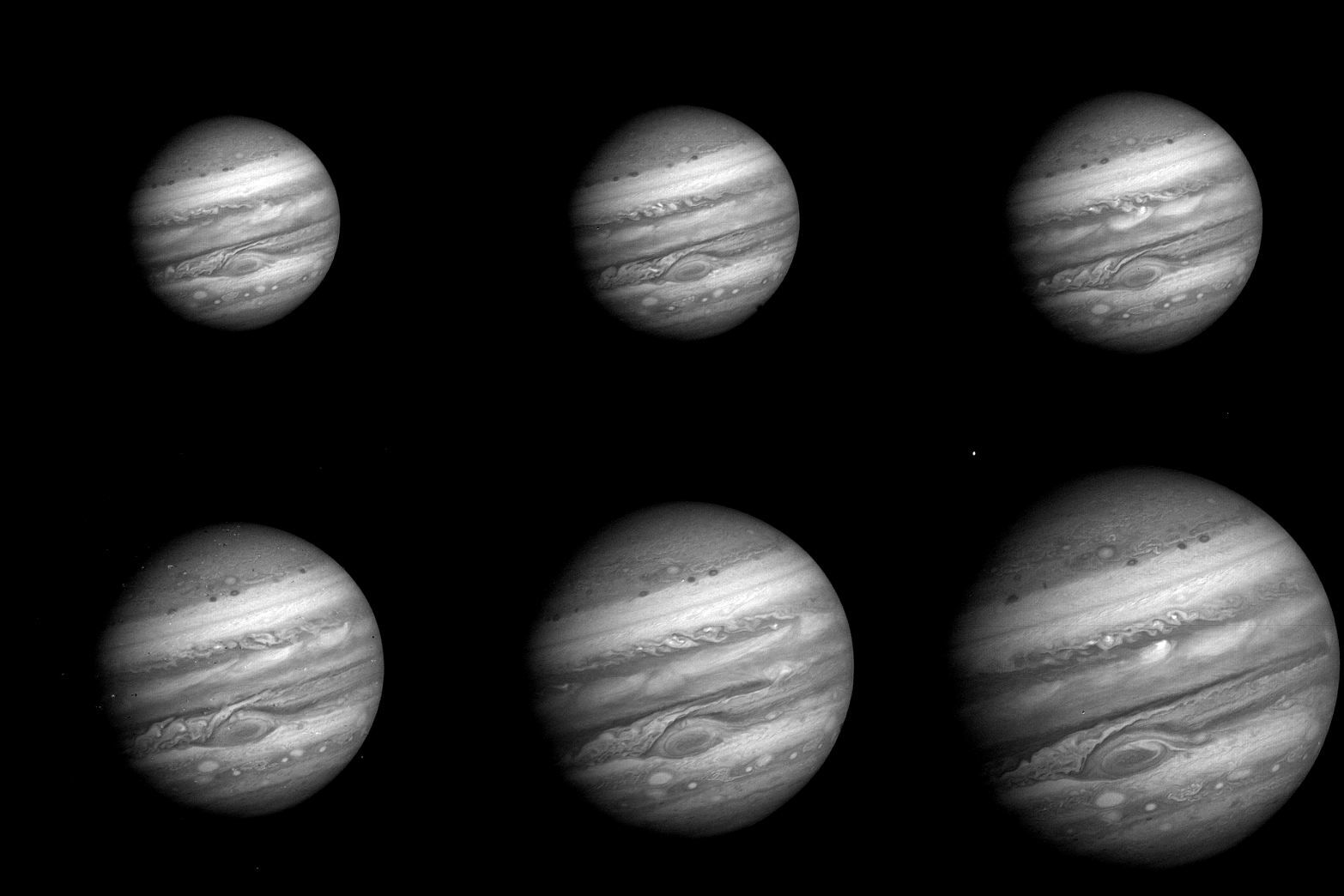
A time-lapse animation of Voyager 1 approaching Jupiter over the course of one Earth month
(Image credit: NASA/JPL)
The close-up view showed that Jupiter is a far more dynamic world than previously thought. But Voyager also made key discoveries about the planet’s many moons.
While passing by the Jovian moon Io, Voyager 1 witnessed an explosion: the first volcanic eruption ever seen beyond Earth. This proved that there were other geologically active worlds in our solar system, opening up entirely new avenues of inquiry and exploration.
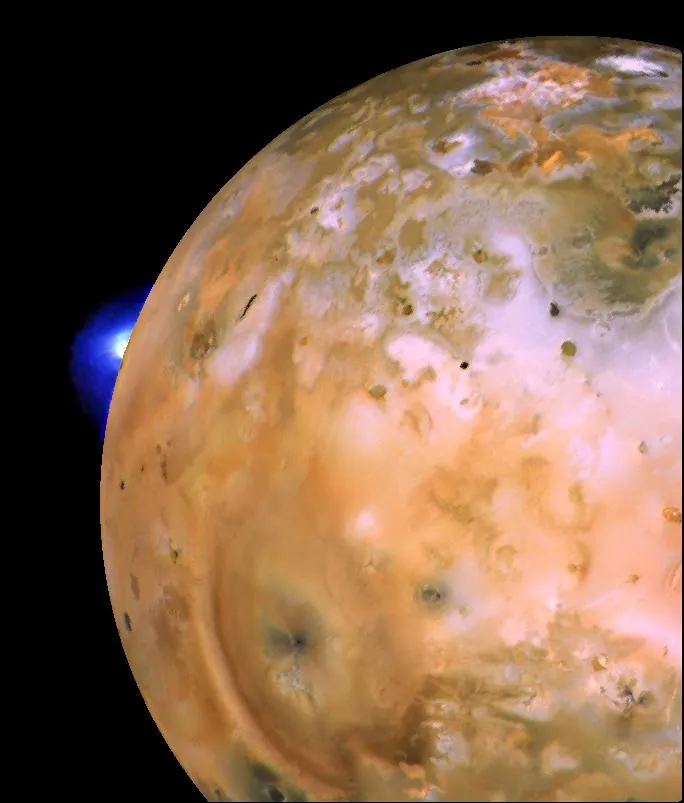
A blue eruption on Jupiter’s moon Io, the first volcanic eruption seen on another world
(Image credit: NASA/JPL)
“Going in, we thought that the moons would look a lot like our own moon: ancient dead worlds,” Spilker said. “And yet we found out they were very different worlds — like Io with active volcanoes. It was just an incredible change in our thinking.”
By viewing these eruptions, scientists saw parts of Io’s surface being changed in real time. “As we got closer [to Io], scientists kept saying the surface is getting younger and younger, because they didn’t see any big craters, no medium sized craters, no little craters — until finally parts of its surface are just minutes old,” Spilker said.

A mosaic view of Callisto taken from Voyager 1 photos at a distance of about 250,000 miles (400,000 km)
(Image credit: NASA/JPL)
Some of Voyager’s close-up observations also confirmed old theories. For example, Voyager 1’s flyby of the moon Callisto in March 1979 revealed vast fields of well-preserved impact craters, proving that Callisto was geologically dead.
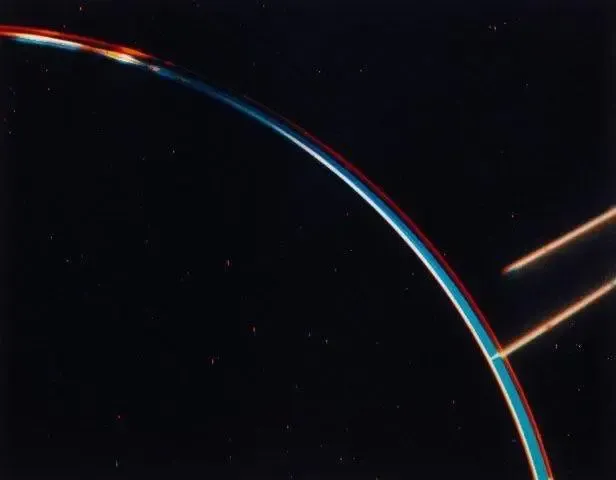
Jupiter and its thin ring of dust backlit by the sun in a Voyager 1 image
(Image credit: NASA/JPL)
A final surprise at Jupiter came when Voyager 1 swooped around the planet’s nightside, seeing the gas giant backlit by the sun. This view revealed a thin ring system around the planet, made partly of the dust particles Io spewed into space.
Swinging by Saturn
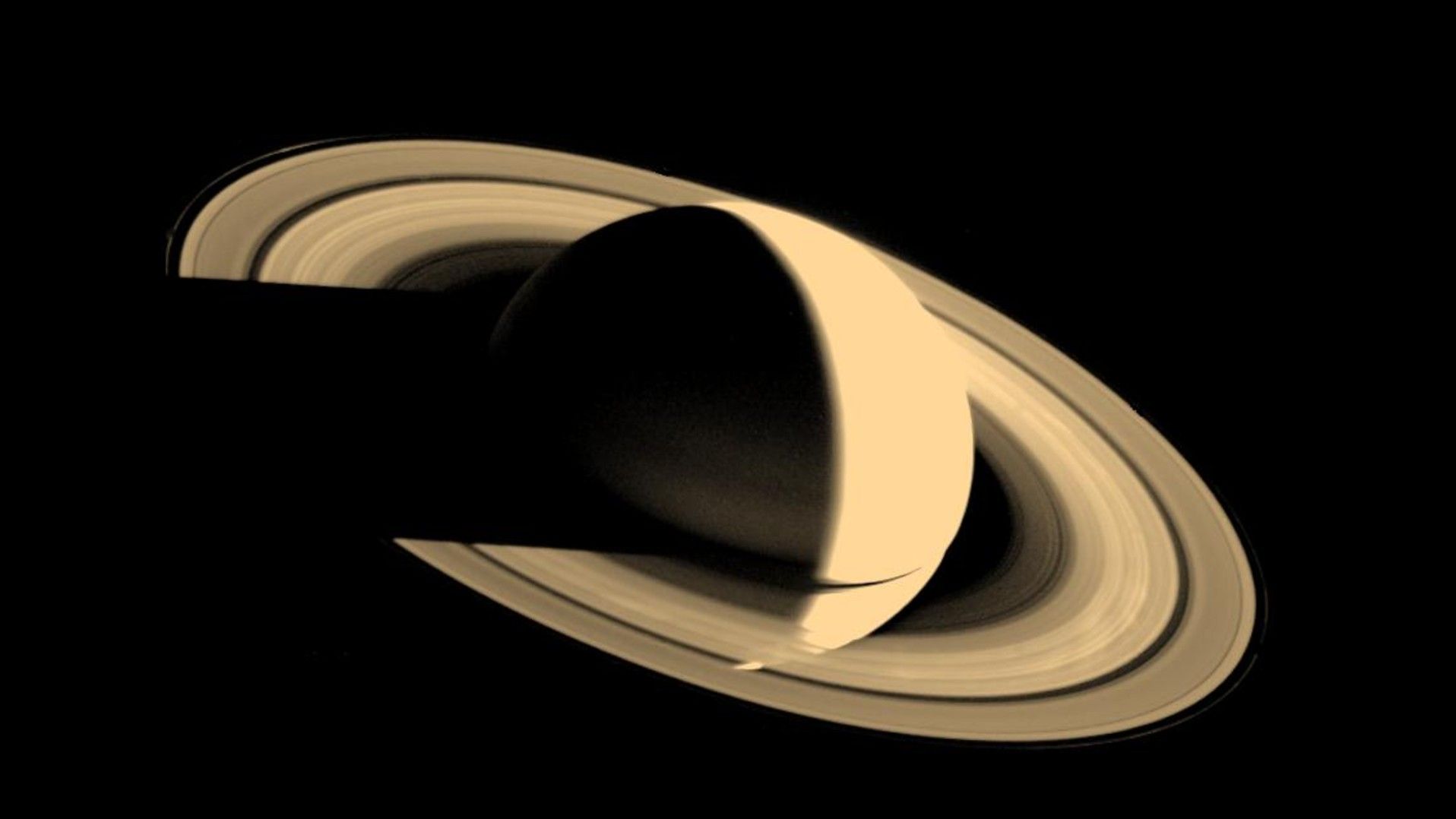
Voyager 1 reached Saturn in November 1980 and made its closest approach to the planet on Nov. 12 of that year. Four days later, the spacecraft took this image of the planet’s nightside, showing a broad shadow cast onto the surrounding rings.

(Image credit: NASA/JPL)
“That is one of my favorite pictures: an outbound image, taken by Voyager looking at [Saturn] in a way you could never see from the Earth,” Spilker said, noting that we can only ever see Saturn’s sunlit side from our planet. “The rings just look so beautiful shining there, and you can actually see the shadow of Saturn on the rings themselves. It’s a really, really special picture.”
In addition to discovering a previously unknown ring, Voyager 1 spotted five new moons around Saturn and took close-up photos of several other known satellites.

Voyager 1’s closeup view of Titan revealed a dense, hazy atmosphere
(Image credit: NASA/JPL)
The mission required Voyager to swing by the moon Titan in order to bend the probe’s trajectory, sending it away from the solar system’s planetary plane and toward a rendezvous with interstellar space. Before that, Voyager 1 revealed Titan’s atmosphere to be so hazy that it completely obscured the moon’s surface. This showed that Titan’s clogged atmosphere was far denser than those of Earth and Mars.
Solar system “family portrait”
By 1990, Voyager 1 was so far from the planetary plane that our solar system’s planets looked like little more than specks of light. But before turning off its camera for good, Voyager 1 looked back at our cosmic neighborhood and took some of the most iconic space photos of all time.
In a series of 64 images taken from roughly 40 times Earth’s distance from the sun, Voyager snapped its solar system “family portrait,” a mosaic of images capturing six planets together for the first time. The portrait included views of Venus, Earth, Jupiter, Saturn, Uranus and Neptune.

Frames from Voyager 1’s family portrait showing Venus, Earth, Jupiter, Saturn, Uranus, and Neptune.
(Image credit: NASA/JPL)
The image of Earth from this collection is famously known as the “Pale Blue Dot.”
“We took the pictures of the planets in color, and that one is especially one of my favorites,” Spilker said. “There’s Earth captured in a sunbeam. A tiny world less than a pixel in size representing all the life that we know in our solar system — just a very special image reminding us just how special and precious our planet is.”

Earth appears as a pale blue dot in this iconic Voyager 1 image
(Image credit: NASA/JPL)
Voyager 1 turned off its camera immediately after taking these images, concluding its role as the greatest tourist in the history of our solar system. In 2012, Voyager 1 passed beyond the heliopause — the boundary where the sun’s radiation gives way to the interstellar medium — becoming the first interstellar spacecraft in history.
Voyager 2 crossed the same boundary in 2018 and is expected to reach its own light-day in 2035. In the meantime, several science instruments remain active on both probes, allowing them to measure the strange and mysterious environment between stars.
Even way out there, the probes are still detecting whispers of the sun’s power.
“We are still seeing effects from the sun that come out, hit the heliopause, and send shocks and pressure fronts out into the interstellar medium,” Spilker said. “I wonder where we will finally reach the point where the sun doesn’t influence what we’re seeing, and we’re in the pristine interstellar medium — and I hope that happens while Voyager 1 is still operating.”