





Follow us
Add us as a preferred source on Google
Subscribe to our newsletter
A toothbrush that generates its own electricity with every stroke could offer a new way to fight the microbes behind cavities and gum disease.
Conventional toothbrushes rely on physical scrubbing to remove plaque from teeth and gums. But even after a thorough brush, some bacteria remain and begin rebuilding plaque. To solve that problem, researchers have developed a self-powered toothbrush that converts the friction of brushing into an electrical charge. That electricity is intended to zap the plaque-promoting bacteria and keep them from colonizing teeth.
“It’s great to have new approaches that actually enhance the effect of mechanical cleaning,” said Nicholas Jakubovics, an oral microbiologist at Newcastle University in the U.K. who was not involved in the study. “The idea that the toothbrush surface itself is actively doing something is really interesting.”
Latest Videos FromLive Science
The experimental brush has bristles made from polyvinylidene fluoride (PVDF), a plastic that generates electricity when bent; these types of energy-producing materials are called piezoelectric. As the bristles flex during brushing, they produce an electrical charge that then triggers chemical reactions in saliva and water. These reactions release reactive oxygen species (ROS), which are highly reactive molecules that can damage bacterial cells.
Even when the bristles are not being used to brush, they carry a faint surface charge that helps prevent bacteria from clinging to the brush head when the toothbrush isn’t in use, the team reported Wednesday (Nov. 4) in the journal Science Advances.
In laboratory tests where the toothbrush was used on isolated germs, its electrified bristles killed more than half of the Streptococcus mutans bacteria present. These microbes contribute to tooth decay. By comparison, nylon bristles killed just 9% of the bacteria. They also reduced levels of Porphyromonas gingivalis, a bacterium linked to gum disease, by up to 78%, while nylon brushes reduced them by less than 8%.
When the researchers added an antioxidant — a compound that neutralizes ROS — the new toothbrush’s antibacterial effect largely disappeared, highlighting that the ROS are likely the key to its effects.
Get the world’s most fascinating discoveries delivered straight to your inbox.
The team also found that the activity of certain genes in both S. mutans and P. gingivalis fell after exposure to the electrified bristles. These genes are involved in making ATP-binding cassette (ABC) transporters — molecular pumps that help shuttle essential nutrients across bacterial cell membranes. The researchers suspect that disrupting this machinery makes it harder for these microbes to survive and cling to teeth.
The new toothbrush still needs to be tested in further safety trials.
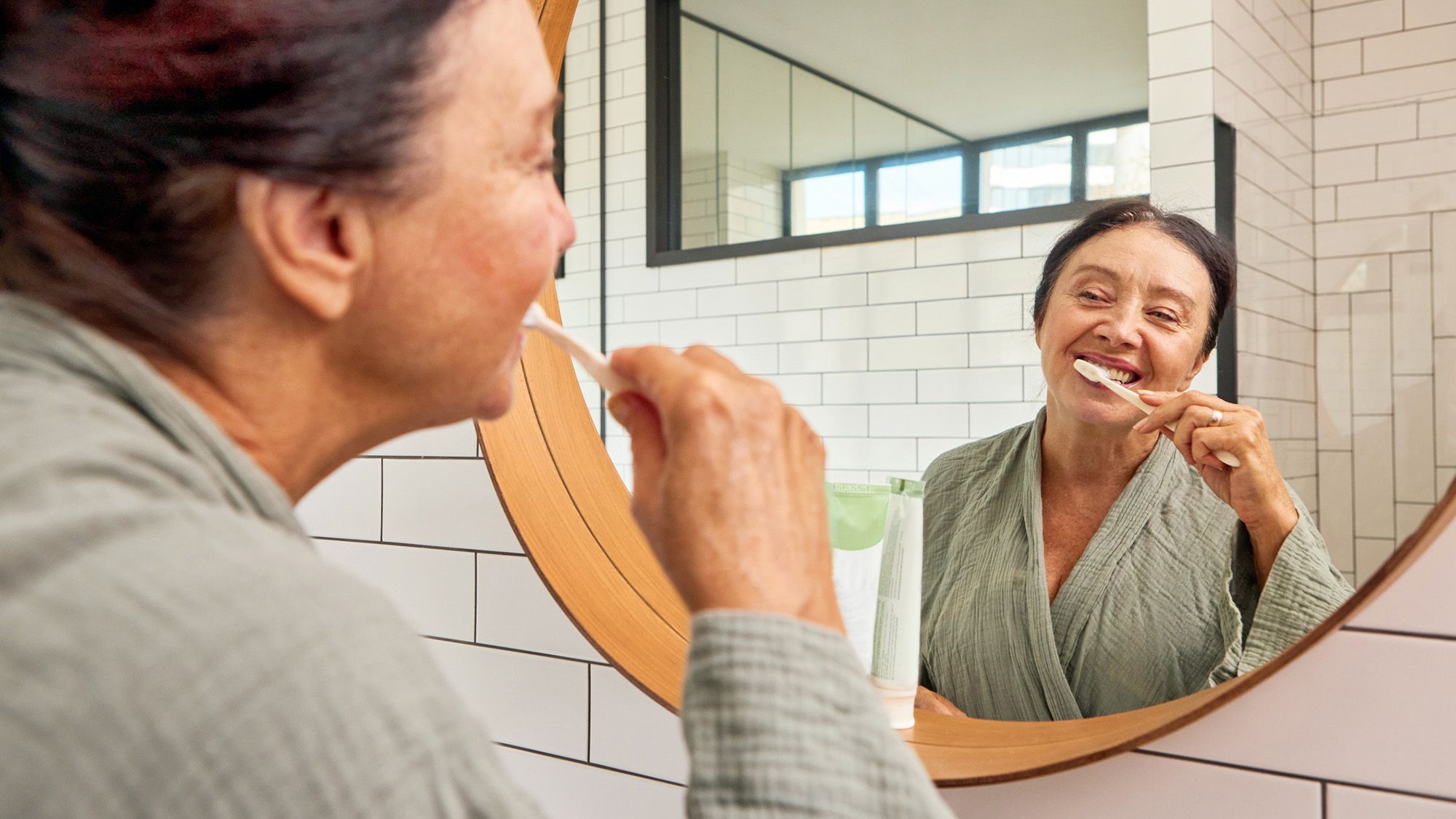
(Image credit: Kathrin Ziegler via Getty Images)
But Jakubovics was not convinced by that part of the team’s explanation. “ABC transporters transport all sorts of different things,” he said, adding that the findings did not clearly show how changes in these genes affected the bacteria.
The researchers also tested the new brush against plaque biofilms — hardy communities of bacteria that stick together and cling to tooth surfaces. For the experiment, they grew human dental plaque on cow tooth enamel and found that the brush removed more than 99% of the biofilm, outperforming a regular nylon brush.
Finally, the team moved to humans, putting the brush to the test in 115 adults with gum inflammation or tooth decay. These study participants were randomly assigned to use either the new toothbrushes or traditional nylon-bristled brushes twice a day for three months. (The study didn’t note whether participants noticed a difference in sensation when using the electrified brushes.)
By the end of the trial, the participants who used the electrified bristles had less plaque, less gum inflammation and less bleeding than the participants who used ordinary brushes. Plaque samples also showed that the people who used electrified brushes had lower levels of bacteria associated with oral disease and higher levels of beneficial bacteria, which have previously been reported to suppress harmful oral bacteria and support oral health.
The researchers think that the disease-linked bacteria may have relatively fragile cell membranes, making them more vulnerable to damage from ROS than the beneficial bacteria. That’s a theory that requires further study, though, so it’s not completely clear how selective the brush is against plaque-causing bacteria.
In a test of the toothbrush’s durability, the PVDF bristles retained their structure and electrical properties over three months of simulated use. Lab-grown mouse cells repeatedly exposed to brush material showed no signs of damage, and brushing on cow tooth enamel did not increase surface roughness. However, these tests cannot establish whether repeated use of these brushes is safe for humans.
“We would want to make sure that it is safe on the tissues for long-term use,” Jakubovics said. He noted that, in lab tests, bacteria are grown directly on the bristles and exposed to their electricity for hours, “whereas in reality, in the mouth, your bristle is only in contact with the tooth or oral tissue for a very short time.”
The trial with humans provides some insight into how the brush works in real life, but it was relatively small. Larger studies will be needed to find out whether the toothbrush offers a meaningful advantage over conventional brushes. For now, Jakubovics sees the recent study as just a proof of concept; more information and more convincing clinical data are still needed, he emphasized.
This article is for informational purposes only and is not meant to offer medical advice.
Lu, Y., Song, J., Chi, X., Li, W., Wu, L., Guo, Y., Cui, Q., Zheng, X., Bai, Y., Heng, B. C., Han, X., Zhang, X., & Deng, X. (2026). Self-charged toothbrush facilitates tooth healthcare maintenance. Science Advances, 12, Article eaeg5744. https://doi.org/10.1126/sciadv.aeg5744