


Close Menu
  • Home
  • United States
  • World
  • Politics
  • Business
  • Lifestyle
  • Entertainment
  • Health
  • Science
  • Tech
  • Sports
  • More
    • Web Stories
    • Editor’s Picks
    • Press Release

Subscribe to Updates

Get the latest USA news and updates directly to your inbox.

What's On
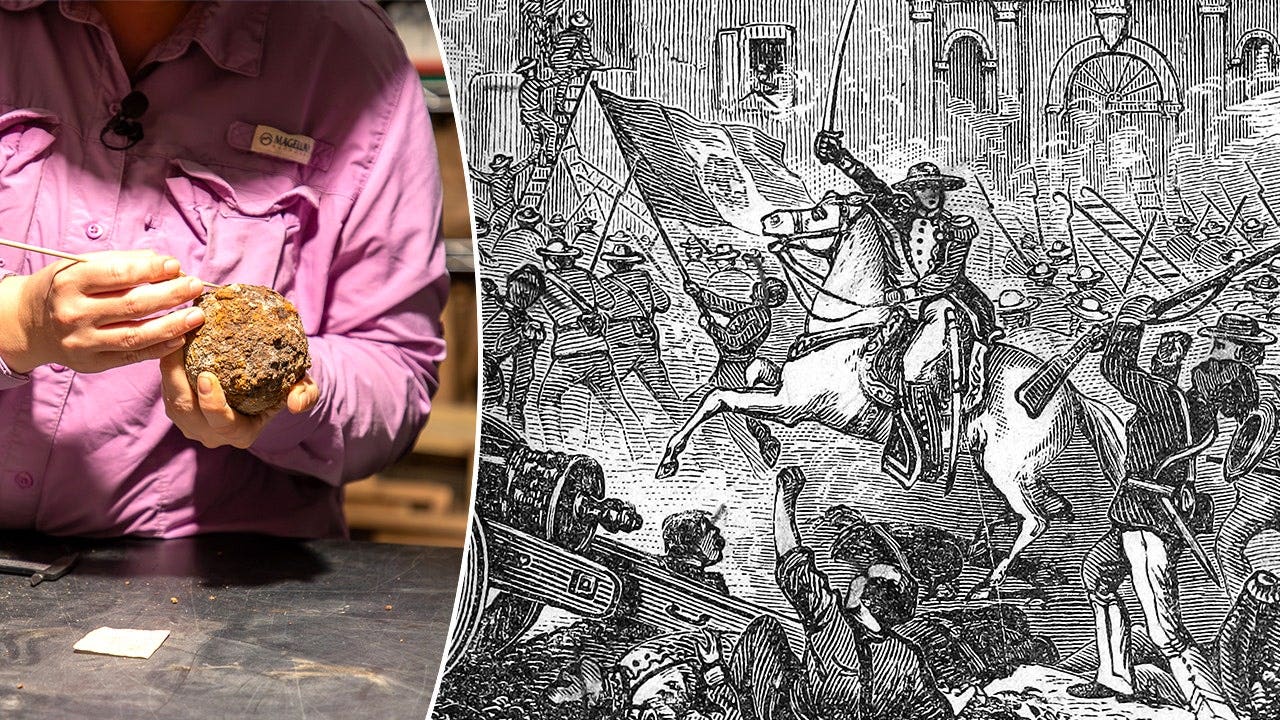
Alamo Church excavation uncovers 4 cannonballs from the 1836 battle

Alamo Church excavation uncovers 4 cannonballs from the 1836 battle

November 6, 2026
Playboy’s Karissa Shannon Wants to Raise Son to Be the ‘Opposite’ of Hugh Hefner: ‘A Gentleman’

Playboy’s Karissa Shannon Wants to Raise Son to Be the ‘Opposite’ of Hugh Hefner: ‘A Gentleman’

November 6, 2026
Banged-up Seaford Vikings out for more after losing LI Championship last year

Banged-up Seaford Vikings out for more after losing LI Championship last year

November 6, 2026
Facebook X (Twitter) Instagram
Trending
  • Alamo Church excavation uncovers 4 cannonballs from the 1836 battle
  • Playboy’s Karissa Shannon Wants to Raise Son to Be the ‘Opposite’ of Hugh Hefner: ‘A Gentleman’
  • Banged-up Seaford Vikings out for more after losing LI Championship last year
  • Gigantic chasm on Mars, 10 times longer than the Grand Canyon, is still tectonically active, surprising ‘marsquake’ reveals
  • Exclusive | Meet the biohacker kids whose dads are trying to live forever
  • The latest twist in the saga between UBS and Swiss regulators involves bank’s New York business
  • Dems prep anti-Trump blitz during first 100 hours when they take back Congress
  • Cannabis use linked to higher stroke and cardiovascular disease risk
  • Privacy
  • Terms
  • Advertise
  • Contact Us
Join Us
USA TimesUSA Times
Newsletter Login
  • Home
  • United States
  • World
  • Politics
  • Business
  • Lifestyle
  • Entertainment
  • Health
  • Science
  • Tech
  • Sports
  • More
    • Web Stories
    • Editor’s Picks
    • Press Release
USA TimesUSA Times
Home » Physicists sank a neutrino telescope 1.5 miles under the sea to put Einstein’s relativity to the test
Physicists sank a neutrino telescope 1.5 miles under the sea to put Einstein’s relativity to the test
Science

Physicists sank a neutrino telescope 1.5 miles under the sea to put Einstein’s relativity to the test

News RoomBy News RoomNovember 5, 20260 ViewsNo Comments


Follow us

Add us as a preferred source on Google


Subscribe to our newsletter


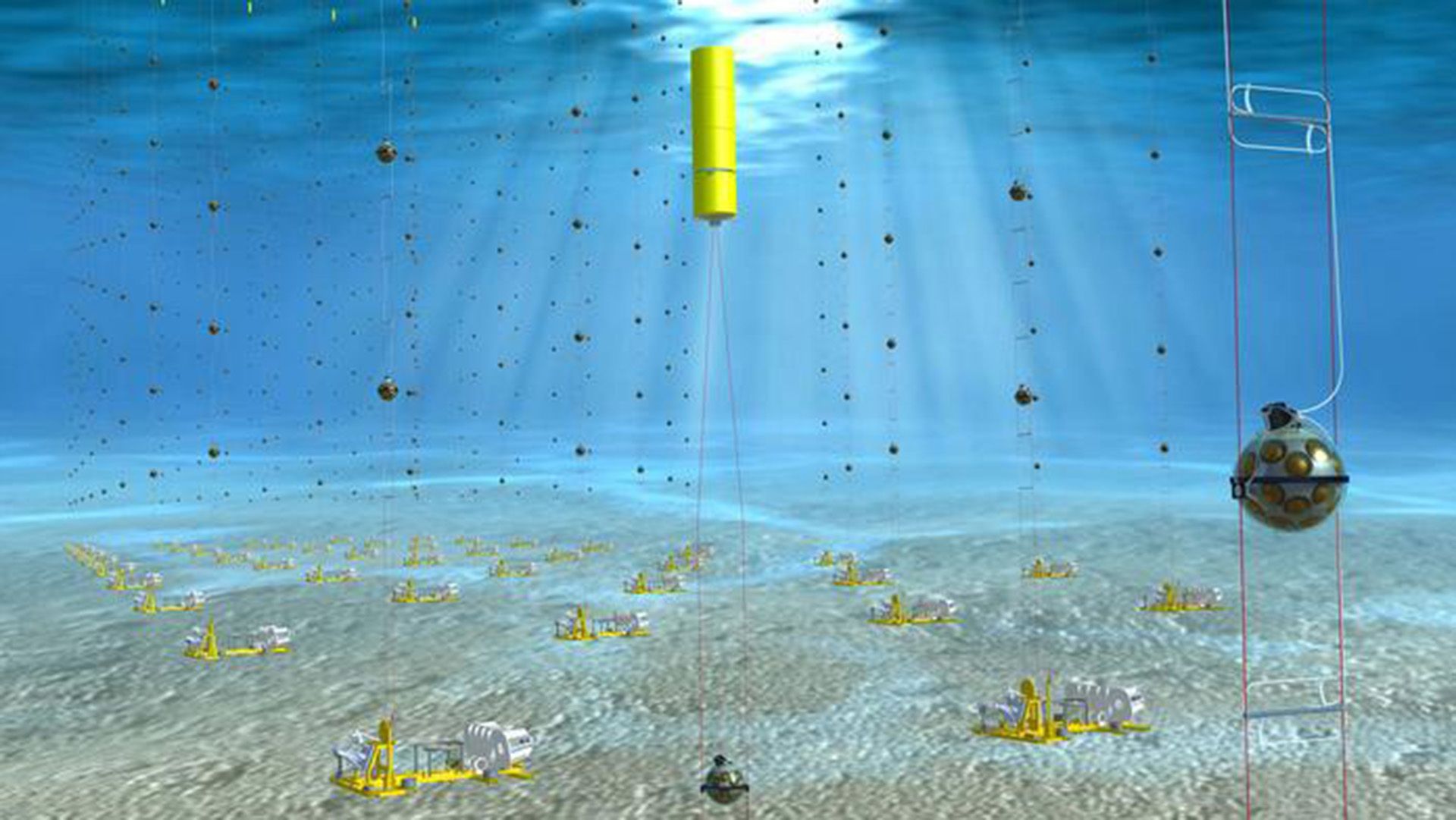
The view from inside a detector building block, with the yellow buoy of a nearby detection unit clearly visible.

(Image credit: Edward Berbee/Nikhef)

A particle-detecting telescope sunk more than a mile beneath the sea off the coast of France has tested a core principle of Einstein’s relativity and found no cracks.

The detector, called Oscillation Research with Cosmics in the Abyss (ORCA), detects elusive particles called neutrinos. As a doctoral student, Alba Domi rode onto the Mediterranean aboard one of two boats that helped build the telescope, lowering some of its first detection units to the seafloor about 1.5 miles (2.4 kilometers) below the waves off Toulon, France.

Now, data from those first detection units have been used to test one of the founding rules of Einstein’s relativity: the idea that the laws of nature look the same no matter which way you face or how fast you move.

Latest Videos FromLive Science

The team found no sign that this rule, called Lorentz invariance, is broken. But even with a detector only a fraction of its planned size, they set limits that compete with those of far larger and longer-running experiments.

The results were published Wednesday (Nov. 4) in the Journal of Cosmology and Astroparticle Physics.


You may like

A crack in space-time?

Physics rests on two successful theories: general relativity, conceived by Albert Einstein more than 100 years ago, and the Standard Model of subatomic physics.

“General relativity describes the universe well on a cosmic scale, and the Standard Model of particle physics describes the microscopic scale; really, the single particles, how they behave,” said study co-author Lukas Hennig, a doctoral student in advanced physics at Erlangen-Nürnberg.

Get the world’s most fascinating discoveries delivered straight to your inbox.

Both theories assume Lorentz invariance to be true. But in extreme settings, such as the first moments after the Big Bang, the two theories don’t mesh. That has fueled a decades-long hunt for a theory of quantum gravity that unites them. Some candidates, including versions of string theory and loop quantum gravity, suggest that space-time might have a hidden “grain” at the tiniest scales — and that Lorentz invariance, “one of the most basic assumptions we make about our universe, might be violated,” Hennig said.

Any such violation would be extremely small. To spot it, physicists would need a probe that could travel long distances and barely interact with anything along the way. Enter the neutrino.

Shape-shifting ghosts

Neutrinos are nearly massless particles that pass through Earth every second and carry zero charge. They barely interact with anything and come in three types: electron, muon and tau neutrinos. As neutrinos travel, they morph from one type into another in a predictable pattern that physicists call neutrino oscillation.


What to read next

A spherical machine is suspended above the ocean.

An optical module attached to the Dyneema ropes of the detection unit.

(Image credit: KM3NeT Collaboration)

If Lorentz invariance were broken, that oscillation would change, with the effect growing more pronounced the farther the neutrinos traveled. So the team focused on neutrinos created when cosmic rays slam into the atmosphere elsewhere on the globe before traveling up through the planet to the detector. Some of the tested neutrinos crossed the entire 7,900-mile (12,700 km) width of Earth.

ORCA is part of the KM3NeT neutrino telescope. Each of its detection units is anchored to the seabed and holds 18 glass spheres packed with 31 light sensors apiece. When a neutrino collides with a particle in the water, it produces a faint flash of blue light that the sensors catch. The many sensors in each sphere help the team pin down which direction the light came from, Domi said.

Earth itself serves as a filter. The researchers selected only particles traveling upward through the planet, and they were able to weed out the flood of other particles from the atmosphere that would otherwise swamp the signal. “Only the neutrinos can get through,” Hennig said.

That setup differs from that of IceCube, the Nobel Prize-winning detector buried in Antarctic ice. “Ice scatters the light more than water, but on the other hand, water absorbs the light more than ice,” Domi said, which changes how each team reconstructs a neutrino’s energy and path.

Small but mighty

The researchers used 5,828 neutrinos collected over about 17 months between 2020 and 2021. They found that the oscillations matched standard physics. That means if Lorentz violation exists, it must be weaker than the limits the team set.

Those limits matter for theorists. If a model “predicts a Lorentz invariance violation [stronger than the new limits], the data rule it out. In that case, you can be pretty sure that this model is not correct,” Hennig said.

The team also set the first direct limits on a kind of violation that would treat muon neutrinos and tau neutrinos differently.

The detector’s limits on several key measures are competitive with those from Japan’s Super-Kamiokande, which used 12 years of data, and from IceCube, which used two years of data from its full array.

“I’m surprised that we have competitive results with only six detection units,” Hennig said. Today, 44 units are in the water, and the collaboration plans to activate 108 by 2030.

The best tests may still lie ahead. Because Lorentz-violating effects grow with distance and energy, neutrinos from distant cosmic sources are “actually the best candidates to do this kind of research,” Domi said. The team plans to repeat the search using ORCA’s sister detector, ARCA (Astroparticle Research with Cosmics in the Abyss), which sits off the coast of Sicily and is designed to catch those high-energy cosmic travelers.

If space-time does have a grain, those particles may be among the first to feel it.

Adriani et al. (2026). Atmospheric neutrino constraints on Lorentz invariance violation with the first six detection units of KM3NET/ORCA. Journal of Cosmology and Astroparticle Physics. https://doi.org/10.1088/1475-7516/2026/11/012


See how much you know about Albert Einstein with our Albert Einstein quiz!
Share. Facebook Twitter LinkedIn Telegram WhatsApp Email

Keep Reading

Gigantic chasm on Mars, 10 times longer than the Grand Canyon, is still tectonically active, surprising ‘marsquake’ reveals

Gigantic chasm on Mars, 10 times longer than the Grand Canyon, is still tectonically active, surprising ‘marsquake’ reveals

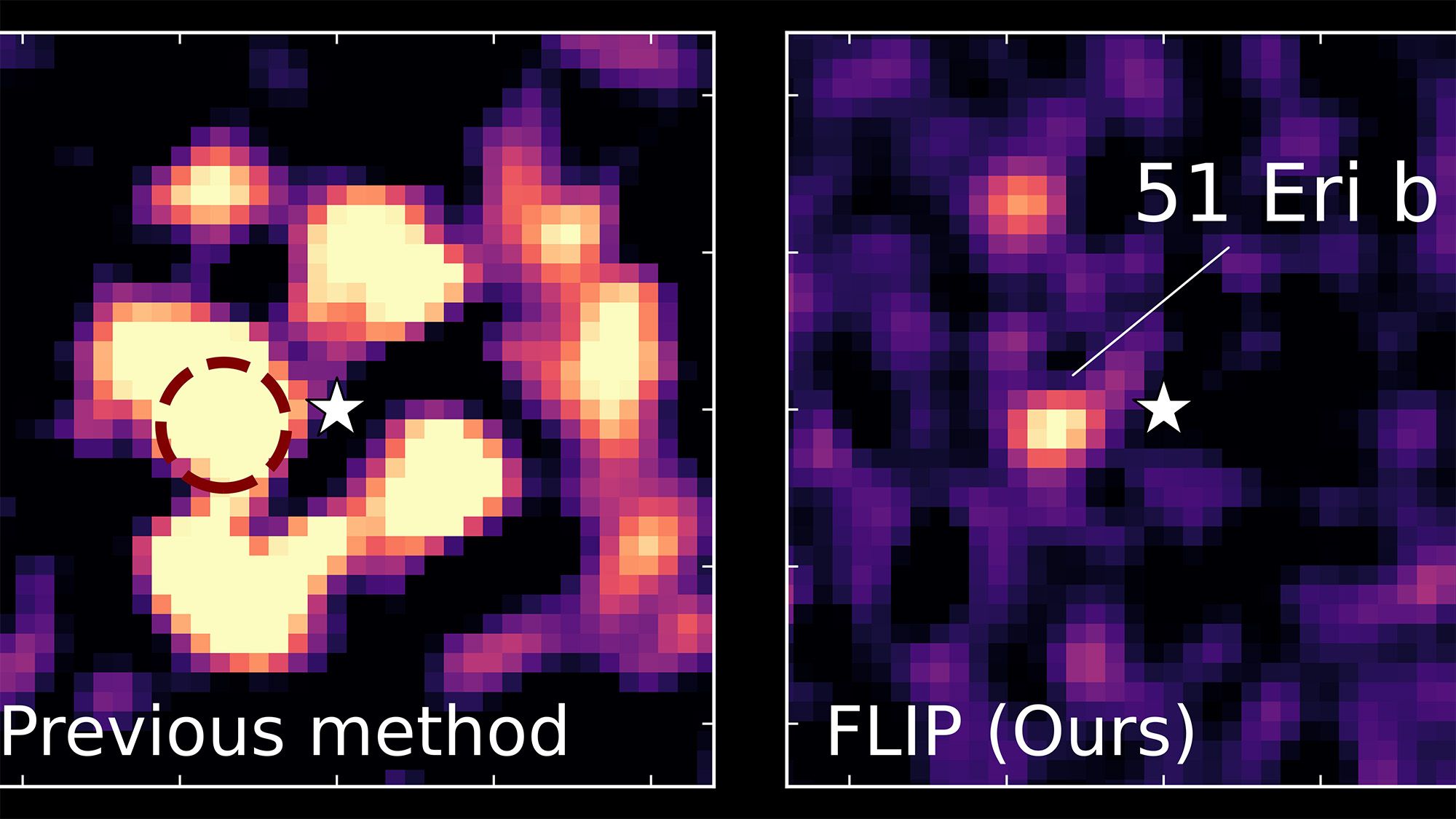
Scientists remove glare from a James Webb Space Telescope image and uncover a hidden planet

Scientists remove glare from a James Webb Space Telescope image and uncover a hidden planet

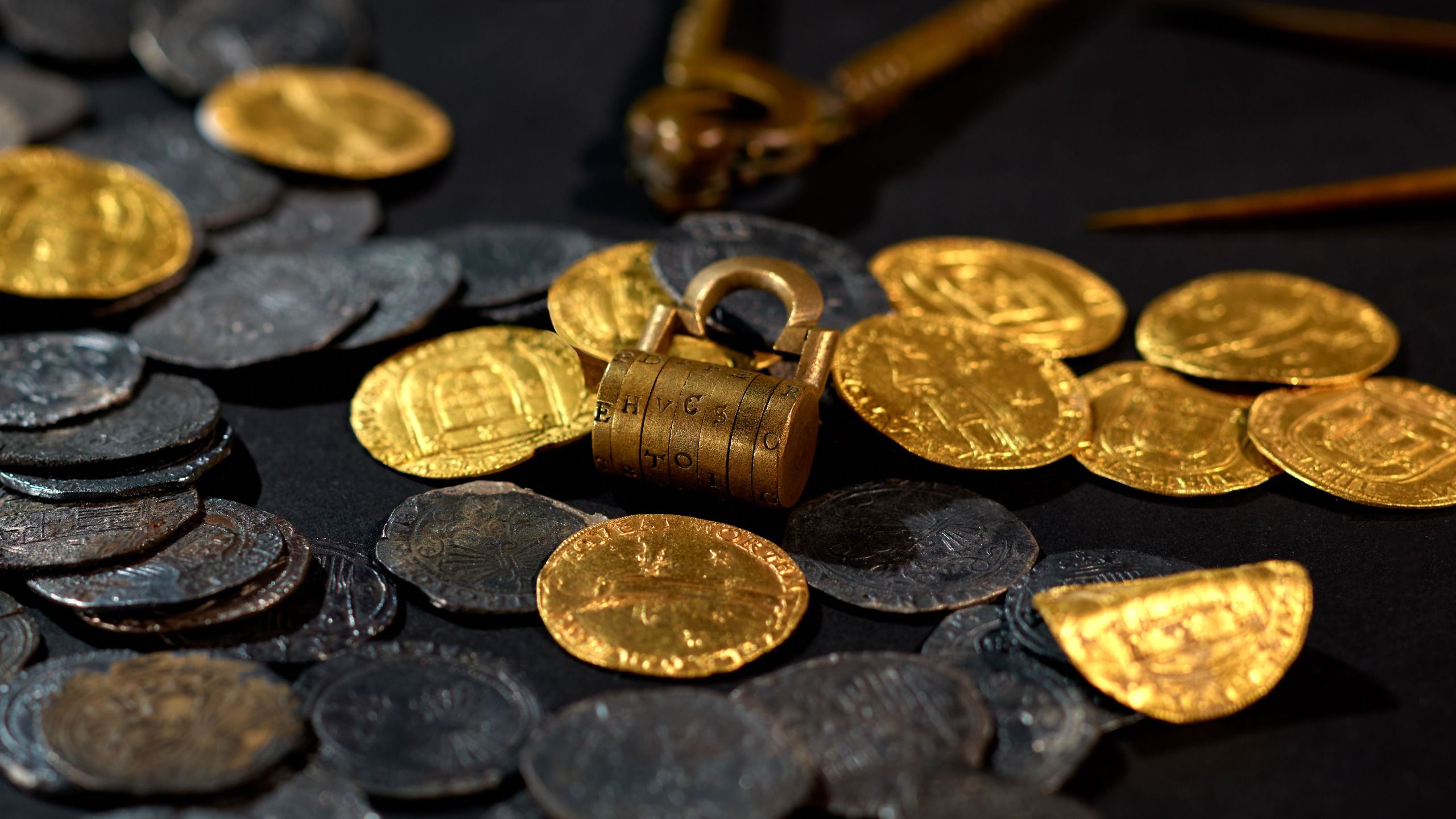
Cryptic padlock from a 400-year-old shipwreck finally opened ‪—‬ but it leaves a mystery

Cryptic padlock from a 400-year-old shipwreck finally opened ‪—‬ but it leaves a mystery

Cannabis may have been used to calm human sacrifice victims 2,800 years ago, earliest evidence of marijuana use reveals

Cannabis may have been used to calm human sacrifice victims 2,800 years ago, earliest evidence of marijuana use reveals

7 stunning Weather Photographer of the Year photos that capture the beauty and power of our planet

7 stunning Weather Photographer of the Year photos that capture the beauty and power of our planet

‘We’re looking at how a bear sees the world’: From forest trails to ‘Sims for Bears,’ researchers are learning how grizzlies navigate a fragmented wilderness

‘We’re looking at how a bear sees the world’: From forest trails to ‘Sims for Bears,’ researchers are learning how grizzlies navigate a fragmented wilderness

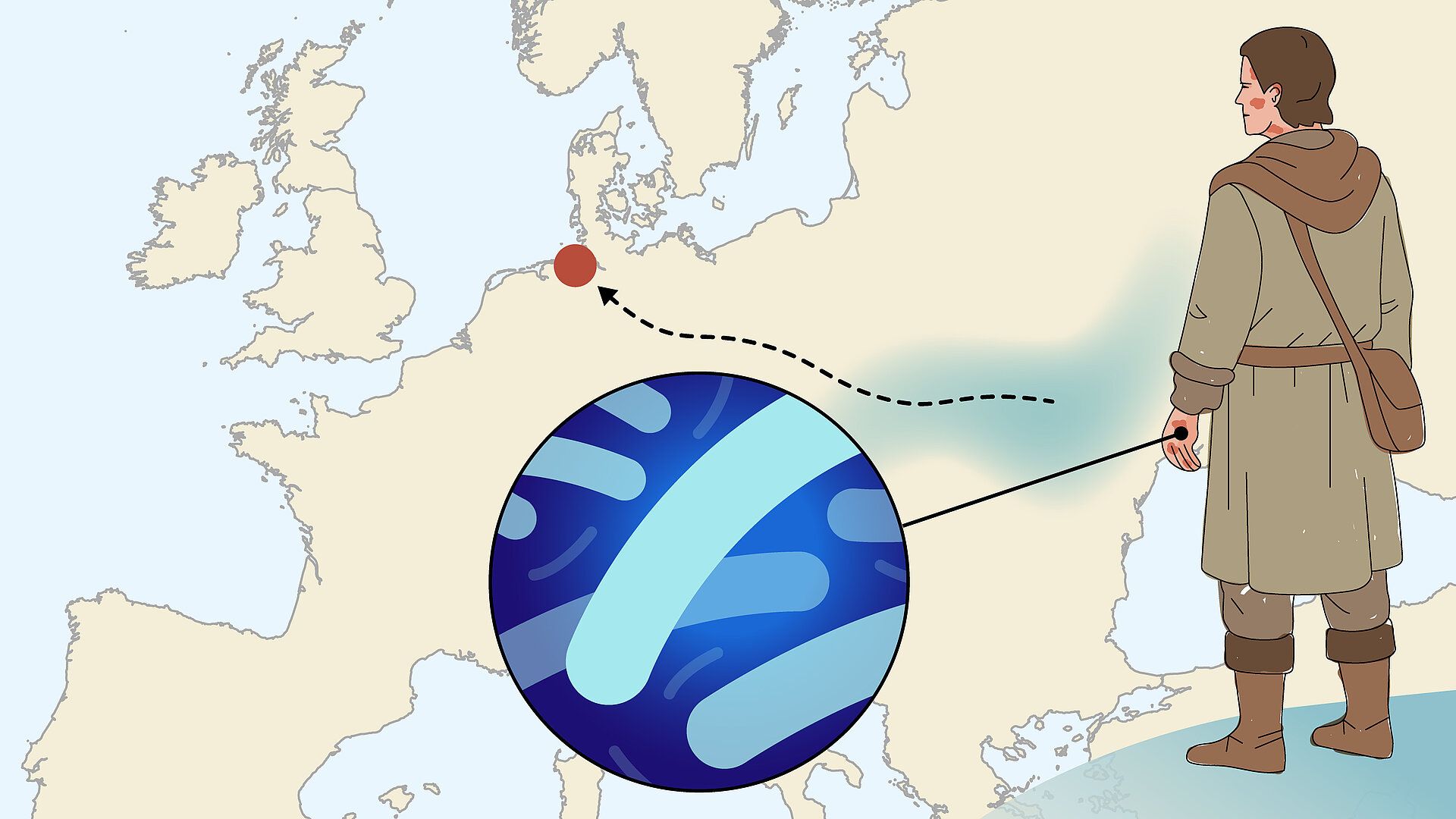
1,600-year-old burial holds remains of man infected with a ‘very rare’ strain of leprosy in Germany

1,600-year-old burial holds remains of man infected with a ‘very rare’ strain of leprosy in Germany

One-third of babies diagnosed with peanut allergy don’t actually have one, study hints

One-third of babies diagnosed with peanut allergy don’t actually have one, study hints

A tiny chunk of Australia seeded Southeast Asia’s tropical forests 50 million years ago, plant fossils preserved in amber reveal

A tiny chunk of Australia seeded Southeast Asia’s tropical forests 50 million years ago, plant fossils preserved in amber reveal

Add A Comment
Leave A Reply Cancel Reply

Editors Picks

Playboy’s Karissa Shannon Wants to Raise Son to Be the ‘Opposite’ of Hugh Hefner: ‘A Gentleman’

Playboy’s Karissa Shannon Wants to Raise Son to Be the ‘Opposite’ of Hugh Hefner: ‘A Gentleman’

November 6, 2026
Banged-up Seaford Vikings out for more after losing LI Championship last year

Banged-up Seaford Vikings out for more after losing LI Championship last year

November 6, 2026
Gigantic chasm on Mars, 10 times longer than the Grand Canyon, is still tectonically active, surprising ‘marsquake’ reveals

Gigantic chasm on Mars, 10 times longer than the Grand Canyon, is still tectonically active, surprising ‘marsquake’ reveals

November 6, 2026
Exclusive | Meet the biohacker kids whose dads are trying to live forever

Exclusive | Meet the biohacker kids whose dads are trying to live forever

November 6, 2026

Subscribe to News

Get the latest USA news and updates directly to your inbox.

Latest News
The latest twist in the saga between UBS and Swiss regulators involves bank’s New York business

The latest twist in the saga between UBS and Swiss regulators involves bank’s New York business

November 6, 2026
Dems prep anti-Trump blitz during first 100 hours when they take back Congress

Dems prep anti-Trump blitz during first 100 hours when they take back Congress

November 6, 2026
Cannabis use linked to higher stroke and cardiovascular disease risk

Cannabis use linked to higher stroke and cardiovascular disease risk

November 6, 2026
Facebook X (Twitter) Pinterest WhatsApp TikTok Instagram
© 2026 USA Times. All Rights Reserved.
  • Privacy Policy
  • Terms
  • Advertise
  • Contact

Type above and press Enter to search. Press Esc to cancel.