
As climate change increasingly sows chaos across our planet, the concept of climate safe havens sounds enticing — a refuge where people can camp out in comfort while sea levels rise and extreme weather hits less fortunate areas. But the reality is not so simple. In this excerpt from “North: The Future of Post-Climate America” (Oxford University Press, 2025), Jesse M. Keenan, associate professor of real estate at Tulane School of Architecture, looks at how climate-driven migration comes with multifaceted problems — both for the “climigrants” and those already living in the “safe havens.”
The article argued that receiving zones will be defined by “areas towards the north” that might also have “sources of energy production [that] are stable, [with] cooler climates and … access to plenty of fresh water.” In a rhetorical flourish, Milman dubbed these receiving zones as “safe havens.”
This article would go on to spark the imagination of journalists, researchers, policymakers, and the general public from around the world. The sweeping ideas of climatic suitability and infrastructural capacity would be reframed in the media as “climate havens.” While “amenity migration” research has long sought to understand the pull factors of migration, this body of research has sustained “a longstanding debate over the relative influence of environmental and economic factors [that] has been inconclusive.”
In the context of climate change, much of the research has focused on climate impacts as a disamenity that pushes people away, as opposed to lower levels of comparative risk being an amenity that pulls people in. For instance, research has shown that “both experiencing a disaster-level wildfire and extreme heat in the prior year were associated with reduced [in-]migration.”
A survey of more than 1,110 California residents after the 2020 wildfire seasons found that “roughly a third of [the] sample intended to move in the next 5 years, nearly a quarter of whom reported that wildfire and smoke impacted their migration decision at least a moderate amount. Prior negative outcomes (e.g., evacuating, losing property) were associated with intentions to migrate.”
At best, one could infer that the disamenities associated with climate risks push people to places with lower risks, but the interacting complexity of various positive amenities in receiving zones associated with everything from labor market participation to lifestyle fitness remains largely unexplored in the United States. The climigration scholar Alex de Sherbinbin and colleagues suggested that “environmental amenities and risks may be among the factors that affect aspirations and capabilities — but in this framing they cannot be said to ‘drive’ migration.”
In this sense, climate change may simply push people to migrate or relocate who were already predisposed to take such actions. Other researchers argue that it may simply come down to money. They argue that the tipping point for out-migration is economic damages from extreme events: For every “$1,000 dollar[s of] damage per capita [there] is [an] associated . . . increase in out-migration” of between 9% and 16%.
Climate impacts as a push factor might be coming into focus, but the pull factors are not well understood. The lack of theoretical and empirical clarity around the role of amenities in pulling people to receiving zones has not stopped scholars and journalists from driving a public discourse on which places might be climate havens and what climate havens should look like. For journalists, this motivation is somewhere between the clickbait production of the “Top Places to Move” and a legitimate reflection on a challenge that appears to be crystal clear in light of the lived experiences of the people and places that define their beat.
Many people recognize that climate change is already influencing where and how people live. In recent years, a group of urban planners and designers known as the PLACE Initiative gathered to identify a range of potential receiving zones based on a combination of factors ranging from climate risk to the quality of urban form. While the data and methods of the PLACE Initiative are unvalidated and perhaps less than scientific, their work highlights a valuable starting point grounded by the professional judgment of those who are on the frontlines.

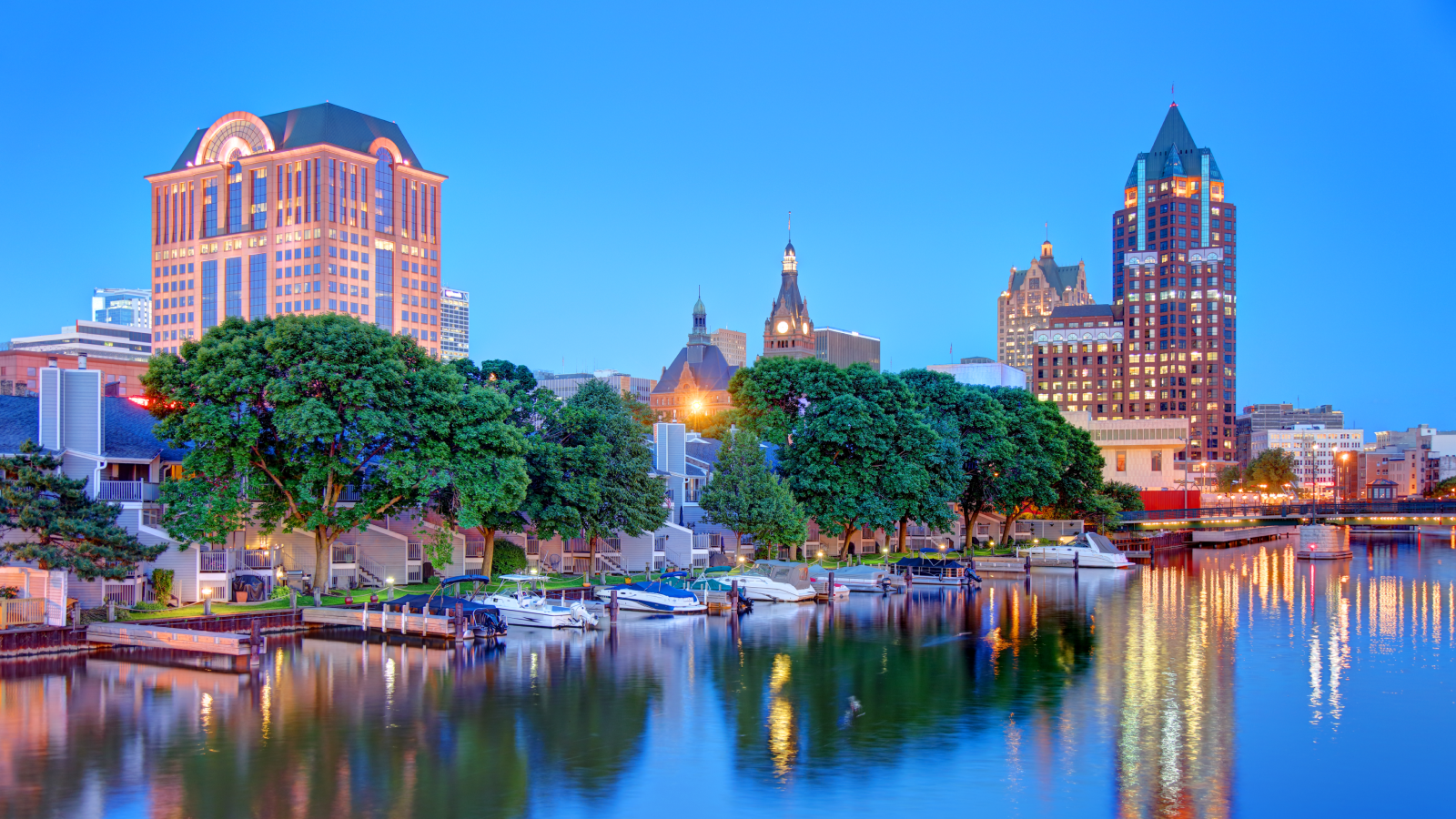
As receiving zones have come into focus, cities like Milwaukee and Buffalo have actively marketed themselves as climate havens. Buffalo has the great tagline: “How Buffalo’s Weather Is Going from Punchline to Lifeline.” The marketing might even be working.
According to Zillow, Buffalo has been the single hottest housing market in America from 2023 to 2025. These marketing efforts build on long-standing local policies to formalize welcoming efforts for immigrants — and by extension migrants — to the Midwest as a means to drive economic development.
Commentators have raised both substantive and meritless challenges that highlight the promise and peril of the concept of climate havens. They argue that nowhere is safe and that no place can escape climate impacts. This is very true. The flooding in Asheville, North Carolina, from Hurricane Helene in 2024 highlighted that even widely recognized receiving zones are still vulnerable to extreme events.
Unfortunately, the history of post-disaster redevelopment in America suggests that, in a place like Asheville, the floods will likely be a catalyst for a post-development landscape that is spatially concentrated, built to a higher performance standard, and less affordable. It is likely that Hurricane Helene redevelopment will operate to both force people out and attract higher-income opportunists. At the end of the day, any receiving zone is vulnerable to extreme events. There is no refuge from a planetary crisis.
Other commentators have argued that a focus on climate havens ignores the plight of those left behind in sending zones. Some have even gone so far as to revive the long-dismissed binary of adaptation versus mitigation by questioning whether cities should prepare for climigrants or reduce their carbon footprint. They argue that labeling some places a haven is misleading to potential climigrants, and that it is certainly not a haven for existing residents who are either currently cost burdened and under-served or might be crowded out through climate gentrification in the future.
Some tribal community members even see climigration as a kind of double colonization. Some of these critiques are perfectly fair. Other critiques are grounded in baseless zero-sum rhetoric. First, cities can plan for climigration and mitigate their carbon footprint at the same time. Investments in adaptation and mitigation can and should happen in dialogue with each other. Any investments that are made in managing risk and carbon that benefit today’s population are going to benefit tomorrow’s population, if done correctly.
For instance, investments in transit-oriented development (TOD) zoning and housing will reduce today’s transit emissions, but they will also provide a basis for future emissions reductions by driving greater measures of efficiency, walkability, and sustainability in dense mixed-income housing.
Mixed-income housing with lower transportation and energy costs will be key for supporting a diverse group of locals and climigrants. Second, while no place can escape climate impacts, it is well established that impacts are unevenly distributed and concentrated in ways that define people’s exposure and vulnerability. Yes, there are extreme precipitation and wildfire risks in Vermont and upstate New York, but it is a relative picnic compared to what the Southwest and Southeast are facing.

Likewise, the ideologically driven politics, anti-science belief systems and widespread lack of institutional capacity in the Sun Belt operate to amplify these costs and vulnerabilities.
There is no denying that some places and people are comparatively better off. While many in the Northeast and the Rust Belt face legacies of economic exclusion, environmental injustice, generations of underinvestment, regional wildfires and droughts and even scary tick-borne diseases, they are not facing the same existential convergence of risks that other regions face.
Florida’s future will no doubt be shaped by sea level rise, wildfires, salinification of groundwater, toxic and fecal contamination of drinking water systems, mega-hurricanes, stationary tropical systems, flooding of all types, extreme heat, and dengue and cholera outbreaks in ways that are almost unimaginable.
As one commentator from Buffalo told the BBC, “We’re not an oasis. We suck less.” There is definitely some truth in this statement, but it does not hold much weight for the thousands of Puerto Rican migrants who moved to Buffalo after the devastating 2017 hurricane season.
Excerpted from North: The Future of Post-Climate America by Jesse M. Keenan. Copyright 2025. Published with permission of the author.