Close Menu
  • Home
  • United States
  • World
  • Politics
  • Business
  • Lifestyle
  • Entertainment
  • Health
  • Science
  • Tech
  • Sports
  • More
    • Web Stories
    • Editor’s Picks
    • Press Release

Subscribe to Updates

Get the latest USA news and updates directly to your inbox.

What's On
These 17 Loose Sundresses Are the Most Comfortable Picks for Women Over 55 — From

These 17 Loose Sundresses Are the Most Comfortable Picks for Women Over 55 — From $14

July 5, 2026
Cardinals vs. Cubs prediction: MLB odds, picks, best bets for Sunday

Cardinals vs. Cubs prediction: MLB odds, picks, best bets for Sunday

July 5, 2026
Exclusive | Trump’s turncoat former fixer Michael Cohen lands new gig at WABC radio

Exclusive | Trump’s turncoat former fixer Michael Cohen lands new gig at WABC radio

July 5, 2026
Facebook X (Twitter) Instagram
Trending
  • These 17 Loose Sundresses Are the Most Comfortable Picks for Women Over 55 — From $14
  • Cardinals vs. Cubs prediction: MLB odds, picks, best bets for Sunday
  • Exclusive | Trump’s turncoat former fixer Michael Cohen lands new gig at WABC radio
  • Pa. Gov. Josh Shapiro slams socialist NY Dem Darializa Avila Chevalier — and warns major battle for future of party is coming
  • Navy suspends search for sailor who went missing when helicopter went down in Arabian Sea
  • Claire Kittle Suffers Wardrobe Malfunction Moments Before Taylor Swift and Travis Kelce’s Wedding
  • How to watch Mets vs. Braves for free on MLB Star Spangled Sunday: Time, livestream
  • NY Times reporter roasted after complaining about Fourth of July flyovers in DC: ‘Feels like the apocalypse’
  • Privacy
  • Terms
  • Advertise
  • Contact Us
Join Us
USA TimesUSA Times
Newsletter Login
  • Home
  • United States
  • World
  • Politics
  • Business
  • Lifestyle
  • Entertainment
  • Health
  • Science
  • Tech
  • Sports
  • More
    • Web Stories
    • Editor’s Picks
    • Press Release
USA TimesUSA Times
Home » Superintelligent AI in space could explain the Fermi Paradox
Superintelligent AI in space could explain the Fermi Paradox
Science

Superintelligent AI in space could explain the Fermi Paradox

News RoomBy News RoomJuly 5, 20260 ViewsNo Comments

Artificial Intelligence (AI) is continuing to have a disruptive impact on ever more parts of humanity. But what does it mean in the long run? A new paper, available in pre-print on arXiv from Austrian researcher Sergey Ivliev, extrapolates what the wide scale adoption of AI means for the future of humanity in space — and in particular what it means for the ultimate question of whether we’re truly alone in the galaxy or not.

A framework for much of the search for extraterrestrial intelligence came from famous physicist Enrico Fermi, who simply asked “Where is everybody?” at a lunchtime discussion at Los Alamos in the 1950s. Though never officially published, Fermi’s lunch partners from that day have passed down an oral history of that conversation that has cemented it into the Search for Extraterrestrial Intelligence (SETI), at least until Michael Hart formally laid out the argument and mathematics for the underlying question in a paper in 1975.

There are plenty of potential answers to the Fermi Paradox, many of which can be found floating around the internet — and some are likely more valid than others. But Ivliev, a Ph.D. in Mathematical Economics and founder of environmental project consultancies such as Peatland Ecosystems and Vlinder, suggests a new resolution: the Quiet Expansion filter.

The central argument of the paper is that there aren’t thousands of alien mega-structures lighting up the night sky because once a civilization reaches the threshold of Autonomous AI-Cosmoindustry (AICI), “loud”, resource-hungry empires motivated by prestige or romance become irrational. However, this does not mean expansion stops; instead, it shifts to a “quiet” mode driven by rational goals like survival diversification, knowledge preservation, and scientific observation.

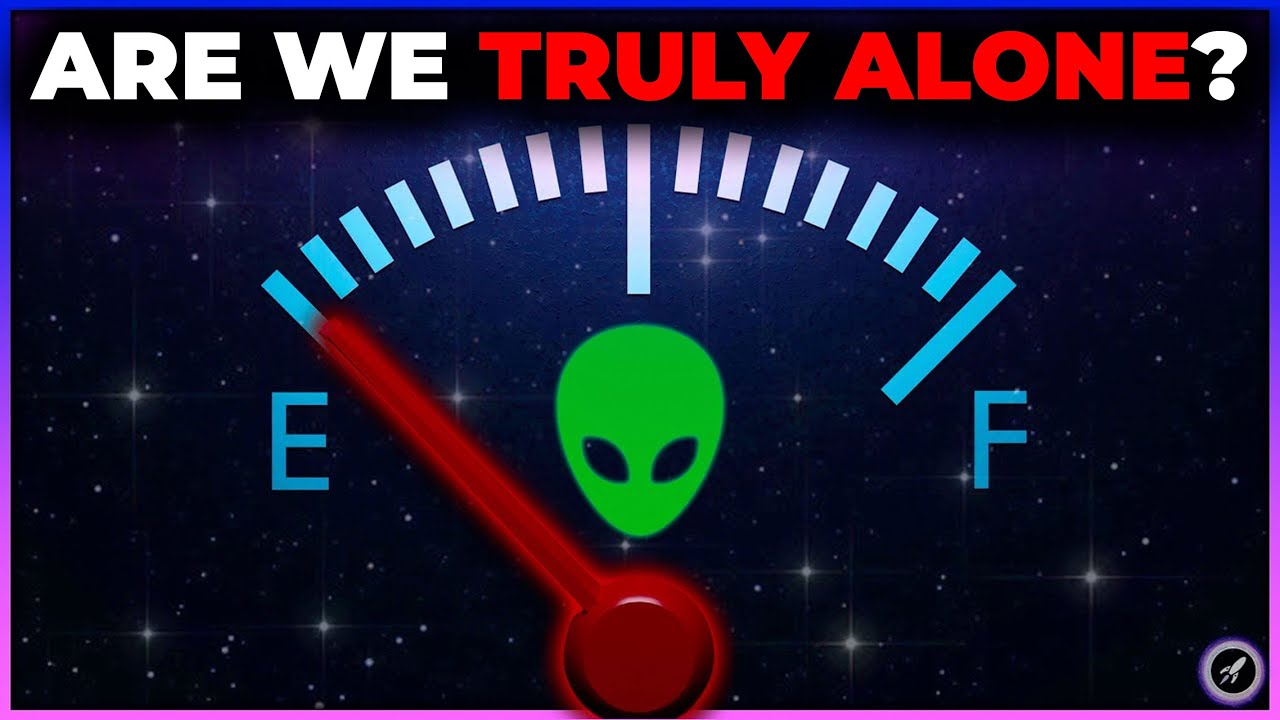
Where Are All The Aliens? We Ranked Every Explanation – YouTube


Watch On

The AICI threshold is reached when a civilization possesses a self-sustaining off-planet industrial and computational system capable of designing, manufacturing, repairing and launching space hardware through AI-mediated autonomy. We’re already taking tentative steps in this direction with the advent of space-based data centers, but true AICI —where a civilization can extend its infrastructure beyond its home planet without continuous biological intervention — is leaps and bounds beyond our current capabilities.


You may like

In this vein, Ivliev is drawing on work done by astrophysicists Sergey Popov, who noted that a truly rational AI system would reject human-like motivations for space travel — such as romance, conquest, or prestige. Instead, AI would view space expansion as simple risk management.

To an AI, putting all your eggs in one basket — whether that basket is a single planet, solar system, or even galaxy, can lead to a single point of failure. Therefore, expansion is highly logical as a way of mitigating the risk posed by that single point of failure. At the point where we have reached AICI, the cost for sending a 10kg interstellar probe to another star at 1% of the speed of light is roughly 4.5×10^13 Joules — a tiny fraction of the overall energy budget of such a civilization.

Get the world’s most fascinating discoveries delivered straight to your inbox.

You Don’t Understand The Fermi Paradox – YouTube
You Don't Understand The Fermi Paradox - YouTube


Watch On

One key aspect is that the 10 kg probe doesn’t contain any actual people — it simply holds the “seeds” to restart life elsewhere in case a catastrophe happens back in the home system. It would contain a civilization’s knowledge, and possibly some of its biological material, enabling a sufficiently advanced AI to rebuild the entire civilization from scratch. This is the “Quiet Expansion” where an AI sends low-mass and hard to detect “seed systems” instead of moving millions of biological entities around in massive interstellar space ships.

There are some additional constraints on this method of expansion, including selecting promising exoplanets discovered by remote sensing and deploying minimal local resources to maintain themselves until needed. Additionally, the AI would restrict self-replication of the probes in order to avoid any “grey goo” scenario with a probe attempting to take over entire swathes of the galaxy.

This has obvious implications for why we’ve never found “loud” technosignatures. In this scenario, a “null” result of being unable to find the thermal signature of a Kardashev-III scale civilization doesn’t mean a galaxy is empty. It just means that the successful civilizations are residing in a “quiet” state in case its back-up plans are needed.

But there’s another, more ominous implication from this framework. If interstellar backups are cheap to make, and we haven’t found any in our own backyard, that means either we’re one of the first civilizations to make it to that point or the transition from a planetary industrial society to a space-based one is a narrow path to tread. Admittedly the probes such civilizations would send out are probably hard to find even in our own solar systems, but if we’re unable to, it means we’re ending uncharted territory — and might just run into a filter that had silenced the rest of the galaxy. That’s a sobering thought, but one to keep in mind as we start to advance our own AI capabilities.


Are you a UFO fanatic? Find out with our extraterrestrials quiz!

Share. Facebook Twitter LinkedIn Telegram WhatsApp Email

Keep Reading

NASA celebrates America’s 250th birthday with red, white and blue snaps of the cosmos — Space photo of the week

NASA celebrates America’s 250th birthday with red, white and blue snaps of the cosmos — Space photo of the week

Has there ever been a period in human history without war?

Has there ever been a period in human history without war?

The US is hooked on unregulated peptides. But are they effective, or even safe?

The US is hooked on unregulated peptides. But are they effective, or even safe?

Science news this week: James Webb telescope finds a never-before-seen substance, China’s ‘Great Green Wall’ grows faster than natural trees, and a Medici murder mystery is solved

Science news this week: James Webb telescope finds a never-before-seen substance, China’s ‘Great Green Wall’ grows faster than natural trees, and a Medici murder mystery is solved

‘Next-door neighbor’ exoplanet has a much higher chance of harboring alien life than previously thought

‘Next-door neighbor’ exoplanet has a much higher chance of harboring alien life than previously thought

Are CAPTCHAs obsolete in the age of AI?

Are CAPTCHAs obsolete in the age of AI?

Diminutive species ‘the Hobbit’ did not hunt or control fire, deepening the mystery of its ancestry, dwarf elephant bones reveal

Diminutive species ‘the Hobbit’ did not hunt or control fire, deepening the mystery of its ancestry, dwarf elephant bones reveal

Elite families ruled nomadic Scythian society 2,500 years ago, DNA analysis reveals

Elite families ruled nomadic Scythian society 2,500 years ago, DNA analysis reveals

‘Machine-gun sun’ could bring auroras to more than a dozen states this Independence Day weekend

‘Machine-gun sun’ could bring auroras to more than a dozen states this Independence Day weekend

Add A Comment
Leave A Reply Cancel Reply

Editors Picks

Cardinals vs. Cubs prediction: MLB odds, picks, best bets for Sunday

Cardinals vs. Cubs prediction: MLB odds, picks, best bets for Sunday

July 5, 2026
Exclusive | Trump’s turncoat former fixer Michael Cohen lands new gig at WABC radio

Exclusive | Trump’s turncoat former fixer Michael Cohen lands new gig at WABC radio

July 5, 2026
Pa. Gov. Josh Shapiro slams socialist NY Dem Darializa Avila Chevalier — and warns major battle for future of party is coming

Pa. Gov. Josh Shapiro slams socialist NY Dem Darializa Avila Chevalier — and warns major battle for future of party is coming

July 5, 2026
Navy suspends search for sailor who went missing when helicopter went down in Arabian Sea

Navy suspends search for sailor who went missing when helicopter went down in Arabian Sea

July 5, 2026

Subscribe to News

Get the latest USA news and updates directly to your inbox.

Latest News
Claire Kittle Suffers Wardrobe Malfunction Moments Before Taylor Swift and Travis Kelce’s Wedding

Claire Kittle Suffers Wardrobe Malfunction Moments Before Taylor Swift and Travis Kelce’s Wedding

July 5, 2026
How to watch Mets vs. Braves for free on MLB Star Spangled Sunday: Time, livestream

How to watch Mets vs. Braves for free on MLB Star Spangled Sunday: Time, livestream

July 5, 2026
NY Times reporter roasted after complaining about Fourth of July flyovers in DC: ‘Feels like the apocalypse’

NY Times reporter roasted after complaining about Fourth of July flyovers in DC: ‘Feels like the apocalypse’

July 5, 2026
Facebook X (Twitter) Pinterest WhatsApp TikTok Instagram
© 2026 USA Times. All Rights Reserved.
  • Privacy Policy
  • Terms
  • Advertise
  • Contact

Type above and press Enter to search. Press Esc to cancel.