

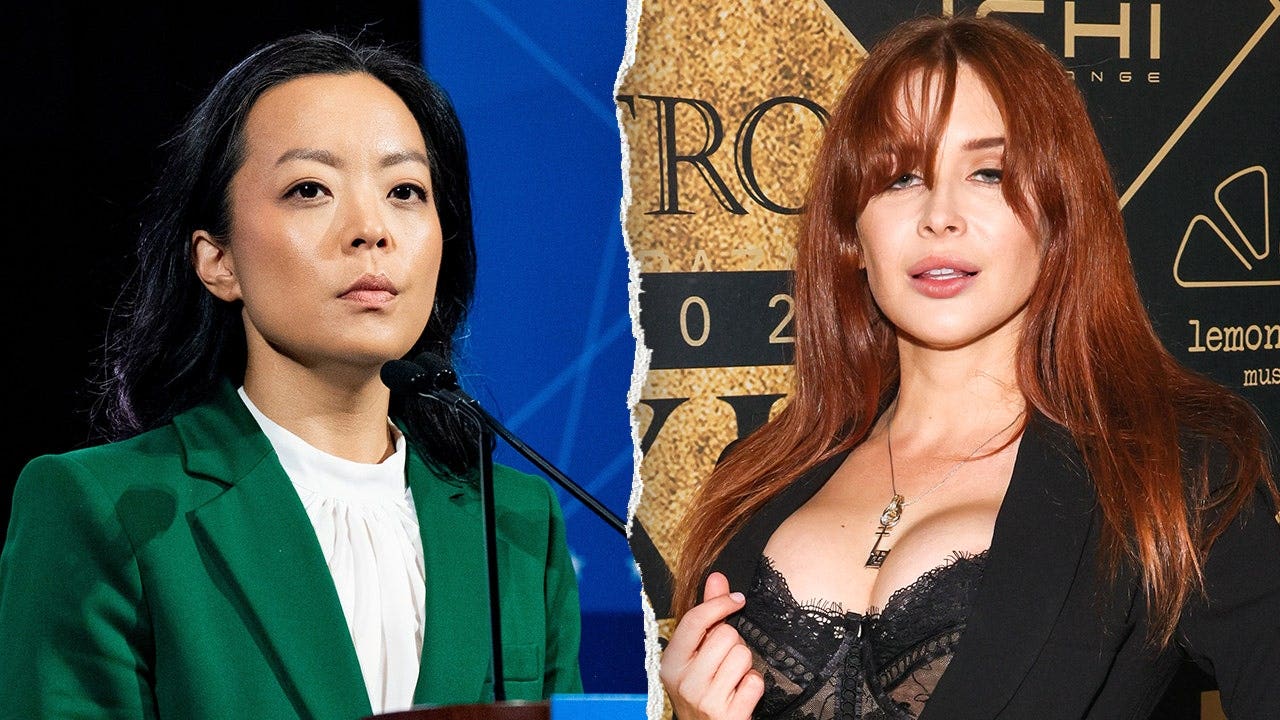




WASHINGTON — The embattled Southern Poverty Law Center’s CEO, Bryan Fair, appeared Tuesday before the House Judiciary Committee for a grilling over Justice Department allegations that the ostensibly anti-racism group secretly funded the extremism it claims to oppose.
Fair broadly defended the center while declining to answer for specific alleged wrongdoing — after the DOJ in April filed fraud and conspiracy charges alleging millions in donor funds flowed to hate groups, including the Ku Klux Klan, Aryan Nations, and National Socialist Party of America.
“All the allegations in the indictment will be addressed in the Middle District of Alabama,” Fair said repeatedly throughout nearly four hours of testimony — as prominent defense attorney Abbe Lowell sat behind him to provide support.
“Were [donors] informed that [contributions were] actually funding members of the KKK?” Rep. Wesley Hunt (R-Texas) asked Fair, drawing the practiced deflection.
Hunt, one of four black House Republicans, recounted allegations that the legacy civil rights group paid a KKK leader a salary and even approved an expense report for a cross burning — expressing incredulity at the organization’s claim that it was merely paying informants.
“According to a superseding indictment, the SPLC paid more than $4.1 million to informants tied to extremist groups, including the KKK from 2010 to 2023,” Hunt said.
“In two cases, informants who were active members of the local KKK chapter reportedly told the SPLC that they wanted out because they feared for their safety. Instead of supporting their exit, the SPLC employee allegedly encouraged them to remain involved and offered them a monthly salary of $1,200 to do so,” the Houston-area congressman said.
“As a result, one informant rose into a leadership role within the KKK, recruited other new members, purchased KKK materials, and were even reimbursed for expenses related to cross-burning events.”
Hunt added: “I can’t make this up. This is not just ironic, sir. It’s quite outrageous, sir.”
Fair gave a big-picture denial during another member’s grilling, saying “we don’t fund the KKK” and “we don’t fund hate groups” — while deferring to the outcome of litigation on the specifics.
Rep. Harriet Hageman (R-Wyo.) brought up the DOJ’s allegations that the SPLC helped foment and fund transportation to the 2017 Unite the Right rally in Charlottesville, Va., which resulted in the death of an anti-racism activist and two police officers who died in a helicopter crash.
She asked Fair if he considered the tragic outcome “a very successful day for the SPLC.”
“SPLC doesn’t foment hate,” he said.
“Well, that day you did,” she retorted.
“You fomented the hate, and then you made bank of it, off of it, about $80 million in the following months after that rally, but you didn’t just make a ton of money that day, three people actually died.”
Hageman said that “a lack of such discrimination and hatred would render the SPLC’s existence obsolete — and that is largely what happened in America.”
“The braintrust at SLC came up with their own unique solution to this conundrum. They decided to fund the very hatred that they claim to be fighting against, and like magic, the money has continued to roll in,” she said.
“In fact, advancing hatred has become quite profitable for the SPLC, as in 2024 the organization had over $829 million in assets, an endowment of approximately $730.8 million, and $120.9 million in revenue.”
Democrats lined up to defend Fair, who credited the fundraising surge with President Trump taking office and said that his organization had long-standing links with DOJ to supply tips on extremist activity.
Rep. Jesús García (D-Ill.) alleged that “the president and his enablers are carrying out the vision of the Klan” and that the SPLC was an organization of “courageous patriots” resisting him.
‘Caping for Charlie Kirk’
Fair declined to disavow his group’s negative criticism of the Charlie Kirk-founded Turning Point USA conservative youth network shortly before his assassination in September.
“Mr. Fair, the SPLC labeled Charlie Kirk and his organization ‘Dangerous Extremists’ in its Hate Watch newsletter, and Charlie Kirk was assassinated the very next day. Do you regret signing off on that newsletter?” asked Rep. Bob Onder (R-Mo.).
“Congressman Onder, what I regret is the political violence in this country on any side of the aisle,” Fair replied, without answering the question or disavowing the SPLC’s labeling.
“Do you regret naming Turning Point USA a hate group several months earlier?” Onder pressed.
“What I regret again is the political violence in this country,” Fair said, again deflecting.
Rep. Jasmine Crockett (D-Texas) rushed to his defense, saying, “y’all are, you know, caping for Charlie Kirk,” before citing the late conservative activist’s criticism of diversity, equity and inclusion (DEI) policies, unassimilated Muslim immigrants and civil rights legislation.
“These all just happen to be comments from the fearless leader of Turning Point USA, so I could see where SPLC was going,” Crockett said.
‘Not an expert on tattoos’
Republicans sought to use the hearing to prove that the SPLC was less focused on hate groups than on partisan politics by raising the controversy over Maine Democratic Senate candidate Graham Platner’s Nazi tattoo.
Fair at first said he had no knowledge of the controversy, despite his group’s close tracking of alleged white supremacism.
Rep. Russell Fry (R-SC) asked if the SPLC would have concern about someone adorning themselves with a ‘Nazi symbol’ and referred to their tattoo as a Totenkopf.
“You know who I’m describing right now?” Fry asked.
“No, I don’t,” Fair claimed about the widely circulated story.
“I think you do, actually. It’s Graham Platner from Maine,” Fry said, accusing him of a double standard.
Rep. Brandon Gill (R-Texas) again raised the SPLC’s treatment of the Platner scandal, compared to its condemnation of Secretary of War Pete Hegseth’s tattoos, including a Jerusalem Cross.
“I’m not an expert on tattoos,” Fair at first told Gill, who proceeded to describe how the Maine Senate front-runner’s tattoo was used by Nazi death camp guards, and that he allegedly knew of its meaning before later having it covered.
“If it’s what you say, if it’s a Nazi symbol, then we oppose Nazis,” Fair said. “You’ll have to ask Mr. Platner why he has that symbol.”
When pressed further on whether a man with a Nazi tattoo should serve in the Senate, Fair told Gill, “I wouldn’t vote for that person.”


