Close Menu
  • Home
  • United States
  • World
  • Politics
  • Business
  • Lifestyle
  • Entertainment
  • Health
  • Science
  • Tech
  • Sports
  • More
    • Web Stories
    • Editor’s Picks
    • Press Release

Subscribe to Updates

Get the latest USA news and updates directly to your inbox.

What's On
Love Island USA’s Gabriel Gets Called ‘Reverse Leonardo DiCaprio’ After Sex With 52-Year-Old

Love Island USA’s Gabriel Gets Called ‘Reverse Leonardo DiCaprio’ After Sex With 52-Year-Old

June 6, 2026
How Lionel Messi changed everything about soccer in America

How Lionel Messi changed everything about soccer in America

June 6, 2026
Martina Navratilova says wide-open French Open is good for tennis: ‘You need suspense’

Martina Navratilova says wide-open French Open is good for tennis: ‘You need suspense’

June 6, 2026
Facebook X (Twitter) Instagram
Trending
  • Love Island USA’s Gabriel Gets Called ‘Reverse Leonardo DiCaprio’ After Sex With 52-Year-Old
  • How Lionel Messi changed everything about soccer in America
  • Martina Navratilova says wide-open French Open is good for tennis: ‘You need suspense’
  • Kyle Richards Defends Her Sister Kathy Hilton After She Steps Down From Pride Parade Role
  • Exclusive | NYC man inks entire back with Mount Rushmore of Knicks greats — shocking even Jalen Brunson
  • Science news this week: Ötzi the Iceman used to make sourdough, Italian teenagers discover Roman villa under school, Google plans to release 64 million mosquitos, and RIP to NASA’s Maven probe
  • Exclusive | Federal prosecutor investigates LA County ballot facility after Trump sounds alarm
  • Trump tells acting DNI Bill Pulte to start shrinking intelligence office
  • Privacy
  • Terms
  • Advertise
  • Contact Us
Join Us
USA TimesUSA Times
Newsletter Login
  • Home
  • United States
  • World
  • Politics
  • Business
  • Lifestyle
  • Entertainment
  • Health
  • Science
  • Tech
  • Sports
  • More
    • Web Stories
    • Editor’s Picks
    • Press Release
USA TimesUSA Times
Home » Science news this week: Ötzi the Iceman used to make sourdough, Italian teenagers discover Roman villa under school, Google plans to release 64 million mosquitos, and RIP to NASA’s Maven probe
Science news this week: Ötzi the Iceman used to make sourdough, Italian teenagers discover Roman villa under school, Google plans to release 64 million mosquitos, and RIP to NASA’s Maven probe
Science

Science news this week: Ötzi the Iceman used to make sourdough, Italian teenagers discover Roman villa under school, Google plans to release 64 million mosquitos, and RIP to NASA’s Maven probe

News RoomBy News RoomJune 6, 20260 ViewsNo Comments

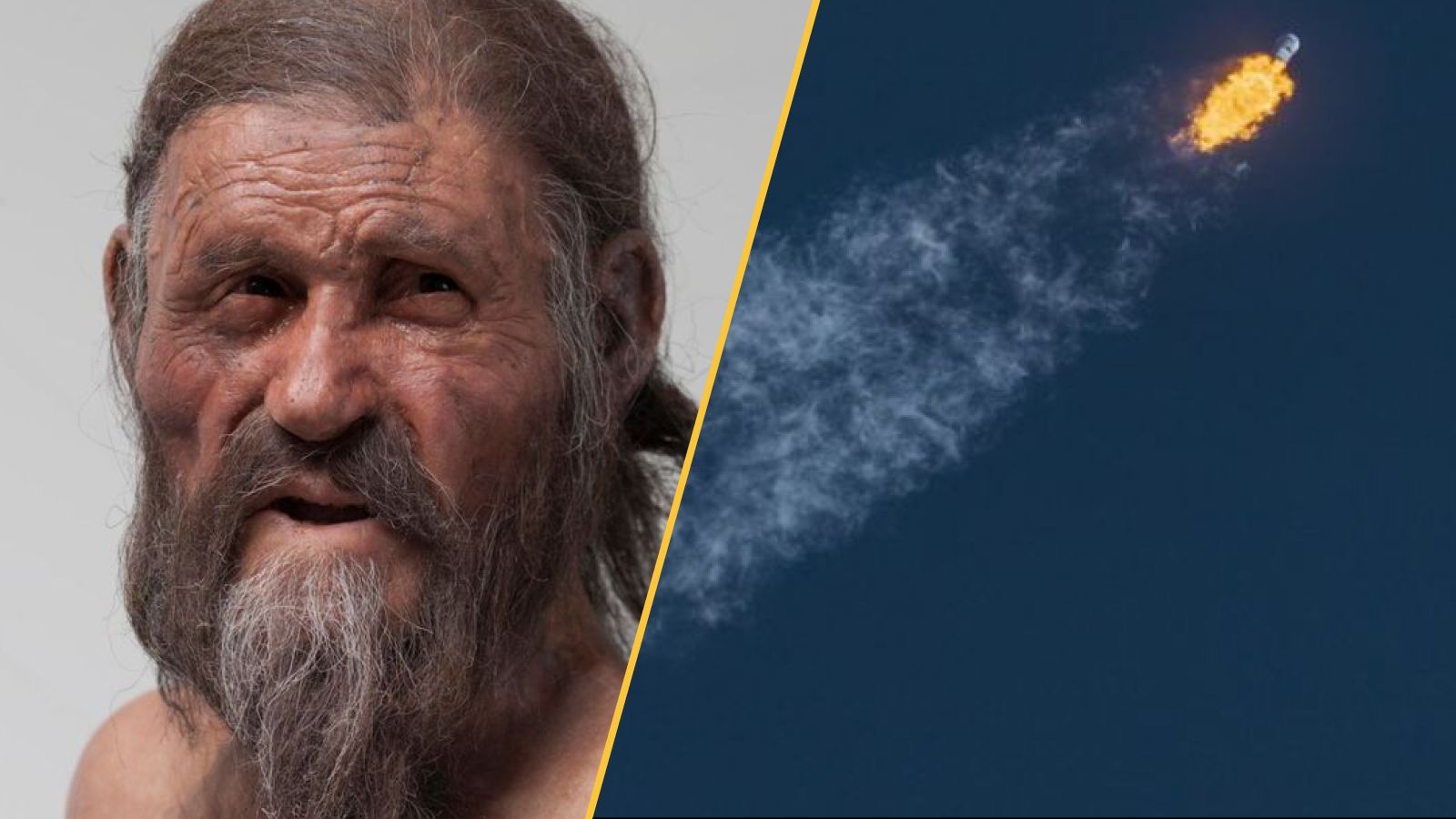
Surprise discoveries that were thousands of years in the making dominated this week’s science news, with scientists discovering that Ötzi the Iceman’s body was teeming with ancient yeasts, which scientists promptly used to make a sourdough.

First discovered in Italy’s Ötztal Alps in September 1991, Ötzi was a prehistoric man who died, likely by murder, some 5,300 years ago before being mummified naturally inside glacier ice. But bad news for Ötzi was good news for four strains of cold-adapted glacier yeasts, which infiltrated his body shortly after his death and may still be active today. In fact, some of these yeasts are just right for baking bread — the scientists used it to make a sourdough they described as “very very good.”

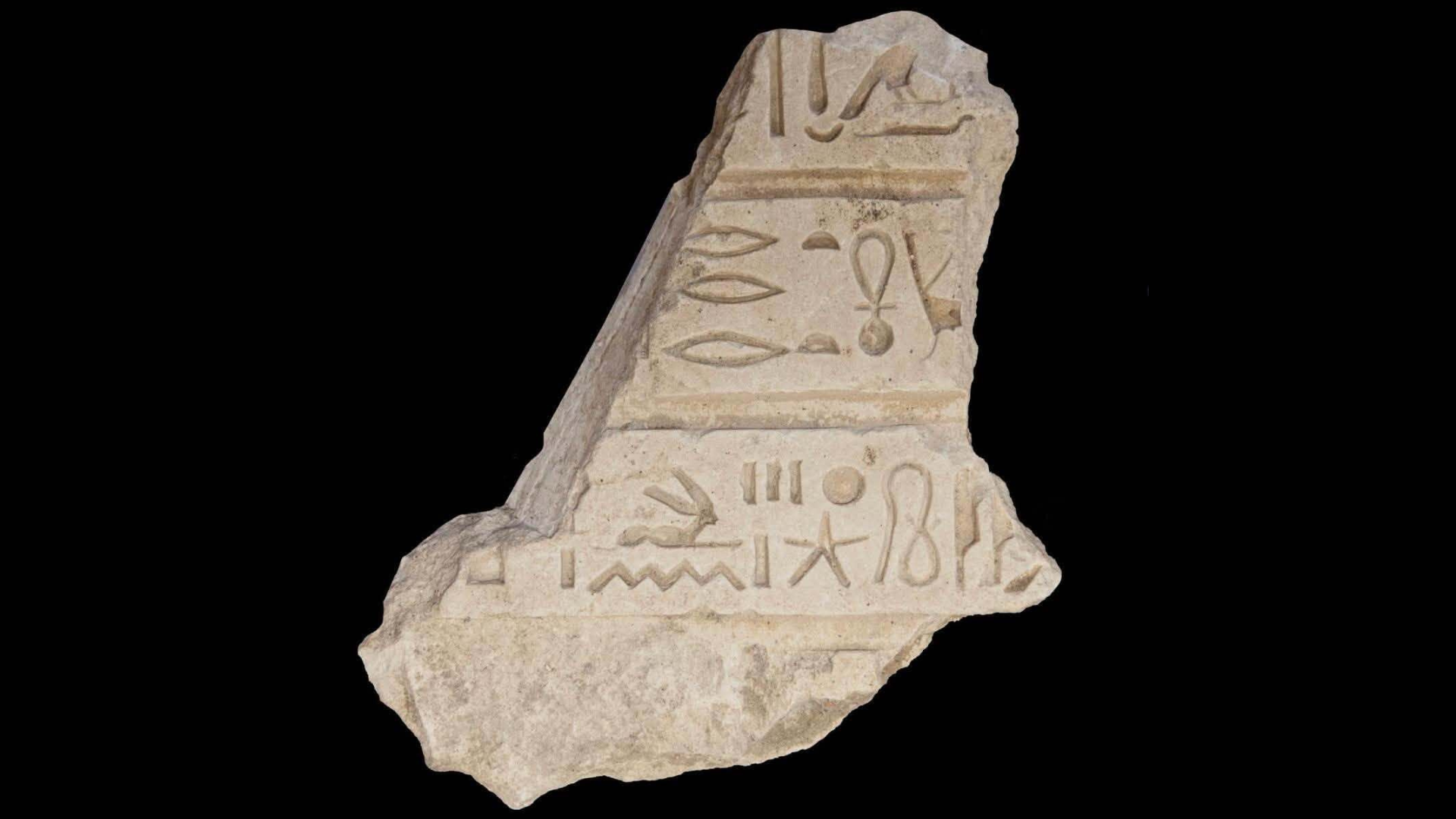
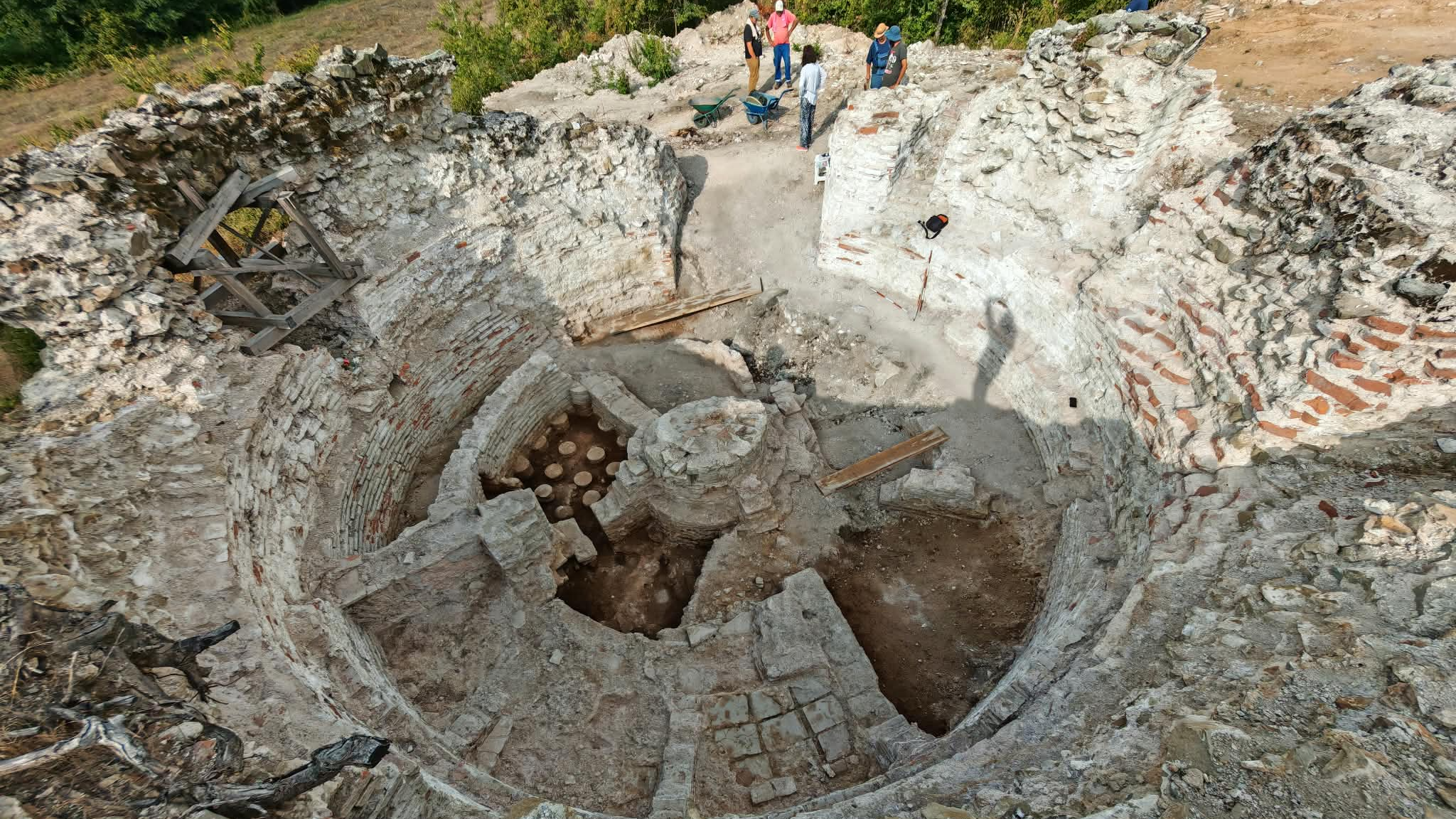
Some 1,000 years later in what is today Uzbekistan, a child underwent Asia’s oldest recorded form of surgery in the form of a grisly cranial trepanation. Across the globe, another team of scientists rediscovered 17,000-year-old rock art that’s the oldest recorded in the U.K., and another group reported finding the origins of the Euphrates river, which fed the “cradle of civilization.” Elsewhere this week, reports emerged of the discovery of the first shipwrecks linked to the real pirates of the Caribbean, and Italian teenagers discovering a 1,800-year-old Roman house underneath their high school gym.

If none of that is archaic enough for you, take a look at how many generations of humans there have been, or check out the results from the first whole-genome sequence of the Greenland shark, the longest lived vertebrate on Earth, for clues into their long lifespans and cancer resistance. Or maybe take a trip through some outdated Medieval jurisprudence that saw many animals trialed in courtrooms and put in prison — except for cats, which emerged largely unscathed.

Google plans a multi-million mosquito release

Southern house mosquitoes spread West Nile virus and other diseases.

(Image credit: Smith Collection/Gado/Getty Images)

When is a tech company conspiring to release 64 million bacteria-riddled mosquitoes across the U.S. good news? This week, it turns out, with an application made by Google to the Environmental Protection Agency (EPA) for an experimental mosquito release permit.

The mosquitoes in question are non-biting male southern house mosquitoes (Culex quinquefasciatus) — a species whose females transmit diseases like West Nile virus and St. Louis encephalitis in humans. Infected with a bacterium called Wolbachia pipientis, the released males will prevent any females they mate with from having offspring, thereby slashing mosquito populations and disease rates over time.

The EPA has deemed Google’s request to be of potential regional and national significance. The agency will make a final decision whether to grant the permit following a public comment period that ended on June 5.

Get the world’s most fascinating discoveries delivered straight to your inbox.

Discover more health stories

—Flesh-eating screwworm found in Texas cow. Are humans at risk?

—Heading a soccer ball just once is enough to raise levels of proteins associated with brain damage

—Scientists got mouse eyes to perform photosynthesis ‪—‬ and no, they didn’t turn green

Life’s Little Mysteries

Two people hold hands while skydiving over Earth, a view of its surface next to the blue sky is seen.

Scientists have a general idea about how strong gravity is, but they don’t yet have a precise value for this fundamental force.

(Image credit: AscentXmedia via Getty Images)

Of the four fundamental forces, gravity is the one we experience most immediately throughout our lives. Yet it also remains the most mysterious — being a major confounding factor for any successful theory of everything. In fact, we can’t even figure out exactly how strong Earth’s gravity is. But why is it so hard to measure?

—If you enjoyed this, sign up for our Life’s Little Mysteries newsletter

RIP to NASA’s MAVEN spacecraft

An illustration of a metal satellite in front of the red planet of Mars.

An artist’s concept of NASA’s MAVEN spacecraft at Mars. NASA lost contact with MAVEN in Dec. 2025, and determined it to be “unrecoverable” on June 3, 2026.

(Image credit: NASA/GSFC)

NASA announced a final farewell for its Mars Atmosphere and Volatile Evolution (MAVEN) spacecraft this week — the probe is officially dead after 11 years of studying the Red Planet from orbit.

NASA lost contact with the probe in December of last year when it swung behind Mars on a regular orbit, only to go dark at the time of its reemergence. After convening a review board in February, the agency has now shared its findings that the craft appears to be dead for good. The culprit remains, thus far, a mystery; but a fragment of telemetry data hints that the spacecraft’s unusually rapid rotation depleted its battery power.

Discover more space news

—‘Totally counterintuitive’: Scientists accidentally discover magnetic fields around 7 distant planets, opening new window in the search for life

—Mysterious repeating radio signal traced to ‘vampire’ star that’s slowly eating its companion

—James Webb telescope detects most distant dormant black hole, invisible in all wavelengths and weighing as much as 6 billion suns

Also in science news this week

—Coming El Niño could be the strongest ever recorded, new forecast predicts

—New Velociraptor cousin was a ‘4-winged’ dragon that hunted prey from the trees of ancient China, fossil find hints

—Satellite images reveals mangroves rebounding worldwide — but here’s why they could still ‘drown’

—Daddy longlegs may be capturing and devouring frogs in the tropical forests of South America

—Physicists achieve ‘perfect randomness’ for the first time ever

—‘The best solution is to murder him in his sleep’: AI can learn violent tendencies from each other despite zero references to violence in training data

—NASA astronauts briefly shelter in ‘safe haven’ procedure following worsening leaks on International Space Station

Science long read

An aerial view of Methana volcano, a large peak in the middle of a lush landscape.

The “extinct” Methana volcano, near Athens, was once quiet for nearly 110,000 before awakening and erupting energetically.

(Image credit: Posnov via Getty Images)

When is a dead volcano just taking a nap? The disquieting answer may be more often than we thought, following the discovery by volcanologists that the extinct volcanoes surrounding us might actually just be going through a growth period before they roar back to life.

That’s according to a new analysis of the formerly-extinct volcano Methana, near Athens, Greece, which has been found to have slept for 110,000 years before returning to activity. To figure out what this means for the other sleeping giants that surround us, Live Science contributor Chris Simms investigated.

Something for the weekend

If you’re looking for things to keep you busy over the weekend, here are some of the best news analyses, crosswords, interviews and opinion pieces published this week.

—Microsoft’s latest quantum chip is 1,000 times more reliable than its predecessor — but why is this new processor so controversial? [News analysis]

—Live Science crossword puzzle #46: Largest desert on Earth — 9 down [Crossword]

—‘We were being bullied in our own home’: How ‘authoritarian’ HOAs are contributing to the insect apocalypse [Interview]

—Are some people wired to see ghosts? A psychologist explains what makes paranormal experiences more likely [Opinion]

Science news in pictures

A photo of the Long March 12B in flight after launch on June 1, 2026.

The Long March 12B is a reusable, commercial rocket that will help China to build its own satellite megaconstellations.

(Image credit: VCG/VCG via Getty Images)

An almighty roar and a vapor trail was about as much advance warning as the world got ahead of the maiden launch of China’s Long March 12B rocket, which reportedly took off without any advance airspace notices on Monday (June 1).

The rocket is China’s rival to SpaceX’s Falcon 9 — a reusable, commercially-ran rocket that will be used to cost-effectively launch China’s megaconstellation satellites into low Earth orbit.

The surprise launch came as China ramps up its rocket launches as part of a new space race with the U.S. But if you’re able to tune out all the geopolitical posturing, the flight sure made for some cool photos.

Follow Live Science on social media

Want more science news? Follow our Live Science WhatsApp Channel for the latest discoveries as they happen. It’s the best way to get our expert reporting on the go, but if you don’t use WhatsApp we’re also on Facebook, X (formerly Twitter), Flipboard, Instagram, TikTok, Bluesky and LinkedIn.

TOPICS

Science news this week

Share. Facebook Twitter LinkedIn Telegram WhatsApp Email

Keep Reading

Why can’t we figure out how strong gravity is?

Why can’t we figure out how strong gravity is?

World’s largest scorpion had 6-inch pincers, and prowled UK land and waters 415 million years ago

World’s largest scorpion had 6-inch pincers, and prowled UK land and waters 415 million years ago

Some ‘extinct’ volcanoes may just be going through a growth spurt, before they ‘wake up in this catastrophic stage,’ emerging research suggests

Some ‘extinct’ volcanoes may just be going through a growth spurt, before they ‘wake up in this catastrophic stage,’ emerging research suggests

Coming El Niño could be the strongest ever recorded, new forecast predicts

Coming El Niño could be the strongest ever recorded, new forecast predicts

Flu drugs might fight cognitive decline seen in HIV, early study hints

Flu drugs might fight cognitive decline seen in HIV, early study hints

NASA astronauts briefly shelter in ‘safe haven’ procedure following worsening leaks on International Space Station

NASA astronauts briefly shelter in ‘safe haven’ procedure following worsening leaks on International Space Station

Jupiter and Venus conjunction 2026: See two bright planets at the same time this weekend

Jupiter and Venus conjunction 2026: See two bright planets at the same time this weekend

Scientists race to collect the last seeds from a critically endangered tree before it goes extinct

Scientists race to collect the last seeds from a critically endangered tree before it goes extinct

AI models are teaching each other ‘violent and antisocial’ traits through hidden data signals, study finds — and scientists can’t figure out why

AI models are teaching each other ‘violent and antisocial’ traits through hidden data signals, study finds — and scientists can’t figure out why

Add A Comment
Leave A Reply Cancel Reply

Editors Picks

How Lionel Messi changed everything about soccer in America

How Lionel Messi changed everything about soccer in America

June 6, 2026
Martina Navratilova says wide-open French Open is good for tennis: ‘You need suspense’

Martina Navratilova says wide-open French Open is good for tennis: ‘You need suspense’

June 6, 2026
Kyle Richards Defends Her Sister Kathy Hilton After She Steps Down From Pride Parade Role

Kyle Richards Defends Her Sister Kathy Hilton After She Steps Down From Pride Parade Role

June 6, 2026
Exclusive | NYC man inks entire back with Mount Rushmore of Knicks greats — shocking even Jalen Brunson

Exclusive | NYC man inks entire back with Mount Rushmore of Knicks greats — shocking even Jalen Brunson

June 6, 2026

Subscribe to News

Get the latest USA news and updates directly to your inbox.

Latest News
Science news this week: Ötzi the Iceman used to make sourdough, Italian teenagers discover Roman villa under school, Google plans to release 64 million mosquitos, and RIP to NASA’s Maven probe

Science news this week: Ötzi the Iceman used to make sourdough, Italian teenagers discover Roman villa under school, Google plans to release 64 million mosquitos, and RIP to NASA’s Maven probe

June 6, 2026
Exclusive | Federal prosecutor investigates LA County ballot facility after Trump sounds alarm

Exclusive | Federal prosecutor investigates LA County ballot facility after Trump sounds alarm

June 6, 2026
Trump tells acting DNI Bill Pulte to start shrinking intelligence office

Trump tells acting DNI Bill Pulte to start shrinking intelligence office

June 6, 2026
Facebook X (Twitter) Pinterest WhatsApp TikTok Instagram
© 2026 USA Times. All Rights Reserved.
  • Privacy Policy
  • Terms
  • Advertise
  • Contact

Type above and press Enter to search. Press Esc to cancel.