Close Menu
  • Home
  • United States
  • World
  • Politics
  • Business
  • Lifestyle
  • Entertainment
  • Health
  • Science
  • Tech
  • Sports
  • More
    • Web Stories
    • Editor’s Picks
    • Press Release

Subscribe to Updates

Get the latest USA news and updates directly to your inbox.

What's On
Andy Cohen Goes Instagram Official With Boyfriend Kevin Sobieski: ‘Date Night’

Andy Cohen Goes Instagram Official With Boyfriend Kevin Sobieski: ‘Date Night’

July 18, 2026
Roki Sasaki looks like ‘different animal’ in narrative-changing gem at Yankee Stadium

Roki Sasaki looks like ‘different animal’ in narrative-changing gem at Yankee Stadium

July 18, 2026
Science news this week: Gold tongues discovered in tombs, sugar found in space, a new monkey identified in the Congolian rainforest, and ancient impact crater ‘geoguessed’ by an amateur astronomer

Science news this week: Gold tongues discovered in tombs, sugar found in space, a new monkey identified in the Congolian rainforest, and ancient impact crater ‘geoguessed’ by an amateur astronomer

July 18, 2026
Facebook X (Twitter) Instagram
Trending
  • Andy Cohen Goes Instagram Official With Boyfriend Kevin Sobieski: ‘Date Night’
  • Roki Sasaki looks like ‘different animal’ in narrative-changing gem at Yankee Stadium
  • Science news this week: Gold tongues discovered in tombs, sugar found in space, a new monkey identified in the Congolian rainforest, and ancient impact crater ‘geoguessed’ by an amateur astronomer
  • Cut the number of choices you make each day — Your brain will thank you
  • Tim Tebow, Mike Waltz lead renewed effort to combat online child exploitation
  • 90 Day Fiance’s Kenny Niedermeier Shares Positive Update After Hannah’s Hospitalization
  • Giants start second half on strong note with much-needed win over Mariners
  • How to watch: England vs France, the 2026 FIFA World Cup Third-Place match
  • Privacy
  • Terms
  • Advertise
  • Contact Us
Join Us
USA TimesUSA Times
Newsletter Login
  • Home
  • United States
  • World
  • Politics
  • Business
  • Lifestyle
  • Entertainment
  • Health
  • Science
  • Tech
  • Sports
  • More
    • Web Stories
    • Editor’s Picks
    • Press Release
USA TimesUSA Times
Home » Science news this week: Gold tongues discovered in tombs, sugar found in space, a new monkey identified in the Congolian rainforest, and ancient impact crater ‘geoguessed’ by an amateur astronomer
Science news this week: Gold tongues discovered in tombs, sugar found in space, a new monkey identified in the Congolian rainforest, and ancient impact crater ‘geoguessed’ by an amateur astronomer
Science

Science news this week: Gold tongues discovered in tombs, sugar found in space, a new monkey identified in the Congolian rainforest, and ancient impact crater ‘geoguessed’ by an amateur astronomer

News RoomBy News RoomJuly 18, 20260 ViewsNo Comments

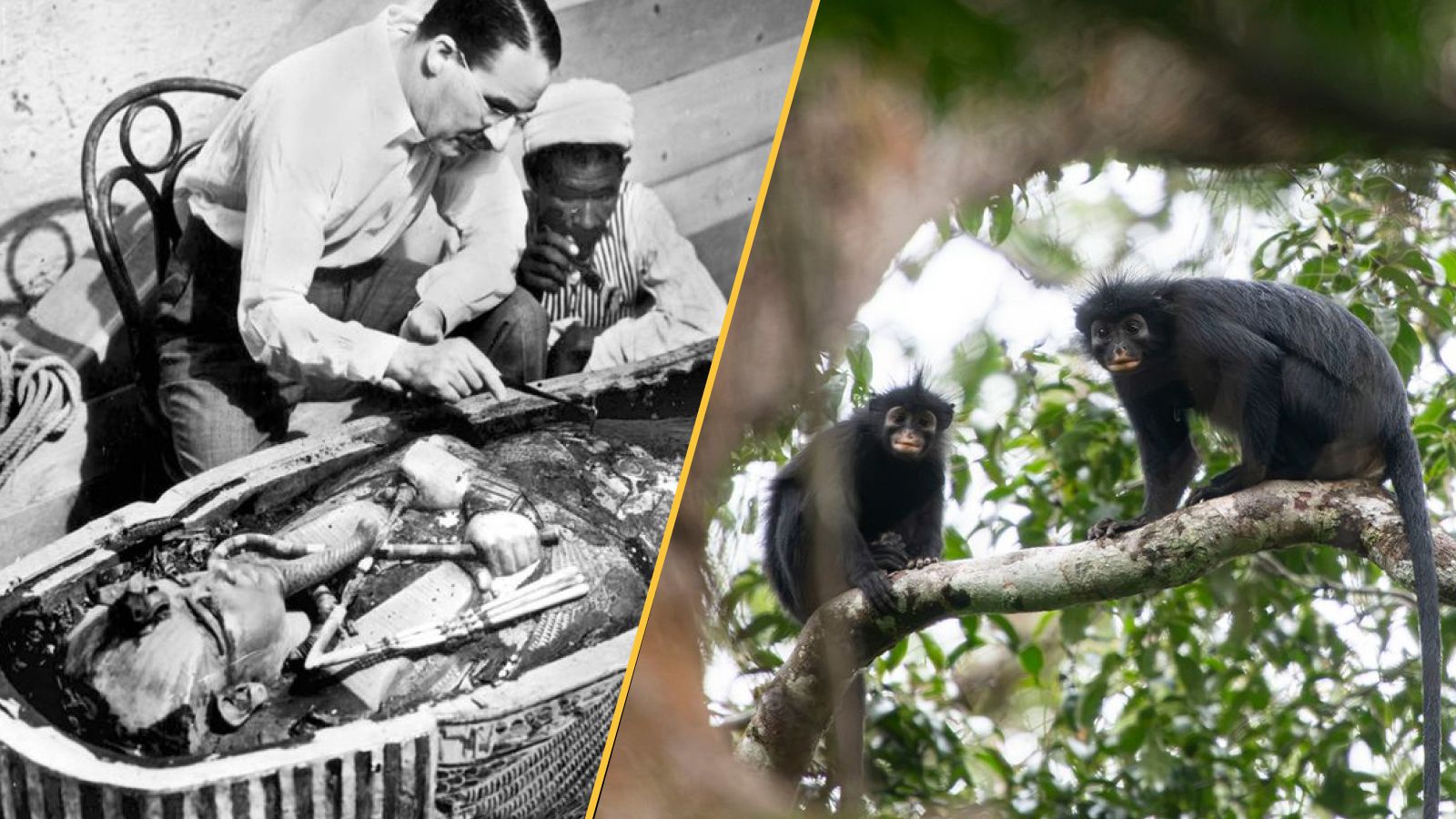
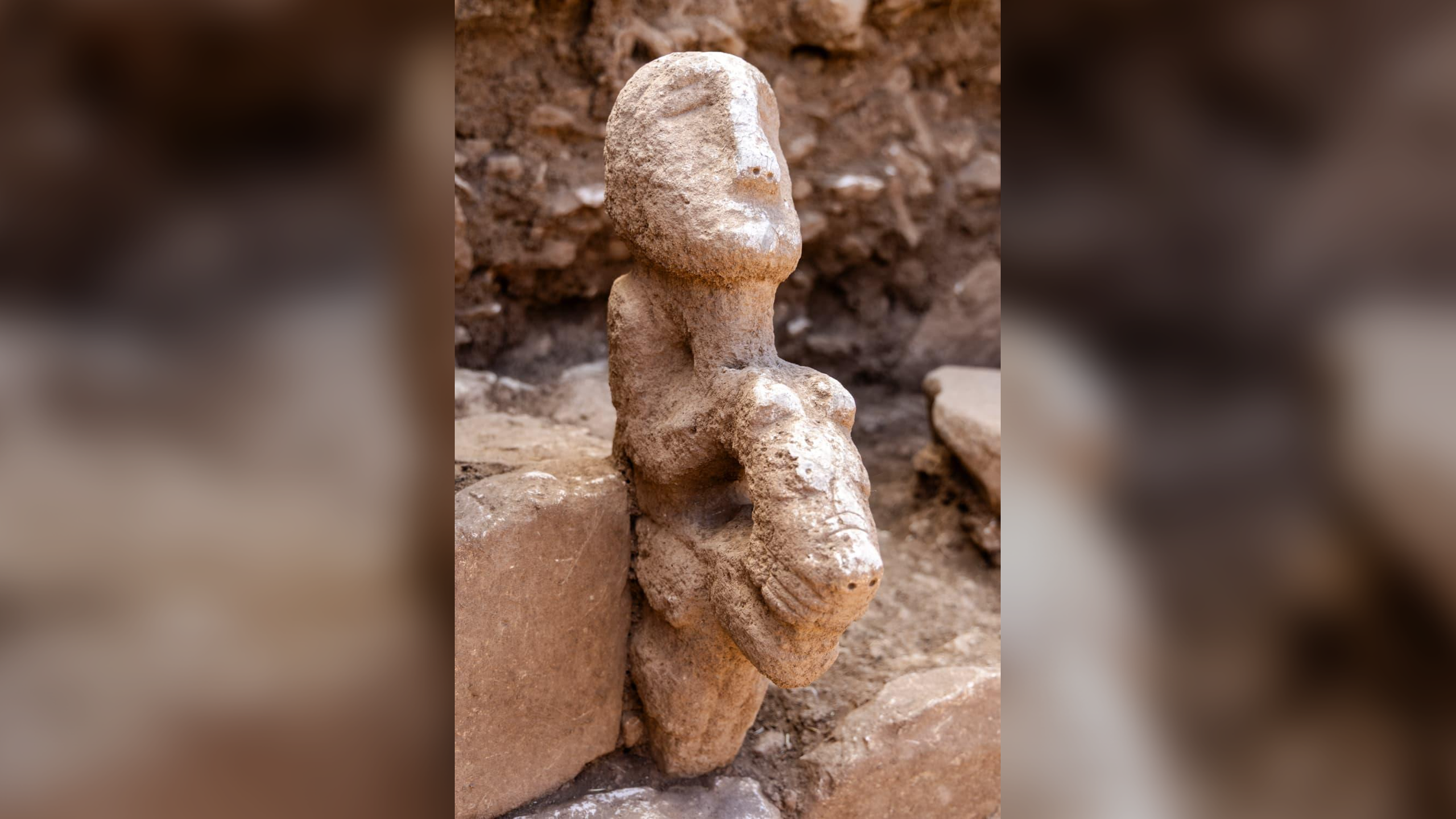
This week’s science news reminds us how the past still speaks if we listen closely, with news of the discovery of 18 ancient Egyptian tombs filled with dozens of gold tongues topping the bill.

The ancient Egyptians believed that gold was the flesh of the gods, meaning that bestowing gold tongues upon the deceased could help them speak in the afterlife. But it’s not entirely certain whether all of the newly found gold objects were tongues (one may actually depict a wheat ear, a symbol of fertility), and the mystery of a possible false door inside the tomb is also stirring up debate.

It’s not the only ancient Egyptian discovery causing disagreement among archaeologists this week; an analysis of the nearly 4,000-year-old skeletal remains of ancient Egyptian princesses reveals they may have hunted or trained with the military — though not all experts agree.

Elsewhere, archaeologists discovered a curious ancient chariot among the remains of a mysterious society that burned down its own buildings before disappearing. We also learned that an ancient Bronze Age shaman thought to be a man was actually a woman, and researchers revealed the origins of more than 150 liberated Africans who had been left to die by the British Navy on the island of St. Helena.

We anticipate further ancient discoveries after a new study revealed that DNA can last for up to 50,000 years in Africa. Meanwhile, we published an excerpt describing how experimental archaeologists used ancient techniques to mummify a modern-day person — part of our coverage of author Sam Kean’s book “Dinner with King Tut: How Rogue Archaeologists Are Re-creating the Sights, Sounds, Smells, and Tastes of Lost Civilizations.”

Sugar found in space

A Hubble image of the Milky Way’s center, in the constellation Sagittarius. Researchers have discovered a sugar found in raspberries buried in a cloud in this region.

(Image credit: NASA, ESA, and G. Brammer)

Astrochemists delivered a sweet surprise this week, with news that they had detected a type of sugar called erythrulose in interstellar space, near the center of our Milky Way galaxy.

Erythrulose, consisting of four carbon atoms, is found in raspberries back on Earth. But its presence in space is a mouthwatering sign that the essential ingredients for life are highly abundant across our galaxy. That could make life much more prevalent than we thought, and could mean that aliens may also have a sweet tooth.

Get the world’s most fascinating discoveries delivered straight to your inbox.

Discover more space news

—‘Smaller than the tiniest scale in nature’: Physicists made a black hole out of light and used it to test Stephen Hawking’s elusive radiation theory

—‘The moon looked wrong’: Artemis II mission controller Chris White on taking historic lunar flyby photos from 250,000 miles away

—James Webb telescope captures never-before-seen glimpse of ‘Centaur’ galaxy’s battle wounds — Space photo of the week

Life’s Little Mysteries

What is the roundest animal?

A close up of a black shiny pill bug all rolled up.

A pill bug curls into a round ball for protection.

(Image credit: lophius via Alamy)

Animals come in all shapes and sizes, but are any a satisfyingly perfect sphere? It turns out that this deceptively simple question holds some evolutionarily profound implications.

—If you enjoyed this, sign up for our Life’s Little Mysteries newsletter

Amateur astronomer ‘geoguesses’ an ancient crater

Image shows a satellite picture from Google Earth showing a recently discovered meteor impact crater.

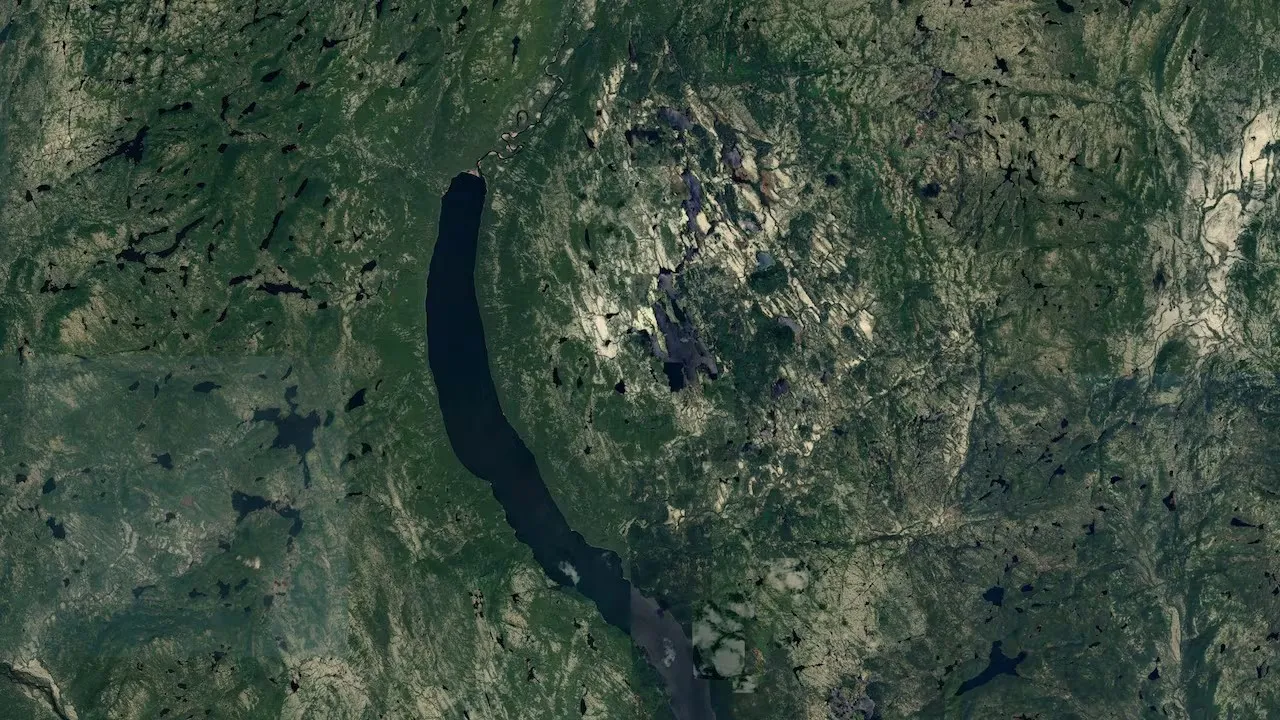
The large pit, discovered on Google Maps in 2024, is actually a 390 million-year-old meteor impact crater.

(Image credit: Gordon Osinski via Google Earth)

Geoguessing emerged in the last decade as a geography game (and later a popular esport) in which players deduce locations from Google Maps imagery. But what about geoguessing something completely undocumented, and one that only trained scientists should be able to recognize?

In that circumstance, amateur astronomer Joël Lapointe should be crowned this year’s champion. Using Google Maps to plan a hiking trip in Quebec’s Côte-Nord region, Lapointe stumbled upon an indentation that has now been confirmed by scientists to be a 390 million-year-old scar from a gigantic asteroid collision.

“I get lots of messages from the public thinking they have found a crater and 99/100 turn out not to be the case,” Gordon Osinski, a professor of planetary geology at Western University in Canada who confirmed the find, told Live Science in an email. “This is one of those rare examples that shows this is possible.”

Discover more planet Earth news

—Tropical forests stop absorbing carbon dioxide during El Niño events. This year could be the worst.

—Venezuela’s devastating ‘earthquake doublet’ holds a warning for California’s San Andreas Fault

—‘These are striking forecasts’: Super El Niño keeps getting even more likely, and it could bring a humanitarian crisis

Also in science news this week

—5 ‘extremely rare’ iron shackles discovered in France highlight Celtic slave trade 2,300 years ago

—Nobel Prize-winning physicist and team use Claude AI to solve decades-old math puzzle

—New 3D silicon chip stacks circuits on top of each other to boost computing power

—Robot dog can climb stairs, navigate a forest and bound over logs thanks to new, rapid AI training technique

—Scientists are deep-freezing koala eggs and sperm to protect the species from extinction

—Heaven Lake: China’s deepest lake sits atop a colossal volcano and belongs mostly to North Korea

Something for the weekend

If you’re looking for things to keep you busy over the weekend, here’s a selection from our best opinion pieces, interviews, diagnostic dilemmas and crosswords that we published this week.

—Tobacco companies are pushing nicotine pouches on teens — and we need to act now to stop them [Opinion]

—‘It affects your daily life suddenly’: Sea level researcher explains why once-in-a-century floods could become the new normal [Interview]

—Diagnostic dilemma: Junk-food diet caused a teen’s permanent blindness [Diagnostic Dilemma]

—Live Science crossword puzzle #52: The moon’s other name — 2 down [Crossword]

Science photo of the week

Two orange-lipped black monkeys sit in a large leafy tree looking at the camera

The newly described monkey has orange lips and a patch of white fur around the anus.

(Image credit:  Daniel Rosengren, Frankfurt Zoological Society  )

Hello! A new monkey just dropped!

Named Colobus congoensis after the remote region of the Democratic Republic of the Congo where it was found, this striking newfound species has orange lips and makes unique roars and snorts.

The monkey’s discovery is remarkable, most of all because finding new primates is extremely rare — with only five new ones being identified in Africa over the past 75 years — and also because of its relatively large size. Pinning down the species took years of careful tracking and documentation, alongside work with people from eight local villages who had knowledge of it.

Besides being a cool find in its own right, the discovery points to there being potentially many more undiscovered mammals, fish, reptiles and plants hidden inside the Congolian rainforest.

Follow Live Science on social media

Want more science news? Follow our Live Science WhatsApp Channel for the latest discoveries as they happen. It’s the best way to get our expert reporting on the go, but if you don’t use WhatsApp we’re also on Facebook, X (formerly Twitter), Flipboard, Instagram, TikTok, Bluesky and LinkedIn.

TOPICS

Science news this week

Share. Facebook Twitter LinkedIn Telegram WhatsApp Email

Keep Reading

What is the roundest animal?

What is the roundest animal?

Science word of the day: Neuroplasticity

Science word of the day: Neuroplasticity

RNA can form large 3D structures, suggesting a new role for the molecule in the origin of life on Earth

RNA can form large 3D structures, suggesting a new role for the molecule in the origin of life on Earth

‘These are striking forecasts’: Super El Niño keeps getting even more likely, and it could bring a humanitarian crisis

‘These are striking forecasts’: Super El Niño keeps getting even more likely, and it could bring a humanitarian crisis

FDA links ‘explosive diarrhea’ parasite infections to Taco Bell shredded lettuce

FDA links ‘explosive diarrhea’ parasite infections to Taco Bell shredded lettuce

‘Potentially hazardous’ asteroid Apophis could be visible to 90% of Earth’s population during ultraclose 2029 flyby, new maps reveal

‘Potentially hazardous’ asteroid Apophis could be visible to 90% of Earth’s population during ultraclose 2029 flyby, new maps reveal

Heaven Lake: China’s deepest lake sits atop a colossal volcano and belongs mostly to North Korea

Heaven Lake: China’s deepest lake sits atop a colossal volcano and belongs mostly to North Korea

Did ancient Egyptian princesses use weapons? Controversial study claims they hunted or trained with the military, but not all experts agree.

Did ancient Egyptian princesses use weapons? Controversial study claims they hunted or trained with the military, but not all experts agree.

‘This was one of the most arduous expeditions I’ve ever done’: Scientists confirm that 15-mile-wide pit found on Google Maps is ancient meteor crater

‘This was one of the most arduous expeditions I’ve ever done’: Scientists confirm that 15-mile-wide pit found on Google Maps is ancient meteor crater

Add A Comment
Leave A Reply Cancel Reply

Editors Picks

Roki Sasaki looks like ‘different animal’ in narrative-changing gem at Yankee Stadium

Roki Sasaki looks like ‘different animal’ in narrative-changing gem at Yankee Stadium

July 18, 2026
Science news this week: Gold tongues discovered in tombs, sugar found in space, a new monkey identified in the Congolian rainforest, and ancient impact crater ‘geoguessed’ by an amateur astronomer

Science news this week: Gold tongues discovered in tombs, sugar found in space, a new monkey identified in the Congolian rainforest, and ancient impact crater ‘geoguessed’ by an amateur astronomer

July 18, 2026
Cut the number of choices you make each day — Your brain will thank you

Cut the number of choices you make each day — Your brain will thank you

July 18, 2026
Tim Tebow, Mike Waltz lead renewed effort to combat online child exploitation

Tim Tebow, Mike Waltz lead renewed effort to combat online child exploitation

July 18, 2026

Subscribe to News

Get the latest USA news and updates directly to your inbox.

Latest News
90 Day Fiance’s Kenny Niedermeier Shares Positive Update After Hannah’s Hospitalization

90 Day Fiance’s Kenny Niedermeier Shares Positive Update After Hannah’s Hospitalization

July 18, 2026
Giants start second half on strong note with much-needed win over Mariners

Giants start second half on strong note with much-needed win over Mariners

July 18, 2026
How to watch: England vs France, the 2026 FIFA World Cup Third-Place match

How to watch: England vs France, the 2026 FIFA World Cup Third-Place match

July 18, 2026
Facebook X (Twitter) Pinterest WhatsApp TikTok Instagram
© 2026 USA Times. All Rights Reserved.
  • Privacy Policy
  • Terms
  • Advertise
  • Contact

Type above and press Enter to search. Press Esc to cancel.