


An Australian startup is building what could become one of the world’s first “biological data centers” — augmenting silicon computing chips with those seeded with living human neurons.
Cortical Labs, the company behind the effort, has opened its first facility in Melbourne, Australia, and is planning a larger site in Singapore. Instead of racks filled entirely with traditional servers, these sites will house the company’s CL1 systems, which combine lab-grown neurons with standard electronic components. The aim is not to replace silicon outright but to explore whether living neural systems can complement existing hardware in specific computing tasks.
Researchers have spent years trying to harness biological learning. In earlier work published in the journal Neuron, Cortical Labs researchers grew neurons on a chip and then taught them to play a simplified version of Pong by connecting them to a simulated environment. This feat relied on a closed feedback loop: When the neurons produced useful behavior, the inputs became more predictable; when they didn’t, the signals grew more chaotic. Over time, the neurons settled into more stable patterns.
That same principle underpins more recent demonstrations, including experiments where similar systems interacted with simplified versions of the game Doom. These setups remain highly constrained, but they show that living neural networks can be nudged toward goal-directed behavior when embedded in a feedback-driven system.
Living computer chips
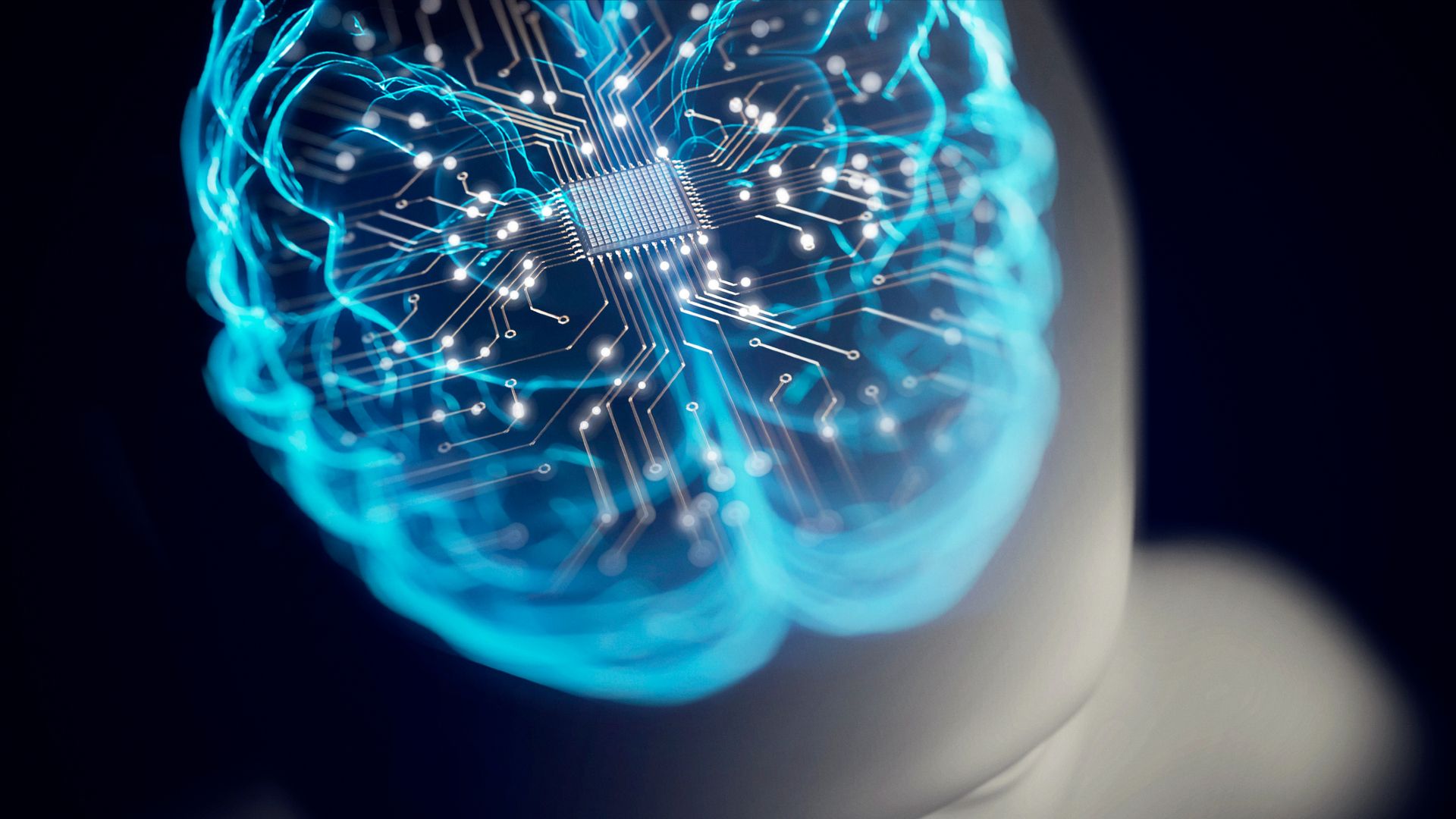
The CL1 system is a hybrid device, with each unit containing roughly 200,000 human neurons derived from stem cells and grown directly onto a silicon chip. Those neurons are arranged across a microelectrode array, which acts as the interface between biology and electronics. The electrodes can stimulate the cells with electrical signals and record the resulting activity in real time.
Surrounding this is a life-support system that keeps the cells alive, provides nutrients, regulates temperature, and maintains a stable environment. A software layer then translates between the biological signals and digital inputs and outputs, effectively turning patterns of neural activity into something a computer can use.
In computing terms, the neurons act less like a processor executing instructions and more like a dynamic system that transforms inputs into complex patterns. This is sometimes described as “reservoir computing,” in which a system with rich internal behavior processes signals that can be interpreted by external software.
The interest in this approach is closely tied to the rapid growth of artificial intelligence (AI). Enormous amounts of computing power are required to train and run modern AI systems, and the data centers that support them consume significant amounts of electricity and water. As demand increases, so do concerns about energy use and the long-term limits of conventional chip design.
Biological systems offer a different model. The human brain operates on roughly 20 watts of power, yet it can perform tasks such as pattern recognition, learning and decision-making with remarkable efficiency. Researchers working in biological computing argue that neuron-based systems could, in principle, handle certain workloads with far lower energy requirements than silicon-based systems.
The advantage is not raw speed or precision. Silicon remains vastly superior for deterministic calculations and large-scale processing. Rather, the appeal lies in adaptability. Neurons naturally reorganize in response to input, which could make them useful for tasks that involve learning from sparse or noisy data. For example, these systems tend to excel at tasks like pattern recognition, sensory processing, and decision-making under uncertainty.
Cortical Labs positions its technology within this emerging space. Company representatives say its systems require relatively low power and could eventually provide a more efficient way to process certain kinds of information. Those claims remain speculative, however, and current systems are limited in both scale and capability.
Early infrastructure, limited capability
The facilities described as data centers are still small by industry standards. Cortical Labs has not disclosed unit counts for its Melbourne site, but its CL1 systems are bench-scale devices, meaning deployments today likely run to tens of units rather than thousands. By comparison, hyperscale data centers operated by Amazon, Microsoft, and Google pack tens of thousands of servers into buildings that can exceed a million square feet.
Cortical’s planned Singapore facility is expected to scale further but remains under construction.
Capabilities are similarly constrained. Demonstrating that neurons can learn simple game-like tasks is an important proof of concept, but it is far removed from real-world applications. There is no evidence yet that biological systems can compete with GPUs or CPUs in the kinds of workloads that dominate modern computing, such as large-scale AI training or high-frequency data processing.
“Despite huge progress in neuroscience over the last century, the fundamental principles of information processing and storage in the brain are far from understood,” said computer scientist, mathematician and hardware engineer Steve Fuber. “At this early stage in the development of such systems much is unknown … We are still some way from identifying an optimal approach that is as general-purpose in this domain as is the general-purpose programmable processor in the conventional computing domain.
At the same time, the effort reflects a broader shift in how computing is being explored. As traditional approaches encounter physical and economic limits, researchers are seeking alternatives that would have seemed impractical only a few years ago. Biological systems are one of the more unconventional options, including the CL1 system and DNA-infused chips.
Living cells are inherently more complex than transistors. They require controlled conditions, consistent nutrient supply, and continuous monitoring, the scientists said. Their behavior can vary among samples, and their lifespans are limited. Scaling living cells into something reliable enough for infrastructure use is a major engineering hurdle.
There are also open questions about reproducibility and control. Silicon chips behave predictably under defined conditions, while biological systems do not. Ensuring consistent performance on a larger scale will be essential for the technology to move beyond experimental use.
Ethical considerations are also beginning to surface. Current neuron cultures are far from anything resembling consciousness, but researchers in the field have already called for clear guidelines as systems become more complex. The question is not immediate, but it is difficult to ignore as the technology evolves.
For now, Cortical Labs’ project is best understood as an early attempt to move biological computing from the lab into something that resembles real infrastructure. The underlying science is credible at small scales, and the motivation to explore alternatives to silicon is growing as AI systems expand.
What remains uncertain is whether those two threads can be brought together in a meaningful way. The current systems are limited, fragile and far from commercially competitive. Even so, they point to a different way of thinking about computation.
Instead of relying solely on faster and more efficient silicon, some researchers are beginning to explore whether living systems, with all their complexity and unpredictability, could eventually play a role in how machines process information.