


Close Menu
  • Home
  • United States
  • World
  • Politics
  • Business
  • Lifestyle
  • Entertainment
  • Health
  • Science
  • Tech
  • Sports
  • More
    • Web Stories
    • Editor’s Picks
    • Press Release

Subscribe to Updates

Get the latest USA news and updates directly to your inbox.

What's On
Lena Dunham and Ex Jack Antonoff’s Relationship Timeline Before 2017 Split

Lena Dunham and Ex Jack Antonoff’s Relationship Timeline Before 2017 Split

April 14, 2026
Islanders’ flameout leaves Anders Lee’s future unclear

Islanders’ flameout leaves Anders Lee’s future unclear

April 14, 2026
Where’s Eric Swalwell? Disgraced congressman out of sight after being booted from billionaire’s home

Where’s Eric Swalwell? Disgraced congressman out of sight after being booted from billionaire’s home

April 14, 2026
Facebook X (Twitter) Instagram
Trending
  • Lena Dunham and Ex Jack Antonoff’s Relationship Timeline Before 2017 Split
  • Islanders’ flameout leaves Anders Lee’s future unclear
  • Where’s Eric Swalwell? Disgraced congressman out of sight after being booted from billionaire’s home
  • Raiders GM says teams are calling about trading up for No. 1 pick
  • Cardi B’s Ex Offset Shot Outside Florida Casino: What to Know, Who Was Arrested and More
  • BetMGM bonus code NYPDM1500: Get a 20% first deposit match up to $1,500 for Mets vs. Dodgers
  • Rep. Elise Stefanik’s new book on campus antisemitism tops Amazon bestseller list as she launches tour
  • Justice Department seeks dismissal of Jan. 6 seditious conspiracy cases
  • Privacy
  • Terms
  • Advertise
  • Contact Us
Join Us
USA TimesUSA Times
Newsletter Login
  • Home
  • United States
  • World
  • Politics
  • Business
  • Lifestyle
  • Entertainment
  • Health
  • Science
  • Tech
  • Sports
  • More
    • Web Stories
    • Editor’s Picks
    • Press Release
USA TimesUSA Times
Home » Microplastics that accumulate in the body may ‘clog up’ immune cells
Microplastics that accumulate in the body may ‘clog up’ immune cells
Science

Microplastics that accumulate in the body may ‘clog up’ immune cells

News RoomBy News RoomMarch 13, 20262 ViewsNo Comments

Microplastics that accumulate in the body can disrupt the immune system by preventing immune cells from gobbling up microbes and clearing dead cells, a new study in mice and lab dishes shows. Although it’s still unclear how this might play out in the human body, experts say the study has potential implications for human health.

Microplastics are tiny particles that break off of plastic products, like water bottles, food storage containers and freezer bags. Although these undigestible particles accumulate in the body, scientists remain unsure how they contribute to illness. The new study revealed that these tiny particles can clog up and disrupt the function of macrophages, cells that engulf and destroy potentially harmful viruses, bacteria or fungi, as well as dead cells.

Microplastics contaminate air, soil and water; are abundant in food and drinks; and have been detected in various human tissues and fluids, including blood, breast milk, the brain, the liver and reproductive organs. Eliseo Castillo, who researches how microplastics affect health at the University of Mexico but was not involved with the study, told Live Science in an email that “because plastic production continues to increase and these materials slowly fragment over time, microplastic pollution is expected to keep rising in the future.”

Article continues below


You may like

The buildup of microplastics in the body has been correlated with atherosclerosis, in which plaque builds up in the inner walls of arteries, causing them to become narrow and rigid; neurodegeneration; and cancer, said Justin Perry, an immunologist at Memorial Sloan Kettering Cancer Center and senior author of the study, which was published March 10 in the journal Immunity.

Nonetheless, researchers have not proved that microplastics directly cause disease. “I think that really set off myself and other colleagues in the field to try and understand this,” Perry told Live Science. For the new study, he and his colleagues focused on polystyrene, a common plastic that is used in food containers and breaks down into microplastic particles that can be as small as a virus or as large as a grain of sand.

The team focused on macrophages, which engulf material, such as dead cells and infectious microbes, from their surroundings and break them down into sugars, amino acids and fats that the cells can recycle. Scientists have shown in mice and humans that macrophages actively take up microplastics but can’t break them down.

“That’s kind of scary, because that means that we really haven’t evolved a response to them,” Perry said, so it’s possible that cells hoard increasing volumes of microplastics throughout a person’s lifetime, he added.

Get the world’s most fascinating discoveries delivered straight to your inbox.

At this time, there is no clear public health evidence directly linking microplastic exposure to increased infections in humans.

Eliseo Castillo, microplastics researcher at the University of Mexico

Perry and his colleagues administered this nonbiodegradable plastic to human macrophages cultured in lab plates. They also inserted the microplastic particles into the airways of mice, euthanized them and extracted their lungs to image on a microscope.. Cells that took up the particles struggled to engulf and destroy dead cell matter or infectious microbes like bacteria or fungi, the team discovered.

To determine if microplastics could prevent macrophages from fighting infections, the team administered the fungus Aspergillus fumigatus, which causes respiratory infections in immunosuppressed people, to the mice’s lungs. They found that the mice that were given microplastics struggled to clear the infection and experienced worse disease.

“Whether this leads to higher infection rates in people is still unknown,” Castillo said. “At this time, there is no clear public health evidence directly linking microplastic exposure to increased infections in humans.”


What to read next

Microplastics also stopped macrophages from engulfing and destroying dead cell matter, potentially causing litter to build up in tissues. Perry said people lose 2% of their body mass per day due to cell death, and it’s up to macrophages to clear away the dead litter. “It’s about 3 million [dying] cells per second. If you really do the math, it’s quite a large burden [for macrophages],” Perry added

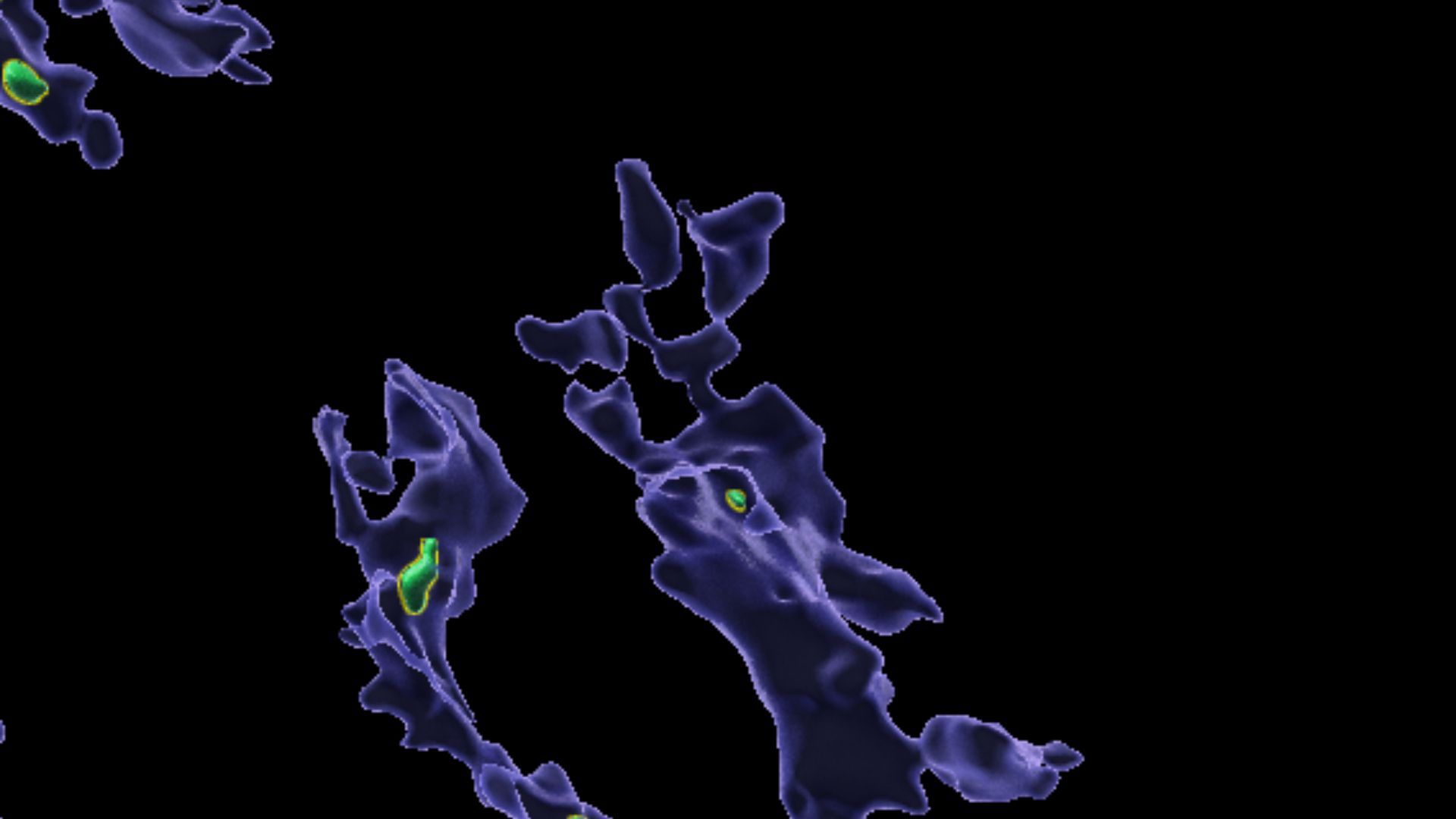
Tiny microplastic particles are hard to break down and can accumulate in our bodies. (Image credit: Auke-Florian Hiemstra)

A pileup of dead cell material like DNA can alarm the immune system because it signals that a threat such as an infection may be causing tissue damage. This could trigger inflammation, potentially precipitating autoimmune disorders, Castillo said.

Microplastics might also reduce fertility when taken up by macrophages in the testes. Perry and his colleagues exposed male mice to regular doses of microplastics and found that their sperm counts decreased over 18 weeks. He speculated that microplastics may partly account for the drop in sperm count seen globally in the human population. The study didn’t explore the potential impact of these particles on female fertility.

Although the researchers demonstrated that human macrophages engulf microplastics when cultured in lab dishes, researchers still don’t know how readily the cells would do so in the body.

Perry plans to study samples taken from humans ‪—‬ specifically, how microplastics might contribute to atherosclerotic plaques that clog up blood vessels. It’s already known that macrophages loaded with undigested material accumulate in these blood-flow-stopping plaques, so he and his colleagues hypothesize that microplastics may exacerbate the problem, he said.

This article is for informational purposes only and is not meant to offer medical advice.

Codo, A. C., Romero-Pichardo, J. E., Wang, Z., Aufiero, M. A., Lazarov, T., Saitz Rojas, W., Walker, N. S., Nair, A., Cole, R. F., Adkins, S., Dong, E., Fadojutimi, K., Martínez de la Torre, C., David, Y., Hohl, T. M., Geissmann, F., Keshari, K. R., Lucas, C. D., & Perry, J. S. A. (2026). Polystyrene microplastic-induced pathophysiology is driven by disruption of efferocytosis. Immunity, 59(3). https://doi.org/10.1016/j.immuni.2026.01.009

Share. Facebook Twitter LinkedIn Telegram WhatsApp Email

Keep Reading

Triassic croc relative from Ghost Ranch, New Mexico finally identified after nearly 80 years in museum basement

Triassic croc relative from Ghost Ranch, New Mexico finally identified after nearly 80 years in museum basement

There were ‘audible screams of delight:’ Why Artemis II sightings of meteor flashes on the moon have scientists giddy

There were ‘audible screams of delight:’ Why Artemis II sightings of meteor flashes on the moon have scientists giddy

Physicists just witnessed pinpricks of darkness moving faster than the speed of light ‪—‬ without breaking the laws of relativity

Physicists just witnessed pinpricks of darkness moving faster than the speed of light ‪—‬ without breaking the laws of relativity

Mini lake meets snowy rim of Canada’s oldest ice mass — Earth from space

Mini lake meets snowy rim of Canada’s oldest ice mass — Earth from space

Stone Age tombs in Scotland reveal ‘webs of descent’ among male relatives

Stone Age tombs in Scotland reveal ‘webs of descent’ among male relatives

‘I have not processed what we just did’: Artemis II astronauts share all in first news conference since splashdown

‘I have not processed what we just did’: Artemis II astronauts share all in first news conference since splashdown

‘Oslo patient’ likely cured of HIV after getting stem cell transplant from his brother, who is genetically resistant to the virus

‘Oslo patient’ likely cured of HIV after getting stem cell transplant from his brother, who is genetically resistant to the virus

Antiseptic-tolerant germs spread through the air in hospitals, early study hints

Antiseptic-tolerant germs spread through the air in hospitals, early study hints

Homo erectus’ tools include stunning geodes and fossils, possibly as a way to connect with the cosmos, study finds

Homo erectus’ tools include stunning geodes and fossils, possibly as a way to connect with the cosmos, study finds

Add A Comment
Leave A Reply Cancel Reply

Editors Picks

Islanders’ flameout leaves Anders Lee’s future unclear

Islanders’ flameout leaves Anders Lee’s future unclear

April 14, 2026
Where’s Eric Swalwell? Disgraced congressman out of sight after being booted from billionaire’s home

Where’s Eric Swalwell? Disgraced congressman out of sight after being booted from billionaire’s home

April 14, 2026
Raiders GM says teams are calling about trading up for No. 1 pick

Raiders GM says teams are calling about trading up for No. 1 pick

April 14, 2026
Cardi B’s Ex Offset Shot Outside Florida Casino: What to Know, Who Was Arrested and More

Cardi B’s Ex Offset Shot Outside Florida Casino: What to Know, Who Was Arrested and More

April 14, 2026

Subscribe to News

Get the latest USA news and updates directly to your inbox.

Latest News
BetMGM bonus code NYPDM1500: Get a 20% first deposit match up to ,500 for Mets vs. Dodgers

BetMGM bonus code NYPDM1500: Get a 20% first deposit match up to $1,500 for Mets vs. Dodgers

April 14, 2026
Rep. Elise Stefanik’s new book on campus antisemitism tops Amazon bestseller list as she launches tour

Rep. Elise Stefanik’s new book on campus antisemitism tops Amazon bestseller list as she launches tour

April 14, 2026
Justice Department seeks dismissal of Jan. 6 seditious conspiracy cases

Justice Department seeks dismissal of Jan. 6 seditious conspiracy cases

April 14, 2026
Facebook X (Twitter) Pinterest WhatsApp TikTok Instagram
© 2026 USA Times. All Rights Reserved.
  • Privacy Policy
  • Terms
  • Advertise
  • Contact

Type above and press Enter to search. Press Esc to cancel.