




A years-long malaria control campaign in the Brazilian Amazon nearly eliminated the disease from a city — but then cases rebounded. Now, scientists think they’ve uncovered why.
The campaign took place in northern Brazil during the construction of the Belo Monte Dam in the Xingu River, one of the largest hydroelectric dams in the world. From 2013 to 2017, the initiative slashed annual malaria rates from more than 1,200 cases to fewer than 60. But the program ended, and within a few years, infections had rebounded to more than 700 cases a year. This time, they were concentrated in the rural communities surrounding the river in the city of Altamira.
In a study published Thursday (July 9) in the journal GeoHealth, scientists analyzed 15 years of malaria surveillance records alongside satellite images of forests around Altamira. Earlier studies have pointed to deforestation and dam construction as a driver of malaria because they can provide habitats for mosquito larvae, which inhabit the forest edge. In Altamira, large stretches of rainforest have been cleared for cattle ranching, logging and settlement along the Xingu River in the decades since the region was first opened up by road-building, leaving a patchwork of cleared land pressed up against the remaining forest.
However, the study found that the malaria resurgence wasn’t simply a result of how much forest had been cut down. Instead, cases tracked most closely with the forest edge, the boundary where intact forest meets cleared or open land. There, mosquitoes get everything they need to thrive: shade from the tree line, sunlit pools of standing water for their larvae, and people living or working close by.
The findings highlight how the environment contributes to malaria risk, suggesting that maintaining surveillance in these high-risk landscapes could be just as important as driving cases down in the first place.
“What made Altamira compelling was that the timing gave us something rare, close to a natural experiment,” study co-author Eloise Skinner, an epidemiologist and postdoctoral research fellow at the University of Queensland in Australia, told Live Science in an email. The results of that natural experiment could help Brazil in its efforts to eliminate malaria from the country in the next decade, she said.
A program tied to temporary funding
The researchers tracked malaria trends before, during and after the construction of the Belo Monte Dam. Before construction began, malaria was already a persistent problem in the region; Altamira city alone reported more than 1,200 cases a year.
Get the world’s most fascinating discoveries delivered straight to your inbox.
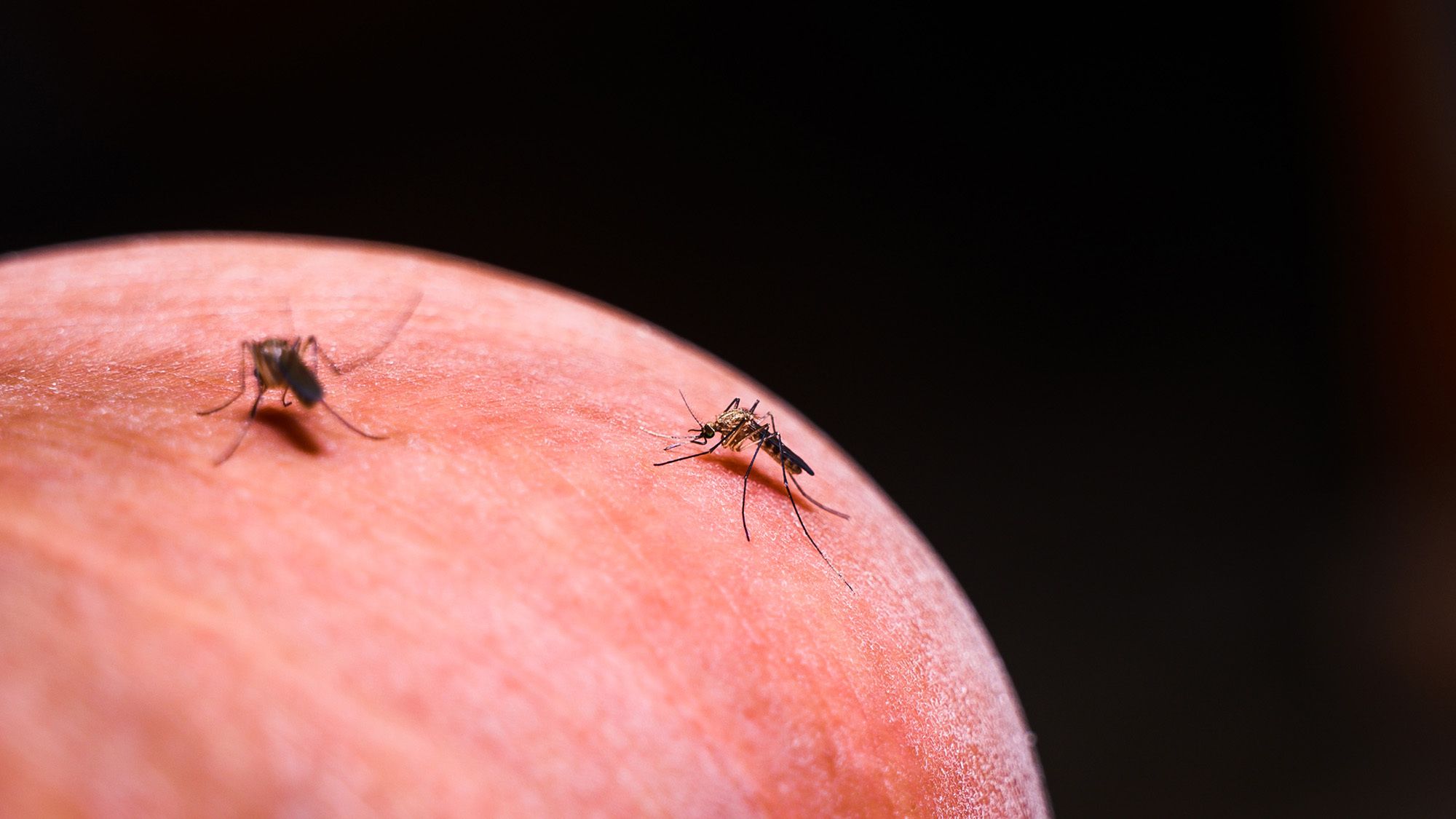
As thousands of workers moved in, local health authorities and the dam’s developers rolled out an intensive control program that involved spraying insecticides indoors, using mosquito nets, and deploying rapid diagnosis and treatment when cases did emerge. The goal was to head off outbreaks spread by Nyssorhynchus darlingi, the mosquito that carries the malaria-causing parasite in the Brazilian Amazon.
Mosquitoes pick up the parasite that causes malaria by feeding on the blood of infected people, and they can then spread that parasite to others they bite. Treating infected people quickly can help break that chain of transmission.
Cases plummeted despite the influx of workers, but once construction wrapped up and the program lost its funding, malaria came back.
Nyssorhynchus darlingi, the mosquito that spreads malaria in the Amazon, breeds in partially shaded bodies of water.
(Image credit: Sabrina Simon)
To understand what drove the resurgence, the researchers combined three streams of data. Case records came from Brazil’s national malaria surveillance system and covered 150 health centers in Altamira over 15 years. The team layered on temperature, forest cover and rainfall data, since both shape how favorable an area is for mosquito breeding and how efficiently the malaria parasite develops inside mosquitos. Plus, they added an estimate of travel time between each cluster of cases and the nearest town, as a proxy for how easily people and the diseases they carry might move around.
From the observations, the forest edge consistently emerged as the strongest predictor of increased malaria cases. For every 1% increase in the perimeter of the forest edge, malaria cases rose by roughly 0.7%; for every 1% increase in Altamira’s population, who are located at the forest edge, cases rose by about 1.4%.
The rebound wasn’t evenly distributed. Before the dam was built, most of Altamira’s malaria cases came from clusters inside the city itself. Afterward, that pattern flipped: by 2020, the roughly 700 annual cases were concentrated almost entirely in remote, rural clusters near forest edges. Meanwhile, Altamira’s urban center stayed comparatively protected, much as it had during construction.
“When the funded program wound down, malaria came back to the communities that are hardest for the health system to reach,” Skinner said. “The city stayed protected, most likely because fast diagnosis and treatment are easier to deliver and keep going in a town.”
That leaves the same communities exposed twice over, Skinner said. The places that are already the hardest to reach with health services also sit where the ecological risk is the highest.
But this pattern could point to solutions. The resurgence didn’t scatter unpredictably. It came back to the same kind of place — rural communities at the forest edge — each time. That’s the kind of risk that can be anticipated in the future.
Brazil aims to eliminate locally acquired malaria by 2035. Skinner said Altamira’s near elimination of the disease, and its rebound within a few years of the control program ending, is a warning for that effort. When a community contains a strong environmental driver for malaria, like forest-edge ecosystems, stopping a control program short is sure to let the disease climb back.
“Because the resurgence wasn’t diffuse, we can predict where malaria is likely to return first,” Skinner said. “The message for a 2035 goal isn’t only that elimination needs sustained investment. It is that where the environment drives risk, that risk is predictable, and planning for it from the start is what lets the money go where it matters most.”
Skinner, E. B., de Angeli Dutra, D., Pelegrino, É., Damasceno, O., Burza, S., & Mordecai, E. A. (2026). Resurgence of malaria in protected and rural areas after successful control program in a Brazilian amazon municipality. GeoHealth, 10, e2025GH001754. https://doi.org/10.1029/2025GH001754
TOPICS