

Close Menu
  • Home
  • United States
  • World
  • Politics
  • Business
  • Lifestyle
  • Entertainment
  • Health
  • Science
  • Tech
  • Sports
  • More
    • Web Stories
    • Editor’s Picks
    • Press Release

Subscribe to Updates

Get the latest USA news and updates directly to your inbox.

What's On
Austin Rivers fires back at Draymond Green, calls him ‘luckiest basketball player I’ve ever seen’

Austin Rivers fires back at Draymond Green, calls him ‘luckiest basketball player I’ve ever seen’

May 5, 2026
We’re Calling It: Taylor Swift’s Red-Accent Buckle Sandals Will Be Summer’s ‘It’ Shoe Style

We’re Calling It: Taylor Swift’s Red-Accent Buckle Sandals Will Be Summer’s ‘It’ Shoe Style

May 5, 2026
Kalshi promo code NYPMAX: Trade , get  for Lakers vs. Thunder

Kalshi promo code NYPMAX: Trade $10, get $10 for Lakers vs. Thunder

May 5, 2026
Facebook X (Twitter) Instagram
Trending
  • Austin Rivers fires back at Draymond Green, calls him ‘luckiest basketball player I’ve ever seen’
  • We’re Calling It: Taylor Swift’s Red-Accent Buckle Sandals Will Be Summer’s ‘It’ Shoe Style
  • Kalshi promo code NYPMAX: Trade $10, get $10 for Lakers vs. Thunder
  • Why cruise ships create an ‘ideal’ environment for disease — and the worst-case scenarios
  • Burlington plots major May expansion — including 3 California stores
  • WHCD gunman Cole Allen faces life in prison for alleged attempt to assassinate President Trump: docs
  • LA Mayor Bass accuses Spencer Pratt of exploiting Palisades fire grief
  • Finally! 17 Stretchy Spring-to-Summer Dresses That Actually Feel Comfortable for Under $40
  • Privacy
  • Terms
  • Advertise
  • Contact Us
Join Us
USA TimesUSA Times
Newsletter Login
  • Home
  • United States
  • World
  • Politics
  • Business
  • Lifestyle
  • Entertainment
  • Health
  • Science
  • Tech
  • Sports
  • More
    • Web Stories
    • Editor’s Picks
    • Press Release
USA TimesUSA Times
Home » Colorado River negotiations have stalled among 7 states and water is scarce. What happens next?
Colorado River negotiations have stalled among 7 states and water is scarce. What happens next?
Science

Colorado River negotiations have stalled among 7 states and water is scarce. What happens next?

News RoomBy News RoomMarch 24, 20262 ViewsNo Comments

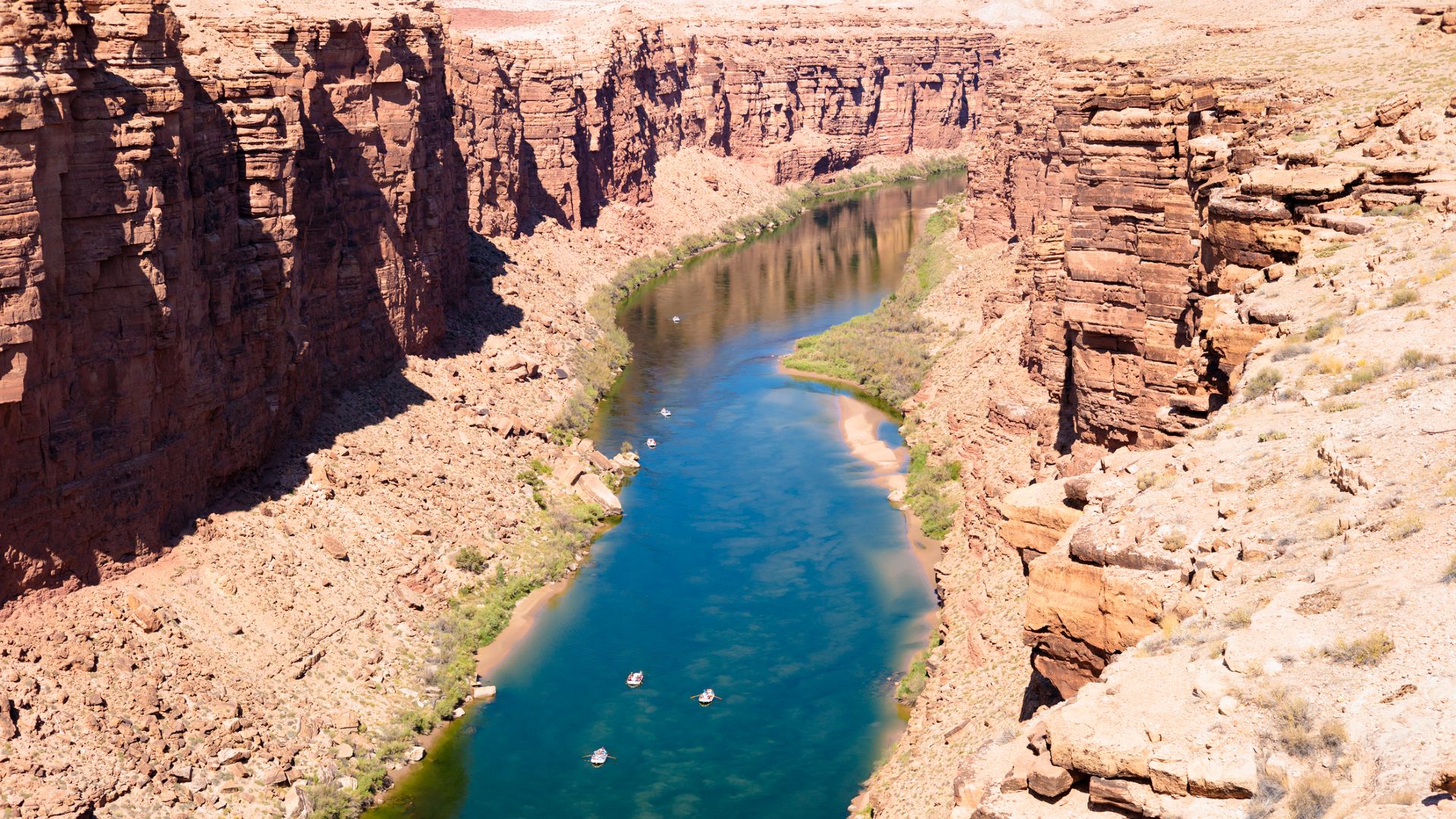
The seven U.S. states that make up the Colorado River basin are struggling to agree on how best to manage the river’s water as its supply dwindles due to climate change and a period of prolonged drought. Their negotiations, which are not open to the public, missed a Feb. 14, 2026, deadline the federal government had established, after which federal officials said they would impose their own plan.

The federal government has not yet done so, but the prospect of such an action is not good news for the nearly 40 million people who depend on the Colorado River for water, energy, agriculture and recreation, nor for the estimated US$1.4 trillion in economic activity the river supports.

We have led or participated in complex water management discussions from the river’s headwaters in Colorado to its delta in Mexico and elsewhere in the arid Southwest and around the world. Even on less contentious issues, the keys to success involve learning together, understanding one another’s interests, working through conflict and developing inclusive solutions for diverse participants. And that works best with an outside facilitator.

Article continues below


You may like

The five most common sources of conflict between people are values, data, relationships, interests and structure. The current Colorado River negotiations include all five. We believe a process designed and facilitated by negotiation experts could help break the logjam.

We recognize it can be very hard to reach an agreement when what’s at stake are countless lives, massive amounts of money, enormous quantities of hydroelectric power and not nearly enough water.

But compromise on Colorado River management is possible and, in fact, was achieved to curb California’s water use in the 2000s, to negotiate an interim agreement to coordinate operations at the Lake Mead and Lake Powell reservoirs in 2007, and to enact contingency plans to manage drought in 2019. But this time around, circumstances are different.

Previous negotiations

The negotiations leading up to those agreements were often facilitated by officials from the U.S. Bureau of Reclamation who focused on reaching broad agreements on general principles and concepts before delving into details. Federal staff also actively guided key agreements and provided the science and computer models to make well-informed decisions. And the states’ negotiators knew the Department of Interior would act unilaterally to make damaging cuts to water supply if states couldn’t come to their own agreement.

Get the world’s most fascinating discoveries delivered straight to your inbox.

The negotiators for the states had long-standing relationships and built trust by frequently communicating outside formal meetings and seeking to listen to and understand other states’ perspectives, even if they didn’t agree.

The states also agreed to use the bureau’s computer model for analyzing scenarios of climate change and management decisions. That meant all the negotiators were looking at the same data when delving into possible options. And the political and social environment was less polarized than today.

The current situation

In this round of negotiations, federal leadership has been lagging. The Department of the Interior has not made clear what the consequences might be for the states if they fail to agree. The U.S. Bureau of Reclamation has been without a permanent commissioner since President Donald Trump retook office in January 2025.


What to read next

And federal staff have only recently begun helping to facilitate the discussions.

The states are fractured into subgroups, according to whether they are in the river’s Upper Basin – Colorado, Wyoming, Utah and New Mexico – or the Lower Basin, which includes Arizona, Nevada and California. Each basin group holds strong positions and has generally been unwilling to shift.

Each basin group is using a different set of assumptions for the bureau’s computer model to explore options. And the discussion often gets stuck on details, which prevents progress toward broader agreements.

In addition, the political context has shifted significantly, with increased polarization and politicization of the issues, creating barriers to effective dialogue and deliberation. Today, compromise can seem unattainable.

But those relatively new challenges to Colorado River compromise are not an excuse for failure.

A way forward?

The current negotiations have all been done behind closed doors. From talking with people involved in the negotiations, we understand the negotiators have been left to set their own agendas and meeting plans and conduct their own communications and follow-up, with no formal facilitators.

It’s reasonable to expect the negotiators to be ready to represent their states’ interests, working through an incredibly complicated landscape of hydrology, climate and management scenario modeling, water law and administration, and politics. But we believe it’s unreasonable — and unrealistic and unfair — to expect them to also be experts at designing and facilitating an effective process for sorting out their differences.

Federal officials are not necessarily the best people to run the process either. And if the agency that ultimately needs to approve any deal is the one leading the process, real or perceived biases about the states or key issues in the agreement could further complicate the discussions.

We believe that agreement between the seven states is still possible. It may be less effective to bring in a third-party facilitator at this stage in the negotiation process, though, because of the degraded trust, hardened positions and shortage of time.

One possible outcome is that the Bureau of Reclamation will select and enforce one of the five management alternatives it outlined in January 2026. But that could lead to decades of litigation going up to the Supreme Court. No one wins in this scenario.

A more hopeful possibility is that the bureau adopts short-term rules that would give the states another chance to negotiate a longer-term deal — ideally with an unbiased third-party facilitator for support.

A collaborative and consensus-based planning process in the Yakima River Basin in Washington state in the early 2010s is evidence that while nobody gets everything they want in a negotiated agreement, “if they can (all) get something, that’s really the basis of the plan,” as a Washington state official told The New York Times.

This edited article is republished from The Conversation under a Creative Commons license. Read the original article.

Share. Facebook Twitter LinkedIn Telegram WhatsApp Email

Keep Reading

Researcher discovers shortcut to Mars that could cut travel time in half — if we build the right spacecraft

Researcher discovers shortcut to Mars that could cut travel time in half — if we build the right spacecraft

Canadian ’emoji’ lake vanishes after dramatic, landslide-like collapse — Earth from space

Canadian ’emoji’ lake vanishes after dramatic, landslide-like collapse — Earth from space

‘They weren’t burned by accident’: Mysterious green rocks discovered high in Pyrenees reveal ancient copper-smelting camp

‘They weren’t burned by accident’: Mysterious green rocks discovered high in Pyrenees reveal ancient copper-smelting camp

Estrogen in both the male and female brain shapes responses to trauma, study suggests

Estrogen in both the male and female brain shapes responses to trauma, study suggests

NASA just released 12,000 more Artemis II photos ‪—‬ here are a dozen of our favorites

NASA just released 12,000 more Artemis II photos ‪—‬ here are a dozen of our favorites

Hantavirus infects at least 1 on cruise ship, while 5 others fall ill: Here’s what we know

Hantavirus infects at least 1 on cruise ship, while 5 others fall ill: Here’s what we know

‘Moved to tears when we saw them’: Why archaeologists re-created gorgeous outfits from centuries-old Christian Nubian murals

‘Moved to tears when we saw them’: Why archaeologists re-created gorgeous outfits from centuries-old Christian Nubian murals

Athena bowl: A silver and gold vessel of the goddess and her owl, buried in a German forest 2,000 years ago

Athena bowl: A silver and gold vessel of the goddess and her owl, buried in a German forest 2,000 years ago

‘Sacrifice zones’ around critical mineral mines are rife with pollution, child workers and birth defects

‘Sacrifice zones’ around critical mineral mines are rife with pollution, child workers and birth defects

Add A Comment
Leave A Reply Cancel Reply

Editors Picks

We’re Calling It: Taylor Swift’s Red-Accent Buckle Sandals Will Be Summer’s ‘It’ Shoe Style

We’re Calling It: Taylor Swift’s Red-Accent Buckle Sandals Will Be Summer’s ‘It’ Shoe Style

May 5, 2026
Kalshi promo code NYPMAX: Trade , get  for Lakers vs. Thunder

Kalshi promo code NYPMAX: Trade $10, get $10 for Lakers vs. Thunder

May 5, 2026
Why cruise ships create an ‘ideal’ environment for disease — and the worst-case scenarios

Why cruise ships create an ‘ideal’ environment for disease — and the worst-case scenarios

May 5, 2026
Burlington plots major May expansion — including 3 California stores

Burlington plots major May expansion — including 3 California stores

May 5, 2026

Subscribe to News

Get the latest USA news and updates directly to your inbox.

Latest News
WHCD gunman Cole Allen faces life in prison for alleged attempt to assassinate President Trump: docs

WHCD gunman Cole Allen faces life in prison for alleged attempt to assassinate President Trump: docs

May 5, 2026
LA Mayor Bass accuses Spencer Pratt of exploiting Palisades fire grief

LA Mayor Bass accuses Spencer Pratt of exploiting Palisades fire grief

May 5, 2026
Finally! 17 Stretchy Spring-to-Summer Dresses That Actually Feel Comfortable for Under

Finally! 17 Stretchy Spring-to-Summer Dresses That Actually Feel Comfortable for Under $40

May 5, 2026
Facebook X (Twitter) Pinterest WhatsApp TikTok Instagram
© 2026 USA Times. All Rights Reserved.
  • Privacy Policy
  • Terms
  • Advertise
  • Contact

Type above and press Enter to search. Press Esc to cancel.