


Close Menu
  • Home
  • United States
  • World
  • Politics
  • Business
  • Lifestyle
  • Entertainment
  • Health
  • Science
  • Tech
  • Sports
  • More
    • Web Stories
    • Editor’s Picks
    • Press Release

Subscribe to Updates

Get the latest USA news and updates directly to your inbox.

What's On
These 3 Movies Are Scarier Than ‘The Silence of the Lambs’: ‘Oddity’ and More

These 3 Movies Are Scarier Than ‘The Silence of the Lambs’: ‘Oddity’ and More

April 28, 2026
Knicks have to ride the highs and lows of the Mitchell Robinson roller coaster

Knicks have to ride the highs and lows of the Mitchell Robinson roller coaster

April 28, 2026
Musk kicks off explosive OpenAI trial by slamming Altman, company for abandoning non-profit mission: ‘Not OK to steal a charity’

Musk kicks off explosive OpenAI trial by slamming Altman, company for abandoning non-profit mission: ‘Not OK to steal a charity’

April 28, 2026
Facebook X (Twitter) Instagram
Trending
  • These 3 Movies Are Scarier Than ‘The Silence of the Lambs’: ‘Oddity’ and More
  • Knicks have to ride the highs and lows of the Mitchell Robinson roller coaster
  • Musk kicks off explosive OpenAI trial by slamming Altman, company for abandoning non-profit mission: ‘Not OK to steal a charity’
  • Exclusive | Beloved Italian Soho restaurant relaunching in June with new name and vision
  • Defiant James Comey breaks silence on second criminal indictment: ‘Let’s go’
  • White-haired Long Island politician who allegedly beat down rival during government meeting denies charges
  • World Cup players who cover their mouths during confrontations could get red cards
  • Stephen Miller’s Pregnant Wife Denies He Used Her as ‘Human Shield’ During WHCD Shooting
  • Privacy
  • Terms
  • Advertise
  • Contact Us
Join Us
USA TimesUSA Times
Newsletter Login
  • Home
  • United States
  • World
  • Politics
  • Business
  • Lifestyle
  • Entertainment
  • Health
  • Science
  • Tech
  • Sports
  • More
    • Web Stories
    • Editor’s Picks
    • Press Release
USA TimesUSA Times
Home » ‘Blood filtering’ therapy could treat preeclampsia, early study hints
‘Blood filtering’ therapy could treat preeclampsia, early study hints
Science

‘Blood filtering’ therapy could treat preeclampsia, early study hints

News RoomBy News RoomApril 28, 20260 ViewsNo Comments

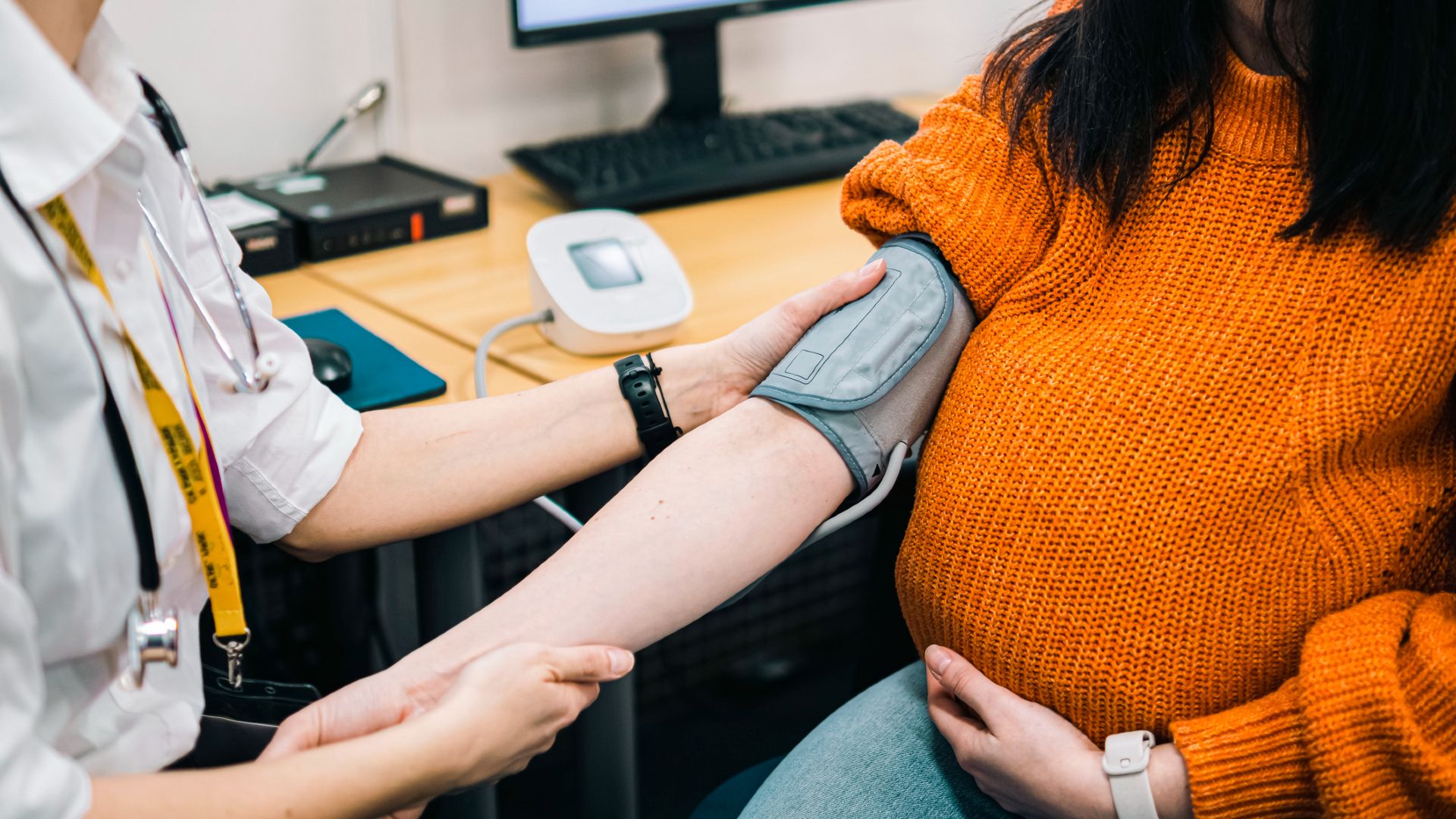
A blood-filtering technique could be a promising treatment for preeclampsia, a potentially deadly disorder of pregnancy that involves high blood pressure.

The new therapy is safe for both the pregnant person and the fetus, according to a new pilot study published Monday (April 27) in the journal Nature Medicine. Future trials will examine how well the treatment works, but early data hints that it can reduce circulating levels of a placental protein linked to the disease.

Although low-dose aspirin has been shown to reduce the risk of preeclampsia in high-risk patients, no intervention has been successful at treating the condition once it has been diagnosed.


You may like

Now, “we’re finally on the verge of developing a targeted treatment for this condition,” study co-author Dr. Ravi Thadhani, a nephrologist and chief medical officer at Cedars-Sinai Medical Center in Los Angeles, told Live Science.

A new avenue for treatment?

Currently, the only way to address preeclampsia is for the pregnant patient to give birth, although the condition can sometimes persist postpartum or even develop after birth.

Ideally, preeclampsia is managed and monitored until the baby reaches full term, at 37 weeks. But that’s not always possible, meaning babies are often delivered prematurely. Preterm delivery can lead to health issues such as breathing problems and developmental disabilities, especially if the baby is born before 32 weeks gestation.

For the pregnant person, preeclampsia can cause dangerous damage to the liver, kidneys and heart, among other issues. And if not treated, it can lead to eclampsia, which involves seizures and can result in coma or death.

Get the world’s most fascinating discoveries delivered straight to your inbox.

Thadhani hopes the blood-filtering treatment can “prevent this disease from getting worse and forcing the hand of the obstetrician to deliver” prematurely.

The new treatment relies on a technique called apheresis, in which blood is drawn and then returned after select components are removed. In this case, a protein called soluble fms-like tyrosine kinase-1 (sFlt-1) gets filtered from the bloodstream. sFlt-1 increases in the bloodstream during healthy pregnancies to regulate blood vessel formation around the placenta, but its levels often rise earlier and by excessive amounts in preeclampsia, causing vascular damage that may contribute to the condition.

Thadhani and colleagues previously demonstrated that the ratio of sFlt-1 to placental growth factor, another circulating protein, could predict the risk of preeclampsia, with a ratio of 40 or above tied to an especially severe form of the disease. Based on this finding, and additional studies from their lab and other groups, they reasoned that sFlt-1 might be good to target with a treatment.


What to read next

They first administered the therapy to three pregnant baboons, observing that each treatment session decreased circulating sFlt-1 by about 50%. They then confirmed the treatment’s safety in healthy human volunteers who were not pregnant before moving to test it with pregnant patients.

They recruited 16 patients with preterm preeclampsia, which is diagnosed before 34 weeks of pregnancy; the participants were a median of 30 weeks pregnant upon hospital admission. Seven participants received a single session of the therapy, which confirmed that the strategy could safely reduce sFlt-1 in people. The remaining nine patients then underwent between one and three treatment sessions. In this latter group, each treatment session brought sFlt-1 levels down by nearly 17%, although these levels rebounded in some patients.

The main purpose of this small study was to confirm the treatment’s safety, and the participants weren’t compared directly with untreated patients. Still, the participants who were treated carried their pregnancies for a median of 10 days after their hospital admission, while a group of untreated patients who weren’t enrolled in the study carried for only four days post-admission.

These results suggest that the treatment can prolong pregnancy in preterm preeclampsia, though a proper clinical trial is needed to know for sure.

More to learn

While Thadhani’s team is targeting sFlt-1 levels, some scientists disagree about how the protein contributes to preeclampsia.

“The camps are still split on whether it has a role in preeclampsia development or it’s a consequence of something else happening in the body,” said Dr. Lana McClements, leader of the Cardio-Obstetrics Research Group at the University of Technology Sydney, who was not involved with the study.

Not all cases of preeclampsia are alike, McClements said, and multiple factors other than sFlt-1 may drive the disease. That said, Thadhani and his collaborators focused on testing the treatment in participants with early-onset preeclampsia, which is associated with high sFlt-1 levels. In that way, they may have identified a suitable patient population for their approach, she said.

McClements called the pilot study’s results “promising,” but she noted that sFlt-1 levels dropped by less than 17% in the human patients following each treatment, compared with around 50% in the baboon experiment. And in people, the levels sometimes rebounded and then plateaued.

Based on this pilot study, Thadhani plans to test the treatment with a gold-standard clinical trial and at earlier time points in pregnancy.

“The women that we treated in this paper were quite sick,” he said. “They were literally on the verge of delivery. The next step here is to start earlier so that we can deliver more treatments and keep the disease more quiet.”

This article is for informational purposes only and is not meant to offer medical advice.

Thadhani, R., Hiemstra, T. F., Vatish, M., Stepan, H., Cerdeira, A. S., Brockelsby, J., James, T., Lia, M., Cornelis, A., Krause, E., Spath, M. R., Grüttner, B., Todorova, P., Hagmann, H., Yeung, K. R., Xu, B., Heffernan, S., Pears, S., Waugh, R., . . . Karumanchi, S. A. (2026). Targeted removal of soluble Fms-like tyrosine kinase 1 in very preterm preeclampsia: a pilot trial. Nature Medicine. https://doi.org/10.1038/s41591-026-04333-6

Share. Facebook Twitter LinkedIn Telegram WhatsApp Email

Keep Reading

1,900-year-old souvenir cup featuring Hadrian’s Wall and Roman forts discovered in Spain

1,900-year-old souvenir cup featuring Hadrian’s Wall and Roman forts discovered in Spain

First-of-its-kind map of the mouse nose reveals surprises about the sense of smell

First-of-its-kind map of the mouse nose reveals surprises about the sense of smell

New AI astrophysics algorithms are 95% better at showing how the universe changes over time

New AI astrophysics algorithms are 95% better at showing how the universe changes over time

‘Their greatest challenge since they stared down the asteroid’: Paleontologist Steve Brusatte on why birds are facing their biggest existential threat since the dino-killing asteroid

‘Their greatest challenge since they stared down the asteroid’: Paleontologist Steve Brusatte on why birds are facing their biggest existential threat since the dino-killing asteroid

Drilling has begun at our sacred site Pe’ Sla, setting a dangerous precedent for Indigenous lands across the country. It must be stopped.

Drilling has begun at our sacred site Pe’ Sla, setting a dangerous precedent for Indigenous lands across the country. It must be stopped.

The universe may end trillions of years sooner than we thought

The universe may end trillions of years sooner than we thought

‘He began to cry, and almost fell to the floor’: The fluffy fossil that finally showed the world that birds are dinosaurs

‘He began to cry, and almost fell to the floor’: The fluffy fossil that finally showed the world that birds are dinosaurs

New data center will be partially powered by human brain cells for the first time

New data center will be partially powered by human brain cells for the first time

DwarfLab Dwarf Mini smart telescope review

DwarfLab Dwarf Mini smart telescope review

Add A Comment
Leave A Reply Cancel Reply

Editors Picks

Knicks have to ride the highs and lows of the Mitchell Robinson roller coaster

Knicks have to ride the highs and lows of the Mitchell Robinson roller coaster

April 28, 2026
Musk kicks off explosive OpenAI trial by slamming Altman, company for abandoning non-profit mission: ‘Not OK to steal a charity’

Musk kicks off explosive OpenAI trial by slamming Altman, company for abandoning non-profit mission: ‘Not OK to steal a charity’

April 28, 2026
Exclusive | Beloved Italian Soho restaurant relaunching in June with new name and vision

Exclusive | Beloved Italian Soho restaurant relaunching in June with new name and vision

April 28, 2026
Defiant James Comey breaks silence on second criminal indictment: ‘Let’s go’

Defiant James Comey breaks silence on second criminal indictment: ‘Let’s go’

April 28, 2026

Subscribe to News

Get the latest USA news and updates directly to your inbox.

Latest News
White-haired Long Island politician who allegedly beat down rival during government meeting denies charges

White-haired Long Island politician who allegedly beat down rival during government meeting denies charges

April 28, 2026
World Cup players who cover their mouths during confrontations could get red cards

World Cup players who cover their mouths during confrontations could get red cards

April 28, 2026
Stephen Miller’s Pregnant Wife Denies He Used Her as ‘Human Shield’ During WHCD Shooting

Stephen Miller’s Pregnant Wife Denies He Used Her as ‘Human Shield’ During WHCD Shooting

April 28, 2026
Facebook X (Twitter) Pinterest WhatsApp TikTok Instagram
© 2026 USA Times. All Rights Reserved.
  • Privacy Policy
  • Terms
  • Advertise
  • Contact

Type above and press Enter to search. Press Esc to cancel.