Close Menu
  • Home
  • United States
  • World
  • Politics
  • Business
  • Lifestyle
  • Entertainment
  • Health
  • Science
  • Tech
  • Sports
  • More
    • Web Stories
    • Editor’s Picks
    • Press Release

Subscribe to Updates

Get the latest USA news and updates directly to your inbox.

What's On
Donald Trump Says ‘Cancel It’ Amid Backlash Over Freedom 250’s Great American State Fair

Donald Trump Says ‘Cancel It’ Amid Backlash Over Freedom 250’s Great American State Fair

May 31, 2026
Exclusive | Marcelo Balboa says this US outcome in World Cup would be ‘complete disaster’

Exclusive | Marcelo Balboa says this US outcome in World Cup would be ‘complete disaster’

May 31, 2026
WNBA news: Caitlin Clark held to just six points in brutal loss to Fire

WNBA news: Caitlin Clark held to just six points in brutal loss to Fire

May 31, 2026
Facebook X (Twitter) Instagram
Trending
  • Donald Trump Says ‘Cancel It’ Amid Backlash Over Freedom 250’s Great American State Fair
  • Exclusive | Marcelo Balboa says this US outcome in World Cup would be ‘complete disaster’
  • WNBA news: Caitlin Clark held to just six points in brutal loss to Fire
  • ‘Alaskan Bush People’ Star Matt Brown Dead at 43 Following Police Search for Unidentified Man
  • Yankees’ Ben Rice continuing to keep pace with MLB’s best: ‘must-watch TV’
  • ‘Astonishing’: James Webb telescope spots the most chemically primitive galaxy in the ancient universe
  • Law-and-order candidate rises as Colombians prepare for presidential vote
  • NHL Legend Claude Lemieux Dead at Age 60: What to Know About His Shocking Death
  • Privacy
  • Terms
  • Advertise
  • Contact Us
Join Us
USA TimesUSA Times
Newsletter Login
  • Home
  • United States
  • World
  • Politics
  • Business
  • Lifestyle
  • Entertainment
  • Health
  • Science
  • Tech
  • Sports
  • More
    • Web Stories
    • Editor’s Picks
    • Press Release
USA TimesUSA Times
Home » ‘Astonishing’: James Webb telescope spots the most chemically primitive galaxy in the ancient universe
‘Astonishing’: James Webb telescope spots the most chemically primitive galaxy in the ancient universe
Science

‘Astonishing’: James Webb telescope spots the most chemically primitive galaxy in the ancient universe

News RoomBy News RoomMay 31, 20261 ViewsNo Comments

One of the greatest achievements of the James Webb Space Telescope is how it has allowed scientists to push the boundaries of astronomy by observing galaxies that existed during the early universe, less than 1 billion years after the Big Bang. This period, known as the Epoch of Reionization, coincides with what astronomers have nicknamed the “Cosmic Dark Ages.” During this time, 380,000 to 1 billion years after the Big Bang, the universe was filled with neutral hydrogen, and any sources of light visible today are redshifted beyond the limits of conventional telescopes.

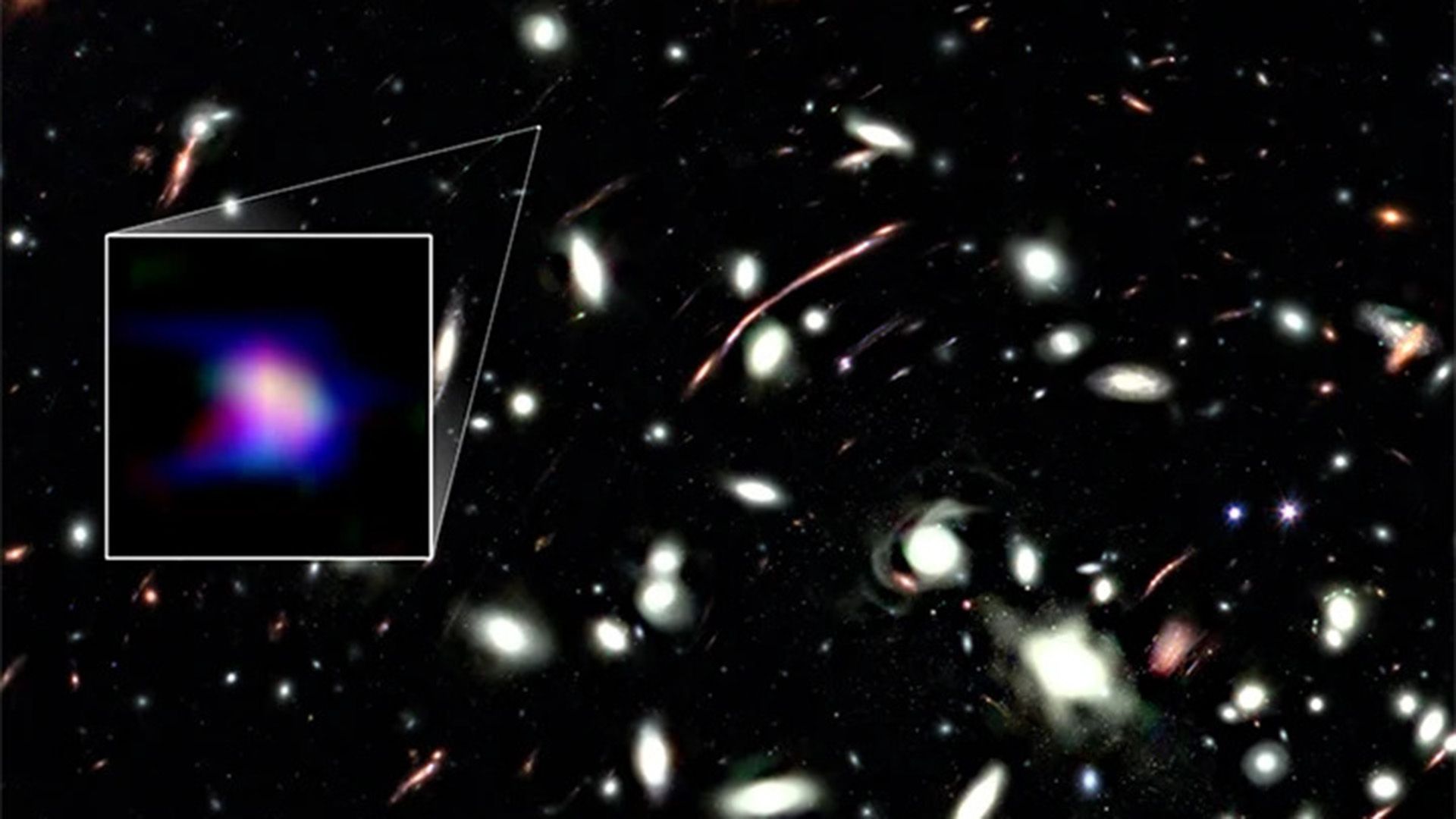
Thanks to Webb’s advanced infrared instruments and spectrometers, scientists can now peer behind this veil and see how galaxies have evolved since the earliest cosmological epochs. In a recent discovery, an international team of astronomers used Webb and the gravitational lensing technique to capture a rare look at LAP1-B, an ultra-faint galaxy that existed 800 million years after the Big Bang. Using Webb’s spectrometers, the team was able to definitively characterize this galaxy, revealing it to be the most metal-poor galaxy in the early Universe observed to date.

The team was led by Associate Professor Kimihiko Nakajima of Kanazawa University. The study describing their research appeared on May 13th in the journal Nature.


You may like

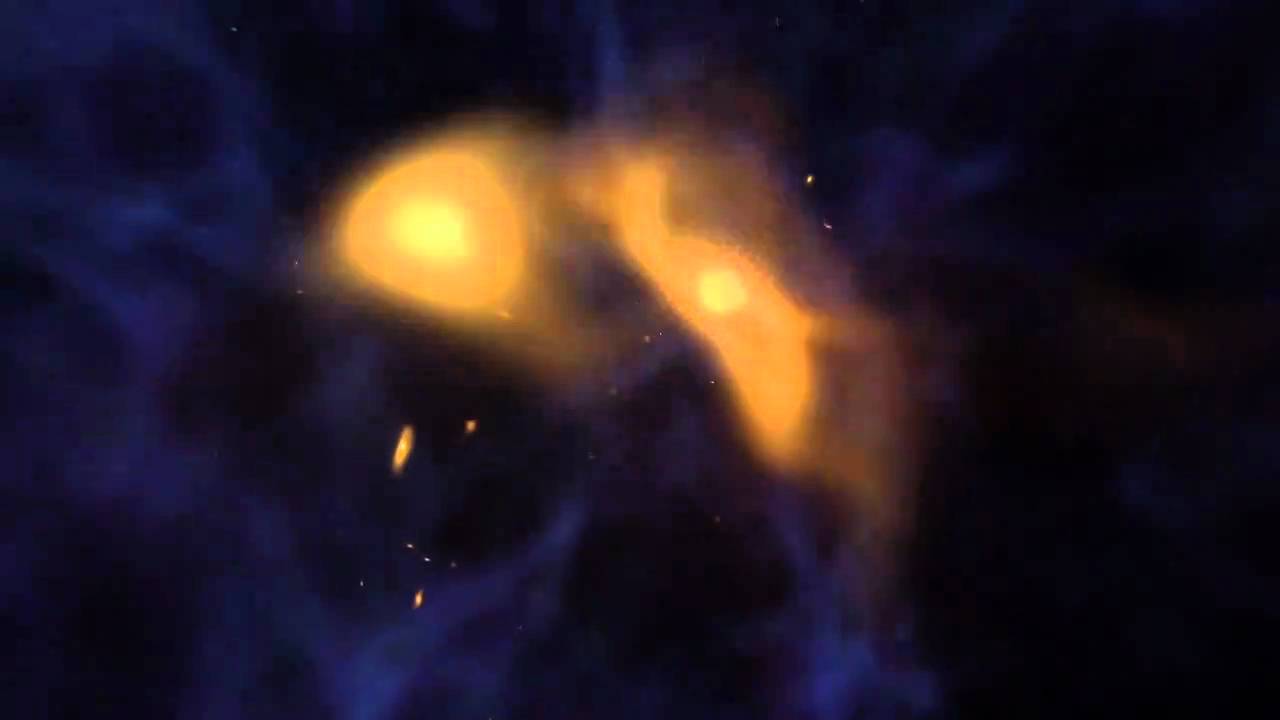
In the immediate aftermath of the Big Bang, the universe contained only light elements such as hydrogen and helium, while the elements necessary for life (carbon, oxygen, etc.) were absent. These elements were forged in the interiors of the first generation of stars (Population III), which were then dispersed when these stars went supernova and blew off their external layers. For decades, astronomers have been hoping to find these stars so they could witness the moment they began seeding the Universe with heavier elements. This has been problematic since the earliest galaxies that hosted Population III stars appear so small and faint.

A timeline of the universe’s evolution after the Big Bang.

As a result, determining their chemical makeup through spectroscopy was thought to be nearly impossible until now. The work of Nakajima builds on initial detections of LAP1-B by adding JWST spectra to the picture, revealing a record-low oxygen abundance (1/240th that of the sun). When combined with an elevated carbon-to-oxygen ratio and a dominant dark matter halo, these findings suggest that LAP1-B is a progenitor to the fossil galaxies found near the Milky Way. Astronomers have been searching for these “ancestor” galaxies, making LAP1-B a historic window into the earliest stages of galaxy formation.

Usually, we act like ‘cosmic archaeologists,’ trying to guess the past by looking at old stars in our own neighborhood. But now, we can analyze the gas directly from the original scene 13 billion years ago.

Kimihiko Nakajima, associate professor at Kanazawa University

The team was assisted by the presence of an intervening galaxy cluster, which acted as a gravitational lens, magnifying the light from LAP1-B by a factor of 100. After 30 hours of observations and deep spectroscopy, the team was finally able to characterize the chemical abundance of this galaxy. In addition to being chemically primitive, the galaxy’s carbon-to-oxygen ratio closely matches theoretical predictions for the material dispersed by Population III star explosions.

Said Associate Professor Nakajima in a Kanazawa University press release: “I was instantly thrilled by the extreme lack of oxygen revealed in the data. Finding a galaxy in such a primitive state is astonishing. It’s a chemical signature that clearly indicates a primordial galaxy caught in the moments shortly after its formation..”

Get the world’s most fascinating discoveries delivered straight to your inbox.

The team also discovered that LAP1-B is incredibly light (less than 3,300 Solar masses), implying that most of the galaxy consists of dark matter in the form of a halo.

Along with its unique chemical makeup, this makes it a near-perfect match for the “Ultra-Faint Dwarf galaxies (UFDs)” found near the Milky Way today. Said Professor Masami Ouchi (NAOJ/University of Tokyo), a member of the research team: “UFDs are not only the faintest galaxies; they are composed of ancient stars over 12 billion years old and are often described as ‘fossils of the universe.’ Astronomers suspected they might be the remains of the universe’s earliest galaxies because they lack heavy elements, but astronomers never had a direct link — until we found LAP1-B. It is a profound surprise to find that LAP1-B looks exactly like the ‘ancestor’ we had only imagined in theories. This helps us solve the mystery of why these cosmic fossils have survived in their current form to the present day.”

Galaxy Evolution: James Webb Space Telescope Science – YouTube
Galaxy Evolution: James Webb Space Telescope Science - YouTube


Watch On

The team’s findings present astronomers with a new way to map the birth of heavier elements in the Universe and the formation of its oldest structures. The next step will consist of the team using JWST data to search for even more chemically primitive objects, including the very first ever formed.

As Nakajima indicated: “We hope this discovery marks a historic step in understanding how the elements that make up our own bodies were first born and accumulated across the Universe.”​​ ​


See how much you know about the world’s most powerful telescope with our James Webb Space Telescope quiz!

TOPICS

James Webb Space Telescope

Share. Facebook Twitter LinkedIn Telegram WhatsApp Email

Keep Reading

Astronomers gaze into the ‘Crystal Ball Nebula’ and see a vision of our dying sun — Space photo of the week

Astronomers gaze into the ‘Crystal Ball Nebula’ and see a vision of our dying sun — Space photo of the week

How many generations of humans have there been?

How many generations of humans have there been?

Are some people wired to see ghosts? A psychologist explains what makes paranormal experiences more likely

Are some people wired to see ghosts? A psychologist explains what makes paranormal experiences more likely

Scientists got mouse eyes to perform photosynthesis ‪—‬ and no, they didn’t turn green

Scientists got mouse eyes to perform photosynthesis ‪—‬ and no, they didn’t turn green

New device could make processors run 1,000 times faster without additional waste heat — scientists say it could reduce data center energy demands

New device could make processors run 1,000 times faster without additional waste heat — scientists say it could reduce data center energy demands

Science news this week: Exploding rocket overshadows NASA’s next steps to the moon, ‘Doomsday Glacier’ faces big loss, quantum computer AI hybrid shows impressive results, and war deepens Iran’s water crisis

Science news this week: Exploding rocket overshadows NASA’s next steps to the moon, ‘Doomsday Glacier’ faces big loss, quantum computer AI hybrid shows impressive results, and war deepens Iran’s water crisis

What is jetlag, and how can you avoid it?

What is jetlag, and how can you avoid it?

Blue Moon 2026: An extremely rare micromoon rises tonight

Blue Moon 2026: An extremely rare micromoon rises tonight

Skeletal remains of Queen Elisenda, one of the most powerful rulers in medieval Europe, unearthed in Barcelona — along with several others who bore unexplained stab wounds

Skeletal remains of Queen Elisenda, one of the most powerful rulers in medieval Europe, unearthed in Barcelona — along with several others who bore unexplained stab wounds

Add A Comment
Leave A Reply Cancel Reply

Editors Picks

Exclusive | Marcelo Balboa says this US outcome in World Cup would be ‘complete disaster’

Exclusive | Marcelo Balboa says this US outcome in World Cup would be ‘complete disaster’

May 31, 2026
WNBA news: Caitlin Clark held to just six points in brutal loss to Fire

WNBA news: Caitlin Clark held to just six points in brutal loss to Fire

May 31, 2026
‘Alaskan Bush People’ Star Matt Brown Dead at 43 Following Police Search for Unidentified Man

‘Alaskan Bush People’ Star Matt Brown Dead at 43 Following Police Search for Unidentified Man

May 31, 2026
Yankees’ Ben Rice continuing to keep pace with MLB’s best: ‘must-watch TV’

Yankees’ Ben Rice continuing to keep pace with MLB’s best: ‘must-watch TV’

May 31, 2026

Subscribe to News

Get the latest USA news and updates directly to your inbox.

Latest News
‘Astonishing’: James Webb telescope spots the most chemically primitive galaxy in the ancient universe

‘Astonishing’: James Webb telescope spots the most chemically primitive galaxy in the ancient universe

May 31, 2026
Law-and-order candidate rises as Colombians prepare for presidential vote

Law-and-order candidate rises as Colombians prepare for presidential vote

May 31, 2026
NHL Legend Claude Lemieux Dead at Age 60: What to Know About His Shocking Death

NHL Legend Claude Lemieux Dead at Age 60: What to Know About His Shocking Death

May 31, 2026
Facebook X (Twitter) Pinterest WhatsApp TikTok Instagram
© 2026 USA Times. All Rights Reserved.
  • Privacy Policy
  • Terms
  • Advertise
  • Contact

Type above and press Enter to search. Press Esc to cancel.