




Two people born on the exact same day can age in totally different ways — one in relative health and the other with chronic disease. Now, scientists have found a key difference in the immune systems of people who are more prone to age-related conditions, and it could help explain why some people remain healthier longer.
In young people, the immune system contains many naive T cells, a type of white blood cell. Over time, exposure to pathogens and vaccinations transforms some of these T cells into memory cells, which can respond quickly to defend the body against germs.
These memory cells make different types of characteristic proteins, called granzymes, which kill infected cells. They come in different “flavors,” including granzyme K and granzyme B.
Latest Videos FromLive Science
In a new study, published Friday (Oct. 9) in the journal Immunity, scientists found that individuals with more memory cells that make granzyme K than cells that make granzyme B tend to have healthier aging.
In the future, the balance of cells making granzyme K and granzyme B in a person’s blood could be used as a test to determine “whether you’re on the right trajectory of aging or not,” study co-author Maxim Artyomov, an immunologist at Washington University in St. Louis, told Live Science.
Hunting for a signature of healthy aging
In earlier research, the same team found that, in old lab mice, granzyme K-making cells accumulated in several tissues and were linked to inflammation. They also observed the same increase in granzyme K cells in blood samples from older adults.
In the new study, they uncovered another piece of the puzzle: a dynamic with granzyme B-producing cells.
Get the world’s most fascinating discoveries delivered straight to your inbox.
They began by analyzing immune cells sampled from over 2,600 people ages 18 to 97, looking at the balance of granzyme K- and granzyme B-making cells. They found that people with a lower ratio of granzyme K to granzyme B cell populations were more likely to have autoimmune diseases or other chronic immune conditions.
In a second analysis, they looked at both immune cells and blood-borne proteins sampled from 329 people, using the data to pinpoint a “protein signature” linked to an abundance of granzyme B-making cells.
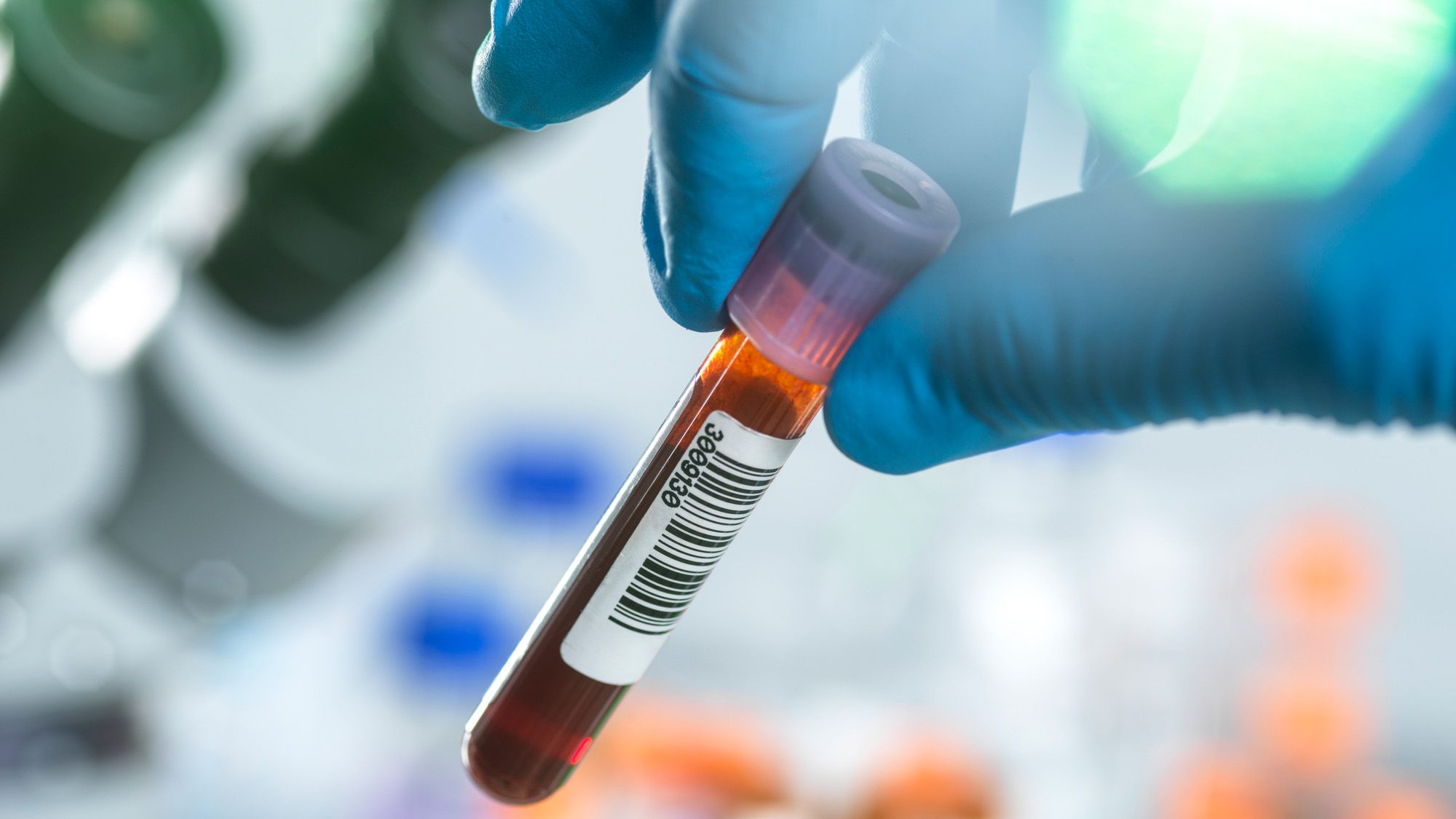
The balance of cells that make different granzymes may be important to how the immune system functions with age.
(Image credit: RUSLANAS BARANAUSKAS/SCIENCE PHOTO LIBRARY via Getty Images)
They went on to hunt for this protein signature in around 48,000 participants who’d provided data to the UK Biobank, a large database of health data from U.K.-based adults. People who were predicted to have higher levels of granzyme B-making cells based on their blood proteins had worse health outcomes in the following 17 years, with a higher risk of death and of conditions like diabetes, high blood pressure, and liver and kidney disease.
The findings might point to an aspect of immune aging that wasn’t previously understood.
“I think that’s really exciting,” Claire Gustafson, an immunologist at the Allen Institute, said of the results. “It highlights there’s potentially some novel biology that we haven’t really observed before,” Gustafson, who was not involved in the research, told Live Science.
However, while there’s a strong association between the balance of these cell populations and disease risks, Artyomov emphasized that the study does not prove that this ratio directly causes the poor health outcomes. Further studies would be needed to understand why having more granzyme B cells is linked with poorer health.
“This observation might be just a consequence, not a cause of the disease,” Artyomov noted.
It’s also important to note that granzyme K-making cells in mice are not the same as granzyme K-making cells in humans. In mice, they represent a more mature, specialized stage of immune cell development, whereas in humans, granzyme B cells better fit that description, he told Live Science.
That points to a key way that immunity in mice and humans is different, which was “underappreciated” before, Gustafson said. So when we’re comparing these cells in mice and humans, “we’re not looking at apples to apples,” she said. Scientists now specifically “need to look more into humans, as it’s not reflected in animal models.”
In people, immune cells’ features can also vary across diverse human populations, Gustafson added. We need more data across different populations to get a “true understanding of universal immune health,” she said. The K-to-B ratio may be a “novel” clue that can help scientists understand healthy aging, but more data is needed to unpack why and how that ratio is linked to healthy or unhealthy aging.
“This is kind of like the first step to be able to get there,” she told Live Science.
This article is for informational purposes only and is not meant to offer medical advice.
Mogilenko, D. A., Shpynov, O., Andhey, P. S., Arthur, L., Swain, A., Esaulova, E., Brioschi, S., Shchukina, I., Kerndl, M., Bambouskova, M., Yao, Z., Laha, A., Zaitsev, K., Burdess, S., Gillfilan, S., Stewart, S. A., Colonna, M., & Artyomov, M. N. (2020). Comprehensive profiling of an aging immune system reveals clonal GZMK+ CD8+ T cells as conserved hallmark of inflammaging. Immunity, 54(1), 99-115.e12. https://doi.org/10.1016/j.immuni.2020.11.005