


Close Menu
  • Home
  • United States
  • World
  • Politics
  • Business
  • Lifestyle
  • Entertainment
  • Health
  • Science
  • Tech
  • Sports
  • More
    • Web Stories
    • Editor’s Picks
    • Press Release

Subscribe to Updates

Get the latest USA news and updates directly to your inbox.

What's On
Washington ranch owners fight 7K wetlands fine over cattle ponds

Washington ranch owners fight $267K wetlands fine over cattle ponds

November 8, 2026
Naomi Watts’ Baby Blue Sweater Has 1 Slimming Detail That Flatters the Arms — The  Look

Naomi Watts’ Baby Blue Sweater Has 1 Slimming Detail That Flatters the Arms — The $28 Look

November 8, 2026
Midge Purce looks to thrive in biggest moments again as Gotham FC’s postseason begins

Midge Purce looks to thrive in biggest moments again as Gotham FC’s postseason begins

November 8, 2026
Facebook X (Twitter) Instagram
Trending
  • Washington ranch owners fight $267K wetlands fine over cattle ponds
  • Naomi Watts’ Baby Blue Sweater Has 1 Slimming Detail That Flatters the Arms — The $28 Look
  • Midge Purce looks to thrive in biggest moments again as Gotham FC’s postseason begins
  • How frequently did Viking women fight in battle?
  • Trump demands DOJ investigation, prison for ‘extortionist’ Democrats following GOP’s midterm blowout
  • 13th-ranked Tennessee dismantles sixth-ranked Kentucky to stay alive in College Football Playoff race
  • It’s Time! These Rich-Looking Holiday Sweaters Are Anything but Cheesy — From $9
  • Nets’ Egor Demin getting closer to return from right leg injury
  • Privacy
  • Terms
  • Advertise
  • Contact Us
Join Us
USA TimesUSA Times
Newsletter Login
  • Home
  • United States
  • World
  • Politics
  • Business
  • Lifestyle
  • Entertainment
  • Health
  • Science
  • Tech
  • Sports
  • More
    • Web Stories
    • Editor’s Picks
    • Press Release
USA TimesUSA Times
Home » ‘Freakish’ discovery of 9 million-year-old capybara tooth supports idea that Atacama wasn’t always a desert
‘Freakish’ discovery of 9 million-year-old capybara tooth supports idea that Atacama wasn’t always a desert
Science

‘Freakish’ discovery of 9 million-year-old capybara tooth supports idea that Atacama wasn’t always a desert

News RoomBy News RoomOctober 8, 20261 ViewsNo Comments

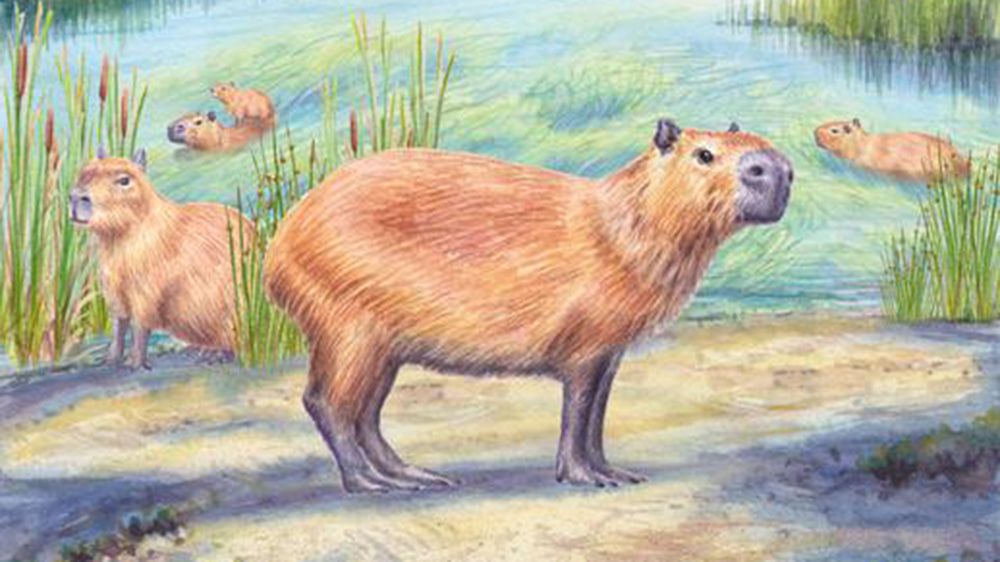
An illustration of ancient capybaras enjoying coastal wetlands, which may have looked somewhat like the Atacama Desert around 9 million years ago.

(Image credit: Mauricio Alvarez)

Researchers have discovered a roughly 9 million year old tooth belonging to a large, water-loving relative of modern day capybaras in the Atacama Desert of northern Chile. The fossilized molar adds to previous evidence suggesting that it’s unlikely the Atacama, one of the driest places on Earth, was continuously dry for the last 40 million years.

The Atacama Desert, possibly the oldest desert on Earth, takes up the northern third of Chile. It’s bounded by the Chilean Coast Range to the west, which blocks rain from the Pacific Ocean, and the enormous Andes to the east, which obstruct rain from the Atlantic Ocean. The driest part of the desert’s hyperarid region gets less than 0.08 inches (2 mm) of rainfall a month.

Recent research estimates the Atacama’s hyperarid core started forming between 47.8 million and 33.9 million years ago, in the Mid- to Late-Eocene, 20 million years before the Andes formed. It suggests the mountain ranges weren’t the cause for the desert’s aridification, and may have only intensified it.

Latest Videos FromLive Science

Capybaras (Hydrochoerus hydrochaeris) ‪—‬ the world’s largest rodent ‪—‬ exclusively live close to stable freshwater sources and feed on plants that also require water to grow, so the discovery of an extinct capybara relative (Hydrochoerus Cardiatherium) tooth in the Atacama Desert is very strange.

“Finding a capybara tooth in a marine deposit in what today is one of the driest regions on Earth is just freakish,” Priscilla Martinez, a geoscientist at the University of Arizona and co-author of a new paper describing the discovery, said in a statement.


You may like

Capybaras are native to South America, although today, they are not found in Chile, where the tooth was unearthed, according to the International Union for Conservation of Nature (IUCN).

A series of jagged cliffs seen in the desert

Part of the Atacama Desert called Valle de La Luna, named because of the region’s resemblance to the moon.

(Image credit: Piero Damiani via Getty Images)

The tooth isn’t the only clue that the Atacama was a wetter place in the late Miocene. Researchers found it in a layer holding the remains of a shallow marine environment that existed between 7 million and 10 million years ago, according to the statement. And they’ve also found microscopic pieces of plants, known as phytoliths, revealing that palm trees, grasses, gingers and other flowering plants grew there in what may have been a subtropical forest.

Get the world’s most fascinating discoveries delivered straight to your inbox.

These findings and others are part of a growing body of evidence that the Atacama Desert was once wet enough for crocodiles and freshwater fish to thrive and palms to grow. The new study, published Sept. 5 in the journal Scientific Reports, shows that capybara relatives lived there as well during the late Miocene, which, because they are semiaquatic animals, is further evidence to support the hypothesis of a sporadically moist Atacama.

The researchers aren’t sure how exactly capybaras moved into the Atacama Desert. Although there were capybaras in South America at the time, the Andes created an 18,000-foot-high (5,500 meters) barrier between their current habitats and the site where the tooth was found. The researchers theorized that, instead of traversing the mountains, the ancient capybaras migrated along the western coast of South America, following wetlands, rivers and other water sources.

According to Samantha Hopkins, an Earth sciences professor at the University of Oregon who was not involved in the study, it’s unlikely the tooth found its way to the site without capybaras living there.

“If you wanted to find a way that this capybara could be here while the Atacama was still as dry as it is today, you’d have a hard row to hoe,” she told Live Science in an email, because the size of the tooth makes it hard to transport it long distances. The desert wind couldn’t have blown it such a long way, and while large carcasses can float down waterways for miles, “if you’re going to invoke a large enough waterway to do this, you’ve demonstrated that the Atacama wasn’t as dry as it is today anyway.”

Gutstein, C. S., Martinez, P. R., Carrapa, B., Clementz, M. T., Cherem, J. J., Cozzuol, M. A., Strömberg, C. a. E., Suárez, M. E., Chavarría, C. C., & Roux, J. P. L. (2026). Late Miocene capybara in the Atacama Desert reveals a wetter climate and a transcontinental dispersal pathway. Scientific Reports. https://doi.org/10.1038/s41598-026-67368-2

Share. Facebook Twitter LinkedIn Telegram WhatsApp Email

Keep Reading

How frequently did Viking women fight in battle?

How frequently did Viking women fight in battle?

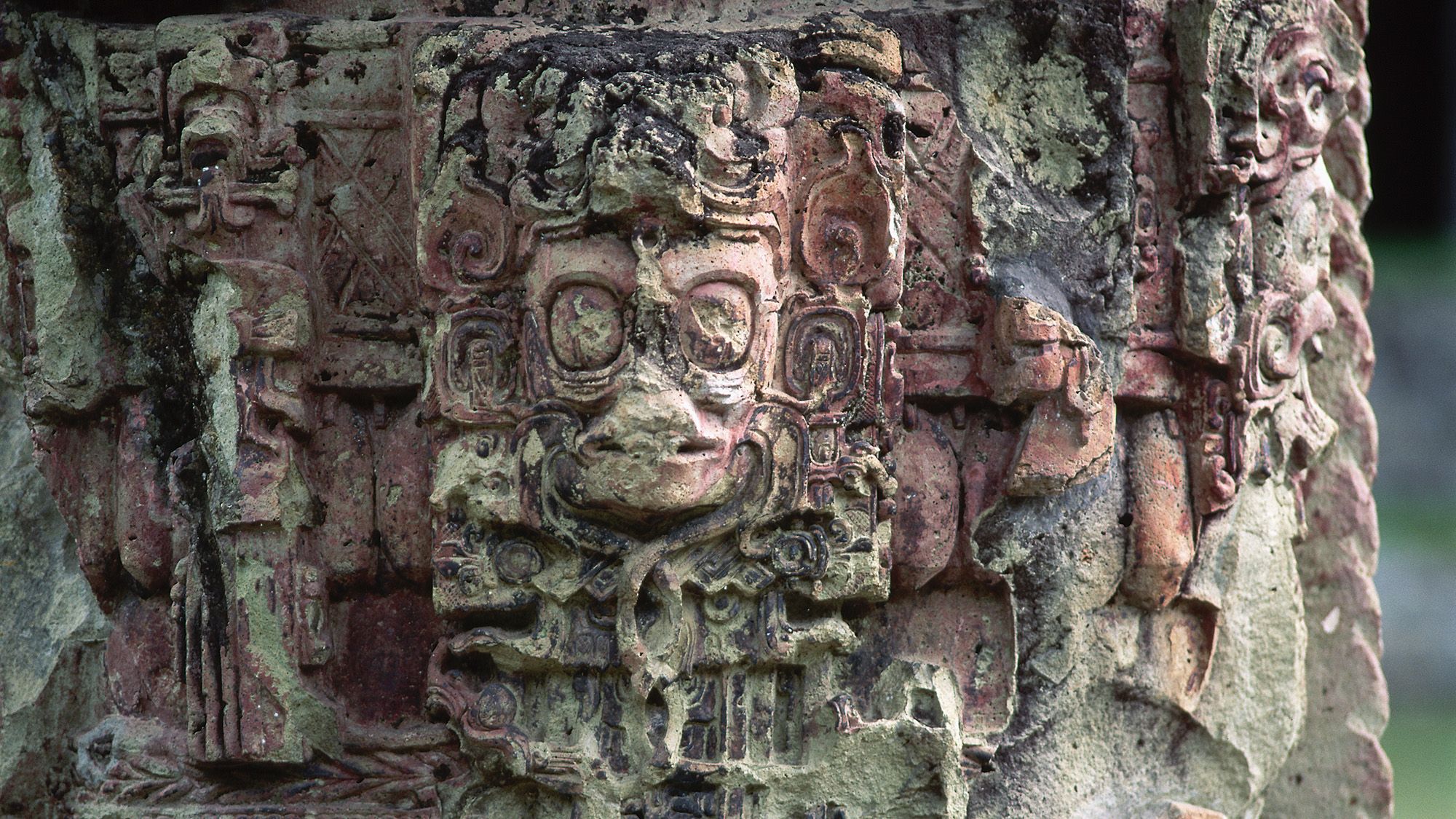
The Maya used so much red paint that they poisoned their water with mercury, mud sediments reveal

The Maya used so much red paint that they poisoned their water with mercury, mud sediments reveal

Tectonic forces near Japan helped fuel the formation of the Grand Canyon

Tectonic forces near Japan helped fuel the formation of the Grand Canyon

Women often get cold more easily than men — a mouse study offers hints why

Women often get cold more easily than men — a mouse study offers hints why

I almost died from flu. My life didn’t go back to normal after | Madi Allen

I almost died from flu. My life didn’t go back to normal after | Madi Allen

Why do most cats hate it when you touch their belly, feet or tail?

Why do most cats hate it when you touch their belly, feet or tail?

‘Life is too brief to leave this planet’: Live Science readers share whether they’d go to Mars, despite health risks

‘Life is too brief to leave this planet’: Live Science readers share whether they’d go to Mars, despite health risks

50% of long COVID patients show improvement in 3 years — but the condition tends to linger in those with this subtype

50% of long COVID patients show improvement in 3 years — but the condition tends to linger in those with this subtype

Perfectly preserved owl fossil from 47 million years ago could help to solve a major evolutionary mystery

Perfectly preserved owl fossil from 47 million years ago could help to solve a major evolutionary mystery

Add A Comment
Leave A Reply Cancel Reply

Editors Picks

Naomi Watts’ Baby Blue Sweater Has 1 Slimming Detail That Flatters the Arms — The  Look

Naomi Watts’ Baby Blue Sweater Has 1 Slimming Detail That Flatters the Arms — The $28 Look

November 8, 2026
Midge Purce looks to thrive in biggest moments again as Gotham FC’s postseason begins

Midge Purce looks to thrive in biggest moments again as Gotham FC’s postseason begins

November 8, 2026
How frequently did Viking women fight in battle?

How frequently did Viking women fight in battle?

November 8, 2026
Trump demands DOJ investigation, prison for ‘extortionist’ Democrats following GOP’s midterm blowout

Trump demands DOJ investigation, prison for ‘extortionist’ Democrats following GOP’s midterm blowout

November 8, 2026

Subscribe to News

Get the latest USA news and updates directly to your inbox.

Latest News
13th-ranked Tennessee dismantles sixth-ranked Kentucky to stay alive in College Football Playoff race

13th-ranked Tennessee dismantles sixth-ranked Kentucky to stay alive in College Football Playoff race

November 8, 2026
It’s Time! These Rich-Looking Holiday Sweaters Are Anything but Cheesy — From

It’s Time! These Rich-Looking Holiday Sweaters Are Anything but Cheesy — From $9

November 8, 2026
Nets’ Egor Demin getting closer to return from right leg injury

Nets’ Egor Demin getting closer to return from right leg injury

November 8, 2026
Facebook X (Twitter) Pinterest WhatsApp TikTok Instagram
© 2026 USA Times. All Rights Reserved.
  • Privacy Policy
  • Terms
  • Advertise
  • Contact

Type above and press Enter to search. Press Esc to cancel.