

Close Menu
  • Home
  • United States
  • World
  • Politics
  • Business
  • Lifestyle
  • Entertainment
  • Health
  • Science
  • Tech
  • Sports
  • More
    • Web Stories
    • Editor’s Picks
    • Press Release

Subscribe to Updates

Get the latest USA news and updates directly to your inbox.

What's On
Miley Cyrus and Husband Maxx Morando’s Relationship Timeline: From a Blind Date to Wedding

Miley Cyrus and Husband Maxx Morando’s Relationship Timeline: From a Blind Date to Wedding

November 22, 2026
Polymarket promo code NYPMAX1: Deposit , get  for Buccaneers vs. Lions

Polymarket promo code NYPMAX1: Deposit $10, get $25 for Buccaneers vs. Lions

November 22, 2026
Timelime of Fiona the hippo’s life at the Cincinnati Zoo, why millions mourn her

Timelime of Fiona the hippo’s life at the Cincinnati Zoo, why millions mourn her

November 22, 2026
Facebook X (Twitter) Instagram
Trending
  • Miley Cyrus and Husband Maxx Morando’s Relationship Timeline: From a Blind Date to Wedding
  • Polymarket promo code NYPMAX1: Deposit $10, get $25 for Buccaneers vs. Lions
  • Timelime of Fiona the hippo’s life at the Cincinnati Zoo, why millions mourn her
  • Tallulah Willis Shares Rare Photo With Her Dad Bruce Willis Amid His Health Struggles
  • Saints vs. Bears prediction: Caleb Williams won’t destroy New Orleans
  • Beaver Moon 2026: See a full ‘supermoon’ rise this week, and another on Christmas Eve
  • Stephen A Smith isn’t the only one who knows dissing White people comes without consequences
  • Who Attended Miley Cyrus and Maxx Morando’s Wedding? Celebrity Guest List Revealed
  • Privacy
  • Terms
  • Advertise
  • Contact Us
Join Us
USA TimesUSA Times
Newsletter Login
  • Home
  • United States
  • World
  • Politics
  • Business
  • Lifestyle
  • Entertainment
  • Health
  • Science
  • Tech
  • Sports
  • More
    • Web Stories
    • Editor’s Picks
    • Press Release
USA TimesUSA Times
Home » James Webb telescope pinpoints the most distant ‘fast radio burst’ ever seen, more than 10 billion light-years away
James Webb telescope pinpoints the most distant ‘fast radio burst’ ever seen, more than 10 billion light-years away
Science

James Webb telescope pinpoints the most distant ‘fast radio burst’ ever seen, more than 10 billion light-years away

News RoomBy News RoomOctober 8, 20264 ViewsNo Comments

Astronomers have detected the most distant burst of radio signals ever seen: an explosion that’s emitting waves of energy from more than 10 billion light-years away.

The event, named FRB 20240304B, is known as a fast radio burst (FRB). Astronomers have detected thousands of FRBs before this. But because these events last only milliseconds, they are extremely difficult to study and their origin stories remain unclear.

In this case, however, astronomers managed to use a radio telescope array and the James Webb Space Telescope (JWST) to chart the event, with JWST narrowing down the precise host galaxy that FRB 20240304B came from. The study, published Thursday (Oct. 8) in the journal Science , sheds more light on a time when the universe was only about 3 billion years old, showing that FRBs arose early in our cosmos’ history. The detection more than doubles the previous distance record for FRBs.

Latest Videos FromLive Science

The JWST played an instrumental role in the discovery, study co-author Themiya Nanayakkara, a senior lecturer at the Sydney Institute for Astronomy, told Live Science in an email. The email was written in collaboration with study first author Manisha Caleb, a senior lecturer in astrophysics at the same university.

For example, JWST’s observations showed that the host galaxy was smaller than expected, was “metal-poor” (had few elements besides hydrogen and helium), and was forming a lot of stars. These characteristics could offer new clues about the environments in which FRBs arise, giving more information about the mysterious events. Researchers suggest that this FRB may have been linked to a magnetar, a highly magnetic star core left after a supernova.


You may like

Zooming in with the James Webb telescope

The ancient FRB was initially detected with MeerKAT, an array of 64 radio telescopes in South Africa. Nanayakkara said MeerKAT revealed “both the detection of the fast radio burst and, importantly, a very precise position on the sky.”

The researchers knew the FRB was far away because of the large dispersion of the radio signal, but initial searches with powerful ground-based telescopes, “saw essentially nothing; it looked like empty sky,” the researchers told Live Science. “The most likely explanation was that the galaxy was simply too faint to be detected in those observations. That is where JWST became transformative.”

Get the world’s most fascinating discoveries delivered straight to your inbox.

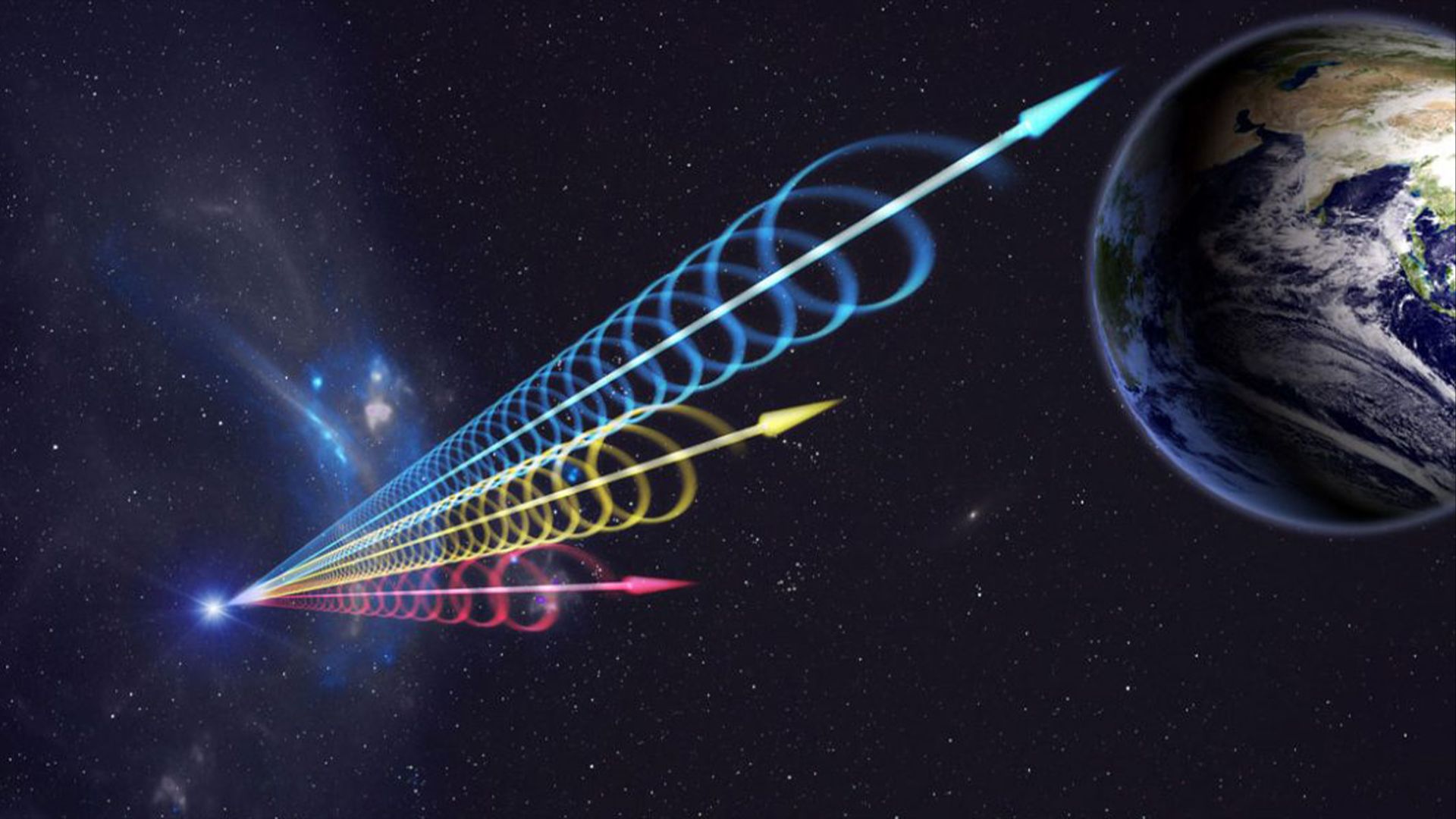
An illustration of a fast radio burst (FRB) being detected by the MeerKAT radio telescope array.

(Image credit: Carl Knox – OzGrav, Swinburne University of Technology Background Image Credit: NASA, ESA, CSA, STScI, Themiya Nanayakkara (USYD) Background Image Processing Credit: Joseph DePasquale (STScI))

The science team successfully got time on JWST with a program called Director’s Discretionary Time, which is aimed at time-sensitive observations. The researchers started by using JWST’s Near Infrared Camera to trace the radio signal and take a very deep image of the target region.

“Suddenly, there it was: a very faint galaxy almost exactly where we expected the host of the FRB to be,” Nanayakkara said. The researchers then used JWST’s Near Infrared Spectrograph to obtain a spectrum (wavelengths of light broken into different chemical signatures), which showed hydrogen and oxygen.

“These spectral features act like fingerprints: because we know the wavelengths at which they are produced in the laboratory, we can measure how much they have been shifted by the expansion of the universe,” Nanayakkara explained. “That gave us a very precise redshift of about 2.15. We are therefore seeing this galaxy as it was when the universe was only around three billion years old, so roughly one-fifth of its current age.”

Because the host galaxy is fairly young, it supports the idea that at least some FRBs are generated by magnetars, which are more likely to appear in spry galaxies where intense star formation is occurring, the team said.

The team plans to continue hunting for FRBs with JWST.

“We do not know what the sources will be yet,” Nanayakkara said, as that depends on what pops up in the sky and is spotted by ground-based radio telescopes. “Once our radio telescopes find and localize a suitable new source, we can trigger the JWST observations. So it is quite exciting, because we really have no idea what we will find when we combine the power of these two types of telescopes.”

TOPICS
James Webb Space Telescope

Share. Facebook Twitter LinkedIn Telegram WhatsApp Email

Keep Reading

Beaver Moon 2026: See a full ‘supermoon’ rise this week, and another on Christmas Eve

Beaver Moon 2026: See a full ‘supermoon’ rise this week, and another on Christmas Eve

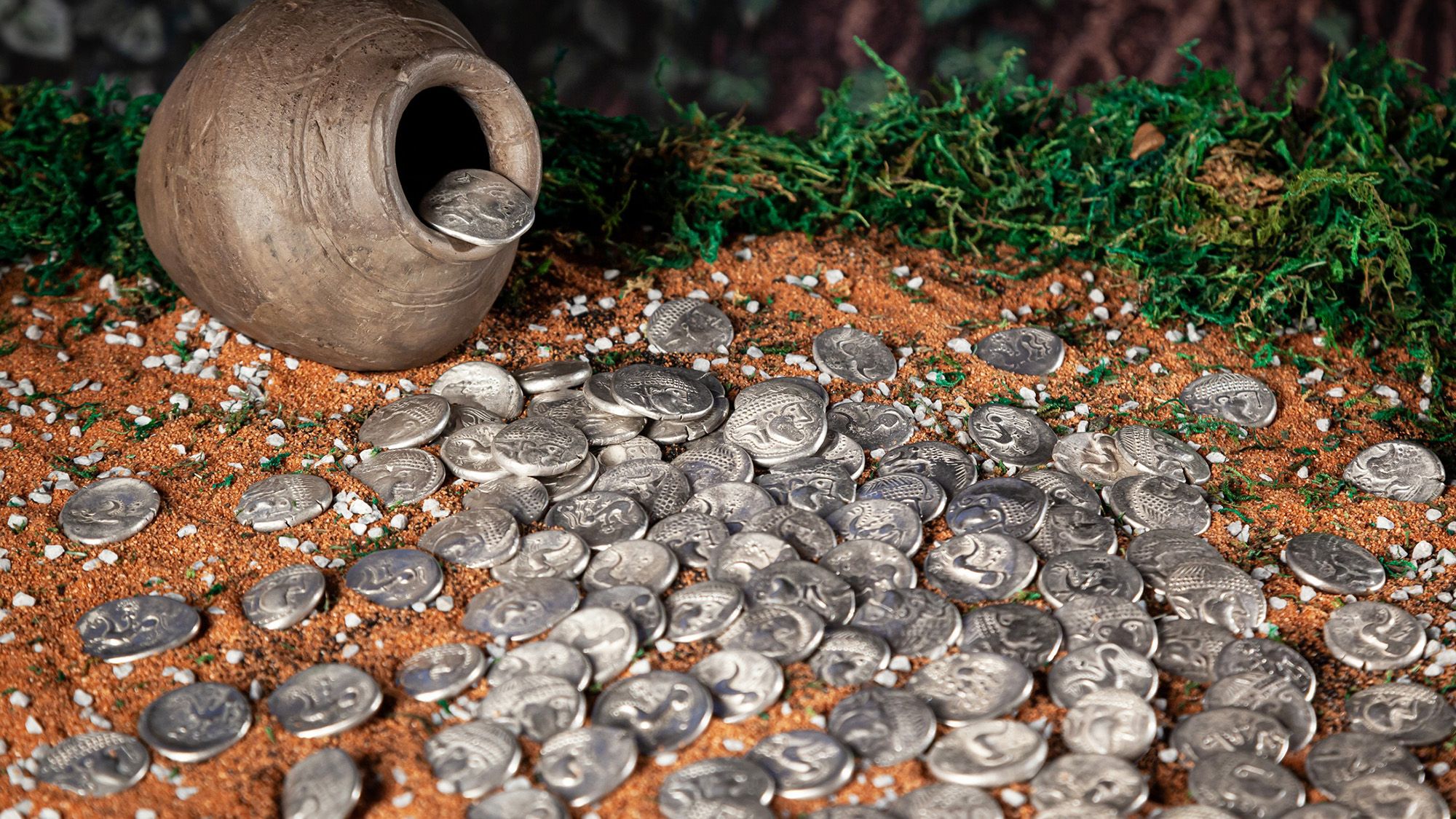
2,200-year-old Celtic silver coin hoard unearthed at construction site in Hungary

2,200-year-old Celtic silver coin hoard unearthed at construction site in Hungary

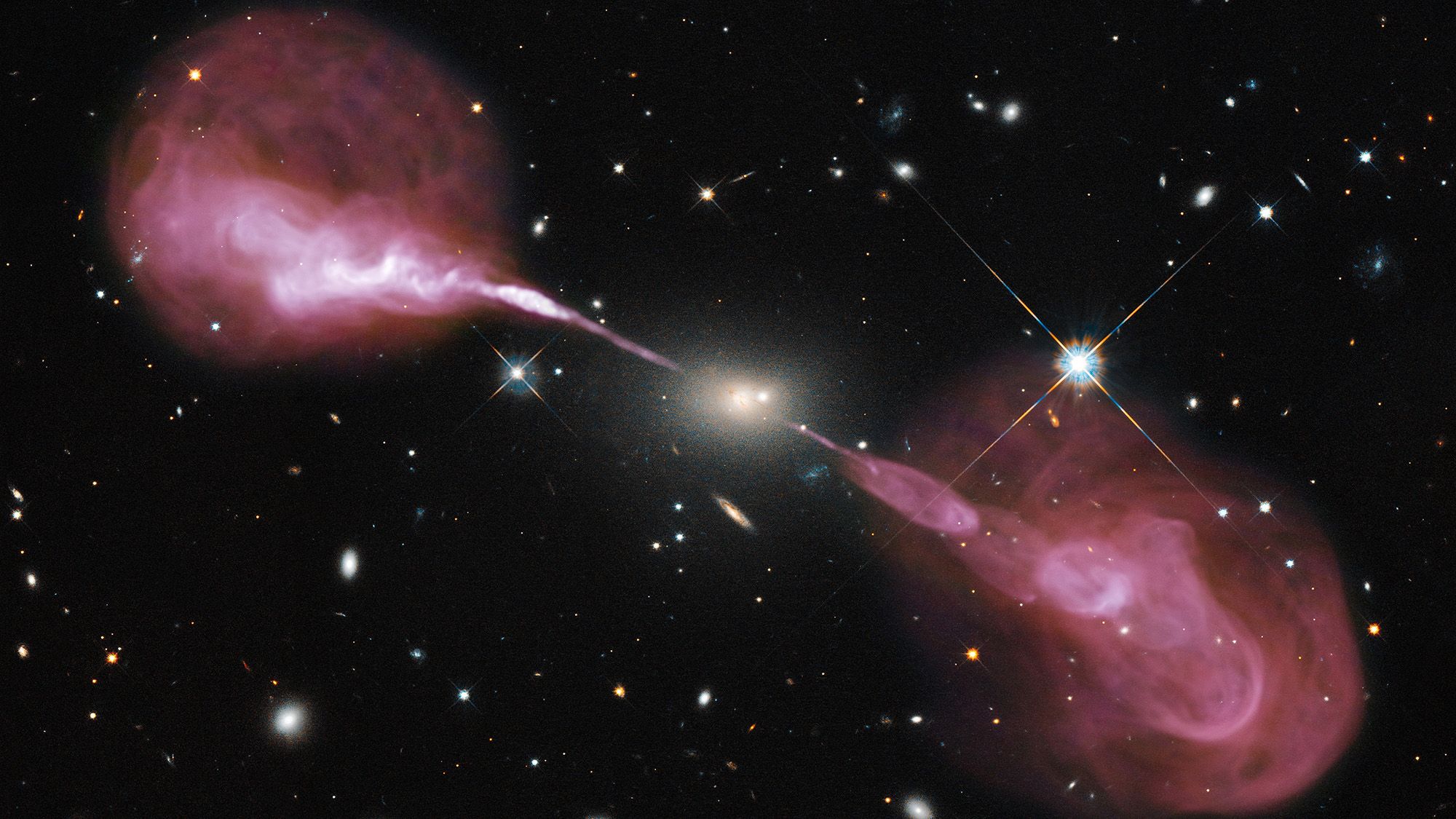
Black holes can split apart ‘like pants’ if they spin too fast, astrophysics study hints

Black holes can split apart ‘like pants’ if they spin too fast, astrophysics study hints

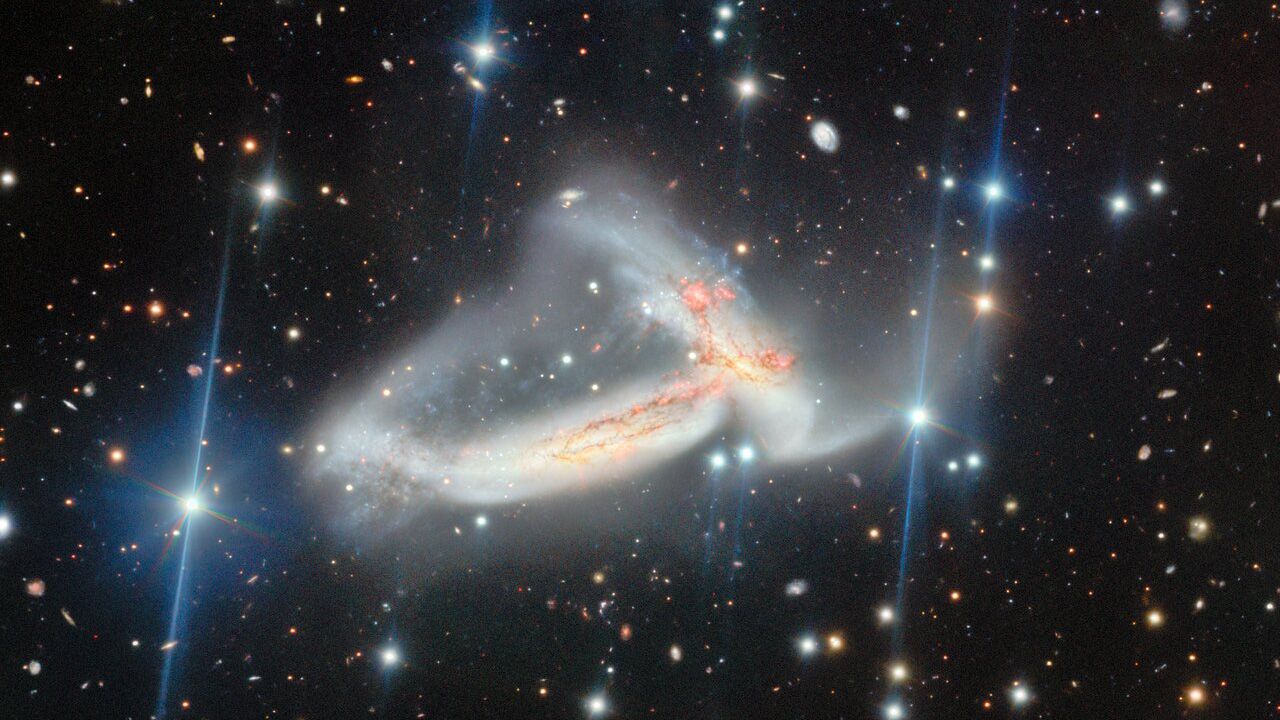
2 ‘peculiar’ spiral galaxies are twisting each other into cosmic balloon animals —‬ Space photo of the week

2 ‘peculiar’ spiral galaxies are twisting each other into cosmic balloon animals —‬ Space photo of the week

Which came first: black holes or galaxies?

Which came first: black holes or galaxies?

‘Like walking the plank’: For 3,000 years, Indigenous people herded bison off a unique cliff in Texas, study reveals

‘Like walking the plank’: For 3,000 years, Indigenous people herded bison off a unique cliff in Texas, study reveals

Winter stargazing 2026: The best skywatching sights this winter (and how to see them)

Winter stargazing 2026: The best skywatching sights this winter (and how to see them)

Meet the science adviser behind Netflix’s hit series ‘Below’

Meet the science adviser behind Netflix’s hit series ‘Below’

Scientists put 78,000 letters of human DNA into a mouse — and unraveled how a rare disease worked

Scientists put 78,000 letters of human DNA into a mouse — and unraveled how a rare disease worked

Add A Comment
Leave A Reply Cancel Reply

Editors Picks

Polymarket promo code NYPMAX1: Deposit , get  for Buccaneers vs. Lions

Polymarket promo code NYPMAX1: Deposit $10, get $25 for Buccaneers vs. Lions

November 22, 2026
Timelime of Fiona the hippo’s life at the Cincinnati Zoo, why millions mourn her

Timelime of Fiona the hippo’s life at the Cincinnati Zoo, why millions mourn her

November 22, 2026
Tallulah Willis Shares Rare Photo With Her Dad Bruce Willis Amid His Health Struggles

Tallulah Willis Shares Rare Photo With Her Dad Bruce Willis Amid His Health Struggles

November 22, 2026
Saints vs. Bears prediction: Caleb Williams won’t destroy New Orleans

Saints vs. Bears prediction: Caleb Williams won’t destroy New Orleans

November 22, 2026

Subscribe to News

Get the latest USA news and updates directly to your inbox.

Latest News
Beaver Moon 2026: See a full ‘supermoon’ rise this week, and another on Christmas Eve

Beaver Moon 2026: See a full ‘supermoon’ rise this week, and another on Christmas Eve

November 22, 2026
Stephen A Smith isn’t the only one who knows dissing White people comes without consequences

Stephen A Smith isn’t the only one who knows dissing White people comes without consequences

November 22, 2026
Who Attended Miley Cyrus and Maxx Morando’s Wedding? Celebrity Guest List Revealed

Who Attended Miley Cyrus and Maxx Morando’s Wedding? Celebrity Guest List Revealed

November 22, 2026
Facebook X (Twitter) Pinterest WhatsApp TikTok Instagram
© 2026 USA Times. All Rights Reserved.
  • Privacy Policy
  • Terms
  • Advertise
  • Contact

Type above and press Enter to search. Press Esc to cancel.