



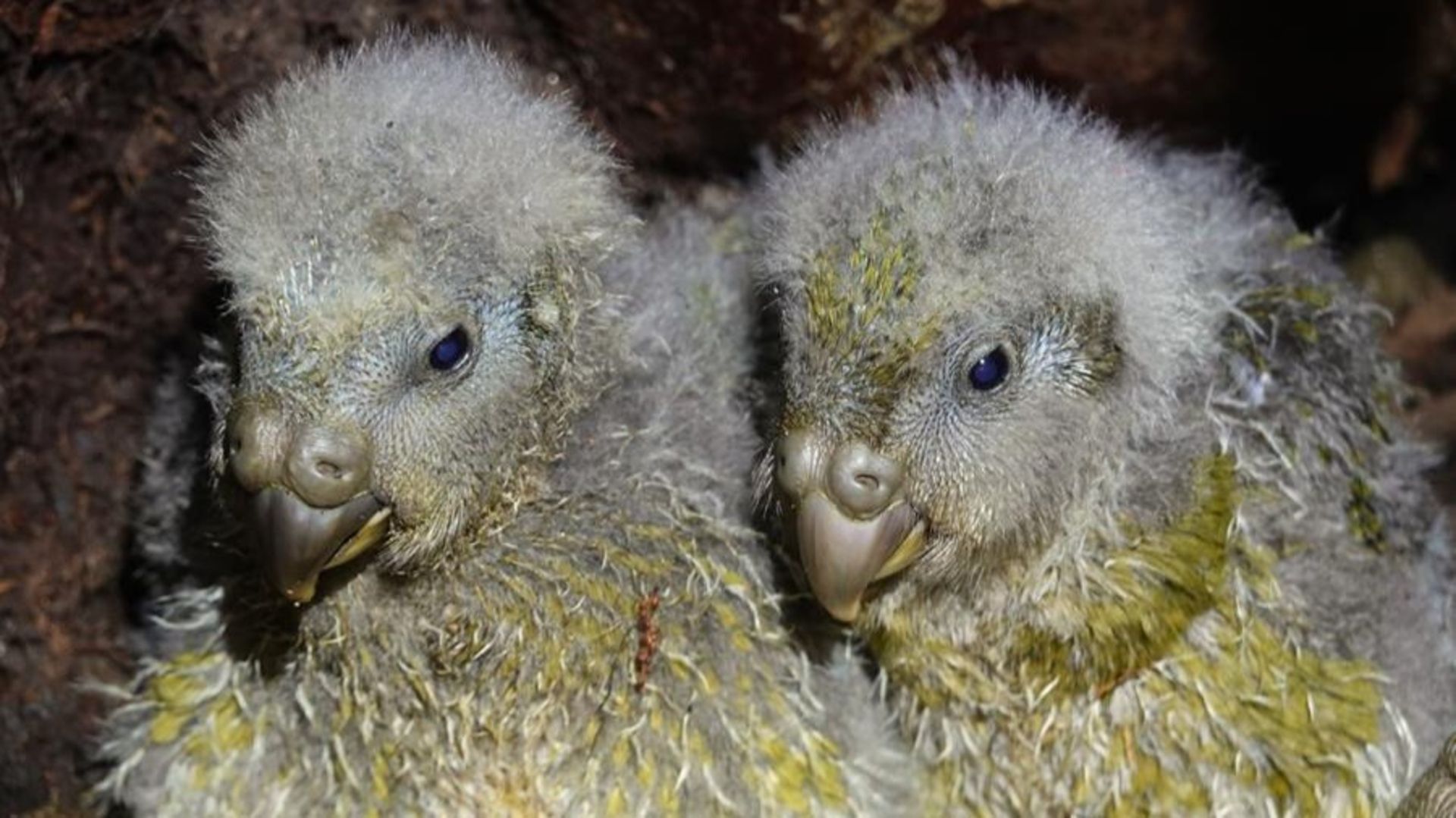

A critically endangered bird that almost went extinct 30 years ago just recorded a major milestone: The kākāpō recovery program in New Zealand has celebrated the 105th kākāpō egg to hatch — the largest number since records began 30 years ago, according to the New Zealand broadcaster RNZ.
In an updated chick count released April 3, representatives from the New Zealand Department of Conservation said 105 kākāpō chicks had hatched from 256 eggs laid. Of these, 98 chicks are still alive. One egg remains in an incubator.
The achievement hints that the species, which reproduces only every two to four years, may be making a comeback. The kākāpō (Strigops habroptilus) is a critically endangered, flightless parrot that is found only in New Zealand. They are the world’s fattest and heaviest parrots, with males weighing up to 8.8 pounds (4 kilograms).
Hunting, habitat destruction and the introduction of new predators have led kākāpō populations to plummet, and the species almost went extinct in the 1990s.
These birds reproduce only every two to four years, and most females hatch only one chick per breeding season, compounding their vulnerability. Today there are an estimated 235 kākāpōs remaining in the wild.
Not all of the newly hatched chicks will survive, however. Sarah Manktelow, Kākāpō Recovery Programme ranger told RNZ’s Kākāpō Files podcast that seven chicks have died so far and four have been transported to Dunedin Wildlife Hospital for treatment. Kākāpō chicks are classified as adults when they reach 150 days old, which will be in mid-July.
The official chick count for this breeding season will be confirmed at this point. The oldest chick is now over 50 days old.
“Every new chick brings the species further from the brink of extinction,” Deidre Vercoe, the Department of Conservation’s operations manager for kakapo told Mongabay. “There’s always a sense of hope and optimism for the future.”
How much do you know about birds? Test your smarts with our bird quiz!