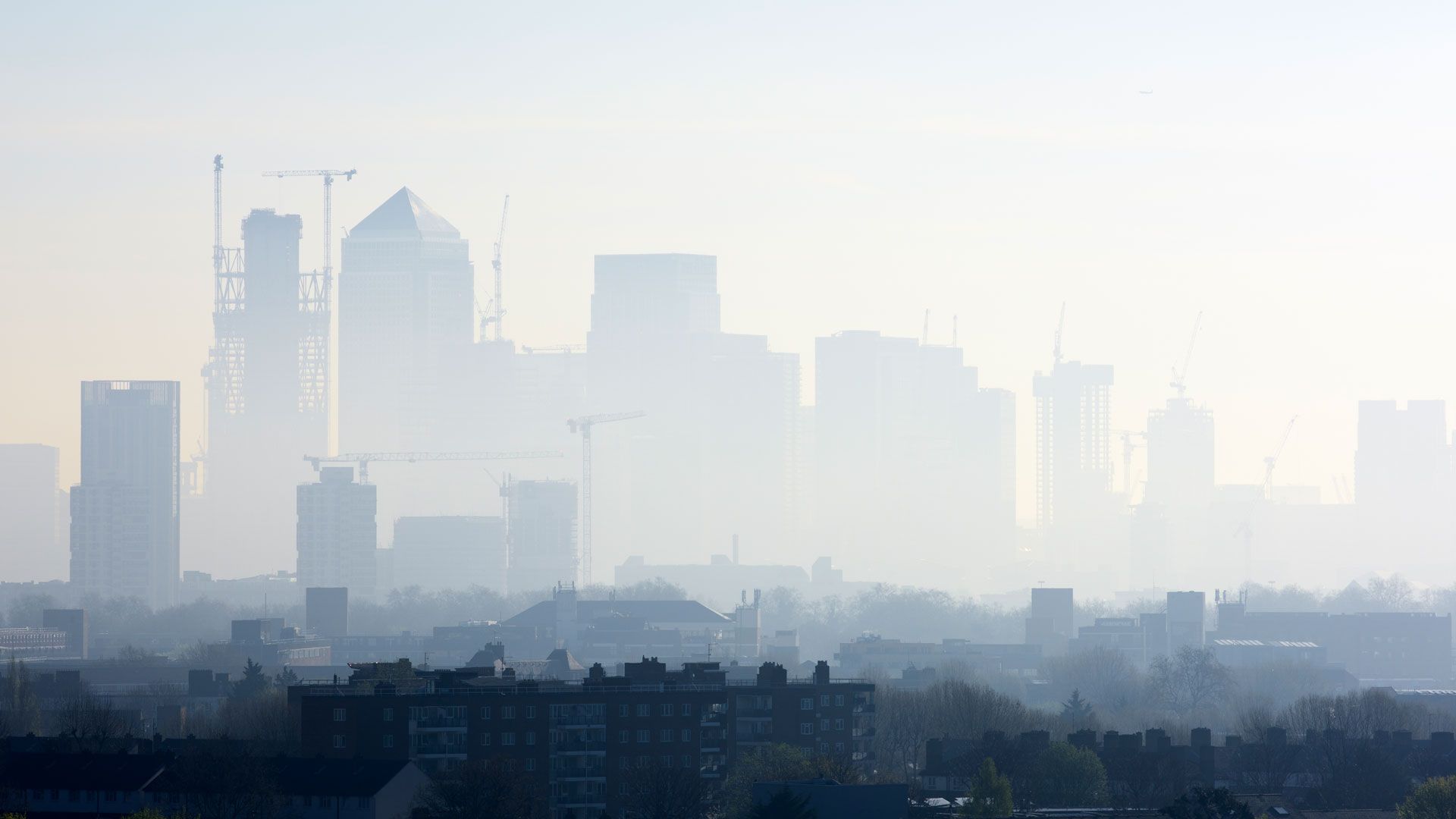

Cars on the road today are 99% cleaner than they were in 1970. Air quality in the United States is much, much better as a result. In Los Angeles, where I live, lead levels in the air were 50 times higher in the 1970s than today, and the amount of lead in kids’ blood has plummeted.
What made that drop possible is arguably the most important environmental technology ever invented: the catalytic converter.
At a time when the Trump administration is attacking California’s ability to cut air and climate pollution and revoking its Clean Air Act waivers, it’s helpful to remember just how important the state’s leadership has been in making the air Americans breathe so much healthier.
As I recount in my forthcoming book, “Smog and Sunshine: The Surprising Story of How Los Angeles Cleaned Up Its Air,” California’s role in the emergence of catalytic technology is often downplayed. The passage of the 1970 Clean Air Act is typically given the credit. That law deserves accolades for its key role. So does William Ruckelshaus, the first administrator of the U.S. Environmental Protection Agency.
But without California’s willingness in the early 1970s to push automakers to meet tough standards, the technology would have developed more slowly and the air would have remained dirtier for many more years.
Birth of the catalytic converter
Eugene Houdry invented the first catalytic converter technology in the 1950s. Years earlier, he had developed the Houdry process for catalytic cracking, which makes converting crude oil into gasoline much easier. That invention in the mid-1930s helped spur the mass adoption of cars and trucks in the U.S.
Widespread car ownership altered American life, changing where people lived, worked and vacationed. But cars also brought terrible smog as their use skyrocketed. When Houdry realized his life’s work was choking the air of Los Angeles, he decided to do something about it. By the late 1950s, Houdry had invented a rudimentary catalytic converter.
You might think that this invention, which Houdry said could make “the lung cancer curve dip,” would lead carmakers to install the technology on their new vehicles.
But that is not what happened. Instead, auto manufacturers engaged in what the government described as a yearslong conspiracy to keep emissions-limiting technology off the market, ultimately leading to an antitrust legal settlement.
It wasn’t until the passage of the 1970 Clean Air Act that carmakers got serious about improving upon Houdry’s invention for mass market installation.
The Clean Air Act’s ambition
The 1970 Clean Air Act is a remarkable piece of legislation. Passed with only one negative vote and signed into law by President Richard Nixon, the act set wildly ambitious goals. They included a requirement that carmakers cut auto pollutants by 90% by 1975.
Congress passed this requirement knowing that the technology to cut emissions wasn’t ready for prime time. Houdry’s catalytic invention couldn’t work with leaded gasoline, and it hadn’t been tested in tough conditions, such as freezing cold or sweltering heat.
The Ford Motor Co., with Lee Iacocca as its president, told Congress in 1970, “If such (pollution cuts) are established … the technology as we know it today would not permit us to continue to produce cars after January 1, 1975.”
Congress ignored Ford’s dire warning and passed the stringent cuts.
Automakers responded with two separate tactics. The first was to gear up — alongside companies like Corning Glass and the Engelhard Company — to develop technology to meet the 90% cuts. Most of their efforts focused on improving the catalytic converter, made more plausible when Engelhard determined that catalytic converters wouldn’t corrode with unleaded gasoline. The EPA’s Ruckelshaus ordered gas stations to make unleaded gasoline available as of Jan. 1, 1975.
While the auto companies worked to meet the congressional mandate, they also pressured Congress and the courts to weaken or delay it. The U.S. Court of Appeals for the District of Columbia Circuit obliged, ordering Ruckelshaus to extend the deadline for compliance by a year. Congress eventually extended the deadline to 1981.
But California did not let up.
A gamble that paid off
California has the authority under federal law to issue its own automobile pollution standards, as long as the standards are stronger than federal standards and the state receives a waiver from the EPA. No other state has similar power, but states can adopt California’s higher standards.
After the federal appeals court gave carmakers an extra year to comply with the federal rules, California decided it would not let car companies off the hook.
The state asked Ruckelshaus to grant a waiver for California to issue standards tough enough that carmakers would have to install catalytic technology to meet them.
Ruckelshaus faced enormous pressure to deny the waiver, with automakers arguing that the technology was neither effective nor available. But in a hint of the resolve he would later show in refusing Nixon’s order to fire Watergate special prosecutor Archibald Cox, Ruckelshaus gave California the go-ahead in 1973, and the state’s rules went into effect for the 1975 model year.
He reasoned that doing so would maintain “continued momentum toward installation of (catalyst) systems … while minimizing risks incident to national introduction of a new technology.” In other words, California could serve as a guinea pig for the rest of the country by adopting tough standards.
Watch On
The gamble paid off. Since California was the nation’s largest auto market, companies had strong economic incentives to change their models to meet the state’s standards. Catalytic technology is now not only standard on American vehicles but also on vehicles around the world, and air quality in the U.S. is vastly improved.
With the adoption of the catalytic converter, leaded gasoline was banned and eventually phased out, and lead levels began to drop almost immediately.
Continuing California’s legacy
Catalytic converters have removed 8 billion tons of pollution from the air in the U.S. They have saved hundreds of thousands of lives and led to the removal of a deadly neurotoxin, lead, from the atmosphere.
California’s standards have spurred important technological innovations for vehicles, including new types of less-polluting gasoline and vehicles that emit no pollution at all.
But the state’s ability to set higher standards is under attack. Congress — at the behest of the Trump administration — has overturned three waivers the state was granted to cut even more pollutants and the greenhouse gases that cause climate change. The Trump administration has also sued California to invalidate its mandates for automakers to sell zero-emissions vehicles.
Today, California officials are searching for alternative ways to continue to make cars and trucks cleaner. The state has set aside money to replace federal tax incentives for electric vehicles, and the Legislature is exploring creative ways to hold indirect sources of emissions, such as rail yards, ports and warehouses where vehicles are constantly running, accountable for air pollution.
But these alternatives aren’t as powerful as the authority to exceed federal standards to make the air cleaner.
This edited article is republished from The Conversation under a Creative Commons license. Read the original article.