Close Menu
  • Home
  • United States
  • World
  • Politics
  • Business
  • Lifestyle
  • Entertainment
  • Health
  • Science
  • Tech
  • Sports
  • More
    • Web Stories
    • Editor’s Picks
    • Press Release

Subscribe to Updates

Get the latest USA news and updates directly to your inbox.

What's On
Late Influencer Ashlee Jenae’s Family Addresses Her ‘Suspicious Passing,’ Death Investigation

Late Influencer Ashlee Jenae’s Family Addresses Her ‘Suspicious Passing,’ Death Investigation

April 15, 2026
Weighing all the factors that have made it all go wrong for LIV Golf

Weighing all the factors that have made it all go wrong for LIV Golf

April 15, 2026
Morgan Stanley traders see massive wins as bank posts record results

Morgan Stanley traders see massive wins as bank posts record results

April 15, 2026
Facebook X (Twitter) Instagram
Trending
  • Late Influencer Ashlee Jenae’s Family Addresses Her ‘Suspicious Passing,’ Death Investigation
  • Weighing all the factors that have made it all go wrong for LIV Golf
  • Morgan Stanley traders see massive wins as bank posts record results
  • Eric Swalwell quietly scrubbed from powerful PAC supporting ‘young Dems’
  • Iran to execute first female protester from 2026 uprising
  • Paul Walter Hauser Reveals How His Wife Makes Him a ‘Better Parent’ After Baby No. 3 (Exclusive)
  • LIV CEO Scott O’Neil says golf league will go ‘full throttle’ in 2026 as questions about future remain
  • Amazon warehouse worker who wanted to give dying colleague CPR says boss urged employees to keep working instead
  • Privacy
  • Terms
  • Advertise
  • Contact Us
Join Us
USA TimesUSA Times
Newsletter Login
  • Home
  • United States
  • World
  • Politics
  • Business
  • Lifestyle
  • Entertainment
  • Health
  • Science
  • Tech
  • Sports
  • More
    • Web Stories
    • Editor’s Picks
    • Press Release
USA TimesUSA Times
Home » Viruses that evolved on the space station and were sent back to Earth were more effective at killing bacteria
Viruses that evolved on the space station and were sent back to Earth were more effective at killing bacteria
Science

Viruses that evolved on the space station and were sent back to Earth were more effective at killing bacteria

News RoomBy News RoomJanuary 18, 20261 ViewsNo Comments

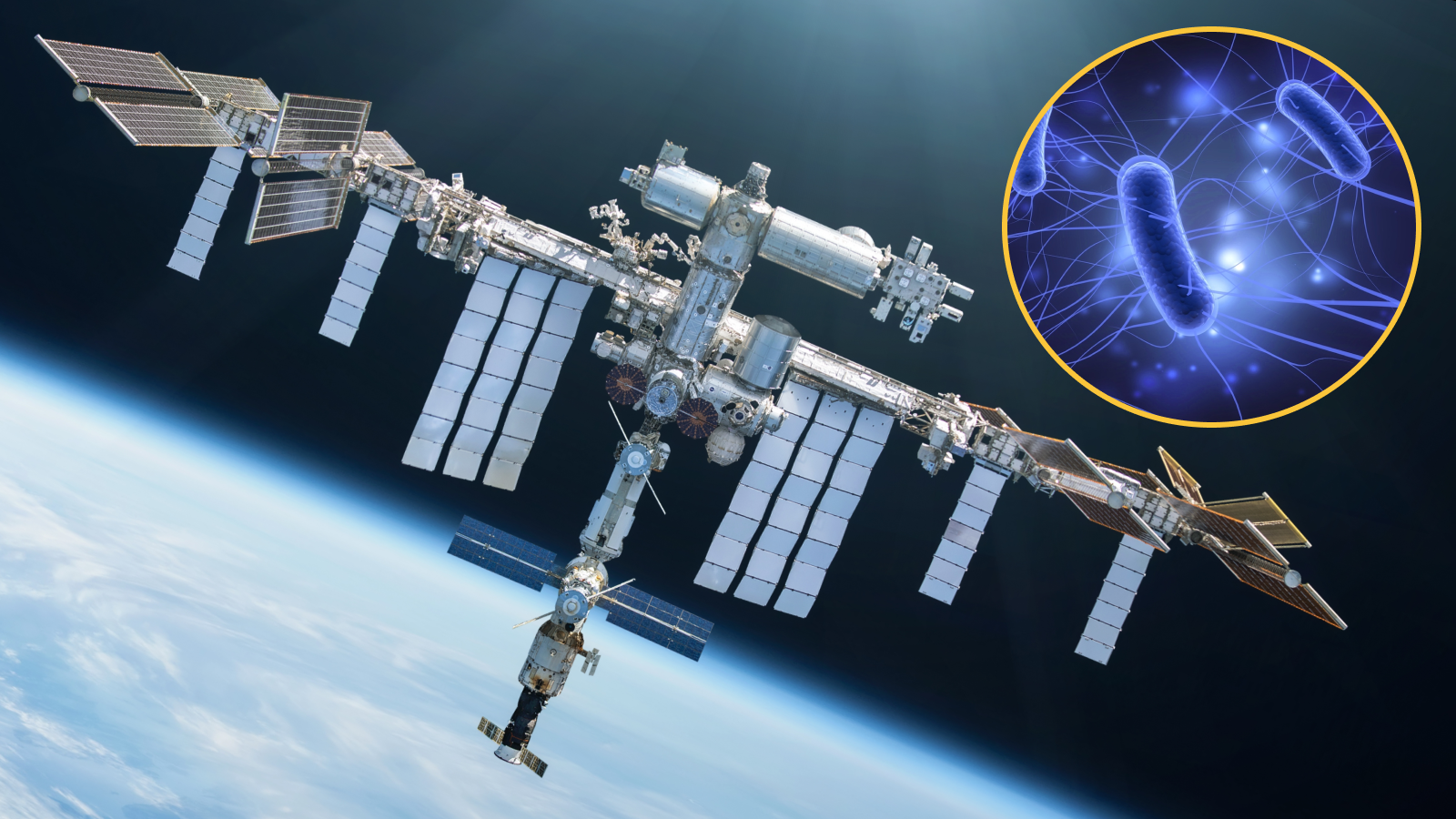
Bacteria and the viruses that infect them, called phages, are locked in an evolutionary arms race. But that evolution follows a different trajectory when the battle takes place in microgravity, a study conducted aboard the International Space Station (ISS) reveals.

As bacteria and phages duke it out, bacteria evolve better defenses to survive while phages evolve new ways to penetrate those defenses. The new study, published Jan. 13 in the journal PLOS Biology, details how that skirmish unfolds in space and reveals insights that could help us design better drugs for antibiotic-resistant bacteria on Earth.

In the study, researchers compared populations of E. coli infected with a phage known as T7. One set of microbes was incubated aboard the ISS, while identical control groups were grown on Earth.


You may like

The analysis of the space-station samples revealed that microgravity fundamentally altered the speed and nature of phage infection.

While the phages could still successfully infect and kill the bacteria in space, the process took longer than it did in the Earth samples. In an earlier study, the same researchers had hypothesized that infection cycles in microgravity would be slower because fluids don’t mix as well in microgravity as they do in Earth’s gravity.

“This new study validates our hypothesis and expectation,” said lead study author Srivatsan Raman, an associate professor in the Department of Biochemistry at the University of Wisconsin-Madison.

On Earth, the fluids bacteria and viruses exist within are constantly being stirred by gravity — warm water rises, cold water sinks, and heavier particles settle at the bottom. This keeps everything moving and bumping into each other.

Get the world’s most fascinating discoveries delivered straight to your inbox.

In space, there is no stirring; everything just floats. So because the bacteria and phages weren’t bumping into each other as often, phages had to adapt to a much slower pace of life and become more efficient at grabbing onto passing bacteria.

Experts think understanding this alternative form of phage evolution could help them develop new phage therapies. These emerging treatments for infections use phages to kill bacteria or make the germs more vulnerable to traditional antibiotics.

“If we can work out what phages are doing on the genetic level in order to adapt to the microgravity environment, we can apply that knowledge to experiments with resistant bacteria,” Nicol Caplin, a former astrobiologist at the European Space Agency who was not involved in the study, told Live Science in an email. “And this can be a positive step in the race to optimise antibiotics on Earth.”


You may like

Whole-genome sequencing revealed that both the bacteria and the phages on the ISS accumulated distinctive genetic mutations not observed in the samples on Earth. The space-based viruses accumulated specific mutations that boosted their ability to infect bacteria, as well as their ability to bind to bacterial receptors. Simultaneously, the E. coli developed mutations that protected against the phages’ attacks — by tweaking their receptors, for instance — and enhanced their survival in microgravity.

Then, the researchers used a technique called deep mutational scanning to examine the changes in the viruses’ receptor-binding proteins. They found that the adaptations driven by the unique cosmic environment may have practical applications back home.

When the phages were transported back to Earth and tested, the space-adapted changes in their receptor-binding protein resulted in increased activity against E. coli strains that commonly cause urinary tract infections. These strains are typically resistant to the T7 phages.

“It was a serendipitous finding,” Raman said. “We were not expecting that the [mutant] phages that we identified on the ISS would kill pathogens on Earth.”

“These results show how space can help us improve the activity of phage therapies,” said Charlie Mo, an assistant professor in the Department of Bacteriology at the University of Wisconsin-Madison who was not involved in the study.

“However,” Mo added, “we do have to factor in the cost of sending phages into space or simulating microgravity on Earth to achieve these results.”

In addition to helping fight infections in Earthbound patients, the research could help yield more effective phage therapies for use in microgravity, Mo suggested. “This could be important for astronauts’ health on long-term space missions — for example, missions to the moon or Mars, or prolonged ISS stays.”

Share. Facebook Twitter LinkedIn Telegram WhatsApp Email

Keep Reading

Ancient process that created rare earth elements discovered — and it could help us locate desperately needed deposits

Ancient process that created rare earth elements discovered — and it could help us locate desperately needed deposits

This humanoid robot does all your housework for you ‪—‬ and its makers say it’s ready for your home

This humanoid robot does all your housework for you ‪—‬ and its makers say it’s ready for your home

New study confirms lobsters feel pain, driving scientists to call for a ban on boiling them alive

New study confirms lobsters feel pain, driving scientists to call for a ban on boiling them alive

‘Human evolution didn’t slow down; we were just missing the signal’: Large DNA study reveals natural selection led to more redheads and less male-pattern baldness

‘Human evolution didn’t slow down; we were just missing the signal’: Large DNA study reveals natural selection led to more redheads and less male-pattern baldness

‘Something’s missing’: Most thorough-ever study of the cosmos proves we still can’t explain how the universe is expanding

‘Something’s missing’: Most thorough-ever study of the cosmos proves we still can’t explain how the universe is expanding

Artemis II quiz: Is your knowledge of NASA’s historic moon mission out of this world?

Artemis II quiz: Is your knowledge of NASA’s historic moon mission out of this world?

Strange mammal ancestor laid huge, leathery eggs —‬ and it was key to surviving the world’s worst mass extinction

Strange mammal ancestor laid huge, leathery eggs —‬ and it was key to surviving the world’s worst mass extinction

73 moon landings? NASA’s ‘Moon Base User’s Guide’ reveals the agency’s ‘most ambitious space project’ will be fraught with challenges

73 moon landings? NASA’s ‘Moon Base User’s Guide’ reveals the agency’s ‘most ambitious space project’ will be fraught with challenges

Diagnostic dilemma: A woman heard voices telling her she had a brain tumor ‪—‬ and scans confirmed she did

Diagnostic dilemma: A woman heard voices telling her she had a brain tumor ‪—‬ and scans confirmed she did

Add A Comment
Leave A Reply Cancel Reply

Editors Picks

Weighing all the factors that have made it all go wrong for LIV Golf

Weighing all the factors that have made it all go wrong for LIV Golf

April 15, 2026
Morgan Stanley traders see massive wins as bank posts record results

Morgan Stanley traders see massive wins as bank posts record results

April 15, 2026
Eric Swalwell quietly scrubbed from powerful PAC supporting ‘young Dems’

Eric Swalwell quietly scrubbed from powerful PAC supporting ‘young Dems’

April 15, 2026
Iran to execute first female protester from 2026 uprising

Iran to execute first female protester from 2026 uprising

April 15, 2026

Subscribe to News

Get the latest USA news and updates directly to your inbox.

Latest News
Paul Walter Hauser Reveals How His Wife Makes Him a ‘Better Parent’ After Baby No. 3 (Exclusive)

Paul Walter Hauser Reveals How His Wife Makes Him a ‘Better Parent’ After Baby No. 3 (Exclusive)

April 15, 2026
LIV CEO Scott O’Neil says golf league will go ‘full throttle’ in 2026 as questions about future remain

LIV CEO Scott O’Neil says golf league will go ‘full throttle’ in 2026 as questions about future remain

April 15, 2026
Amazon warehouse worker who wanted to give dying colleague CPR says boss urged employees to keep working instead

Amazon warehouse worker who wanted to give dying colleague CPR says boss urged employees to keep working instead

April 15, 2026
Facebook X (Twitter) Pinterest WhatsApp TikTok Instagram
© 2026 USA Times. All Rights Reserved.
  • Privacy Policy
  • Terms
  • Advertise
  • Contact

Type above and press Enter to search. Press Esc to cancel.