





Watch On
A spectacular explosion of Blue Origin’s gigantic New Glenn rocket has plunged NASA’s plans to build a permanent base on the moon into uncertainty.
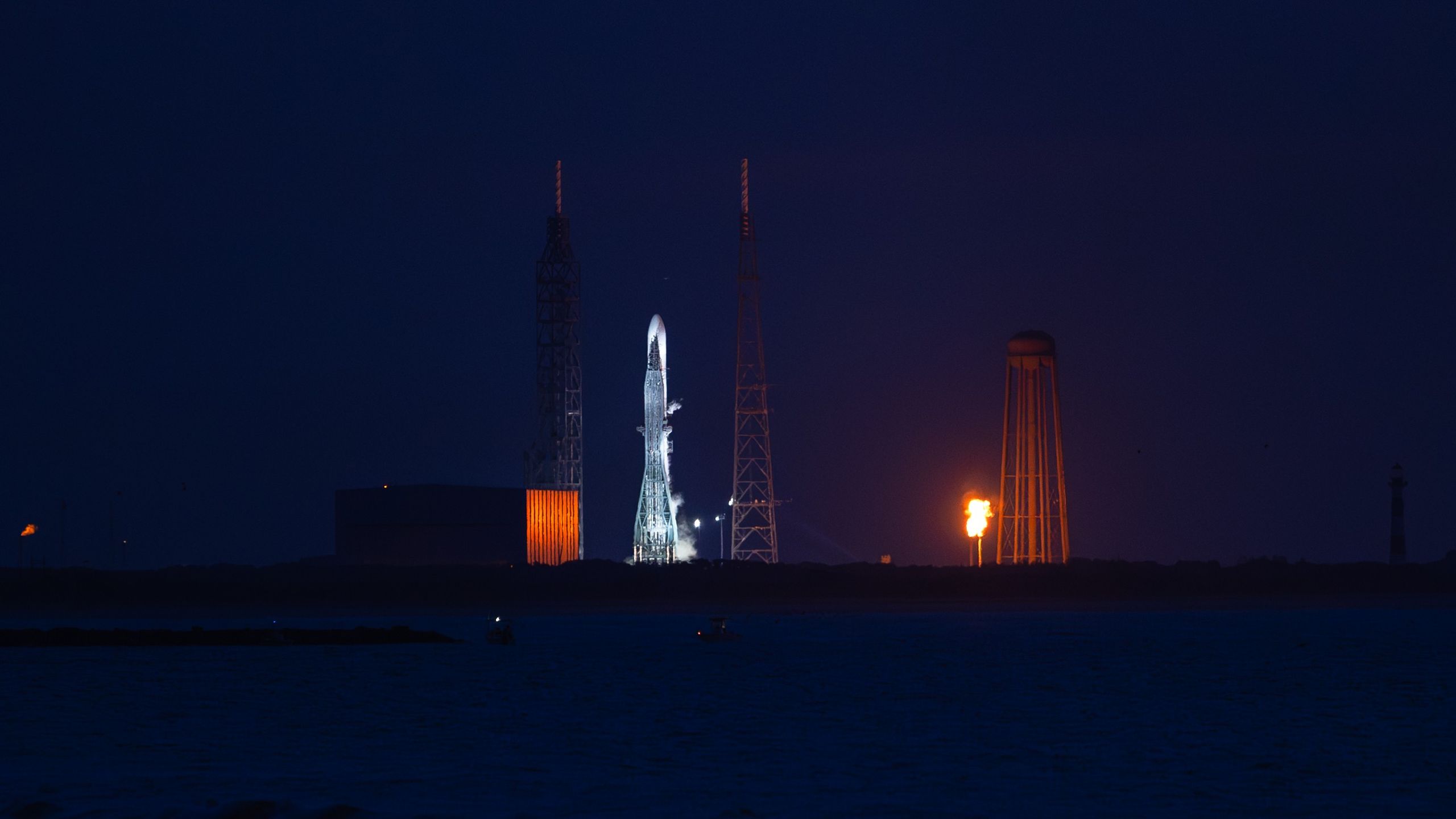
The 321-foot-tall (98 meters) rocket erupted into a gigantic fireball just seconds into a “hotfire test” at Florida’s Cape Canaveral Space Force Station at around 9 p.m. EDT (1 a.m. GMT) on Thursday night (May 28).
The force of the blast — among the most powerful rocket explosions filmed in over 50 years and a contender for the largest in American history — destroyed parts of the rocket’s launchpad, shaking nearby homes and sending debris flying. The detonation bathed the sky in an orange light that was reportedly seen as far as Sarasota, roughly 175 miles (280 kilometers) away.
Nobody was injured in the blast, but it has likely bruised NASA’s ambitions to build humanity’s first lunar outpost, which were revealed just two days earlier on Tuesday (May 26). NASA awarded Blue Origin the contract to launch the first of three missions planned to deliver initial payloads to the moon this year, alongside $468 million for two uncrewed landers.
The first of those payloads, Moon Base 1, was set to be transported on Blue Origin’s robotic Blue Moon Mark 1 “Endurance” lander, mounted atop a New Glenn rocket. The company is also competing with Elon Musk’s SpaceX to build a crewed lunar lander for the Artemis IV mission, which is set to land astronauts on the moon in 2028.
The exact cause of last night’s explosion remains unknown, although it appears to have originated in the rocket’s first stage, which houses seven liquid methane BE-4 engines.
“All personnel are accounted for and safe. It’s too early to know the root cause but we’re already working to find it,” Jeff Bezos, the former president and CEO of Amazon and the founder of Blue Origin, wrote on X not long after the explosion. “Very rough day, but we’ll rebuild whatever needs rebuilding and get back to flying.”
Get the world’s most fascinating discoveries delivered straight to your inbox.
Less than 15 minutes after Bezos’ post, NASA administrator Jared Isaacman wrote on X that the space agency was aware of an “anomaly” at Launch Complex 36 involving Blue Origin’s rocket. “Spaceflight is unforgiving, and developing new heavy-lift launch capability is extraordinarily difficult,” he added. “We will work with our partners to support a thorough investigation of this anomaly, assess near-term mission impacts, and get back to launching rockets.”
This isn’t the first recent mishap involving New Glenn this year. On April 19, Blue Origin successfully reused the rocket’s booster for the first time, but the AST SpaceMobile satellite it lofted into space was dropped into a critically low orbit, rendering it useless, representatives from the satellite maker wrote at the time.
The upper-stage malfunction responsible for this previous error led to New Glenn’s grounding by the Federal Aviation Authority (FAA), an order that was lifted just four days ago. (The FAA has yet to comment on last night’s incident.)
Besides being a major setback for Blue Origin, the explosion will be a headache for NASA. Experts have already voiced strong skepticism about the feasibility of the agency’s ambitious timeline for a return to the moon, citing the untested nature of much of the technology included in its commercial lunar contracts.
For example, NASA chose Axiom Space as a rover partner despite its late space suits risking significant delays to the Artemis program. Astrobotic and Intuitive Machines, meanwhile, were selected to send payloads, but both failed in their only other lunar delivery missions to date. And SpaceX’s Starship, New Glenn’s main rival, has suffered at least two years of delays since NASA selected the rocket as an astronaut moon lander in 2021.
“Most unfortunate,” Musk wrote on X soon after Thursday’s explosion. “Rockets are hard.”