

Close Menu
  • Home
  • United States
  • World
  • Politics
  • Business
  • Lifestyle
  • Entertainment
  • Health
  • Science
  • Tech
  • Sports
  • More
    • Web Stories
    • Editor’s Picks
    • Press Release

Subscribe to Updates

Get the latest USA news and updates directly to your inbox.

What's On
Josh Dallas Reveals If He Would Join Manifest’s Melissa Roxburgh on Justin Hartley’s ‘Tracker’ (Exclusive)

Josh Dallas Reveals If He Would Join Manifest’s Melissa Roxburgh on Justin Hartley’s ‘Tracker’ (Exclusive)

April 6, 2026
OG Anunoby ‘starting to understand’ his aggressiveness is key to Knicks’ playoff ceiling

OG Anunoby ‘starting to understand’ his aggressiveness is key to Knicks’ playoff ceiling

April 6, 2026
Ex-CIA chief says agency ran deception op to rescue airman from Iran

Ex-CIA chief says agency ran deception op to rescue airman from Iran

April 6, 2026
Facebook X (Twitter) Instagram
Trending
  • Josh Dallas Reveals If He Would Join Manifest’s Melissa Roxburgh on Justin Hartley’s ‘Tracker’ (Exclusive)
  • OG Anunoby ‘starting to understand’ his aggressiveness is key to Knicks’ playoff ceiling
  • Ex-CIA chief says agency ran deception op to rescue airman from Iran
  • Rumer Willis Shares Candid Video of Her Breastfeeding Toddler, Slams Critics Who Disapprove
  • Kodai Senga ‘outstanding’ for Mets in rare outing on regular rest
  • Democrat lawmakers blast ‘blockade of fuel’ to Cuba after delegation to island
  • Savannah Guthrie Questions If Jesus Felt ‘This Wound’ in Easter Message Amid Mom’s Disappearance
  • Dodgers’ Roki Sasaki has lost his best pitch — and maybe his identity
  • Privacy
  • Terms
  • Advertise
  • Contact Us
Join Us
USA TimesUSA Times
Newsletter Login
  • Home
  • United States
  • World
  • Politics
  • Business
  • Lifestyle
  • Entertainment
  • Health
  • Science
  • Tech
  • Sports
  • More
    • Web Stories
    • Editor’s Picks
    • Press Release
USA TimesUSA Times
Home » ‘They are much more connected than we thought’: Study may rewrite our understanding of glia, the nervous system’s support cells
‘They are much more connected than we thought’: Study may rewrite our understanding of glia, the nervous system’s support cells
Science

‘They are much more connected than we thought’: Study may rewrite our understanding of glia, the nervous system’s support cells

News RoomBy News RoomJanuary 7, 20261 ViewsNo Comments

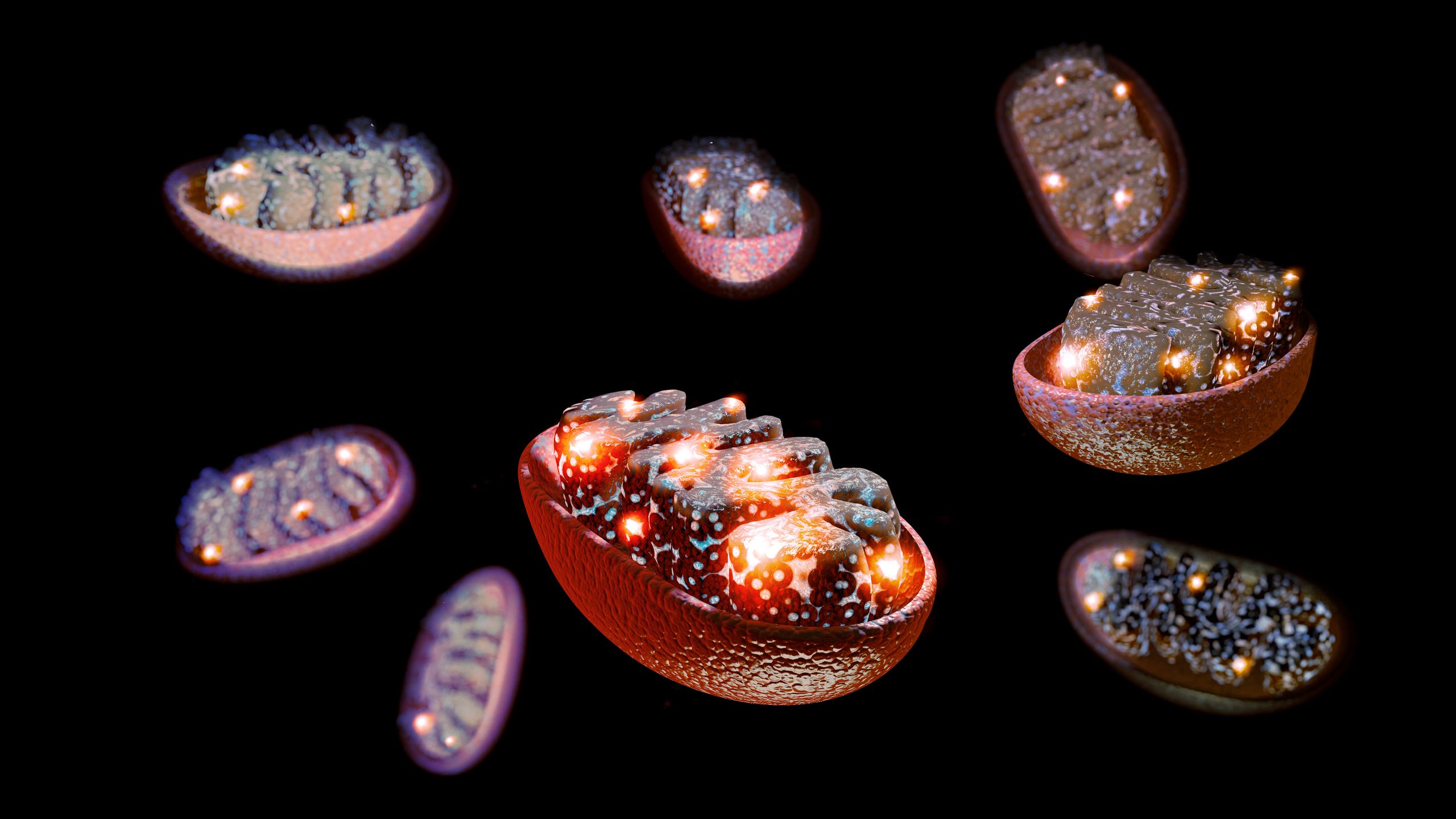
Supplying nerves with a fresh supply of mitochondria could curb chronic nerve pain, a new study hints.

The research, conducted with mouse cells, live mice, and human tissues, reveals a previously unsung role of mitochondria, the powerhouses of cells. It shows that support cells within the nervous system can ship mitochondria to the nerves that respond to pressure, temperature and pain. But problems with that shipping process can deplete the nerves’ energy reserves, causing them to malfunction.

Whereas nerves would normally send a signal to the brain in response to some stimulus, dysfunctional nerves “fire sometimes spontaneously, even without stimulation,” said senior study author Ru-Rong Ji, director of the Duke University School of Medicine’s Center for Translational Pain Medicine and a professor of anesthesiology and neurobiology.


You may like

“That will drive chronic pain and also will lead to neurodegeneration,” Ji told Live Science, “because if you fire like crazy, eventually, that neuron probably will degenerate.”

The new study, published Wednesday (Jan. 7) in the journal Nature, points to potential new ways of heading off that neuronal breakdown — and one strategy could involve transferring mitochondria directly into nerves.

Fresh mitochondria reduce pain

The research zoomed in on satellite glial cells, unique cells that physically wrap themselves around the “roots” of nerve cells located near the spinal cord. The bodies of these nerve cells cluster together near the spine, and from each cluster, bundles of long fibers extend to different parts of the body, from head to toe. The longest of these fiber bundles belong to the sciatic nerve, which measures just over 3 feet (1 meter) long.

The sheer length of the fibers poses a “real challenge,” because for a nerve to function properly, mitochondria made in the nerve’s root must travel down to the end of each fiber, and that in itself requires energy to do, Ji said. That raises a question of how nerves maintain this power-hungry supply chain.

Get the world’s most fascinating discoveries delivered straight to your inbox.

Scientists once thought that cells had to make all of their own mitochondria, but in recent years, they have uncovered evidence that cells swap mitochondria. This can occur between cells of the same type or between cells of different types, such as between a stem cell and an immune cell, for example. To facilitate the swap, cells construct tiny structures called tunneling nanotubes for the mitochondria to travel through, like spitballs sliding from one end of a straw to another.

Ji and his team wondered whether satellite glial cells might be able to send mitochondria to the nerve cells they encircle — and it turns out that they can.

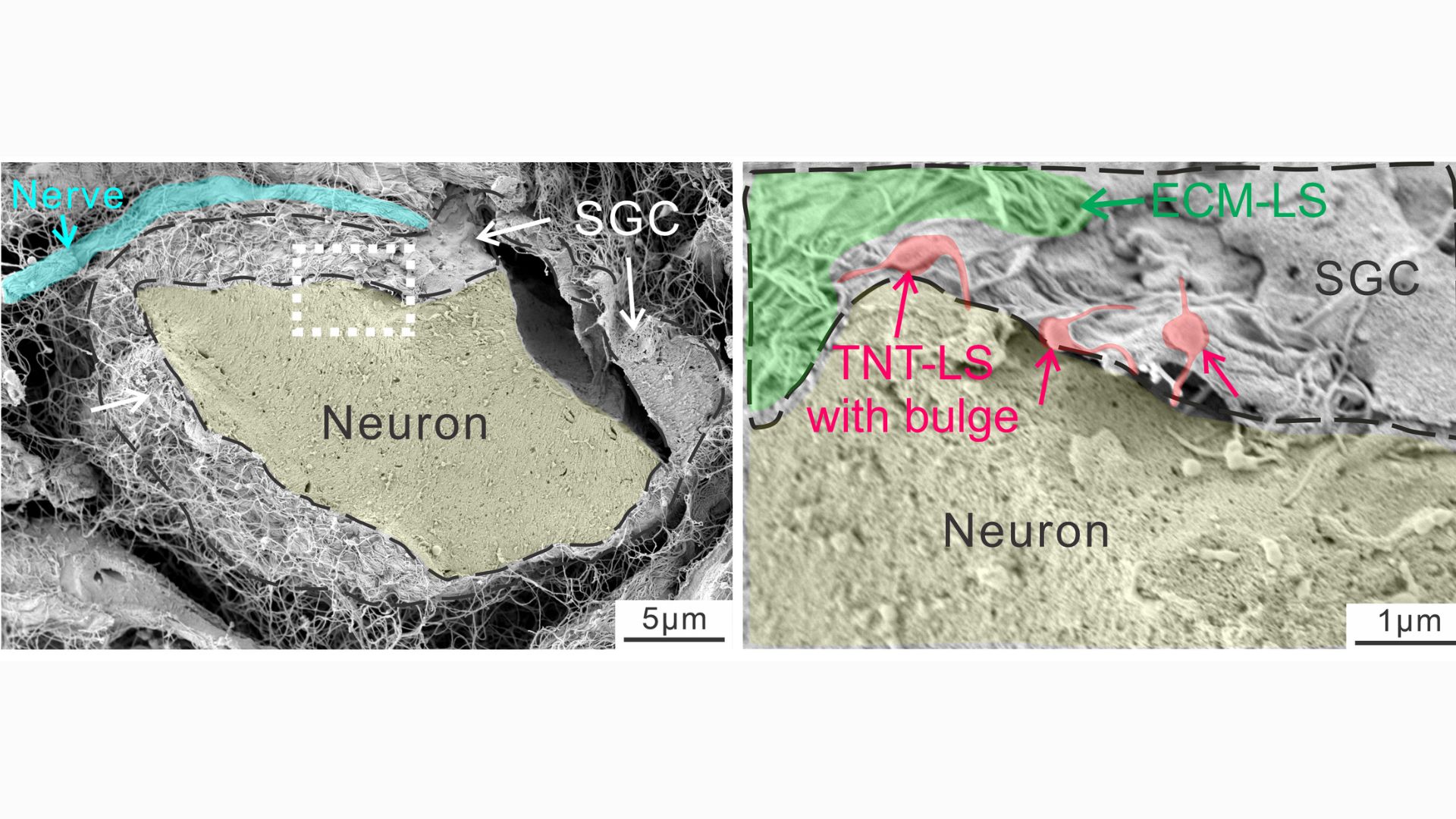
“We demonstrate that these cells actually extend these tunneling nanotubes to deliver in the mitochondria. This [finding] is unique in this study,” Ji said.


You may like

Image 1 of 2

(Image credit: Xu et al. Nature (2026). doi: 10.1038/s41586-025-09896-x)

This close-up snapshot shows a nanotube extending from a neuron. The bulge in the tube indicates that something is being transported down its length.

two images show a neuron and glial cell and tiny tubes connecting the two
(Image credit: Xu et al. Nature (2026). doi: 10.1038/s41586-025-09896-x)

This diagram shows nanotubes linking glia to neurons, with bulges in the tubes indicating things being transported from the former cells to the latter. Later analyses revealed these transports to be mitochondria.

In a series of experiments with mouse cells and human tissues, the researchers took snapshots of the tiny tubes that formed between glia and nerve cells, noting distinct “bulges” that appeared in the tubes as materials traveled through them. By tacking a fluorescent tag onto mitochondria, they were able to track instances in which powerhouses from glial cells made their way into the nerves.

The nanotubes were transient structures that broke down soon after a given transfer was complete. Experiments showed that a protein called MYO10 was critical to the tubes’ construction, helping to extend them out from the glia. But additionally, the mitochondria could sometimes be transferred without the tubes, either inside tiny bubbles released by glia or through special channels that formed between the membranes of the donor and recipient cells.

In healthy lab mice, the researchers found that disrupting these different modes of mitochondria shipment made the mice more sensitive to pain. That’s because it spurred damage in the nerves and caused them to fire abnormally.

They also looked at mice with various types of nerve damage, such as from exposure to chemotherapy drugs or from diabetes. These nerve-damaging conditions also disrupted the mitochondrial exchange from glia to some degree, and this contributed to nerve pain in the lab mice. Transferring healthy glia into the mice alleviated the pain, though, by providing them with a fresh source of healthy mitochondria.

A new view on glia

Notably, nerve damage from diabetes and chemotherapy tends to hit the smallest nerve fibers the hardest, whereas medium and large fibers show more resilience. In the team’s experiments, they found that the larger nerve fibers appeared to receive a higher volume of mitochondria from glia, while small fibers got fewer by comparison. In short, it seems that glia have a “preference” toward lending their mitochondria to larger fibers, the study authors wrote.

“That is still a puzzle. We don’t know why that’s the case,” Ji said. But nonetheless, it might begin to explain why small fibers are more vulnerable to damage in these conditions, triggering symptoms of numbness, painful tingling or burning in the feet and hands.

More studies are needed to fully understand how mitochondria are shuttled from glia to nerve cells in health and disease. This fundamental research could pave the way to future treatments for nerve pain, the team thinks. In theory, treatments could be aimed at boosting the activity of satellite glial cells, so they produce and transfer more mitochondria.

Or alternatively, mitochondria could be harvested from cells grown in the lab, purified, and then injected straight into nerves as a treatment, he added.

Historically, glia were solely thought of as the glue of the nervous system, providing structural support to neurons by binding them together. But scientists have since uncovered that glia are involved in processes once thought to be handled only by neurons, like memory. And the new study suggests glia may actually be physically plugged into neuronal networks, Ji said.

“If they can transport mitochondria, such a very large organelle, in that tube, then you can transport many other things, right?” he suggested. “That means the neurons and the glial cells, they are much more connected than we thought.”
Share. Facebook Twitter LinkedIn Telegram WhatsApp Email

Keep Reading

‘This generation’s moment’: How the Artemis missions will reframe humanity’s relationship with the moon

‘This generation’s moment’: How the Artemis missions will reframe humanity’s relationship with the moon

Diabetes rates are lower in high-altitude environments ‪‪—‬ and scientists may have discovered why

Diabetes rates are lower in high-altitude environments ‪‪—‬ and scientists may have discovered why

Antarctica hides huge caches of gold, silver, copper and iron. As the ice melts, countries may race to harvest them.

Antarctica hides huge caches of gold, silver, copper and iron. As the ice melts, countries may race to harvest them.

Shroud of Turin, claimed to be Jesus’ burial cloth, contaminated with carrot and red coral DNA

Shroud of Turin, claimed to be Jesus’ burial cloth, contaminated with carrot and red coral DNA

NASA telescope uncovers new mystery in supernova first spotted by Chinese astronomers 2,000 years ago —‬ Space photo of the week

NASA telescope uncovers new mystery in supernova first spotted by Chinese astronomers 2,000 years ago —‬ Space photo of the week

What happened to the Minoan civilization?

What happened to the Minoan civilization?

Cheap, decades-old transplant drug delays full onset of type 1 diabetes

Cheap, decades-old transplant drug delays full onset of type 1 diabetes

Fossil site in China reveals bevy of complex creatures lived prior to the Cambrian explosion, including a ‘Dune’-like sandworm

Fossil site in China reveals bevy of complex creatures lived prior to the Cambrian explosion, including a ‘Dune’-like sandworm

Octopus quiz: Are you a sucker for cephalopod science?

Octopus quiz: Are you a sucker for cephalopod science?

Add A Comment
Leave A Reply Cancel Reply

Editors Picks

OG Anunoby ‘starting to understand’ his aggressiveness is key to Knicks’ playoff ceiling

OG Anunoby ‘starting to understand’ his aggressiveness is key to Knicks’ playoff ceiling

April 6, 2026
Ex-CIA chief says agency ran deception op to rescue airman from Iran

Ex-CIA chief says agency ran deception op to rescue airman from Iran

April 6, 2026
Rumer Willis Shares Candid Video of Her Breastfeeding Toddler, Slams Critics Who Disapprove

Rumer Willis Shares Candid Video of Her Breastfeeding Toddler, Slams Critics Who Disapprove

April 6, 2026
Kodai Senga ‘outstanding’ for Mets in rare outing on regular rest

Kodai Senga ‘outstanding’ for Mets in rare outing on regular rest

April 6, 2026

Subscribe to News

Get the latest USA news and updates directly to your inbox.

Latest News
Democrat lawmakers blast ‘blockade of fuel’ to Cuba after delegation to island

Democrat lawmakers blast ‘blockade of fuel’ to Cuba after delegation to island

April 6, 2026
Savannah Guthrie Questions If Jesus Felt ‘This Wound’ in Easter Message Amid Mom’s Disappearance

Savannah Guthrie Questions If Jesus Felt ‘This Wound’ in Easter Message Amid Mom’s Disappearance

April 6, 2026
Dodgers’ Roki Sasaki has lost his best pitch — and maybe his identity

Dodgers’ Roki Sasaki has lost his best pitch — and maybe his identity

April 6, 2026
Facebook X (Twitter) Pinterest WhatsApp TikTok Instagram
© 2026 USA Times. All Rights Reserved.
  • Privacy Policy
  • Terms
  • Advertise
  • Contact

Type above and press Enter to search. Press Esc to cancel.