





Follow us
Add us as a preferred source on Google
Subscribe to our newsletter
Sailor Matt Rutherford has dreamed for several years of becoming the first person to circumnavigate the Arctic Ocean solo, nonstop and unassisted. He finally set out from western Greenland on June 25 to achieve this goal, but threatening encounters with Russia’s security agency less than two months later forced him to reverse course.
Rutherford is the founder and executive director of the nonprofit environmental organization Ocean Research Project, which gathers and analyzes marine data from a sailboat. His route took him around the southern tip of Greenland, through the Denmark Strait and into the Greenland Sea. From there, he sailed through the Norwegian and Barents seas, and reached Russia’s Novaya Zemlya archipelago in mid-August.
He was planning to continue to Canada and end his journey where it started, but Russian officials halted him in his tracks and ordered him to turn around.
On his way home, Rutherford told Live Science about his adventures and why he wants to complete this loop. In an interview on Sept. 23, he also revealed what he’ll do differently on his next attempt to avoid another Russian interception.
Matt Rutherford
Matt Rutherford is a sailor and the founder of the Ocean Research Project, a nonprofit that conducts marine research from a sailboat. Matt is the first solo sailor to complete a circumnavigation of North and South America nonstop. This achievement in 2011 inspired his new circumnavigation project in the Arctic Ocean.
Sascha Pare: Where are you currently, and what are the conditions like?
Matt Rutherford: I’m about halfway between Greenland and Newfoundland in the Labrador Sea. The conditions aren’t too bad; I mean, it’s close to a gale, but it’s not quite a gale. [Editor’s note: A gale is defined as an area of sustained surface winds of 34 to 47 knots (39 to 54 miles per hour).] It’s just a little hard to do anything. I’ve got dishes in the sink that are all wedged in there that I really need to deal with — but I don’t feel like it, because you’re just getting tossed around. Waves are crashing on the cockpit. Normally, I do video calls under a dodger [a canvas screen on a boat or ship that provides protection from spray], and you can see the ocean in the background… But I’m going to get hit by a wave if I do that.
SP: You’re sailing home to Maryland after a rather perilous expedition. How long have you been at sea for?
MR: I left in mid-May, and I’ve been basically underway for the most part since then. At this time, currently, I’ve only been at sea for a few days, because I left Greenland a few days ago. The longest stretch I was continuously at sea this year is 59 days, although I was planning on doing longer than that, so that sucked. Essentially, I was attempting to do a nonstop, single-handed circumnavigation of the Arctic. That’s where this all sort of came out of. I tried in 2018, but you couldn’t get the Russian permits. And the Russians were the problem in the end [this year]. I got defeated by Russian bureaucracy, essentially. And there was some weird stuff going on with the ice up there this year. [Editor’s note: Sections of the High Arctic were impassable due to a relatively cold summer and solid ice fields.]

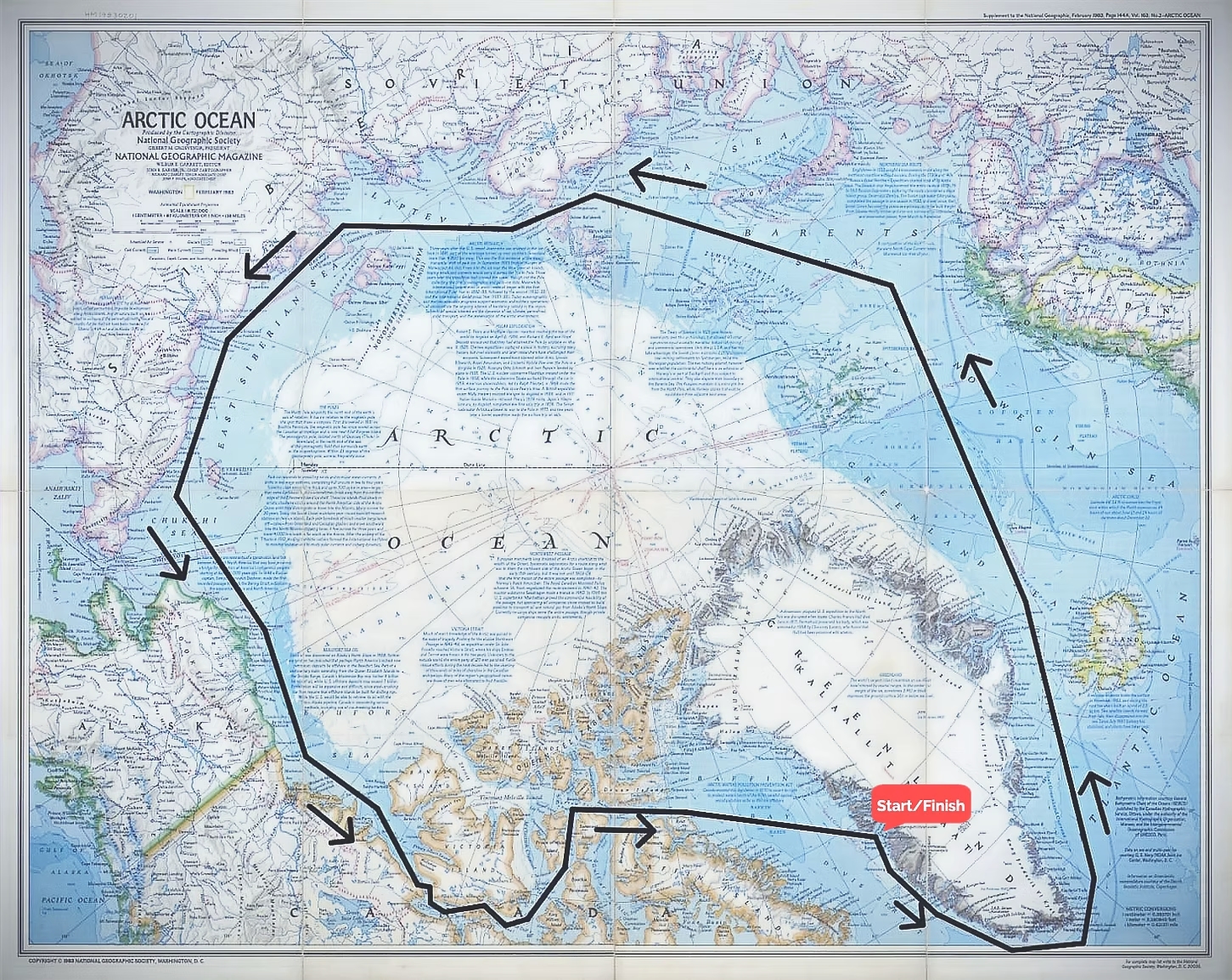
Rutherford’s route took him close to Russia’s coast, where the FSB intercepted him.
(Image credit: Ocean Research Project)
SP: What happened with the Russians that forced you to turn back?
MR: The FSB got me. [Editor’s note: The Federal Security Service (FSB) is Russia’s main security agency and a successor to the Soviet Union’s KGB.] They boarded me twice, actually. I’ve never been boarded in the ocean in my life, and I’ve been sailing 20 years, all over the place. I got about 1,000 miles [1,600 kilometers] into Russia, roughly. I got into the Northern Sea Route. If you just draw a line due north, I was due north of West China — it was way over there, about halfway around the world in the Arctic. I made it about halfway, because I started in Aasiaat, Greenland.
They boarded me once, and then they turned me around and boarded me again. It’s a bit of a strange situation, I guess. Two days after I turned around, the ice that I was waiting to open opened, and I sent them an email — the NSRA, the Northern Sea Route Association in Moscow — and said, “Hey, it’s open. Can I pretty please go?” And they just got mad at me, like, “You’ll be in violation of your permit; you have to turn around.”
SP: You’re planning to try the circumnavigation again next year. Will you do anything differently to make sure you complete it?
MR: The boat’s pretty good to go — which is great, because that’s a huge time sink. Ideally, hopefully, if I can get north of [the Norwegian archipelago] Svalbard again like I did this year, then I’m going to stay north of [the Russian archipelago] Franz Josef Land, and I’m going to basically ride the polar ice cap all the way from Svalbard to the Northwest Passage — all the way to Alaska and beyond, essentially.
Because I’ve learned how the FSB operate, and I know where they’re keeping their ships now. Even though I was north of Novaya Zemlya, they still were able to get me. But if I’m over there, north of Frank Josef, they don’t go that far, so they won’t be able to get me up there. I’ve figured out a couple of other things that I’m not even going to say, honestly — there are workarounds to get them to [leave me alone]. I’m going to go a little bit quiet.
The NSRA gives you the permit to do this, but the FSB are the people who patrol it. And the FSB don’t like the NSRA. I learned that when they boarded me, because they think that they’re the ones who should control the Northern Sea Route, not the NSRA. So there’s [a] beef between them; they don’t talk. There’s a lack of communication, which benefits me. I can lean heavy onto the NSRA side, because they don’t have boats; they’re not going to board you. And they’re the ones you have to check in with every 24 hours in Moscow; you’ve got to send them an email every 24 hours. So I’ll do all of that stuff with those guys, but I think there’s some ways I can avoid the FSB even knowing where I am, essentially, while still complying with my permit in the NSRA.
Basically, I’ve got to do the Northern Sea Route without getting within 12 miles [19 km] of any Russian land, period — even a little island, even a rock that sticks out that’s 10 feet by 10 feet [3 by 3 m]. That’s going to be real tricky, because there are a lot of little islands down there. But the FSB is mostly on the European side; they have almost no boats over on the east side or the middle. So if you can get past the European side by hugging the coast way the hell north, hopefully I can get past where they patrol, and then I can just shoot on through.
Nobody else in the world does this — nobody else in the Arctic, nobody else anywhere. There’s literally no other body of water on Earth where you’ve got to get permits, and then you’ve got to get boarded like this. It’s only Russia, and only north of Russia. And that’s because there’s a huge amount of natural gas, they think, buried above Russia. So Russia’s trying to claim everything to the North Pole.
Technically, it’s international waters, so the U.N. is like, “No, this is not right.” And Russia’s like, “Whatcha gonna do about it?” It’s kind of hard to argue with that — and it’s north of Russia, so nobody else is there. They’ve got free rein, and they’ve got all the icebreakers and whatever else.
Everything else is about the same. I need to secure my hot sauce better, because every time I open my cabinet, they fall out all over the place. There’s little things like that — quality-of-life things. I’ll probably bring some more heated socks — electric socks and electric gloves. I’ll try to make better videos — but I’m not a content creator, and I don’t want to be an influencer.

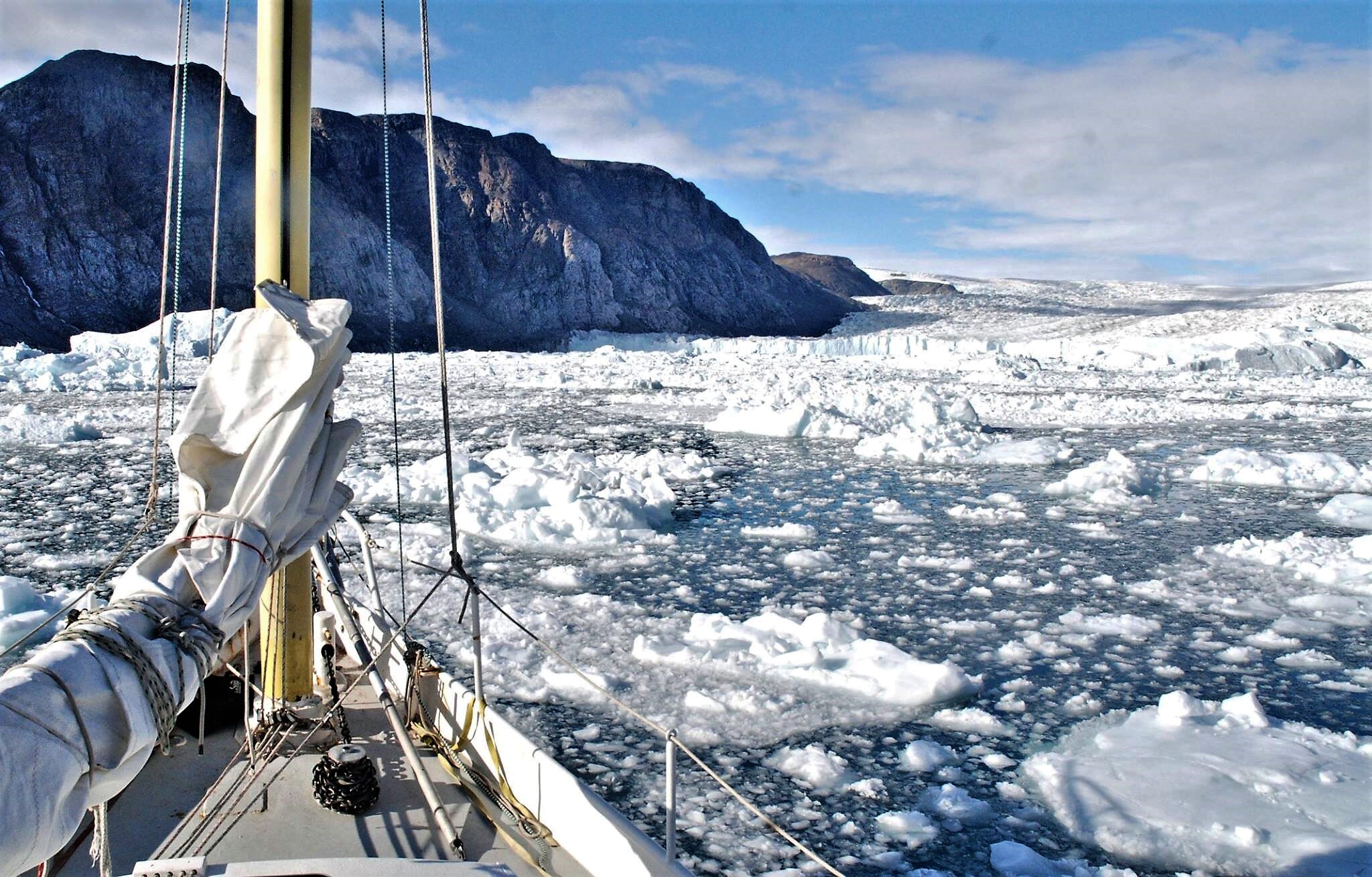
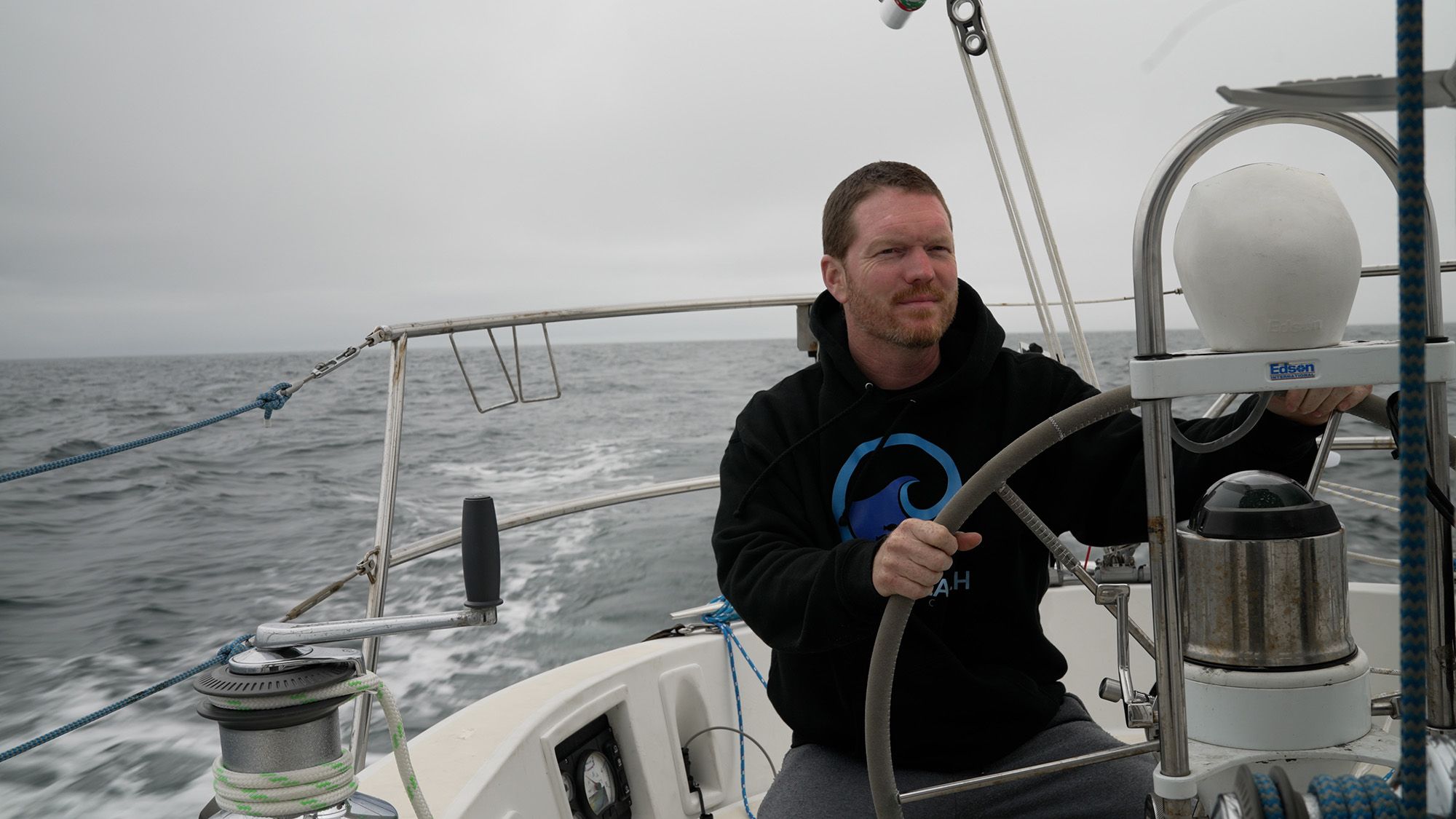
Rutherford will make another attempt at circumnavigating the Arctic next year.
(Image credit: Matt Rutherford)
SP: Can you tell me a bit about your background and what led you to this point?
MR: I did this whole circumnavigation of the Americas — nonstop, single-handed — back in 2011 where I spent 309 days alone at sea on this little 27-foot (8 meters) boat. When I got back from that big, crazy trip — which I made a documentary about [“Red Dot on the Ocean: The Matt Rutherford Story”] — I created a nonprofit called Ocean Research Project, where, basically, we use sailboats to do research. We focused mostly in 2013 and 2014 on garbage-patch-related microplastics. In 2013, we mapped out the eastern side of the Atlantic garbage patch, because nobody had got to the eastern side of it. I think it was 160,000 pieces per square kilometer, or something like that. And then, we did some stuff in 2014 in the Pacific garbage patch with the University of Tokyo; we did a joint paper with them.
But mostly what we focus on is Arctic research. Since 2015, we’ve been heading up to Greenland — sometimes the Northwest Passage also, but primarily Greenland — doing research related to glaciers, for the most part. An ocean-terminating glacier sort of has a river of melted water underneath it, and it creates upwelling, and the upwelling has nutrients. So it mixes nutrients with the ocean and creates this perfect recipe for growth for phytoplankton and zooplankton. And then, we look at the different stages of decay between an ocean-terminating glacier, a land-retreated glacier or a deglaciated fjord. In the middle phase, when a glacier starts retreating back on land, it just creates a river of muddy water, essentially; it turns the fjord into a mud puddle. You can’t have photosynthesis if you’re in a mud puddle.

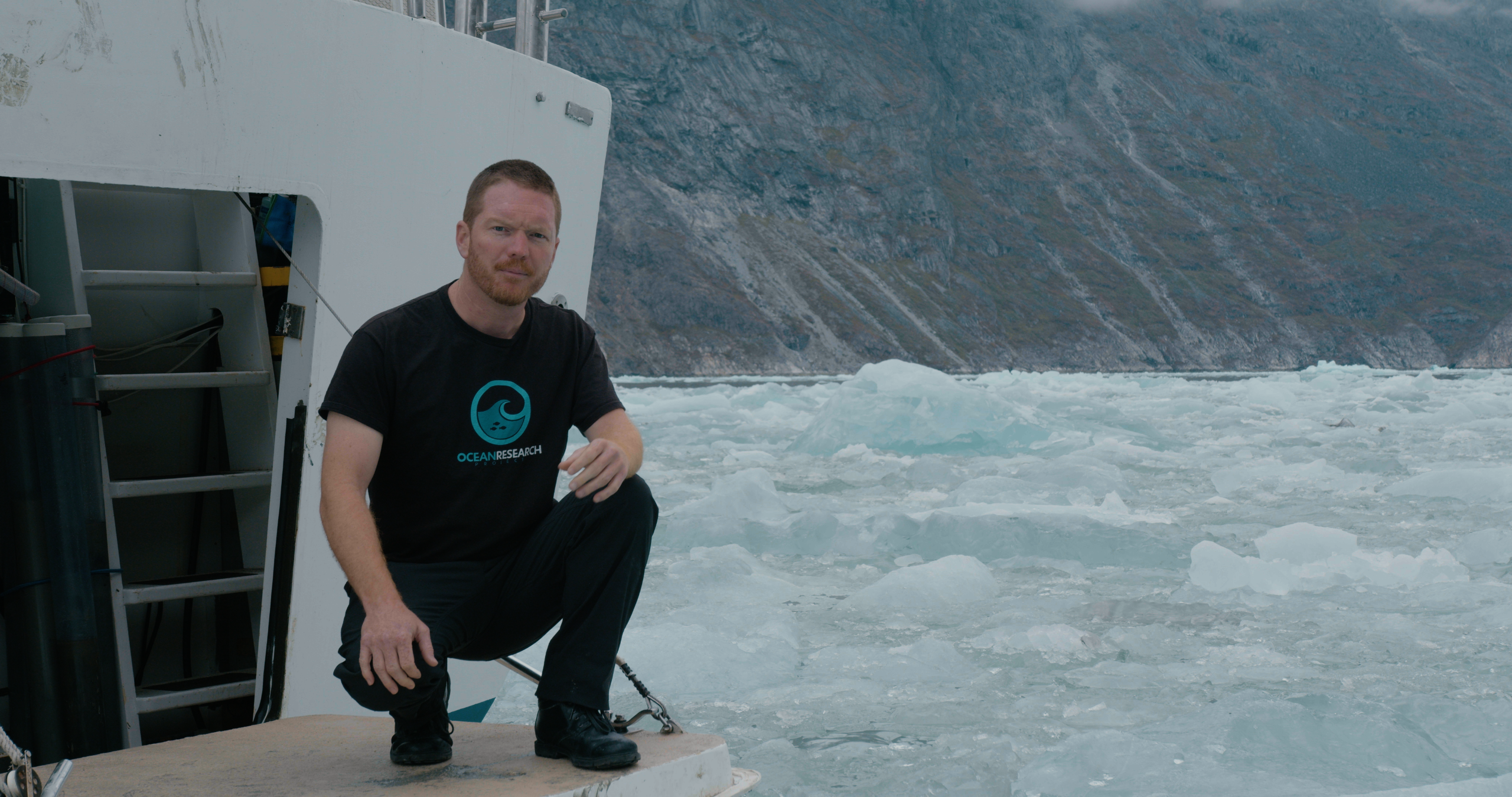
The Ocean Research Project is a nonprofit studying the Arctic and Chesapeake Bay.
(Image credit: Matt Rutherford)
SP: Have you been collecting samples or data on this expedition?
MR: Well, it’s a little tricky on a boat under these circumstances. I took 50 samples, which were just water samples, and those were from Newfoundland to Aasiaat, Greenland. Nicole [Nicole Trenholm, Ocean Research Project’s science director] has a NASA internship out at JPL [Jet Propulsion Laboratory]. She was publishing a paper looking at their model that they have [ECCO-Darwin], and I’ve kind of forced my way into the paper — well, the organization did, with Nicole’s help — by adding these samples. Now we have in situ data, physical data, that we can compare to the model data. That was the only thing we did this year. It’s a couple-thousand-mile stretch with 50 water samples in it, so it’s a pretty straightforward sort of thing.
Nicole is trying to publish multiple peer-reviewed scientific papers from our previous data. She’s got a traffic jam of data, so she needed some time to finish publishing papers from stuff we’ve collected over the last few years. There is no money anyways. I could still grab some samples on the way up there [Greenland]. And it’s trying to promote the nonprofit through it, because people will pay a lot more attention to this stuff than they pay to traditional research expeditions.
Exclusive to Live Science Pro
SP: What are your hopes for the Ocean Research Project once you tick off this goal?
MR: Basically, we’re trying to expand the organization over the next couple of years. I’d like to bring in another one or two more scientists, because we’re up there for three months in Greenland, and sometimes we go to the Northwest Passage — and it’s a lot for one scientist.
The big problem we’re having is that when Elon Musk was part of DOGE [U.S. Department of Government Efficiency], they cut a massive amount of polar funding — something like 88% of it — because apparently climate change is a hoax and they hate it and you’re not allowed to research it either, right?
Basically, nobody’s got money. We don’t typically get NSF [National Science Foundation] funding; we get more foundation funding, because it’s hard to get NSF funding, even before all this stuff. Now that the funding has been cut on the governmental level, a lot more scientists are going after the foundation grants that we used to have a lot less competition for. That makes it a little tricky, too, because now they’re getting a flood of requests that they didn’t usually get in the past.
This interview has been condensed and edited lightly for clarity.
Help us improve Live Science Pro: We’re always trying to make our content better. Leave us feedback about Pro here.