

Close Menu
  • Home
  • United States
  • World
  • Politics
  • Business
  • Lifestyle
  • Entertainment
  • Health
  • Science
  • Tech
  • Sports
  • More
    • Web Stories
    • Editor’s Picks
    • Press Release

Subscribe to Updates

Get the latest USA news and updates directly to your inbox.

What's On
Supreme Court hands Trump two major wins on asylum and immigration

Supreme Court hands Trump two major wins on asylum and immigration

June 25, 2026
30 going on 21: Bryan Johnson’s girlfriend reveals extreme biohacking that made her skin age backwards

30 going on 21: Bryan Johnson’s girlfriend reveals extreme biohacking that made her skin age backwards

June 25, 2026
Lionel Richie Cuts Minnesota Concert Short After Falling Ill on Stage on Opening Night of Tour

Lionel Richie Cuts Minnesota Concert Short After Falling Ill on Stage on Opening Night of Tour

June 25, 2026
Facebook X (Twitter) Instagram
Trending
  • Supreme Court hands Trump two major wins on asylum and immigration
  • 30 going on 21: Bryan Johnson’s girlfriend reveals extreme biohacking that made her skin age backwards
  • Lionel Richie Cuts Minnesota Concert Short After Falling Ill on Stage on Opening Night of Tour
  • BetMGM bonus code NYPNEWSGET: Get up to $1K in no-sweat tokens for Germany vs. Ecuador
  • ‘Shook 10 years off my body’ — My mom swears by this viral device, $50 off for Prime Day
  • Anthropic’s ‘weirdo’ CEO Dario Amodei replaced by co-founder in high-stakes White House meetings: report
  • Supreme Court rules Trump can remove deportation protection from Haitians, Syrians
  • Johnson heads to White House as House grinds to halt over Trump’s voter ID push
  • Privacy
  • Terms
  • Advertise
  • Contact Us
Join Us
USA TimesUSA Times
Newsletter Login
  • Home
  • United States
  • World
  • Politics
  • Business
  • Lifestyle
  • Entertainment
  • Health
  • Science
  • Tech
  • Sports
  • More
    • Web Stories
    • Editor’s Picks
    • Press Release
USA TimesUSA Times
Home » The night sky could get three times brighter as new satellites launch — all but ruining the Vera C. Rubin Observatory’s survey of the universe
The night sky could get three times brighter as new satellites launch — all but ruining the Vera C. Rubin Observatory’s survey of the universe
Science

The night sky could get three times brighter as new satellites launch — all but ruining the Vera C. Rubin Observatory’s survey of the universe

News RoomBy News RoomMay 6, 20261 ViewsNo Comments

Ultrabright satellite constellations planned to launch in the next decade could make the sky three times brighter, threatening to ruin all-sky surveys like those planned for the new Vera C. Rubin Observatory, a new study warns. To prevent this, satellite operators will have to follow strict size and brightness restrictions, according to the study, which was uploaded to the preprint server arXiv but has not been peer-reviewed.

Thousands of satellites hover over much of Earth today in vast constellations, and countless more are on the way. These satellites are already vexing astronomers, mainly by photobombing images of the sky.

Because constellations can spoil astronomical observations, researchers recommended in 2021 that satellites have an apparent magnitude (a measure of brightness, where lower values are brighter) of at least 7 when at a height of 342 miles (550 kilometers) from the ground, which is the altitude at which several satellites operate in Low Earth Orbit. Olivier Hainaut, an astronomer at the European Southern Observatory in Garching, Germany, and author of the new study, told Live Science by email that “completely coincidentally, [that’s] the faintest satellite visible by the naked eye.”


You may like

However, the situation is set to worsen. As of April 2026, roughly 1.7 million satellites are planned to be launched in the next few years, space sustainability expert Jonathan McDowell noted on his website. Many are megaconstellations‪ —‬ groups of tens of thousands of satellites.

Some are problematic because the satellites themselves are large. These include AST SpaceMobile’s BlueWalker and BlueBird satellites, each of which is about the size of a large studio apartment and a tennis court, respectively. Other satellites, like those of Reflect Orbital — a controversial startup that plans to use giant, space-based mirrors to generate solar power at night — will be highly reflective, making them appear like false stars in surveys.

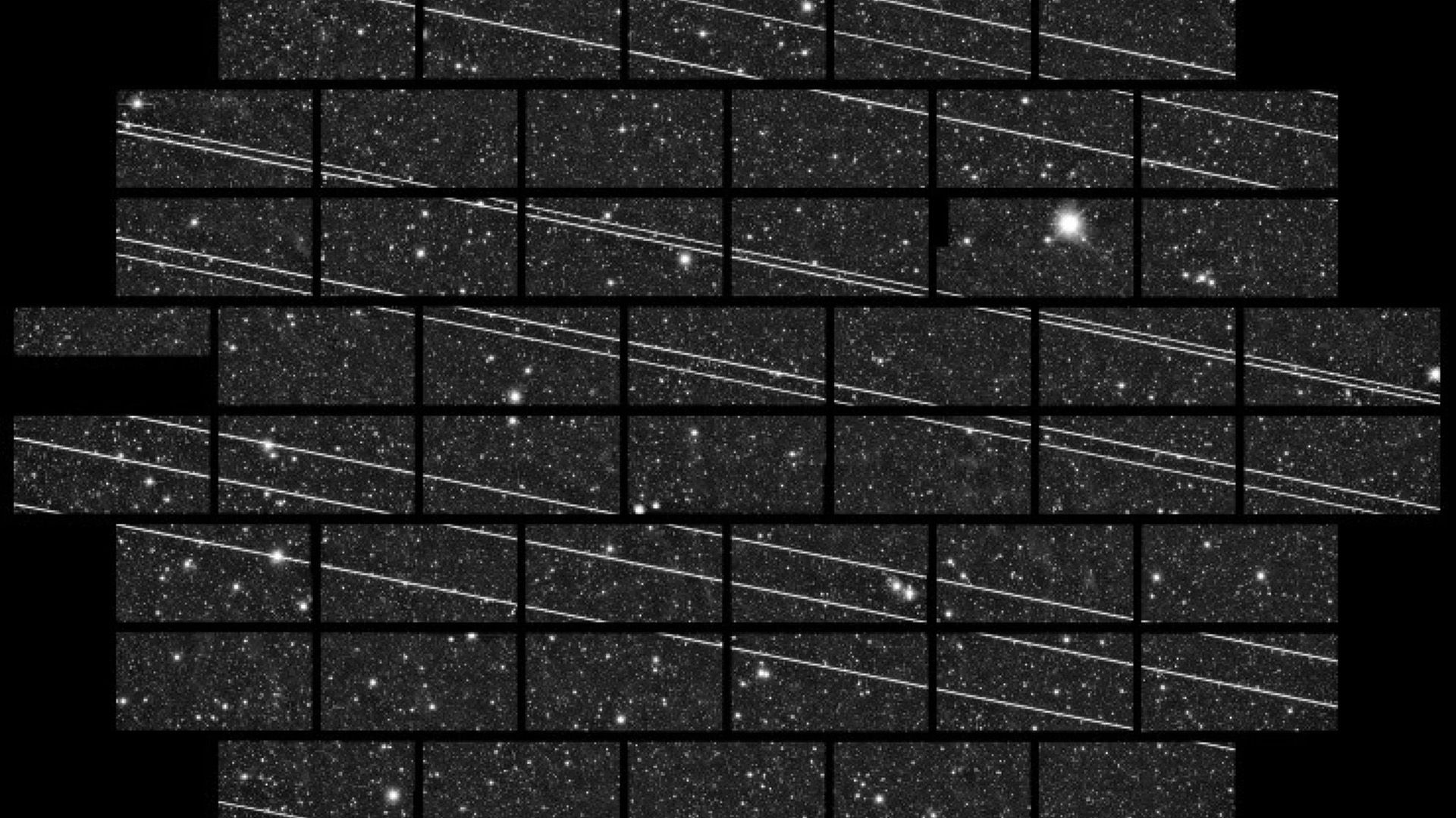
These satellites could affect astronomical imaging in detrimental ways. For one, the brightness of many satellites, coupled with astronomical cameras’ low shutter speeds — designed to collect as much light as possible from distant celestial objects — may cause the satellites to leave bright streaks in photographs.

The Vera C. Rubin Observatory sits atop a mountain in Chile.

(Image credit: Hernan Stockebrand)

“For some cameras … this causes a secondary effect (‘saturation cross-talk’) that multiplies the effect of the bright streak,” Hainaut explained. This could zap whole images. Additionally, “the light from the bright satellites is scattered by the atmosphere, illuminating the whole sky,” Hainaut said. “This constitutes light pollution.”

Get the world’s most fascinating discoveries delivered straight to your inbox.

How bad could it be?

To determine exactly how new satellites will affect observations, Hainaut created a computer model of how incoming visible light gets scattered by Earth’s atmosphere.

This model took into account two physical phenomena that cause light to scatter in the atmosphere. By accounting for both kinds of scattering, the model can map the sky’s appearance from any Earth-based observatory.

Hainaut focused on two instruments in Chile: a spectrograph from the Very Large Telescope and the Vera C. Rubin Observatory’s Legacy Survey of Space and Time (LSST) Camera. To simulate the positions, brightness and movements of millions of satellites, he drew on an algorithm that he co-developed in a 2022 study. With this comprehensive model, “I can say exactly how bad, in terms of cost and losses,” the proposed constellations and ultra-bright satellites may be, Hainaut said.


What to read next

He found that a megaconstellation of 60,000 satellites (assuming all were dimmer than magnitude 7) would contribute just 0.1% of the sky’s natural light. However, their trails would be problematic, saturating between 6% and 15% of the LSST Camera’s field of view and erasing many observations.
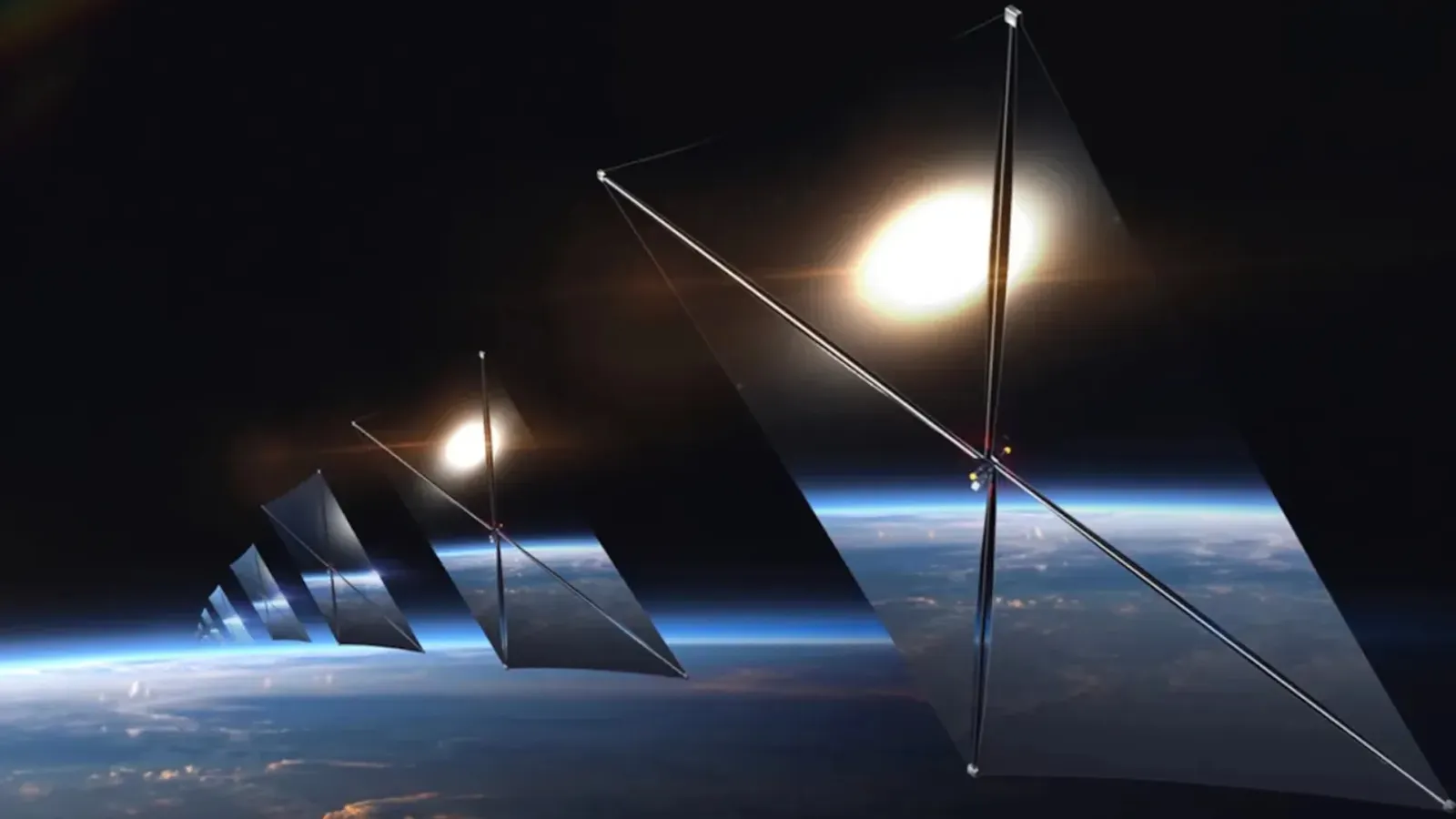
An illustration showing a series of giant mirrors in orbit around Earth

Reflect Orbital plans to put up to 4,000 giant mirrors in low Earth orbit to reflect sunlight onto the planet’s night side.

(Image credit: Reflect Orbital)

Extra-large mobile broadband satellites would have an even more dramatic impact, even with a small number of satellites. For instance, the 243 BlueBird satellites scheduled for launch will appear in images as bright blotches speckled across the sky.

But the worst-case scenario involves superbright Reflect Orbital-type satellites. The model showed that a constellation of 50,000 of these satellites ‪—‬ similar to the company’s 2035 vision ‪—‬ may make the night sky three times as bright as it is now, rendering the LSST Camera’s images worthless.

Restrictions may apply

Anthony Mallama, a researcher at the International Astronomical Union’s Centre for the Protection of the Dark and Quiet Sky who wasn’t involved in the research, agreed with the findings.

“Bright satellites will significantly impact astronomy even in moderate numbers,” Mallama told Live Science via email.

This troubles Hainaut, too; he recommended that most satellites be fainter than magnitude 7. Mallama said operators can achieve this by applying a mirror-like coating to satellites’ lower surfaces that would reflect any sunlight falling on these surfaces into outer space. (Such techniques, however, cannot be applied to Reflect Orbital-type satellites because that would defeat their purpose.)

Hainaut also believes fewer than 10 satellites with a magnitude brighter than 7 should be permitted in the sky at one time. “A single bright satellite can cause more harm than thousands of faint ones,” he said.

He recommended keeping the total satellite number under 100,000. “This is not a hard number,” Hainaut said. “But 100,000 causes [astronomical data] losses at about the level of other technical losses,” such as bad weather.

Share. Facebook Twitter LinkedIn Telegram WhatsApp Email

Keep Reading

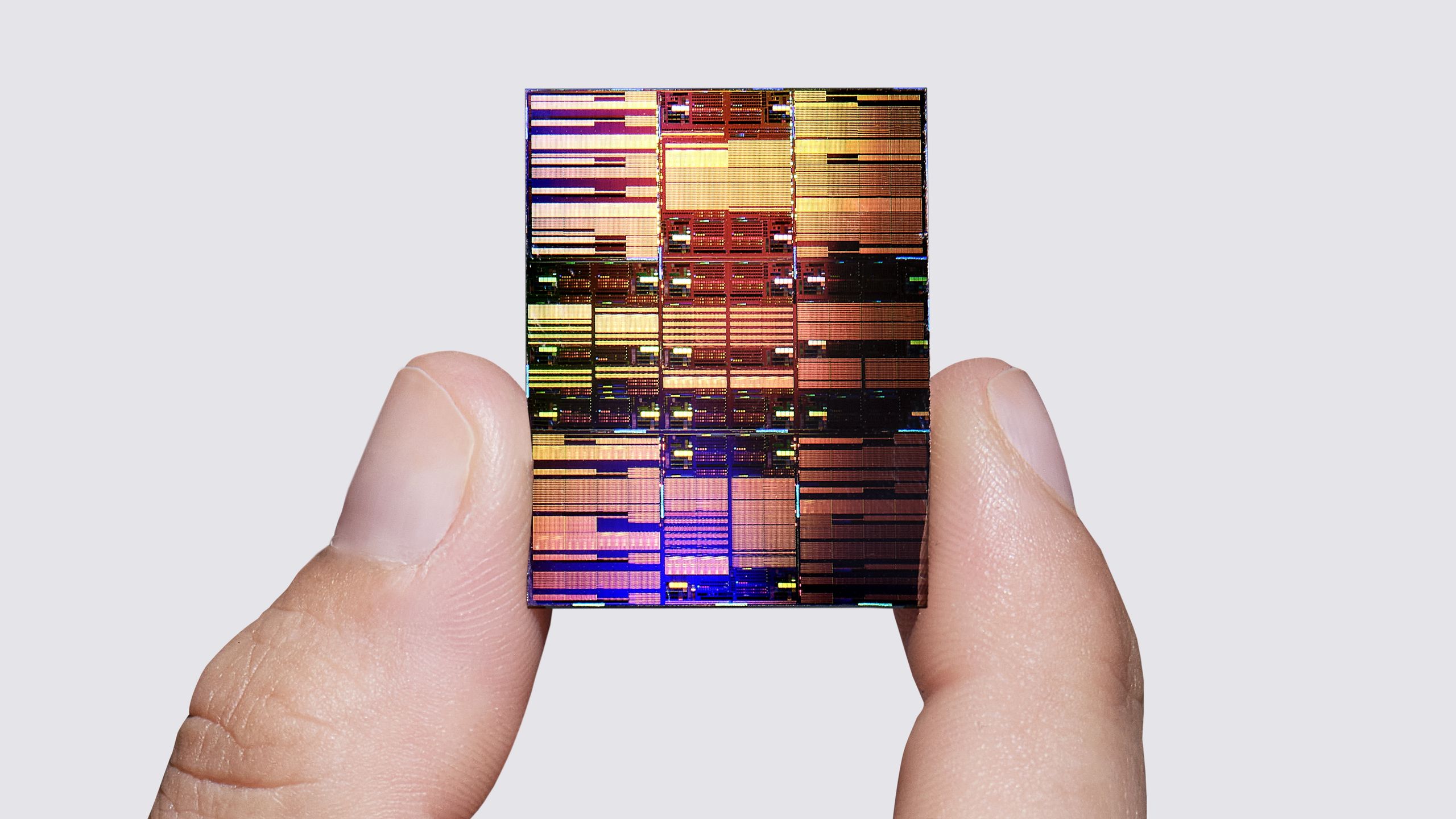
'This is the next jump in technology': World's first sub-1nm chip keeps Moore's Law alive a little longer

'This is the next jump in technology': World's first sub-1nm chip keeps Moore's Law alive a little longer

‘You can’t patch your way out of it’: Cheap AI worm can spread between devices without human guidance — but how did scientists create it?

‘You can’t patch your way out of it’: Cheap AI worm can spread between devices without human guidance — but how did scientists create it?

Scientists find thousands of earthquakes in a perfectly straight line in Alaska, revealing a hidden ‘microplate’

Scientists find thousands of earthquakes in a perfectly straight line in Alaska, revealing a hidden ‘microplate’

NASA’s Perseverance rover finds record-breaking trove of carbon molecules at Bright Angel rock formation on Mars

NASA’s Perseverance rover finds record-breaking trove of carbon molecules at Bright Angel rock formation on Mars

Satellites reveal Earth has a surprising symmetry in the way it reflects light — and it might be tied to the El Niño cycle

Satellites reveal Earth has a surprising symmetry in the way it reflects light — and it might be tied to the El Niño cycle

Water might secretly be a mix of 2 different liquids, scientists say

Water might secretly be a mix of 2 different liquids, scientists say

China’s Einstein Probe detected a mysterious cosmic explosion — and scientists have no idea what caused it

China’s Einstein Probe detected a mysterious cosmic explosion — and scientists have no idea what caused it

‘A weird result from an already weird hominin’: Archaeologists discover all Homo naledi skeletons found in South African cave are female

‘A weird result from an already weird hominin’: Archaeologists discover all Homo naledi skeletons found in South African cave are female

‘Weirdos of the sperm whale world’ appear to be evolving 2 different dialects, audio recordings suggest

‘Weirdos of the sperm whale world’ appear to be evolving 2 different dialects, audio recordings suggest

Add A Comment
Leave A Reply Cancel Reply

Editors Picks

30 going on 21: Bryan Johnson’s girlfriend reveals extreme biohacking that made her skin age backwards

30 going on 21: Bryan Johnson’s girlfriend reveals extreme biohacking that made her skin age backwards

June 25, 2026
Lionel Richie Cuts Minnesota Concert Short After Falling Ill on Stage on Opening Night of Tour

Lionel Richie Cuts Minnesota Concert Short After Falling Ill on Stage on Opening Night of Tour

June 25, 2026
BetMGM bonus code NYPNEWSGET: Get up to K in no-sweat tokens for Germany vs. Ecuador

BetMGM bonus code NYPNEWSGET: Get up to $1K in no-sweat tokens for Germany vs. Ecuador

June 25, 2026
‘Shook 10 years off my body’ — My mom swears by this viral device,  off for Prime Day

‘Shook 10 years off my body’ — My mom swears by this viral device, $50 off for Prime Day

June 25, 2026

Subscribe to News

Get the latest USA news and updates directly to your inbox.

Latest News
Anthropic’s ‘weirdo’ CEO Dario Amodei replaced by co-founder in high-stakes White House meetings: report

Anthropic’s ‘weirdo’ CEO Dario Amodei replaced by co-founder in high-stakes White House meetings: report

June 25, 2026
Supreme Court rules Trump can remove deportation protection from Haitians, Syrians

Supreme Court rules Trump can remove deportation protection from Haitians, Syrians

June 25, 2026
Johnson heads to White House as House grinds to halt over Trump’s voter ID push

Johnson heads to White House as House grinds to halt over Trump’s voter ID push

June 25, 2026
Facebook X (Twitter) Pinterest WhatsApp TikTok Instagram
© 2026 USA Times. All Rights Reserved.
  • Privacy Policy
  • Terms
  • Advertise
  • Contact

Type above and press Enter to search. Press Esc to cancel.