




UConn student from Iran shares hopes for home country amid conflict
UConn international student Sadaf Zarei discusses the plight of the Iranian women’s soccer team, whose captain dropped her asylum bid in Australia fearing for her family’s safety from the oppressive Iranian regime. Zarei highlights the pervasive digital blackouts and human rights abuses, advocating for an end to the “criminal terrorist entity” currently in power.
NEWYou can now listen to articles!
Five years after the Taliban reclaimed reclaimed Afghanistan, 2.4 million girls remain locked out of secondary school, wiping away decades of progress and leaving a generation of young women without access to the classroom.
Afghanistan is now the only country in the world that formally prohibits girls and women from receiving an education beyond the primary level, according to UNESCO, which issued a new call Tuesday for the “immediate and unconditional” restoration of their right to education.
The United Nations agency warned that the consequences of the Taliban’s policies now reach far beyond the classroom, with women barred from most paid jobs and public-facing professions and facing restrictions on their ability to travel without a male guardian.
MOSCOW, TALIBAN FORGE MILITARY ALLIANCE IN POWER GRAB AFTER US AFGHANISTAN EXIT: REPORTS
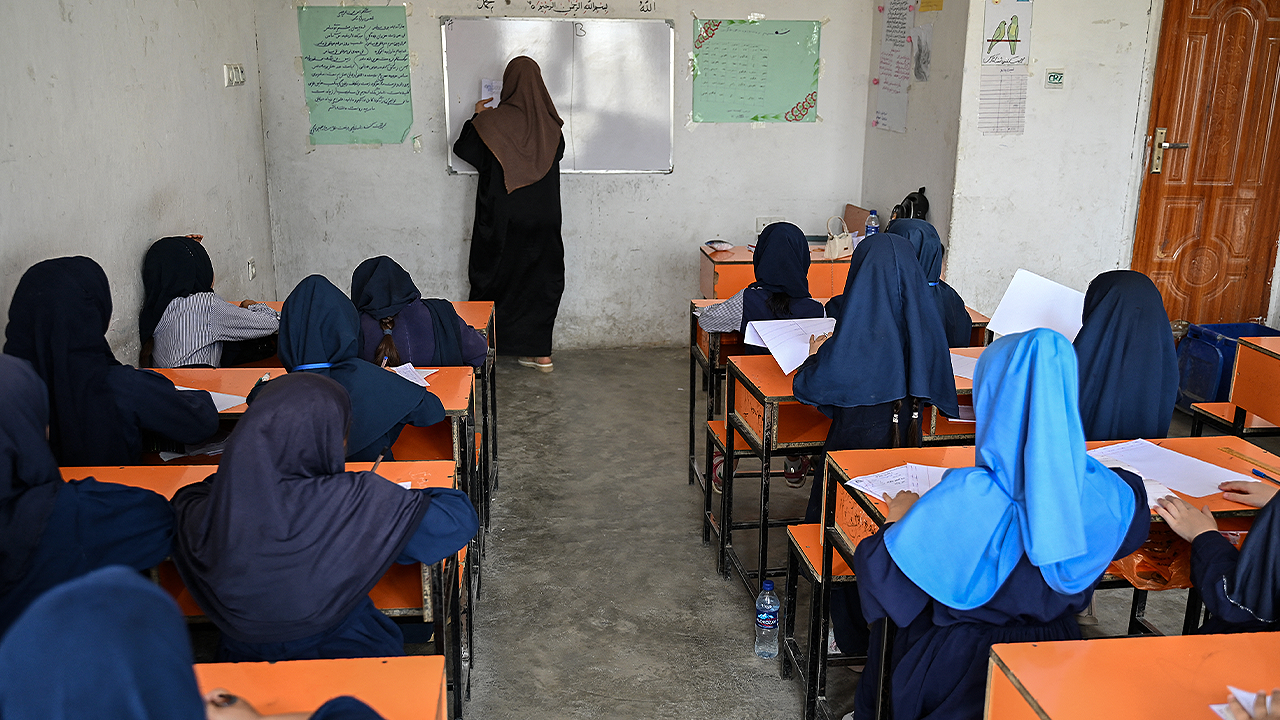
Afghan girls participate in a lesson at Tajrobawai Girls High School, in Herat, Afghanistan, Thursday, Nov. 25, 2021. (AP Photo/Petros Giannakouris)
“Women have been erased from public life, and as a new generation of girls grows without an education, their future becomes increasingly dark,” UNESCO said in a statement.
The Taliban swept back into power on Aug. 15, 2021, as U.S. and NATO forces withdrew from Afghanistan after two decades of war.
The Taliban soon barred girls from secondary schools and later expanded the restrictions to universities, employment and other areas of public life.
Despite years of pressure from the United Nations, humanitarian groups, human rights advocates and several Islamic countries, the Taliban has refused to lift the education restrictions and has maintained that the issue is a domestic matter, according to The Associated Press.
IRAN AGREES NOT TO EXECUTE EIGHT WOMEN TIED TO ANTI-REGIME PROTESTS AFTER TRUMP’S PUBLIC APPEAL
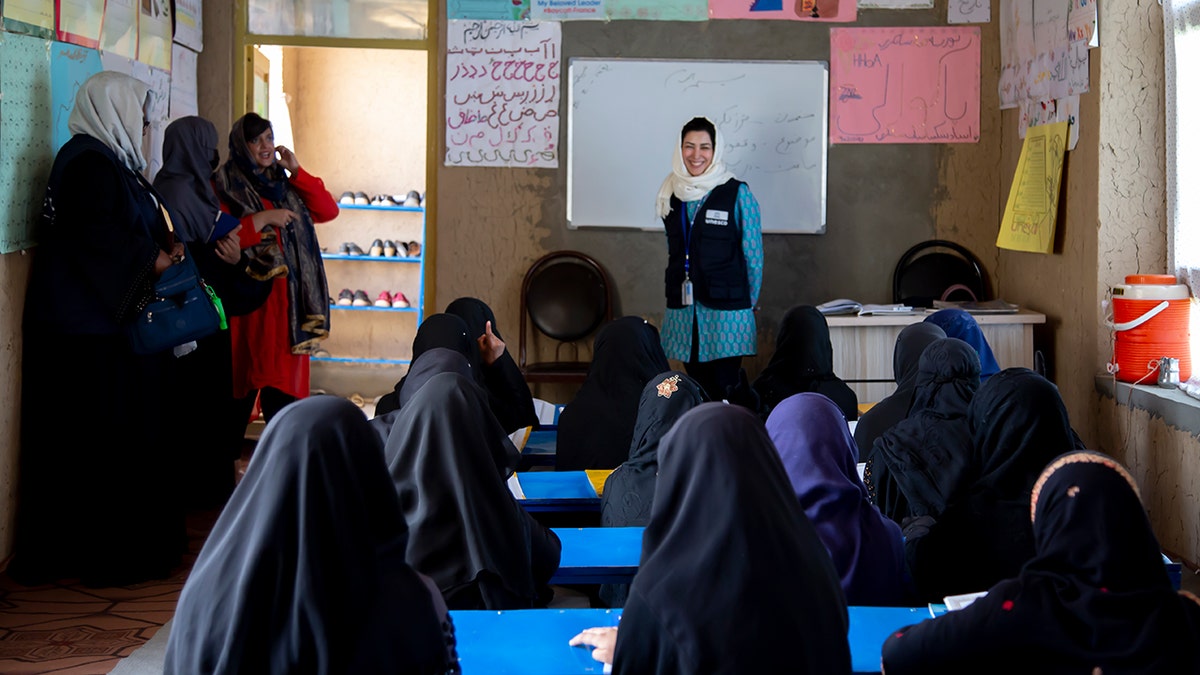
The Taliban has refused to lift its education restrictions on girls and women despite longstanding international pressure. (© UNESCO/Navid Rahi)
The impact has been a dramatic reversal of the educational gains made by Afghan girls during the previous two decades.
While girls had severely limited access to schooling in 2001, nearly 1 million were enrolled in secondary education by 2021, according to UNESCO.
Five years later, an estimated 2.4 million girls are excluded from secondary education.
“Five years is not a temporary interruption in a child’s education,” Hoda Jaberian, UNESCO’s program coordinator for education in emergencies, said during a video news conference Tuesday, according to The AP. “It is clearly almost an entire secondary school cycle.”
UNESCO warned that denying education to girls while restricting women’s ability to work could deepen Afghanistan’s already severe economic problems.
Nearly half of Afghanistan’s population lives below the poverty line, according to UNESCO, which said preventing women from studying and working further limits their ability to support their families and contribute to the country’s economy.
The agency also warned that excluding girls from school can damage their mental and physical well-being and increase the risk of early marriage.
The effects could also reach Afghan boys.
UNESCO said the Taliban’s ban on female teachers teaching boys is worsening teacher shortages and undermining the quality of education across Afghanistan.
TRUMP BETS ECONOMIC PRESSURE CAN SQUEEZE IRAN AS REGIME’S OWN FAILURES DEEPEN THE PAIN
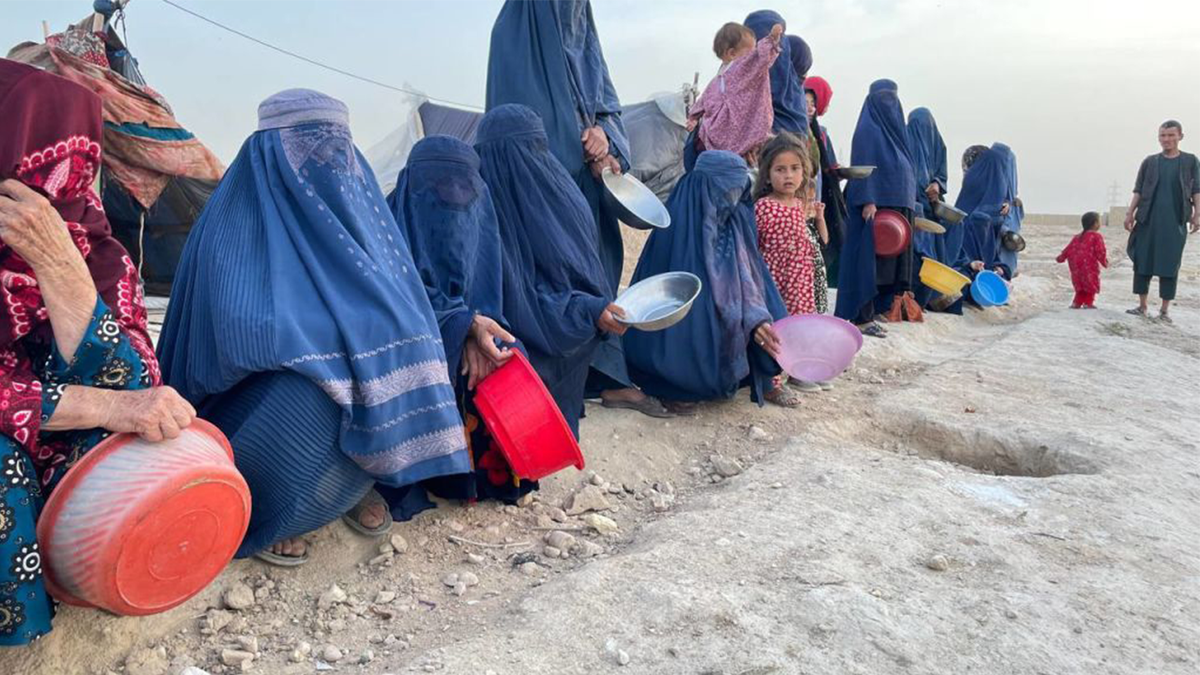
Women wear burqas in Kabul, Afghanistan on May 7, 2022. (Sayed Khodaiberdi Sadat/Anadolu Agency via Getty Images)
With formal secondary and higher education closed to women and girls, UNESCO says it has turned to community-based education, literacy and skills development programs and psychosocial support to keep them learning.
Nearly 70,000 people have participated in UNESCO’s programs, with women accounting for 73% of the learners, according to the agency.
Some literacy and skills classes take place in community spaces and in the homes of facilitators with the knowledge of authorities, according to The AP. More than 1,000 literacy facilitators are involved, most of whom have been trained by UNESCO and its partners.
UNESCO said a recent study found evidence that its literacy and skills programs have helped increase household incomes and improve livelihoods.
The agency acknowledged, however, that such efforts cannot replace formal schooling.
“Afghanistan’s girls and women have the right to learn, to work, to move freely, and to shape their own futures,” UNESCO said, adding that “the world must not look away until their human rights are restored.”
CLICK HERE TO DOWNLOAD THE APP
UNESCO said it would continue working with local communities and partners to maintain alternative opportunities for Afghan women and girls while pressing for the education ban to be lifted.
“UNESCO continues to call for the immediate and unconditional restoration of girls and women’s right to secondary and higher education,” Jaberian said Tuesday. “It is not negotiable. It’s a basic human right and we reiterate that there is no substitute for this.”
The Associated Press contributed to this report.