


Close Menu
  • Home
  • United States
  • World
  • Politics
  • Business
  • Lifestyle
  • Entertainment
  • Health
  • Science
  • Tech
  • Sports
  • More
    • Web Stories
    • Editor’s Picks
    • Press Release

Subscribe to Updates

Get the latest USA news and updates directly to your inbox.

What's On
Exclusive | My ‘panic attacks’ turned out to be much more serious — I needed brain surgery at 24 to fix it

Exclusive | My ‘panic attacks’ turned out to be much more serious — I needed brain surgery at 24 to fix it

March 18, 2026
Tax scams on the rise as April 15 approaches, IRS warns: Here are the ‘dirty dozen’ hoaxes to avoid

Tax scams on the rise as April 15 approaches, IRS warns: Here are the ‘dirty dozen’ hoaxes to avoid

March 18, 2026
Republicans dig in on SAVE America Act as marathon Senate debate begins

Republicans dig in on SAVE America Act as marathon Senate debate begins

March 18, 2026
Facebook X (Twitter) Instagram
Trending
  • Exclusive | My ‘panic attacks’ turned out to be much more serious — I needed brain surgery at 24 to fix it
  • Tax scams on the rise as April 15 approaches, IRS warns: Here are the ‘dirty dozen’ hoaxes to avoid
  • Republicans dig in on SAVE America Act as marathon Senate debate begins
  • ‘Mormon Wives’ Star Dakota Mortensen Is ‘Hurt’ by How Things Unfolded With Taylor Frankie Paul (Exclusive)
  • Grandson of tennis legend Bobby Riggs sentenced to 20 years for sexually abusing teen girls he coached
  • Diagnostic dilemma: A man’s back pain led to the discovery of a third kidney
  • Prenuvo CEO bets he can save lives and major healthcare spending by ‘inverting the pyramid’
  • Exclusive | Trump will ‘rebalance’ media, FCC boss Brendan Carr tells Pod Force One — and urges broadcasters to air ‘pro-America’ programs
  • Privacy
  • Terms
  • Advertise
  • Contact Us
Join Us
USA TimesUSA Times
Newsletter Login
  • Home
  • United States
  • World
  • Politics
  • Business
  • Lifestyle
  • Entertainment
  • Health
  • Science
  • Tech
  • Sports
  • More
    • Web Stories
    • Editor’s Picks
    • Press Release
USA TimesUSA Times
Home » Spotted lanternflies are invading the US. They may have gotten their evolutionary superpowers in China’s cities.
Spotted lanternflies are invading the US. They may have gotten their evolutionary superpowers in China’s cities.
Science

Spotted lanternflies are invading the US. They may have gotten their evolutionary superpowers in China’s cities.

News RoomBy News RoomFebruary 5, 20262 ViewsNo Comments

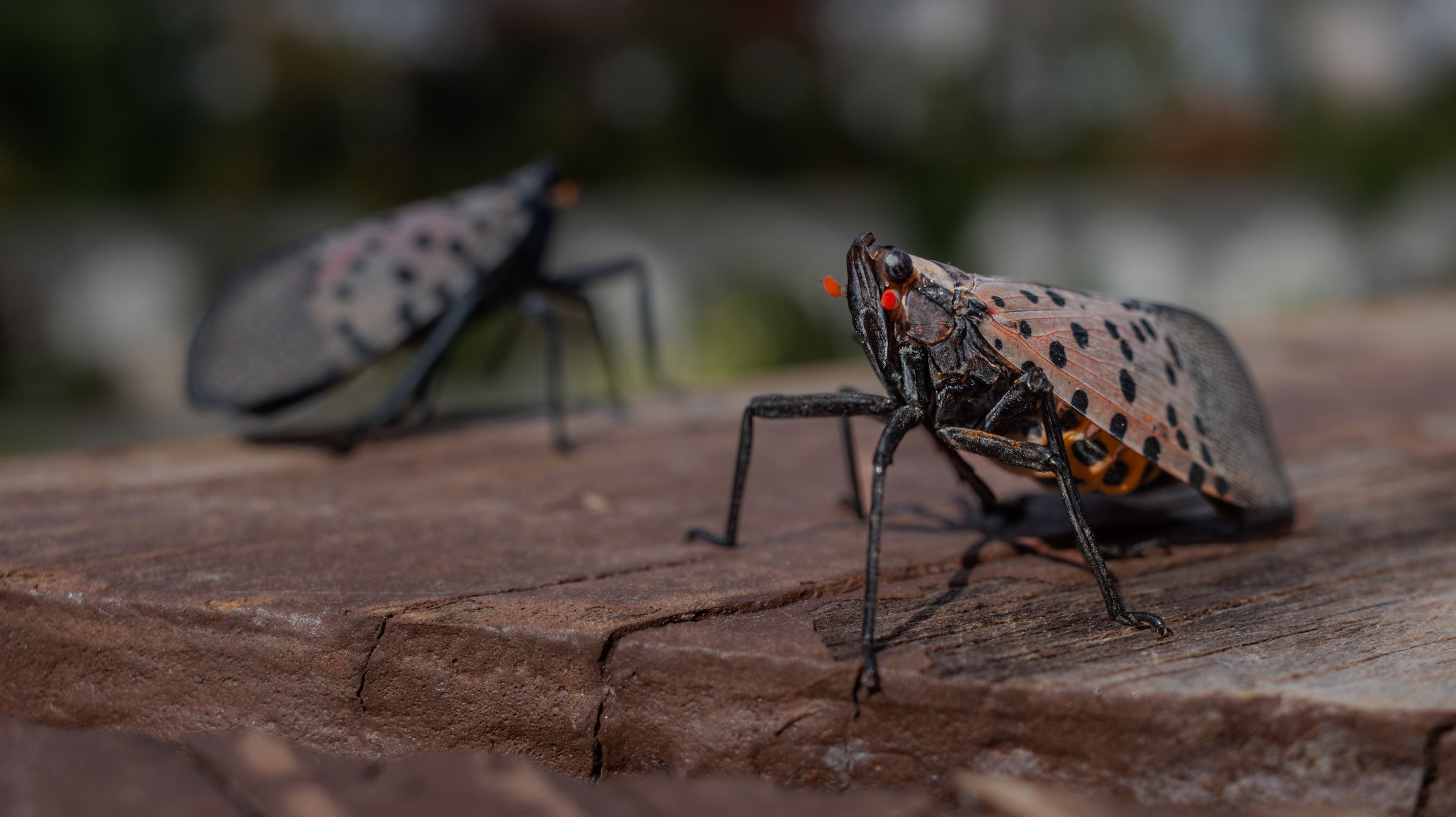
The spotted lanternfly has spread across the United States with unrelenting speed — and now we have a clue as to why: living in cities seems to have helped these invasive insects evolve to be more resistant to stresses.

“Cities may act as evolutionary incubators that help an invasive species to better deal with pressures like heat and pesticides, which then helps them to better adapt to new environments,” lead author Fallon (Fang) Meng, a biologist at New York University, told Live Science.

The spotted lanternfly (Lycorma delicatula) is a planthopper that uses its long mouthparts to suck sap from plants. The insect is native to China, but has spread through South Korea, Japan and to the U.S., where it was first detected in Pennsylvania in 2014, but is now seen in 19 states in the eastern U.S.


You may like

Its preferred host plant is the tree of heaven (Ailanthus altissima), which is also an invasive species — but it is able to sup on a wide range of plants, including economically valuable ones like grapevines, hops, maples, fruit trees and hardwood trees.

Spotted lanternflies can weaken plants, and as they feed, they also excrete a sticky, sugary fluid that promotes the growth of sooty mold. What’s more, when bees decide to forage on this sugary waste rather than visiting flowers it gives the honey they produce a smoky aroma and a lingering aftertaste, although this honey is still safe to eat.

All this adds up to a potentially huge financial impact. For example, a 2019 study estimated that in Pennsylvania alone, if uncontrolled, the insect’s effects could cost $324 million annually.

A spotted lanternfly in Shanghai. Some lanternflies in their native China have partially blue wings, unlike the gray seen on those that have invaded the U.S. (Image credit: Fallon Meng/NYU)

Lanternfly genetics

To get a better handle on how the lanternflies have adapted so well to life in the United States, researchers sequenced the genomes of lanternflies from urban and rural areas in Shanghai, China, and from New York City, Connecticut and New Jersey. The study was published Wednesday (Feb. 4) in the journal Proceedings of the Royal Society B: Biological Sciences.

Get the world’s most fascinating discoveries delivered straight to your inbox.

In the lanternfly populations in China, they found clear genetic differences between those in the urban and rural areas. “Even though they’re just 30 kilometers [19 miles] away, they have very strong population differentiation,” Meng said.

This is probably because although lanternflies can fly, they need to feed continuously, so they stick close to the host trees on which they depend. This means it is easy for populations to stay separate, Meng added.

This separation means the urban lanternflies in Shanghai evolved genetic tolerance to stresses that the rural ones didn’t, adapting them to the hotter conditions of cities, and boosting their ability to detoxify and metabolize toxins and pesticides.


You may like

In the U.S., however, the lanternflies were genetically similar across all locations, even though some were sourced from locations 124 miles (200 kilometers) apart. The same genes that evolved for city living were further adapted in U.S. populations, according to the study.

Using demographic modeling on the genomic data to reconstruct the recent history of the lanternflies, researchers revealed three genetic bottlenecks, when populations were established from a limited pool of insects. One was more than 170 years ago, when Shanghai underwent rapid urbanization. The second aligned with when lanternflies moved from China to South Korea in 2004, and the third was in 2014 when the insects arrived in Pennsylvania — probably hitchhiking on goods shipped from overseas.

Adapting to China’s cities may have primed the lanternfly to tolerate other hot, polluted environments, Meng said. “We should study invasive species and urbanization as interconnected parts of a whole. Those two major aspects are too often studied in isolation, but their effects actually can compound in synergistic and surprising ways.”

The ability to handle a wider range of toxins might be helping spotted lanternflies spread in the U.S., said Zach Ladin, an ecologist at the University of Delaware, who wasn’t involved in the study.

The relatively high densities of tree of heaven give spotted lanternflies a foothold in many cities, he told Live Science, “but some of those genes that they found that are related to overcoming toxic chemical exposure could really help them switch hosts and take advantage of other plants.”

Ladin added that the new genetic information could help people slow or contain the spread of spotted lanternflies. “From a chemical control perspective, now we have some genes to target which could be important in making sure we’re not just driving resistance to certain chemicals,” he said.


Share. Facebook Twitter LinkedIn Telegram WhatsApp Email

Keep Reading

Diagnostic dilemma: A man’s back pain led to the discovery of a third kidney

Diagnostic dilemma: A man’s back pain led to the discovery of a third kidney

Live Science Today: Super El Niño looms and Starlink hits 10,000 satellites in orbit

Live Science Today: Super El Niño looms and Starlink hits 10,000 satellites in orbit

Colorectal cancer is now the most common cause of cancer deaths in the US for people under 50

Colorectal cancer is now the most common cause of cancer deaths in the US for people under 50

Amazon Big Spring Sale: Top 16 early health and fitness deals

Amazon Big Spring Sale: Top 16 early health and fitness deals

Paramount+ deal: Watch out-of-this-world space documentaries for less

Paramount+ deal: Watch out-of-this-world space documentaries for less

Brazil’s underprotected Cerrado savanna stores a staggering amount of carbon, study finds

Brazil’s underprotected Cerrado savanna stores a staggering amount of carbon, study finds

Understanding telescope magnification: A beginner’s guide to eyepieces, aperture and getting the best views

Understanding telescope magnification: A beginner’s guide to eyepieces, aperture and getting the best views

Iran war could create a ‘fertilizer shock’ that impacts agriculture and raises food prices

Iran war could create a ‘fertilizer shock’ that impacts agriculture and raises food prices

‘We got evidence of boars, deer, bears, aurochs’: Ancient DNA reveals sunken realm Doggerland had habitable forests during the last ice age

‘We got evidence of boars, deer, bears, aurochs’: Ancient DNA reveals sunken realm Doggerland had habitable forests during the last ice age

Add A Comment
Leave A Reply Cancel Reply

Editors Picks

Tax scams on the rise as April 15 approaches, IRS warns: Here are the ‘dirty dozen’ hoaxes to avoid

Tax scams on the rise as April 15 approaches, IRS warns: Here are the ‘dirty dozen’ hoaxes to avoid

March 18, 2026
Republicans dig in on SAVE America Act as marathon Senate debate begins

Republicans dig in on SAVE America Act as marathon Senate debate begins

March 18, 2026
‘Mormon Wives’ Star Dakota Mortensen Is ‘Hurt’ by How Things Unfolded With Taylor Frankie Paul (Exclusive)

‘Mormon Wives’ Star Dakota Mortensen Is ‘Hurt’ by How Things Unfolded With Taylor Frankie Paul (Exclusive)

March 18, 2026
Grandson of tennis legend Bobby Riggs sentenced to 20 years for sexually abusing teen girls he coached

Grandson of tennis legend Bobby Riggs sentenced to 20 years for sexually abusing teen girls he coached

March 18, 2026

Subscribe to News

Get the latest USA news and updates directly to your inbox.

Latest News
Diagnostic dilemma: A man’s back pain led to the discovery of a third kidney

Diagnostic dilemma: A man’s back pain led to the discovery of a third kidney

March 18, 2026
Prenuvo CEO bets he can save lives and major healthcare spending by ‘inverting the pyramid’

Prenuvo CEO bets he can save lives and major healthcare spending by ‘inverting the pyramid’

March 18, 2026
Exclusive | Trump will ‘rebalance’ media, FCC boss Brendan Carr tells Pod Force One — and urges broadcasters to air ‘pro-America’ programs

Exclusive | Trump will ‘rebalance’ media, FCC boss Brendan Carr tells Pod Force One — and urges broadcasters to air ‘pro-America’ programs

March 18, 2026
Facebook X (Twitter) Pinterest WhatsApp TikTok Instagram
© 2026 USA Times. All Rights Reserved.
  • Privacy Policy
  • Terms
  • Advertise
  • Contact

Type above and press Enter to search. Press Esc to cancel.