



Riley Gaines: Caitlin Clark’s abuse rooted in jealousy, not race or sexuality
Riley Gaines addresses the controversy surrounding WNBA star Caitlin Clark, asserting that concerns for Clark stem from her exceptional talent, not her race or sexuality. Gaines suggests jealousy from other players is fueling the on-court abuse and the league’s ‘self-imploding’ nature. She questions the double standards applied to different athletes.
WNBA guard Sophie Cunningham is a megastar.
Of course she is. She’s attractive, funny, charismatic and relentlessly positive.
Cunningham is reportedly set to sign a signature shoe deal with Adidas. Over the weekend, she worked as a ring girl at UFC 329.
HERE IS THE REAL REASON WHY THEY HATE CAITLIN CLARK SO MUCH | BOBBY BURACK
Some corners of the WNBA community are bothered by Cunningham’s popularity. Critics argue she’s merely a role player whose on-court production doesn’t justify that level of fame.
Maybe it doesn’t.
But marketability is not an athletic competition. It’s a popularity contest. In terms of the WNBA, Cunningham is winning that contest.
Indiana Fever guard Sophie Cunningham points at Phoenix Mercury forward-guard DeWanna Bonner after an argument during a game at Gainbridge Fieldhouse in Indianapolis on June 22, 2026. The Indiana Fever defeated the Phoenix Mercury 86-77. (USA TODAY Network via Reuters Connect)
The WNBA entered the mainstream in 2024 with the arrival of Caitlin Clark, Cunningham’s eventual Fever teammate. For many players, Clark’s debut marked their first real introduction to a national audience.
Instead of using that spotlight to win over new fans, however, players such as Angel Reese, Chennedy Carter, DiJonai Carrington and Alyssa Thomas projected bitterness and hostility toward the league’s biggest attraction.
They made themselves part of the story through hard fouls, cheap shots and social media potshots aimed at Clark. That became their first impression.
Reese reinforced that perception by promoting claims of widespread racist abuse that the WNBA later said it could not substantiate. Others rushed to social media to portray themselves as victims of online harassment.
It quickly became clear that many WNBA players were deeply unlikeable. They came across as catty, bitter and racially charged. The same players driving fists and nails into Clark’s body would often claim victimhood days later. The more attention Clark brought to the league, the more many of its players tarnished their own public image.
Then there was Sophie Cunningham.
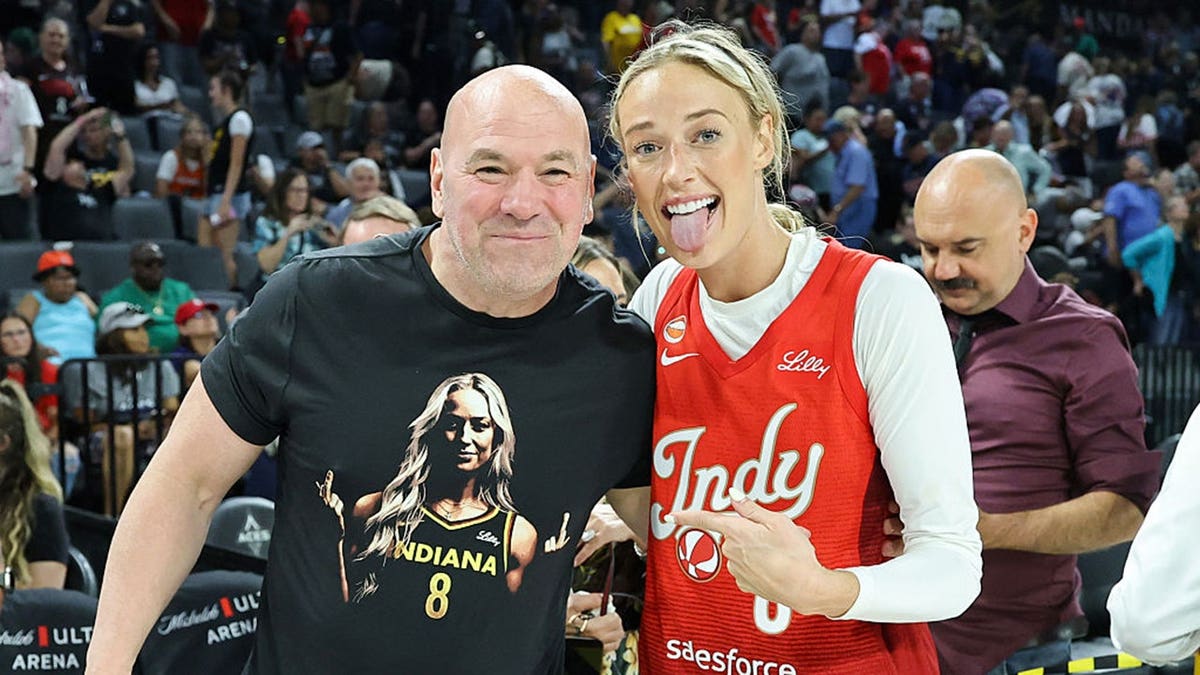
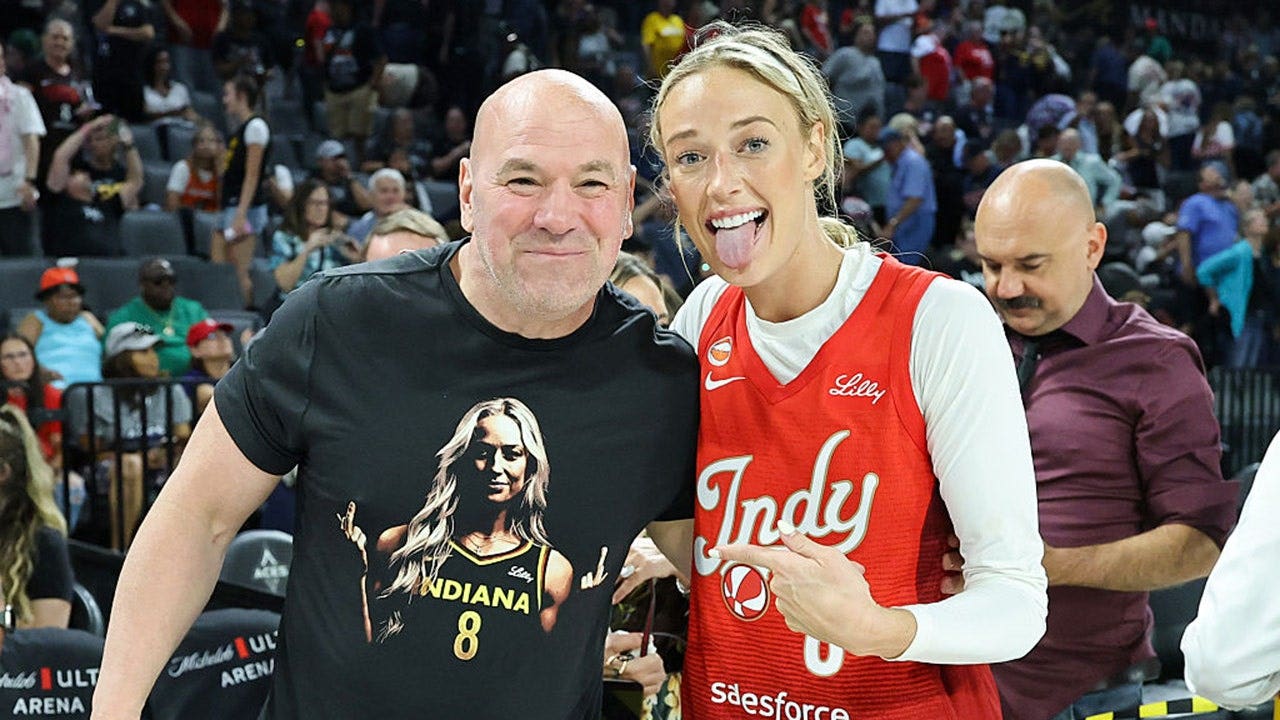
UFC CEO Dana White poses with Sophie Cunningham of the Indiana Fever after the Fever’s 109-75 victory over the Las Vegas Aces at Michelob ULTRA Arena in Las Vegas, Nev., on July 12, 2026. (Ethan Miller/Getty Images)
After nearly two seasons of WNBA players targeting Clark, Cunningham stepped in last June. Connecticut’s Marina Mabrey shoved Clark to the floor. Jacy Sheldon then raked Clark across the face. While the officials showed little interest in restoring order — or protecting the league’s biggest star — Cunningham responded by planting Sheldon on the hardwood.
After the game, Cunningham made it clear that targeting her teammates would come with consequences.
“I’m not focused on the extracurricular activities,” Cunningham said. “During that, it was just part of the game. I think the refs had a lot to do with that. It was a build up for a couple years now of them just not protecting the star player of the WNBA. And so, at the end of the day, I’m going to protect my teammates.”
Cunningham has had one of the WNBA’s top-selling jerseys ever since.
In a league full of mean girls and self-appointed victims, Cunningham comes across as the girl next door who also happens to have a black belt in Taekwondo. She looks like a supermodel, but also the person you’d want standing next to you if things went sideways.
CLICK HERE FOR MORE OUTKICK SPORTS COVERAGE
While other White players in the league have largely conformed to the racial and sexual activism increasingly expected of them, Cunningham has defended Clark and acknowledged the obvious impact she has had on the sport.
“It literally pisses me off when people are like, ‘She’s not the face of the league.’ Who would be? … When people try to argue that she’s not the face of our league or that our league would be where we’re at without her, you’re dumb as s—.”
Tough, pretty, and unafraid to tell the truth. It sounds simple. Yet those qualities have become remarkably rare in the WNBA.
You’d never hear the likes of Paige Bueckers or Cameron Brink speak that honestly about Clark — not without first paying the obligatory tribute to the Black women who came before her, as though that’s now a prerequisite.
Meanwhile, while Angel Reese and Alyssa Thomas lecture audiences about how unfair life is, Cunningham is dancing on TikTok, singing from her hotel room, and wearing “Hot Girls Eat Arby’s” shirts.
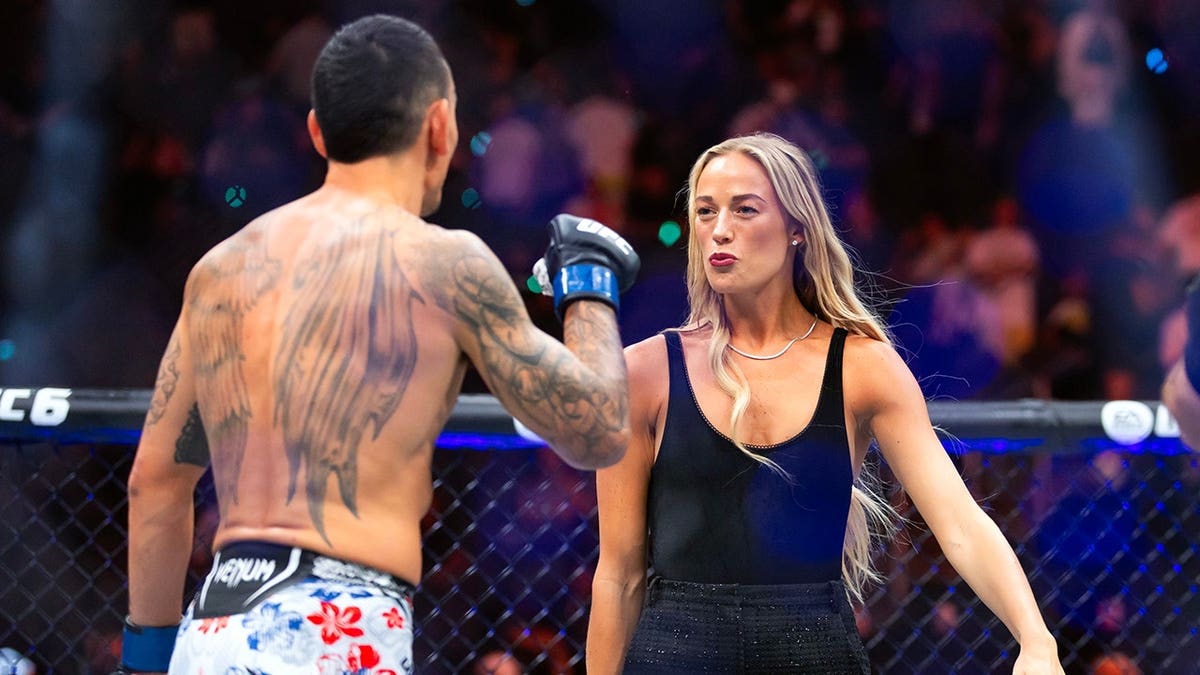
Indiana Fever guard Sophie Cunningham jokes with Max Holloway following UFC 329 at T-Mobile Arena in Las Vegas, Nev., on July 11, 2026. (Mark J. Rebilas/Imagn Images)
Cunningham is a throwback to when American athletes were people fans wanted to emulate. She looks like the life of the party. Much of the rest of the WNBA looks like the group hoping everyone remembered their SSRIs before showing up.
The usual suspects on social media have blamed Cunningham’s stardom on “White privilege.” Of course, they have. But it’s simply not accurate.
For one, “White privilege” is an odd explanation for success in a league where White players are routinely vilified and, in Clark’s case, physically targeted. More importantly, Black players could be just as popular as Cunningham. It would simply require abandoning the perpetual victim mentality and their severe cases of Clark Derangement Syndrome (CDS).
This isn’t complicated.
Cunningham defends and protects the most popular figure in women’s sports. Many of her peers spend their time roughing Clark up, only to insist afterward that they are the real targets.
And forget the argument that Cunningham “isn’t good enough.” How many current basketball players could also revive interest in the Sports Illustrated Swimsuit Issue while making an Arby’s Beef ‘N Cheddar a fashionable lunch choice?
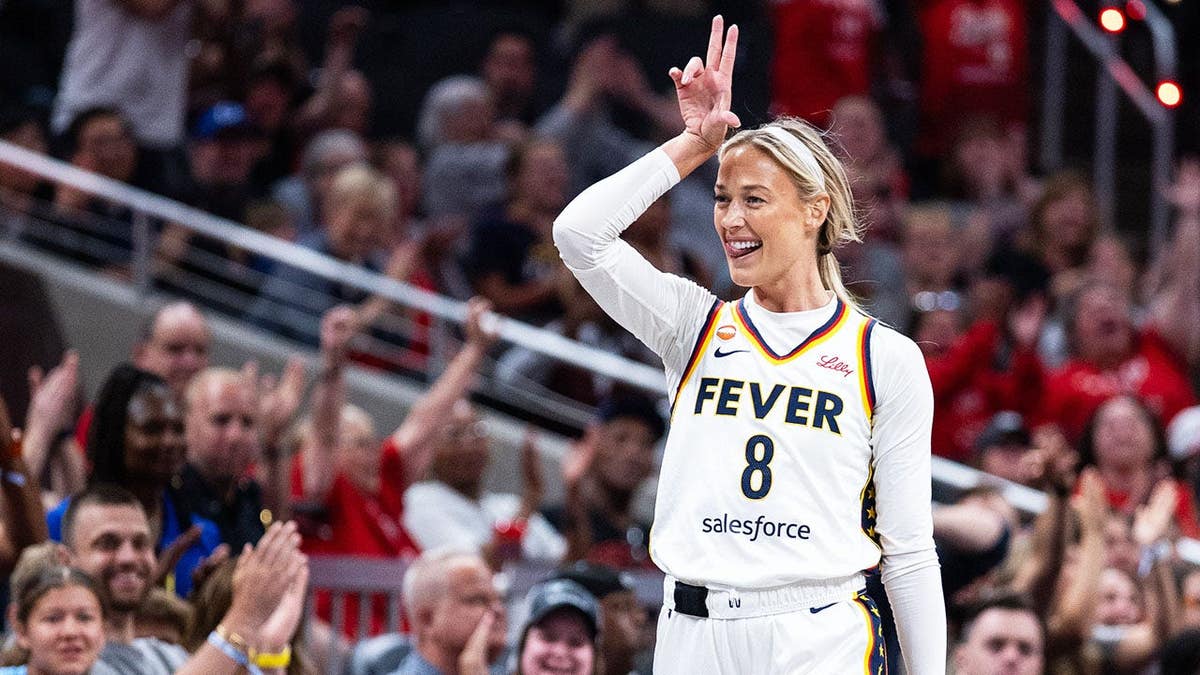
Jun 16, 2026; Indianapolis, Indiana, USA; Indiana Fever guard Sophie Cunningham (8) celebrates a made shot in the first half against the Toronto Tempo at Gainbridge Fieldhouse. Mandatory Credit: Trevor Ruszkowski-Imagn Images (IMAGN IMAGES via Reuters Connect)
In all seriousness, Cunningham understood the assignment.
Whenever a transcendent athlete emerges, everyone around them has a chance to grow with them. Cunningham recognized the moment. She capitalized on it. Many of her WNBA peers squandered it.
Ask yourself a simple question: Why would fans root for most of these women? They appear unhappy, resentful and ungrateful. Rather than inspiring people, they ask people to feel sorry for themselves and guilty for not supporting them sooner.
By contrast, Sophie Cunningham is a hoot. She isn’t political or polarizing. She seems genuinely happy and goofy. She thanks her fans every chance she gets.
Cunningham has exactly the sort of personality American sports fans have always gravitated toward. She’s funny. She’s authentic. She doesn’t appear to resent the audience she’s trying to attract.
CLICK HERE TO DOWNLOAD THE APP
That’s what makes her such a unique player in the WNBA today.
Honestly, Nike and Under Armour made a serious mistake by letting Adidas get to Cunningham first. Her new sneakers are about to be a hot commodity.