Close Menu
  • Home
  • United States
  • World
  • Politics
  • Business
  • Lifestyle
  • Entertainment
  • Health
  • Science
  • Tech
  • Sports
  • More
    • Web Stories
    • Editor’s Picks
    • Press Release

Subscribe to Updates

Get the latest USA news and updates directly to your inbox.

What's On
Tyson Fury’s Daughter Venezuela, 16, Shares Hopes to Eventually Have ‘Many’ Kids With Her Husband

Tyson Fury’s Daughter Venezuela, 16, Shares Hopes to Eventually Have ‘Many’ Kids With Her Husband

June 21, 2026
Dodgers shrouded in disappointment during blowout loss to Orioles

Dodgers shrouded in disappointment during blowout loss to Orioles

June 21, 2026
Rep. Ro Khanna believes Graham Platner accusers — but stands by him anyway

Rep. Ro Khanna believes Graham Platner accusers — but stands by him anyway

June 21, 2026
Facebook X (Twitter) Instagram
Trending
  • Tyson Fury’s Daughter Venezuela, 16, Shares Hopes to Eventually Have ‘Many’ Kids With Her Husband
  • Dodgers shrouded in disappointment during blowout loss to Orioles
  • Rep. Ro Khanna believes Graham Platner accusers — but stands by him anyway
  • Los Angeles news station ‘accidentally’ posts N-word on X: ‘Technical error’
  • Iowa local news anchor Dustin Nolan quits live on air at KWQC TV6
  • Millie Bobby Brown Shares 1st Father’s Day Tribute to Husband Jake Bongiovi: ‘The Best Dad’
  • Giants downplay Rafael Devers incident late in third consecutive loss
  • Final design for NYC Penn Station’s redevelopment one step closer — including how much it could cost
  • Privacy
  • Terms
  • Advertise
  • Contact Us
Join Us
USA TimesUSA Times
Newsletter Login
  • Home
  • United States
  • World
  • Politics
  • Business
  • Lifestyle
  • Entertainment
  • Health
  • Science
  • Tech
  • Sports
  • More
    • Web Stories
    • Editor’s Picks
    • Press Release
USA TimesUSA Times
Home » Science history: Doctor hypothesizes that ‘transmissible proteins’ can cause disease, contradicting a ‘central dogma’ of molecular biology — April 9, 1982
Science history: Doctor hypothesizes that ‘transmissible proteins’ can cause disease, contradicting a ‘central dogma’ of molecular biology — April 9, 1982
Science

Science history: Doctor hypothesizes that ‘transmissible proteins’ can cause disease, contradicting a ‘central dogma’ of molecular biology — April 9, 1982

News RoomBy News RoomApril 9, 20261 ViewsNo Comments

Milestone: Prions identified

Date: April 9, 1982

Where: San Francisco

Who: Dr. Stanley Prusiner

On April 9, 1982, a doctor at the University of California, San Francisco, published a paper in the journal Science showing that infectious proteins caused a degenerative nerve disease in sheep. In doing so, he transformed our understanding of how some diseases are transmitted.

Dr. Stanley Prusiner had been studying the disease scrapie, which affects sheep and goats. It had long been a mystery exactly how scrapie was transmitted from animal to animal. He had also long been haunted by seeing a patient die rapidly of the degenerative brain disorder Creutzfeldt-Jakob disease (CJD) a decade earlier. The patient had no fever or other signs of immune system activation nor any evidence of a bacterial or viral infection. Yet Prusiner was told the patient was infected by a “slow virus,” or one that progressed on longer time scales than is typically seen with viruses.

“At that time, I was beginning a residency in neurology and was most impressed by a disease process that could kill my patient in two months by destroying her brain while her body remained unaffected by this process,” he said in a speech he later gave about his discovery.


You may like

In the 1950s, the term “slow virus” had been coined to describe the diseases scrapie in sheep and goats. By the 1960s, scientists had started applying the term to certain human disorders, noting that the disease “kuru” that ravaged the Fore tribe in Papua New Guinea seemed to be transmitted when tribal members ate the brains of those who previously died of the disease.

Research in chimpanzees in the 1960s definitively showed that Creutzfeld-Jakob disease ‪—‬ a fatal, relentless brain disease that seemed to run in families ‪—‬ could also be transmitted by feeding the chimpanzees brain tissue from affected animals. Under a microscope, brain tissues affected by kuru, scrapie or CJD all looked remarkably similar, showing a characteristic “spongiform” appearance. In other words, the brain tissue became riddled with holes, like a sponge.

Yet there was a puzzle: CJD seemed to be passed on in families. So how could viruses or bacteria be both heritable and infectious?

Prusiner was initially studying CJD but switched his focus to scrapie when he looked at data from a team led by Tikvah Alper, a radiobiologist. Alper had found that scrapie could still be transmitted when infected tissue was irradiated with ultraviolet light, which damages DNA.

Get the world’s most fascinating discoveries delivered straight to your inbox.

Dr. Stanley Prusiner discovered the existence of prions. (Image credit: Christopher Michel, CC BY 4.0 via Wikimedia Commons)

So Prusiner began studying scrapie in mouse spleens and brains. But he quickly switched to hamsters because they developed disease symptoms within 70 days, as opposed to one to two years for mice. He then systematically worked to isolate and identify the chemical nature of the “infectious agent” driving the disease.

Ultimately, he pinpointed a protein as the culprit.

“Six separate and distinct lines of evidence show that the scrapie agent contains a protein that is required for infectivity,” Prusiner wrote in the seminal 1982 study. All of those showed that breaking down the protein structure short-circuited the transmission of scrapie. He went on to show that there was no evidence for any nucleic acids, such as DNA or its cousins, in the samples. He proposed the name “prion” to describe the infectious protein, which he suggested could “code for its own biosynthesis,” adding that “this hypothesis contradicts the ‘central dogma’ of molecular biology.”


What to read next

Prusiner’s proposal was not widely accepted at first. But over the next 15 years, scientists elucidated the protein structure of prions and showed that they could take multiple conformations, even when encoded by the same DNA sequence. Researchers also showed how the prion’s shape resisted degradation,and that it could “convert” the healthy versions of the protein into the pathological form.

A microscope image of prions

A microscopic image of human brain tissue. The holes in the brain (white spots) are considered the “trademark” of prion diseases. (Image credit: UCSF via Getty Images)

Follow-up work in familial cases of CJD showed certain genes could also predispose people to the disease and that DNA damage determined how long it took for the disease to incubate.

Prusiner won the Nobel Prize in physiology or medicine in 1997 for his work on prions.

Prusiner’s hypothesis was validated when the mad cow disease epidemic struck the U.K. in the early 2000s. Scientists would eventually determine that people became infected after eating beef from cows that had been fed the brain tissue of cows sick with bovine spongiform encephalopathy (BSE). After consuming meat from cows with BSE, humans develop a version of CJD known as “variant CJD.”


Share. Facebook Twitter LinkedIn Telegram WhatsApp Email

Keep Reading

The US just approved bemotrizinol, a sunscreen ingredient long used in Asia and Europe. Here’s how it works.

The US just approved bemotrizinol, a sunscreen ingredient long used in Asia and Europe. Here’s how it works.

James Webb telescope finds a cosmic cloud of creation buried in the Sword of Orion — Space photo of the week

James Webb telescope finds a cosmic cloud of creation buried in the Sword of Orion — Space photo of the week

What will the Amazon rainforest look like in 100 years?

What will the Amazon rainforest look like in 100 years?

‘You kill the bacteria and heal the wound at the same time’: Emerging nanotech could be the future of wound healing

‘You kill the bacteria and heal the wound at the same time’: Emerging nanotech could be the future of wound healing

Outdoor cats can be exposed to dangerous germs — here’s how to protect you and your pets, according to more than 400 studies

Outdoor cats can be exposed to dangerous germs — here’s how to protect you and your pets, according to more than 400 studies

Science news this week: Goblin shark filmed for first time, California close to a major quake, physicists split photon, and inside China’s plans to ‘tame nature’

Science news this week: Goblin shark filmed for first time, California close to a major quake, physicists split photon, and inside China’s plans to ‘tame nature’

Diagnostic dilemma: A fish stabs a man through the throat and the base of the skull

Diagnostic dilemma: A fish stabs a man through the throat and the base of the skull

Why does it take our eyes so long to adjust to the dark?

Why does it take our eyes so long to adjust to the dark?

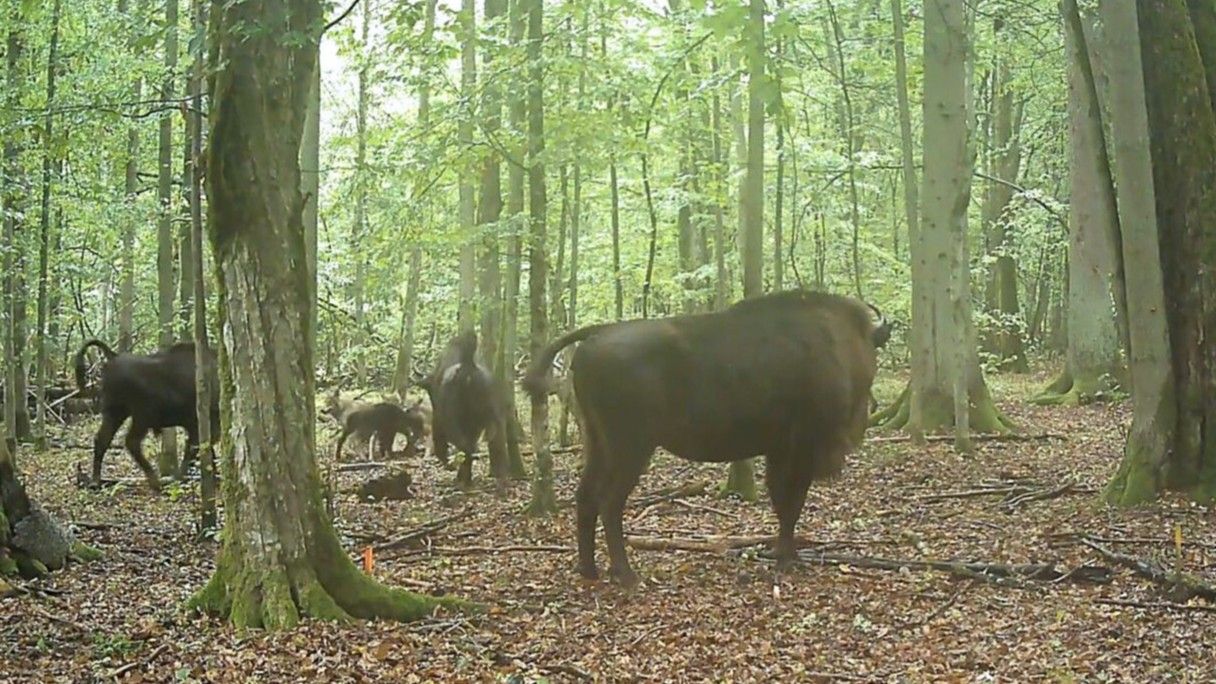
Watch bison herd defend a newborn calf from wolf attack in a primeval Polish forest

Watch bison herd defend a newborn calf from wolf attack in a primeval Polish forest

Add A Comment
Leave A Reply Cancel Reply

Editors Picks

Dodgers shrouded in disappointment during blowout loss to Orioles

Dodgers shrouded in disappointment during blowout loss to Orioles

June 21, 2026
Rep. Ro Khanna believes Graham Platner accusers — but stands by him anyway

Rep. Ro Khanna believes Graham Platner accusers — but stands by him anyway

June 21, 2026
Los Angeles news station ‘accidentally’ posts N-word on X: ‘Technical error’

Los Angeles news station ‘accidentally’ posts N-word on X: ‘Technical error’

June 21, 2026
Iowa local news anchor Dustin Nolan quits live on air at KWQC TV6

Iowa local news anchor Dustin Nolan quits live on air at KWQC TV6

June 21, 2026

Subscribe to News

Get the latest USA news and updates directly to your inbox.

Latest News
Millie Bobby Brown Shares 1st Father’s Day Tribute to Husband Jake Bongiovi: ‘The Best Dad’

Millie Bobby Brown Shares 1st Father’s Day Tribute to Husband Jake Bongiovi: ‘The Best Dad’

June 21, 2026
Giants downplay Rafael Devers incident late in third consecutive loss

Giants downplay Rafael Devers incident late in third consecutive loss

June 21, 2026
Final design for NYC Penn Station’s redevelopment one step closer — including how much it could cost

Final design for NYC Penn Station’s redevelopment one step closer — including how much it could cost

June 21, 2026
Facebook X (Twitter) Pinterest WhatsApp TikTok Instagram
© 2026 USA Times. All Rights Reserved.
  • Privacy Policy
  • Terms
  • Advertise
  • Contact

Type above and press Enter to search. Press Esc to cancel.