



Close Menu
  • Home
  • United States
  • World
  • Politics
  • Business
  • Lifestyle
  • Entertainment
  • Health
  • Science
  • Tech
  • Sports
  • More
    • Web Stories
    • Editor’s Picks
    • Press Release

Subscribe to Updates

Get the latest USA news and updates directly to your inbox.

What's On
Ciara Miller Reposts Cryptic Message About Liars After West Wilson and Jennifer Fessler Deny Fling

Ciara Miller Reposts Cryptic Message About Liars After West Wilson and Jennifer Fessler Deny Fling

May 9, 2026
Paige Bueckers, Wings knock off Caitlin Clark-led Fever in hyped opener

Paige Bueckers, Wings knock off Caitlin Clark-led Fever in hyped opener

May 9, 2026
Romanian gymnast Ana Barbosu suspended for three missed drug tests

Romanian gymnast Ana Barbosu suspended for three missed drug tests

May 9, 2026
Facebook X (Twitter) Instagram
Trending
  • Ciara Miller Reposts Cryptic Message About Liars After West Wilson and Jennifer Fessler Deny Fling
  • Paige Bueckers, Wings knock off Caitlin Clark-led Fever in hyped opener
  • Romanian gymnast Ana Barbosu suspended for three missed drug tests
  • When Is Taylor Sheridan’s ‘Landman’ Returning for Season 3? Filming Updates Explained
  • Bobby Cox, legendary Braves manager and Hall of Famer, dead at 84
  • People who lose weight on Ozempic are viewed worse than people who don’t lose weight at all: study
  • Exclusive | Blakeman: I’ll dip into $3.8B Hochul ‘slush fund’ to lower NY taxes
  • WHO says Hantavirus outbreak ‘is not another COVID-19’ amid evacuations
  • Privacy
  • Terms
  • Advertise
  • Contact Us
Join Us
USA TimesUSA Times
Newsletter Login
  • Home
  • United States
  • World
  • Politics
  • Business
  • Lifestyle
  • Entertainment
  • Health
  • Science
  • Tech
  • Sports
  • More
    • Web Stories
    • Editor’s Picks
    • Press Release
USA TimesUSA Times
Home » Science history: Carbon-14 is discovered, opening a window into past civilizations — Feb. 27, 1940
Science history: Carbon-14 is discovered, opening a window into past civilizations — Feb. 27, 1940
Science

Science history: Carbon-14 is discovered, opening a window into past civilizations — Feb. 27, 1940

News RoomBy News RoomFebruary 27, 20261 ViewsNo Comments

Milestone: Carbon-14 discovered

Date: Feb. 27, 1940

Where: Berkeley, California

Who: Martin Kamen and Samuel Ruben

On this day in 1940, two scientists discovered an elusive form of carbon — and inadvertently opened a window into lost civilizations.

Since the mid-1930s, scientists had predicted the existence of a form of carbon with two extra neutrons in its nucleus, but they thought it would be so short-lived that it would be impossible to measure.

But Ernest Lawrence, who founded the Berkeley Laboratory, was determined to find it. In 1939, he tasked chemists Martin Kamen and Samuel Rubin with discovering carbon-14. For a year, they found no hint of the elusive atom.


You may like

Then, in January 1940, they launched a “desperation” experiment, in which they placed a piece of graphite (a crystalline form of carbon) inside a cyclotron, one of the first types of particle accelerators. The cyclotron bombarded their sample with deuterons — nuclei of a heavy form of hydrogen with one proton and two neutrons. The hope was that the crystalline form of carbon would absorb the extra neutrons, emit a proton, and become a “heavy” version of carbon.

They ran the experiment for 120 hours straight. On Feb. 15, a sleep-deprived Kamen stopped bombarding the sample with deuterons and headed home. He was so disheveled that police, who were looking for an escaped murderer, briefly questioned him.

Scientists at the Berkeley Lab (now Lawrence Berkeley Lab) used a cyclotron to discover a host of radioactive elements from the 1930s onward. (Image credit: Department of Energy. Office of Public Affairs, Public domain, via Wikimedia Commons)

When Kamen was released, he returned to the lab, where his colleague Ruben noted faint signs of radioactivity in the sample. For the next two weeks, they purified the carbon, converting it into a CO2 gas that could be pumped at the right angle at the Geiger counter to measure its radioactivity.

Surprisingly, the carbon did not have a short half-life — the time it takes for half the radioactive atoms to decay into a stable atom.

Get the world’s most fascinating discoveries delivered straight to your inbox.

“The measured cross section coupled with low yield suggests the half-life to be very long (years),” the researchers wrote in a short paper published March 15, 1940, in the journal Physical Review Letters.

Their measurements indicated it would take around 4,000 years for about half the carbon-14 to decay into nitrogen-14. (We now know the half-life of carbon-14 is about 5,730 years.)

Even at the time, they recognized the significance of their find.


You may like

“Long-lived radio-carbon will be of great importance for many chemical, biological, and industrial experiments,” the researchers wrote in the paper.

A black and white photo shows a man with dark hair and dark eyes, wearing a suit, vest and tie, sitting at a desk full of papers with a half burnt cigarette in his left hand. He looks to the left of the camera

Martin Kamen was one of the co-discoverers of carbon-14. Along with Samuel Ruben, he would go on to identify the key chemical reactions behind photosynthesis. (Image credit: American Institute of Physics (AIP) via Wikimedia Commons)

In the next few years, Ruben and Kamen used radioactive carbon and oxygen molecules to elucidate the key steps in photosynthesis. Sadly, Ruben died in 1943 in a lab accident while working with a poisonous gas, and Kamen was fired from Berkeley after having social interactions with musicians and other people considered “leftists” during the Red Scare. In 1948, he was hauled up to testify in front of the House Un-American Activities Committee, and although he was never found guilty of any wrongdoing, he was dogged by unfounded allegations for years.

While the implications of Kamen and Ruben’s experiments were immediately apparent, it wasn’t until 1949 that University of Chicago chemists James Arnold and Willard Libby demonstrated that the ratio of carbon-14 to stable carbon could be used to estimate the ages of carbon-containing relics. Libby would earn the 1960 Nobel Prize in chemistry for his work on radiocarbon dating.

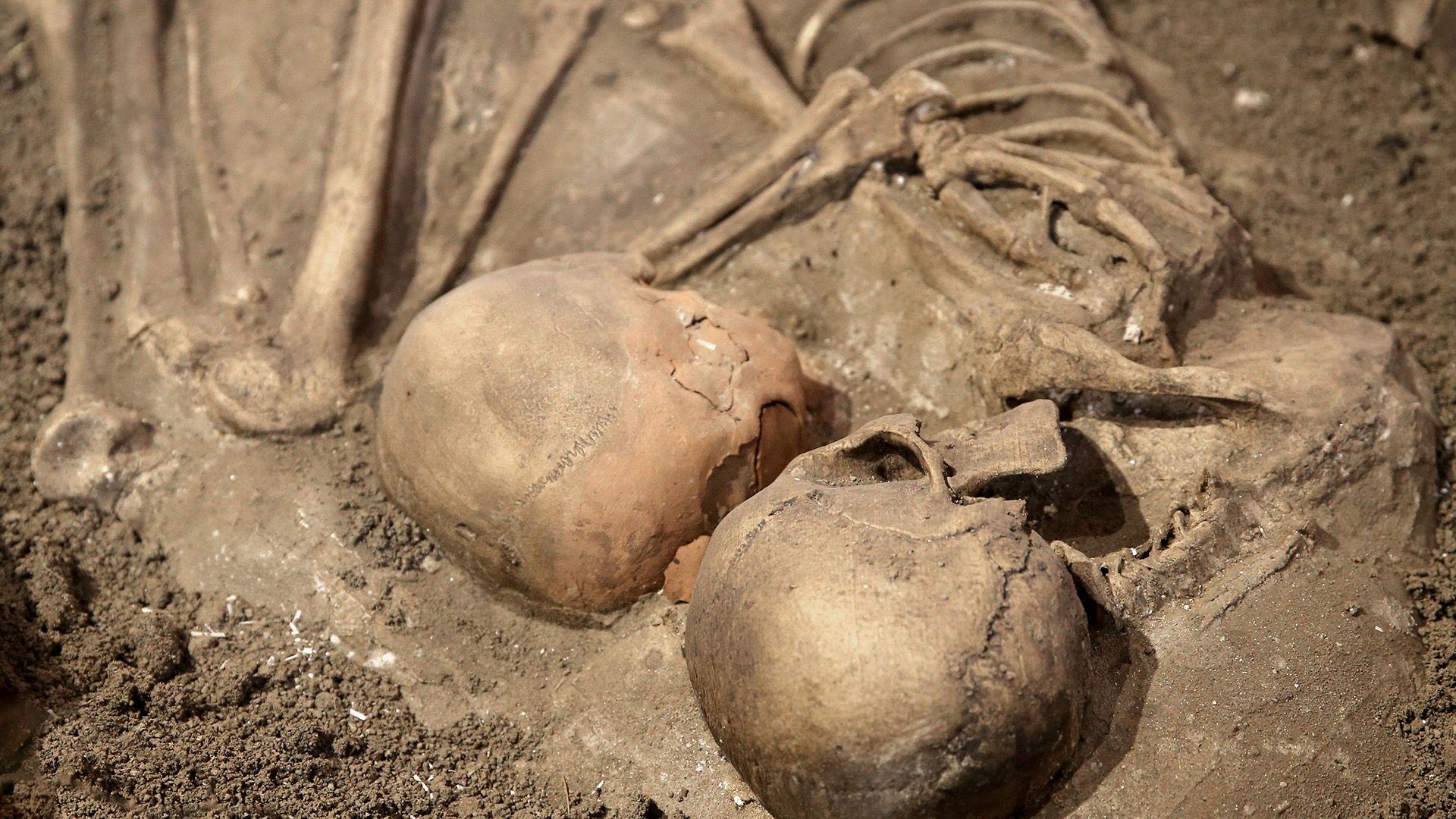
Archaeologists routinely use radiocarbon dating to estimate the ages of ancient skeletons and other artifacts that are up to 50,000 years old. And newer techniques analyze radioactive isotopes of elements such as strontium and lead to determine where ancient people lived and died, what they ate, and which pollutants they had encountered during their lifetimes.


Share. Facebook Twitter LinkedIn Telegram WhatsApp Email

Keep Reading

Pregnancy quiz: Can you deliver on the science of growing babies?

Pregnancy quiz: Can you deliver on the science of growing babies?

Science news this week: The latest on the cruise ship hantavirus infections, a shortcut to Mars, and a fast-charging quantum battery

Science news this week: The latest on the cruise ship hantavirus infections, a shortcut to Mars, and a fast-charging quantum battery

‘Feuding tech bros’ go head to head in legal showdown. But what does it mean for the future of AI?

‘Feuding tech bros’ go head to head in legal showdown. But what does it mean for the future of AI?

If humans are getting smarter, why are our brains shrinking?

If humans are getting smarter, why are our brains shrinking?

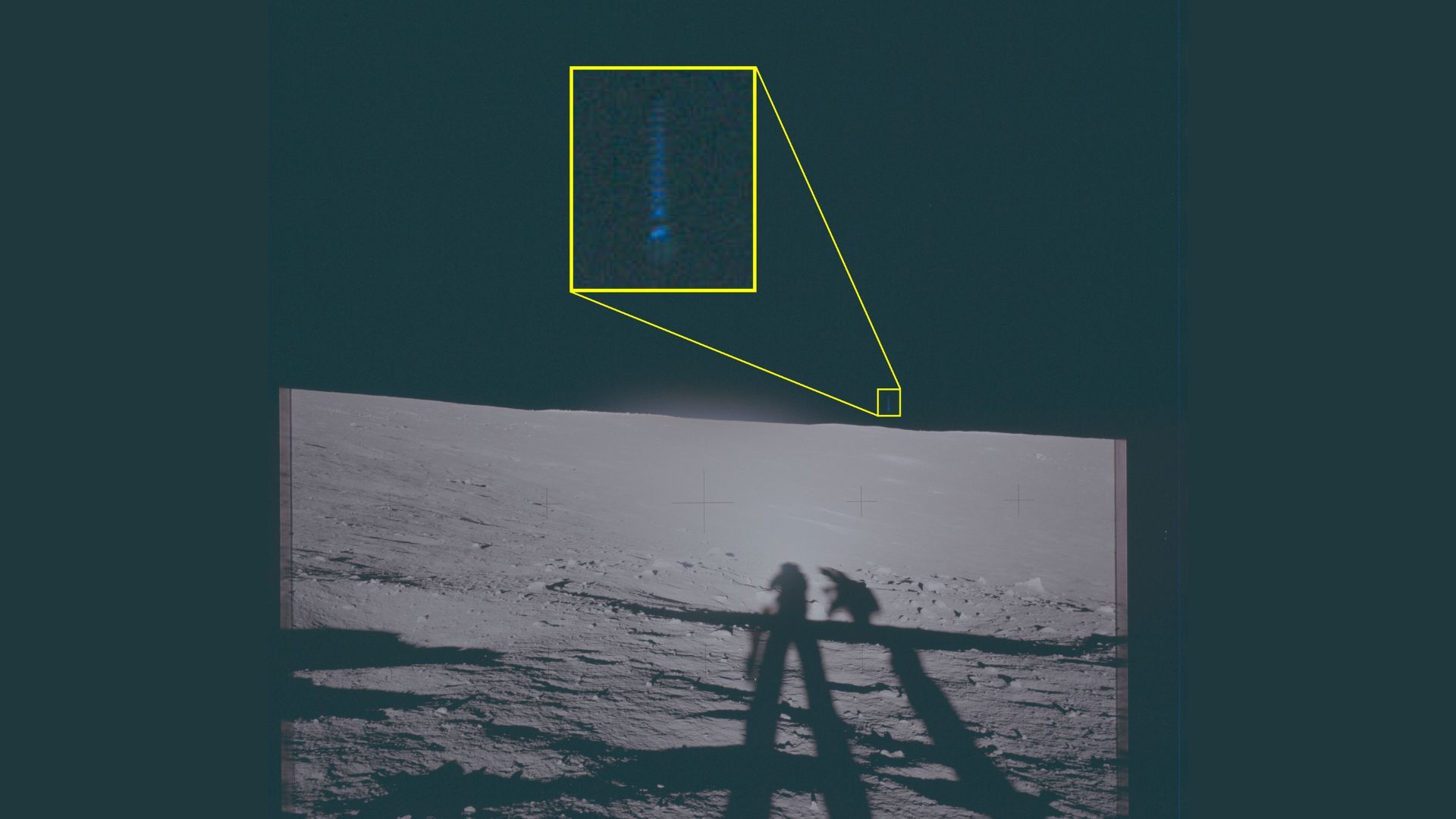
US government declassifies nearly 200 UAP files, including strange sightings from Apollo astronauts

US government declassifies nearly 200 UAP files, including strange sightings from Apollo astronauts

Some gene therapies no longer require clinical trials, thanks to new FDA rule. Is this safe, and who will it help?

Some gene therapies no longer require clinical trials, thanks to new FDA rule. Is this safe, and who will it help?

Flowering plants transformed into ‘hopeful monsters’ in 9 dire bursts across evolutionary time, study finds

Flowering plants transformed into ‘hopeful monsters’ in 9 dire bursts across evolutionary time, study finds

Hantavirus cruise LIVE: Cruise passengers monitored in several US states as CDC sets lowest emergency response

Hantavirus cruise LIVE: Cruise passengers monitored in several US states as CDC sets lowest emergency response

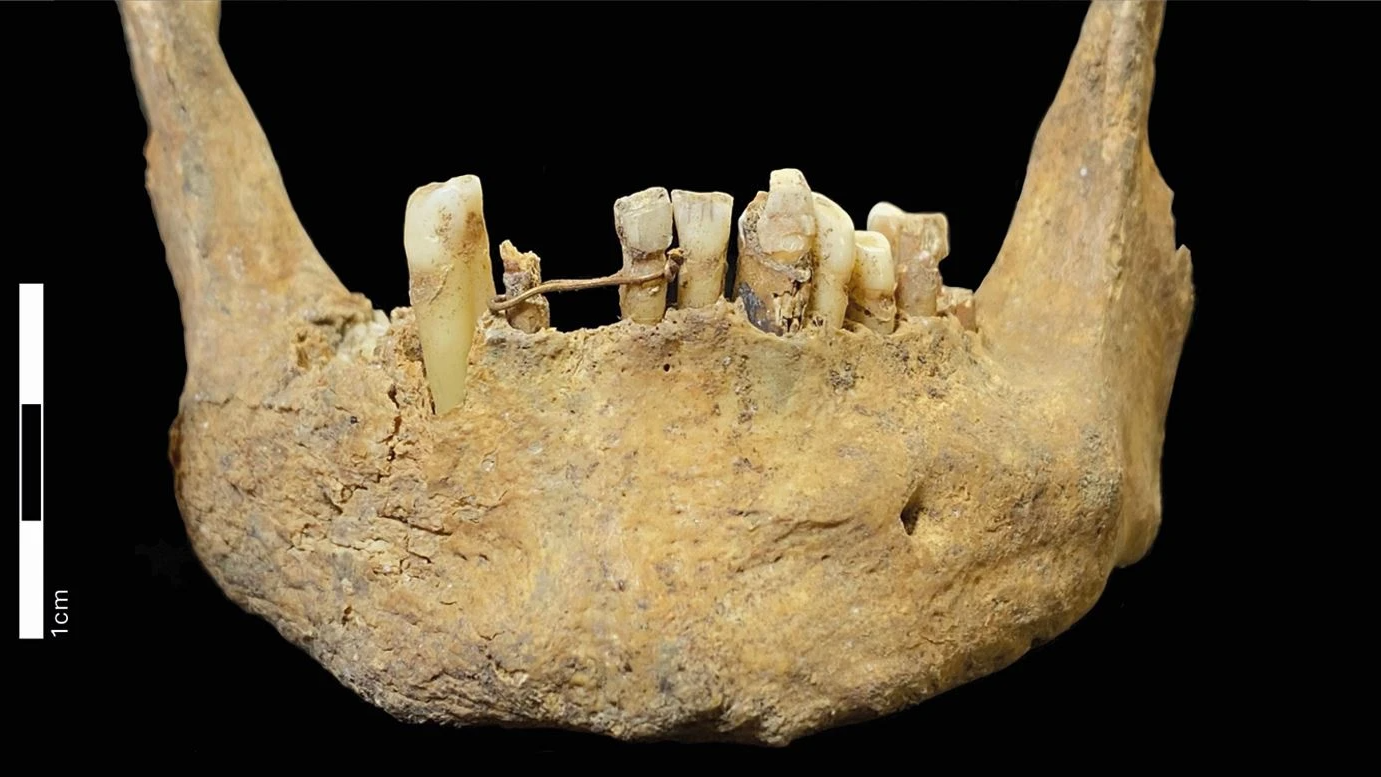
500-year-old gold dental bridge is earliest known oral care of its kind in Scotland — and it likely held a fake tooth

500-year-old gold dental bridge is earliest known oral care of its kind in Scotland — and it likely held a fake tooth

Add A Comment
Leave A Reply Cancel Reply

Editors Picks

Paige Bueckers, Wings knock off Caitlin Clark-led Fever in hyped opener

Paige Bueckers, Wings knock off Caitlin Clark-led Fever in hyped opener

May 9, 2026
Romanian gymnast Ana Barbosu suspended for three missed drug tests

Romanian gymnast Ana Barbosu suspended for three missed drug tests

May 9, 2026
When Is Taylor Sheridan’s ‘Landman’ Returning for Season 3? Filming Updates Explained

When Is Taylor Sheridan’s ‘Landman’ Returning for Season 3? Filming Updates Explained

May 9, 2026
Bobby Cox, legendary Braves manager and Hall of Famer, dead at 84

Bobby Cox, legendary Braves manager and Hall of Famer, dead at 84

May 9, 2026

Subscribe to News

Get the latest USA news and updates directly to your inbox.

Latest News
People who lose weight on Ozempic are viewed worse than people who don’t lose weight at all: study

People who lose weight on Ozempic are viewed worse than people who don’t lose weight at all: study

May 9, 2026
Exclusive | Blakeman: I’ll dip into .8B Hochul ‘slush fund’ to lower NY taxes

Exclusive | Blakeman: I’ll dip into $3.8B Hochul ‘slush fund’ to lower NY taxes

May 9, 2026
WHO says Hantavirus outbreak ‘is not another COVID-19’ amid evacuations

WHO says Hantavirus outbreak ‘is not another COVID-19’ amid evacuations

May 9, 2026
Facebook X (Twitter) Pinterest WhatsApp TikTok Instagram
© 2026 USA Times. All Rights Reserved.
  • Privacy Policy
  • Terms
  • Advertise
  • Contact

Type above and press Enter to search. Press Esc to cancel.