
QUICK FACTS
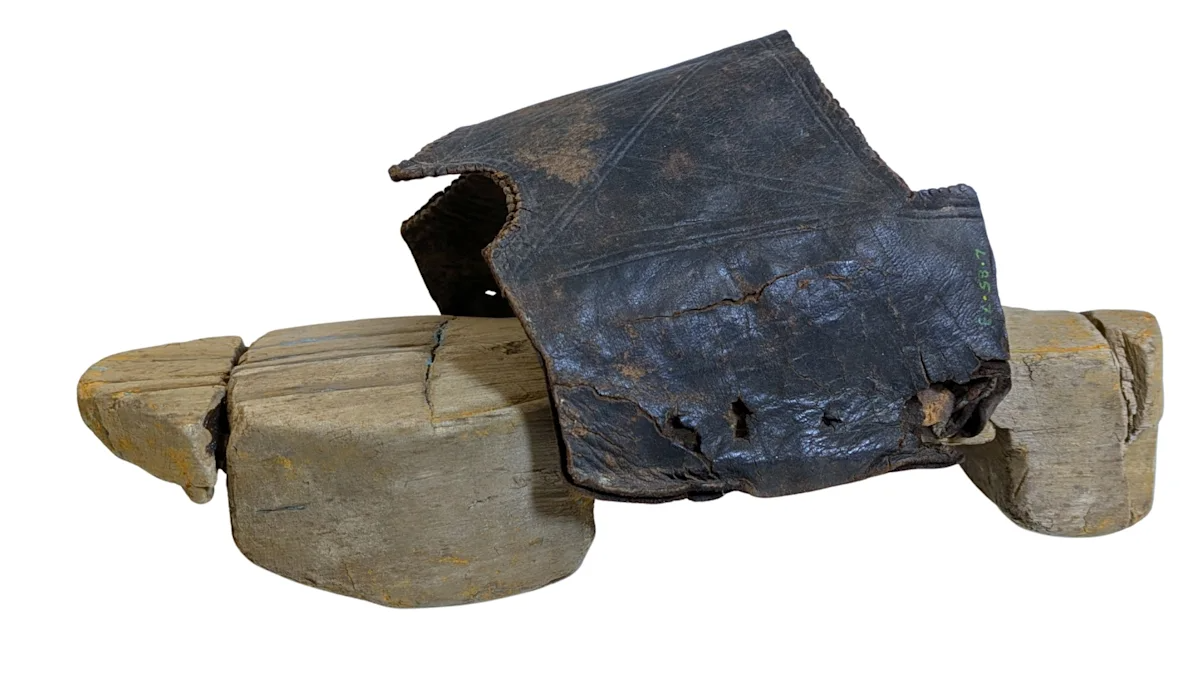
Name: Roman bath clog
What it is: A wooden platform shoe with a leather top strap
Where it is from: Vindolanda Fort, Northumberland, U.K.
When it was made: A.D. 140 to 180
Archaeologists have discovered thousands of preserved shoes at Vindolanda, an ancient Roman fort along Hadrian’s Wall. But this one is quite possibly the world’s oldest example of a shower shoe.
The “bath clog” — which consists of a wooden platform sole and a leather upper — was a version of the kind of slip-on shoe people today wear in locker room showers or at a nail salon to avoid issues like foot fungus. But the Romans wore the platform clogs — which they called “sculponeae” in Latin — to protect themselves from the hot, slippery floors of the bath house.
Roman bath houses were communal gathering places, according to English Heritage, a historic trust that conserves artifacts and heritage sites. A bather would undress then move from a cold room to a warm room to a hot room, then back to the first room for a cold plunge. One of the most important inventions in Roman bathing was the hypocaust system, which involved stoking a furnace underneath a raised floor to heat the warm and hot rooms and their baths. This radiant heat system also made the floor incredibly hot to the touch.
Because Roman shower shoes were made from perishable materials, the oldest and best-known examples come from Vindolanda, a Roman fort in Northumberland, England, where organic remains have been preserved in oxygen-free layers of mud. Archaeologists have found over 5,000 Roman shoes at Vindolanda — around 50 of which are bath clogs, according to Elizabeth Greene, an archaeologist at the University of Western Ontario in Canada.
Most of the bath clogs feature a wooden platform 1 to 2 inches (2.5 to 5 centimeters) high and a leather strap across the top. According to Greene, some of the clogs were plain and others were decorated with geometric patterns or representations of toes cut into the surface.
Whether or not the Vindolanda bath clogs are the world’s earliest shower shoes is up for some debate.
Archaeologists have found much earlier examples of sandals, including King Tut’s, dated to 3,300 B.C. in Egypt, for example. And the Etruscans had metal-framed sandals as early as the sixth century B.C., Elizabeth Semmelhack, the director and curator of the Bata Shoe Museum in Toronto, Canada, told Live Science. “But they were not for bathhouse wear.”
Get the world’s most fascinating discoveries delivered straight to your inbox.
MORE ASTONISHING ARTIFACTS
Two wood-soled children’s shoes were discovered in 2025 at Isarnodurum, a Roman-era archaeological site in France that slightly predates Vindolanda. If these are confirmed to be bath clogs, they would be the oldest ones in the world.
One research angle Greene is pursuing is questioning whether bath clogs were only used in bathing. A few centuries after the Romans left Europe, medieval people invented similar looking footwear that functioned as a type of overshoe (a shoe strapped or worn over another shoe) to protect their feet from mud, water or snow on the ground. Some of the wooden clogs found at Vindolanda may have served an overshoe purpose — or they could have pulled dual-duty two millennia ago as shower shoes and overshoes.
This bath clog from Vindolanda can be seen from now until September 2027 at the Bata Shoe Museum in Toronto as part of their Unearthing Vindolanda exhibit.
For more stunning archaeological discoveries, check out our Astonishing Artifacts archives.
TOPICS