




NEWYou can now listen to articles!
Republican control of the Senate could return as soon as the 2028 general election, but only if the party can pull off a series of crucial victories in competitive races, a possibility that seems distant following Tuesday night’s devastating Democratic sweep.
As of publication, Democrats and independents who caucus with them have secured 54 Senate seats, a total that could grow to as many as 56 pending election calls in Mississippi and Alaska. Assuming Republicans hold the vice presidency in 2028, far from a guarantee, they would need to flip at least four seats during that election cycle to win the Senate back.
While there are ample pick-up opportunities for Republicans in 2028 if the party can return to its typical national performance benchmarks, several vulnerable GOP-held seats could complicate their efforts to retake the upper chamber.
DEMS FLIPS YET ANOTHER SENATE SEAT IN TRUMP COUNTRY AMID SWEEPING GOP UPSETS
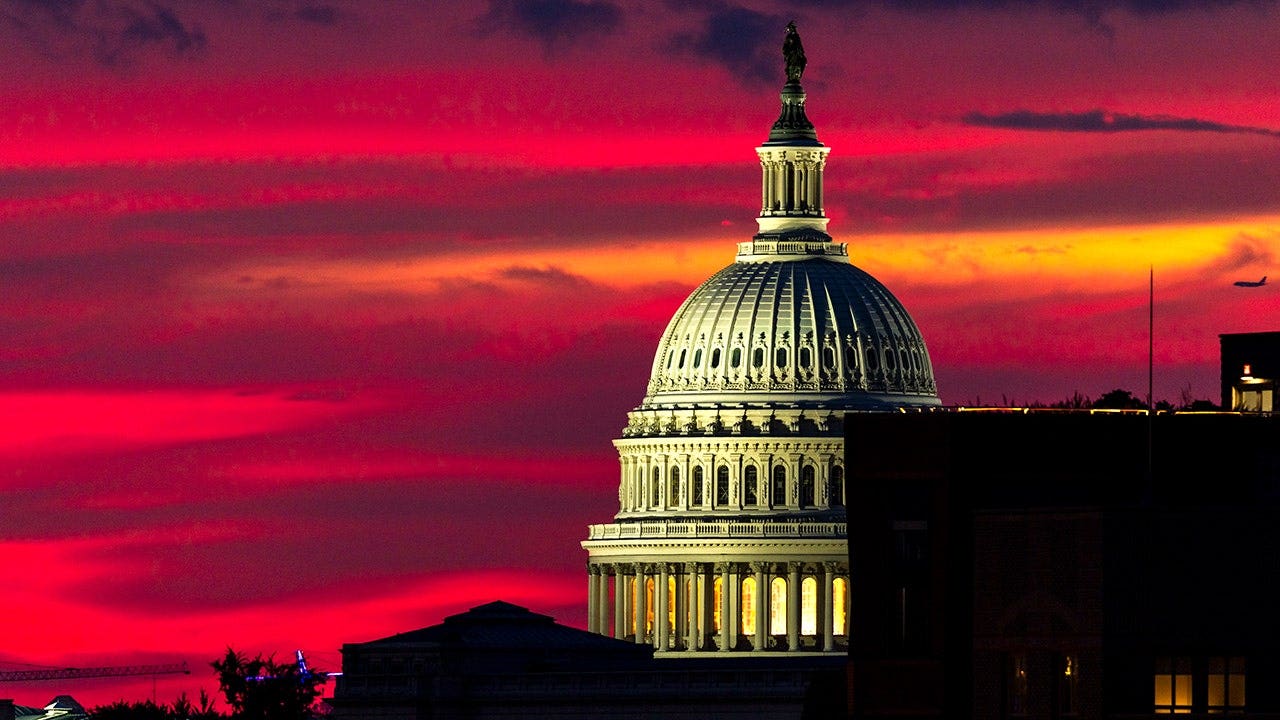
The U.S. Capitol, on Dec.12, 2024. Republicans are defending their 53-47 majority in the Senate in the 2026 midterm elections. ( – Paul Steinhauser)
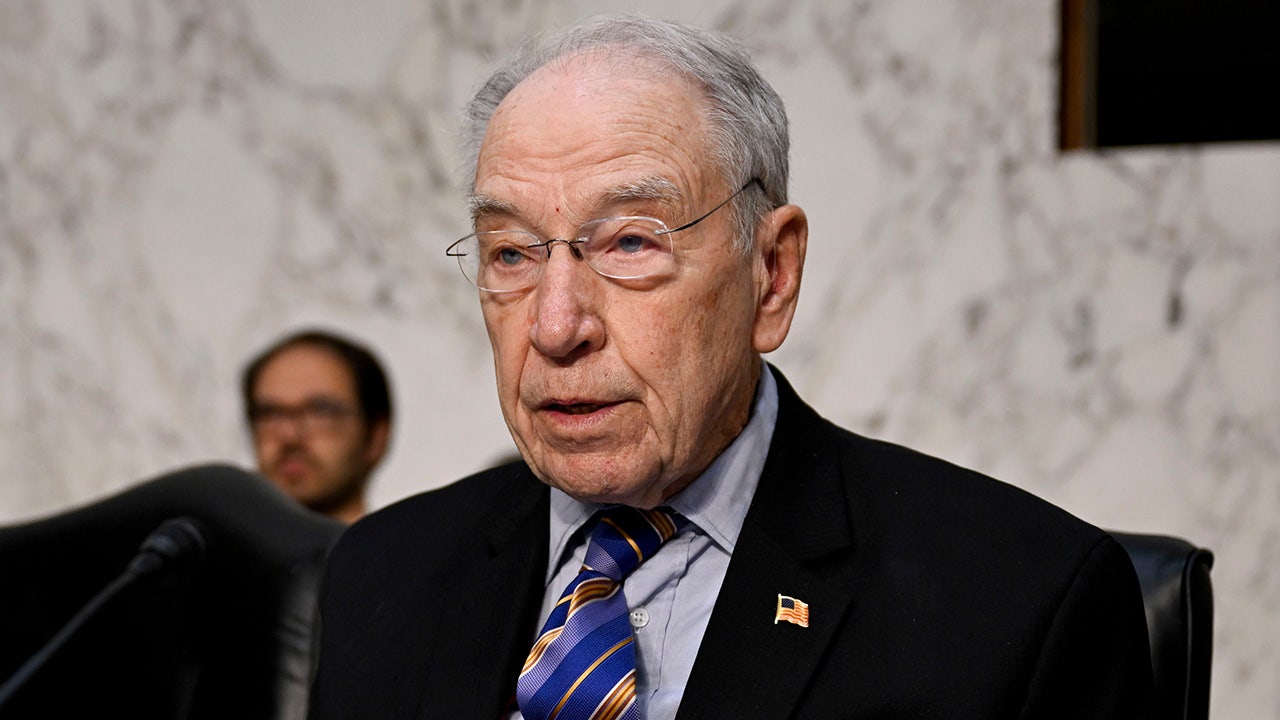
Iowa Sen. Chuck Grassley, for instance, turned 93 in September and faces a decision about whether to seek another term in 2028, when Republicans will be defending his seat in a state where Democrat Josh Turek just defeated Republican Ashley Hinson by roughly four percentage points. His departure before then could also give Iowa’s incoming Democratic governor the opportunity to appoint a temporary replacement.
Another possibility that could make the GOP’s path back to a majority even more uncertain is the admission of Puerto Rico and Washington, D.C., to the union as full states. Such a move would likely require the Democratic-led Senate to abolish or overcome the legislative filibuster, something lawmakers representing more moderate or competitive states may balk at, as well as support in the House and either presidential approval or enough votes to override a veto.
CHUCK SCHUMER AFTER SWEEPING DEMOCRATIC MIDTERM VICTORIES: ‘I’LL BE RE-ELECTED AS MAJORITY LEADER’
The proposal comes as Republicans seek to convince voters that keeping the GOP in power would translate into more money in Americans’ pockets. (Finn Gomez/Getty Images)
Even if the filibuster is done away with, President Donald Trump could veto admittance bills. Democrats currently lack the numbers to override such a veto.
If Republicans lose the White House in 2028, however, Democrats could have a clearer path to advancing statehood for Puerto Rico and Washington, D.C., a move that would add four Senate seats and potentially complicate Republican efforts to win back the chamber, though significant political and legal obstacles would remain.
Assuming none of that happens, Democrats will be defending six Senate seats that could offer Republicans potential pick-up opportunities in 2028.
Republicans will have pick-up opportunities in New Hampshire, Nevada, Arizona, Georgia, Pennsylvania and Ohio that year. They will, however, be forced to defend vulnerable Senate seats in Wisconsin, Iowa and North Carolina. Indiana, which saw a significant blue shift, also has a Senate seat up for contention in 2028, while Nebraska, where independent Dan Osborn mounted a competitive but unsuccessful challenge to Republican Sen. Pete Ricketts on Tuesday, will not hold another regularly scheduled Senate election until 2030.
While 2028 could deliver Republicans a majority if they play their cards right, another defeat on the scale of 2026 could put the Democratic Party dangerously close to the 60-vote threshold necessary to invoke cloture and counter a filibuster.
“It may be unlikely, but I do think it’s feasible,” Heritage Action government relations director Chip Wyatt told Digital. “We’re just as capable of having a night like the Democrats had on Tuesday in 2028. If anything, that election, the election we had on Tuesday has shown us that two years is a very, very long time in politics. think if you had told anybody in 2024 that this is what happened in 2028, they probably wouldn’t believe you.”
For Republicans to have a good night in 2028, Wyatt argued that conservatives would have to focus on affordability issues while Democrats overstep their mandate by allowing the fringes of their party to dictate its policy agenda.
Texas Sen. Ted Cruz took a similar line in reacting to Tuesday night’s election results.
“We will rebuild as a true blue-collar party, not by embracing socialism, but by being real free-market conservatives. The way we built the Texas economic miracle in the first place, and we will build and rebuild America as well,” he said. “When the zealots overreach, and they will, we will stand ready to lead in the direction of freedom, of prosperity, of safety and security and common sense. We will return to a new dawn of freedom in America.”
2030 features slightly fewer pick-ups for the GOP with a comparable number of states to defend. While Republicans will have pick-up opportunities in Arizona, Nevada, Wisconsin and Michigan, they will also be forced to defend seats in Texas, Ohio and Pennsylvania.
MAJORITY LEADER THUNE SAYS SENATE GOP WON’T ‘STAND IDLY BY’ AS DEMOCRATS TAKE CONTROL OF CONGRESS
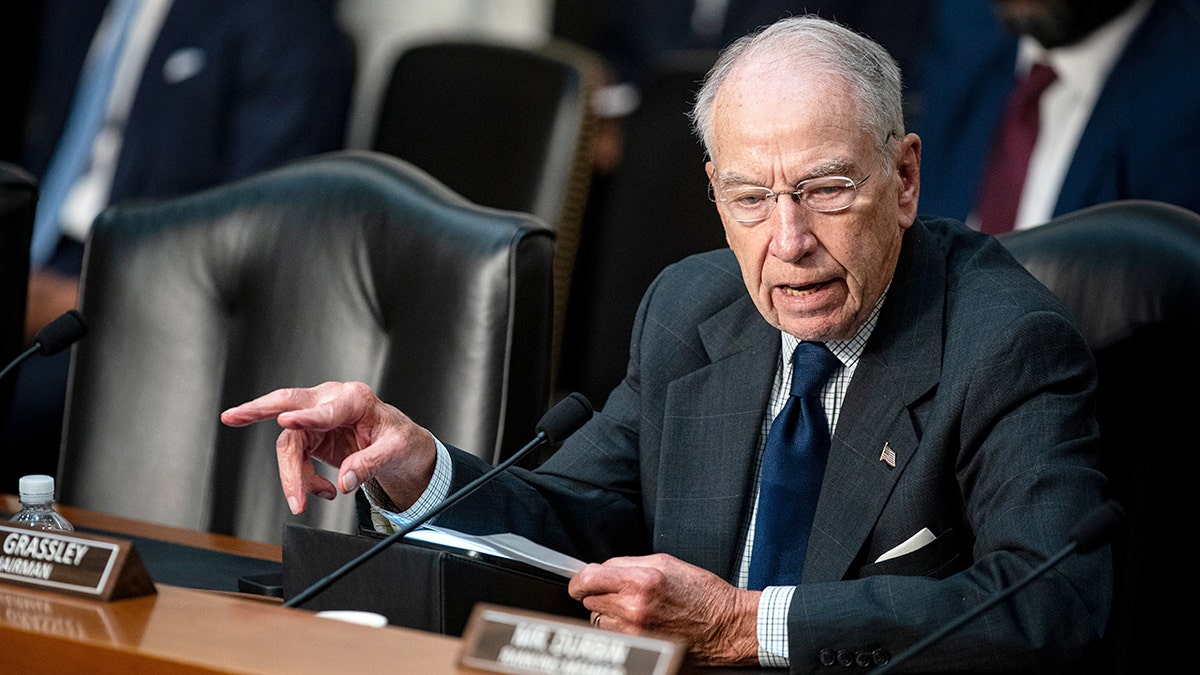
Senator Chuck Grassley, a Republican from Iowa and chairman of the Senate Judiciary Committee, speaks during a hearing in Washington, Sept. 16, 2025 (Al Drago/Bloomberg via Getty Images)
The 2032 election will feature the same regularly scheduled Senate seats contested in 2026, giving Republicans another opportunity to retake deep-red states they blundered this year, such as Kansas and South Carolina. Historically, however, some moderate Democrats have managed to hang on to state-wide offices in typically red states, making a reversion far from a certainty.
Former West Virginia Sen. Joe Manchin, for instance, managed to survive multiple GOP challenges in the deep-red state. Kansas and Kentucky, similarly, have Democratic governors that survived Republican challenges in races that received national attention.
While many Republicans, and even some Democrats, have suggested liberal pick-ups in deep red states could be one-cycle wonders, Wyatt cautioned against complacency.
“We should always assume the politicians want to get re-elected and so the senators in the deep red states that have been recently elected as Democrats are going to want to keep their seats and so they’re going to be very strategic in how they vote and in what kind of bills they’re introducing,” Wyatt said. “In some of these deep red states, it’s going to be difficult for [Democrats] to hold on to these seats … Now granted, I’ve already said two years is a long time, six years is an even longer time. So who knows what kind of political landscape we’re looking at in 2032 but Republicans should definitely start off with a strong advantage in many of these states … But it’s never wise to counter chickens before they hatch.”
CLICK HERE TO DOWNLOAD THE APP
Electoral politics is famously unpredictable. Nobody in 2024, for instance, envisioned South Carolina or Kansas sending Democrats to the Senate in 2026. It is possible that the Republican path to a Senate majority, or lack thereof, will be comparably surprising.