

NEWYou can now listen to articles!
A new analysis of 44 studies has linked “doomscrolling” to higher levels of anxiety and psychological distress — but for some, information overload may also contribute to a phenomenon one neurologist calls “helicopter brain.”
The research, published in Frontiers in Psychology, found associations between excessive consumption of negative online content and poorer mental health, although it did not establish a cause-and-effect relationship.
Board-certified neurologist Dr. Steven Resnick uses the term “helicopter brain” to describe a nervous system that remains constantly on high alert, much like a “helicopter parent” who constantly hovers over a child to protect them from harm.
FUNCTIONAL MEDICINE EXPERT WARNS EVERYDAY HABITS MAY ACCELERATE CELLULAR AGING
“Imagine your own helicopter — that is your nervous system,” Resnick, chief of the Division of Neurology and medical director of the Comprehensive Stroke Center at Mount Sinai Medical Center in Miami Beach, Florida, told Digital. “Your nervous system’s job is to protect you from harm.”
Information overload may also contribute to a phenomenon one neurologist calls “helicopter brain.” (iStock)
Information overload, overstimulation and uncertainty can keep the brain on high alert, activating the autonomic nervous system, the neurologist said.
“The brain is scanning for danger,” Resnick said. “When it scans for danger, then you have that autonomic nervous system pushing the accelerator.”
NEARLY 3 IN 4 AMERICANS ARE BATTLING THE SAME EXHAUSTING HEALTH PROBLEM, CDC REVEALS
The neurologist, who also hosts “The Healthy Mind” podcast, said he often sees patients experiencing symptoms they struggle to explain, including headaches, gastrointestinal issues, fatigue, sleep problems, tingling and dizziness.
In some cases, patients undergo evaluations by multiple specialists before identifying a potential explanation.

“The brain is scanning for danger,” the neurologist said. “When it scans for danger, then you have that autonomic nervous system pushing the accelerator.” (iStock)
“They end up going to see a neurologist, who sends them to the gastroenterologist, who sends them to the cardiologist, then the rheumatologist,” he said.
“They don’t understand what they’re feeling is actually authentic, it’s real — it’s the nervous system that is actually activated.”
THINK YOUR CORTISOL IS TOO HIGH? EXPERT REVEALS THE TRUTH BEHIND VIRAL WELLNESS CRAZE
Although constant information overload can contribute to this heightened state of alertness, Resnick said the same patterns can emerge in response to everyday stressors and deeply ingrained habits.
The neurologist outlined the following five strategies for recognizing these patterns, calming the nervous system and developing healthier responses to stress.
No. 1: Recognize what you’re feeling
When seeing patients, Resnick said his first step is to listen to them, to ensure that he understands what they’re feeling.
“I hear patients say, ‘I’m scared, I’m fearful, I’m concerned, I’m worried,’ and then you start to realize what their nervous system is telling you,” he told Digital. “I would never have done that by just fixing the problem right away.”

When seeing patients, Resnick said his first step is to listen to them, to ensure that he understands what they’re feeling. (iStock)
The nervous system can begin to calm when patients feel truly heard, safe, secure and connected, the neurologist said.
“The solution can be done later,” Resnick said. “And we have to stop using the word ‘fixing,’ because a lot of things cannot be fixed — but over time, you can start feeling better.”
No. 2: Name the pattern
Recognizing recurring patterns — in thoughts, behaviors and reactions — is an important first step toward changing them, Resnick said.
“Mindfulness is not just about meditation; it’s about noticing,” he said.
That could mean recognizing the same conflict happening repeatedly with a co-worker, lying awake each night with racing thoughts, or turning to food or cigarettes during periods of stress, according to Resnick.
THIS ONE QUESTION MAY REVEAL WHETHER YOUR BODY IS GETTING THE REST IT NEEDS, STUDY FINDS
When those behaviors repeat, people can begin operating on “autopilot,” he said.
“The brain wants to resort to what is familiar, what is safe and what is known,” Resnick said. “It keeps going back to that because the brain understands it, retrieves it and does the same thing over and over again.”
Breaking that cycle requires recognizing the pattern and making a conscious effort to respond differently, he added.
No. 3: Catch the trigger
Next, the neurologist said it’s important to “catch the cue,” or trigger, that kick-starts the pattern.
“It’s a stimulus,” he said. “It’s something that is very sneaky. It goes under your level of consciousness.”
“It could be your boss’ face. It could be a telephone. It could be a chair or a couch in a room. It could be a smell or a feeling.”

The neurologist said it’s important to “catch the cue,” or trigger, that kick-starts the pattern. (iStock)
That cue can trigger an almost automatic behavior, Resnick said, such as procrastinating, eating, reaching for a drink or lashing out.
If the behavior provides pleasure or helps someone avoid an uncomfortable feeling or situation, the brain can become more likely to repeat it.
Even worrying can become part of that cycle. If the feared outcome doesn’t happen, Resnick said, the brain may interpret the worry as protective, reinforcing the habit.
ONE TYPE OF SLEEP LINKED TO DRAMATICALLY LOWER RISK OF DEMENTIA, PARKINSON’S AND 81 OTHER DISEASES
Breaking the pattern starts with identifying the specific cues that set it in motion, according to the neurologist.
Rather than viewing anxiety or overthinking as something that happens “all the time,” Resnick encourages patients to pinpoint a specific episode, consider what triggered it and recognize the behavior and potential reward that followed.
No. 4: Reward the new habit
The next step is replacing the unwanted behavior with a healthier habit that provides a noticeable reward, Resnick said.
“Give your new habit a reward you can feel,” he advised.
DIETITIAN REVEALS SIMPLE EATING STRATEGY FOR BETTER SLEEP — AND ONE HABIT TO AVOID
That reward does not have to be significant. After an early-morning workout, for example, it might be a sense of accomplishment or an improved mood. A healthy shake after the workout could provide another small reward.
“Give your new habit a reward you can feel.”
“Even checkboxing something on a piece of paper feels good,” Resnick said.
These immediate, positive reinforcements can help the brain begin associating the healthier behavior with something rewarding.
“Rewards are very important,” the neurologist said. “Even the small ones are important.”
No. 5: Float instead of fight
Finally, when anxiety or panic strikes, Resnick recommends taking a counterintuitive approach: “Float instead of fight.”
CLICK HERE FOR MORE HEALTH STORIES
In many cases, he said, people are not only afraid of a particular situation, but of the anxious feelings that may result.
Someone with claustrophobia, for example, may fear getting an MRI because they anticipate the physical sensations of anxiety that could arise inside the machine.
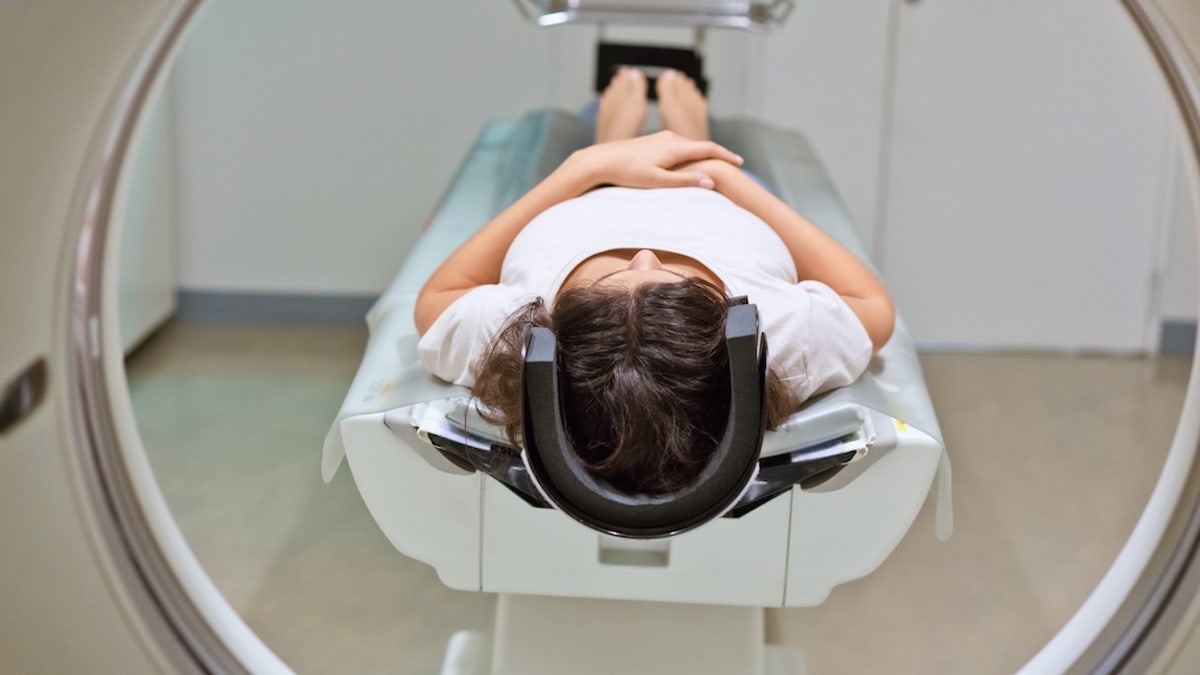
A person with claustrophobia may dread getting an MRI because they expect to experience anxiety-related physical sensations while inside the machine. (iStock)
“Don’t fight it,” Resnick advised. “You want to allow it. You want to feel it.”
Avoiding a situation can reinforce the brain’s perception that it poses a threat, he said, while safely experiencing it can help create a new association.
CLICK HERE TO SIGN UP FOR OUR HEALTH NEWSLETTER
“After you have that experience where you felt safe and you went toward it, then your brain and body … pair it as being safe,” Resnick said.
The goal, he added, is “to teach the brain safety through your body and through your brain and mind.”
TEST YOURSELF WITH OUR LATEST LIFESTYLE QUIZ
While these strategies may help people better manage stress and anxiety, Resnick emphasized the importance of recognizing the patterns behind the symptoms.
People experiencing persistent or unexplained physical symptoms should seek medical evaluation to rule out underlying health conditions.