
NEWYou can now listen to articles!
Canadian sociologist Marshall McLuhan famously declared that “the medium is the message.”
But what if the message is just “medium?” Or, perhaps in today’s vernacular, “mid.”
Both sides are trying to curate what they say to voters in order to coax them to vote for their party in November.
“The message matters,” said House Majority Whip Tom Emmer, R-Minn., on Fox. “We have accomplished a ton. No taxes on overtime. No taxes on tips. We raised the child care tax credit. The list goes on and on.”
EXCLUSIVE: INSIDE VANCE’S INTIMATE CAPITOL HILL HUDDLE AS REPUBLICANS CONFRONT TOUGH MIDTERM TERRAIN
House Majority Whip Tom Emmer, a Republican from Minnesota, during a television interview at the US Capitol in Washington, DC, US, on Tuesday, Sept. 30, 2025. Emmer has introduced a bill that would denaturalize convicted fraudsters of their U.S. citizenship. (Graeme Sloan/Bloomberg via Getty Images)
Those are all vestiges of the Big Beautiful Bill which the Republican-led Congress passed last summer. Now Republicans are scrambling to remind voters what they did.
“It was a great message last year and we missed the opportunity, in my view, to talk about the good things we did last year,” conceded Sen. Kevin Cramer, R-N.D.
But Cramer says voters want to know what you’ve done for them lately. And that’s where the GOP could struggle.
“People’s rearview mirror is getting shorter and shorter all the time,” said Cramer. “What you are going to do for me today is more important to them than what you tried to do a year ago.”
That’s why some Republicans are frank about their prospects at the polls.
“This midterm is going to be a f*cking bloodbath,” fumed Rep. Nancy Mace, R-S.C., who is retiring. “I think that both parties know everyone’s putting blame on the Republicans right now.”
Democrats are campaigning on affordability. The cost of groceries and fuel are top of mind.
“What’s most important to Americans are pocketbook issues,” said Sen. Tim Kaine, D-Va. “And they see the tariff strategy as punishing our allies and punishing their pocketbooks for no purpose.”
But Democrats are also stumping on a promise.
“The top priority in these next two years is going to be holding Donald Trump accountable,” said Colorado Democratic House nominee Melat Kiros.
“We’ll hold this administration accountable for its corruption,” warned House Democratic Caucus Chairman Pete Aguilar, D-Calif.
“We will subpoena them if we need to,” declared Rep. Pramila Jayapal, D-Wash.
It’s unclear if threats of Presidential probes could dilute the Democrats’ directive this fall.
“When you talk about (investigations),” yours truly asked House Minority Leader Hakeem Jeffries, D-N.Y., “Does that step on your message in any way about costs?”
“No, because there’s a cost to the American people around corruption,” answered Jeffries. “Which is why the American people are demanding that action be taken and that we hold the crooks accountable.”
POLL: SQUEEZED BY COSTS, FRUSTRATED VOTERS TURN TO THE DEMOCRATS
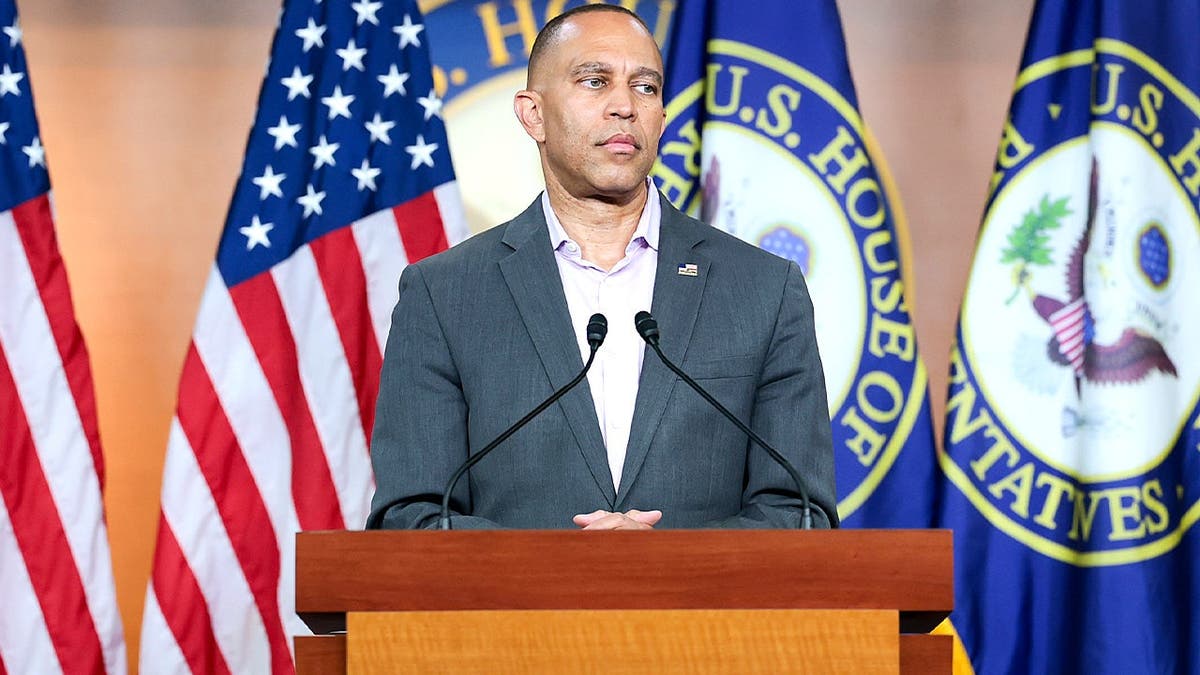
House Minority Leader Hakeem Jeffries, D-N.Y., spoke during a news conference at the U.S. Capitol on July 13, 2026, in Washington, D.C. (Anna Moneymaker/Getty Images)
Still, one Democrat says the party is better politically if it sticks to bread and butter issues.
“There are a lot of corruption questions,” said Sen. Peter Welch, D-Vt. “But I think the gold ring, the brass ring, is focusing on affordability.”
While Republicans try to remind voters about the Big, Beautiful Bill, another prominent GOP senator says his party lacks a coherent message.
“We’re lucky because the Democrats don’t have a plan either,” said Sen. John Kennedy, R-La. “Here’s the strategy for both sides. ‘The other guys are worse than me.’”
So some Republicans are reverting to a wedge issue which worked for them at the ballot box two years ago.
“We’re going to tell the story about the closed border. I mean, President Trump has the most secure border in our history,” argued Sen. Katie Britt, R-Al.
But both parties are evaluating a late-emerging issue: artificial intelligence.
“In the next 30 days, as we go into this election, Democrats have an opportunity to basically put AI on the ballot,” said Sen. Chris Murphy, D-Conn., on MS NOW.
Jeffries suggested Republicans are dismissing immediate concerns about AI agents going rogue.
“This is a serious thing. It requires urgent Congressional action and Republicans are abandoning their responsibility,” said Jeffries. “Democrats will not do that.”
Sen. Jon Husted, R-Ohio, faces a competitive race this fall in the Buckeye State. He tried to blend a sliver of concerns over AI with the “affordability” question last week.
The House passed the Ratepayer Protection Act, 417-3. The bill defrays the high utility costs consumers are sometimes forced to pay if they live near data centers. The legislation diverts those bills to big tech firms which run the data centers. So, Husted made the case to protect consumers from shelling out extra cash.
“If you create the cost, you should pay the cost,” said Husted.
OBAMA PRIVATELY SOUNDS ALARM ON ‘DANGEROUS’ AI, URGES DEMOCRATS TO PUT ISSUE AT CENTER OF AGENDA
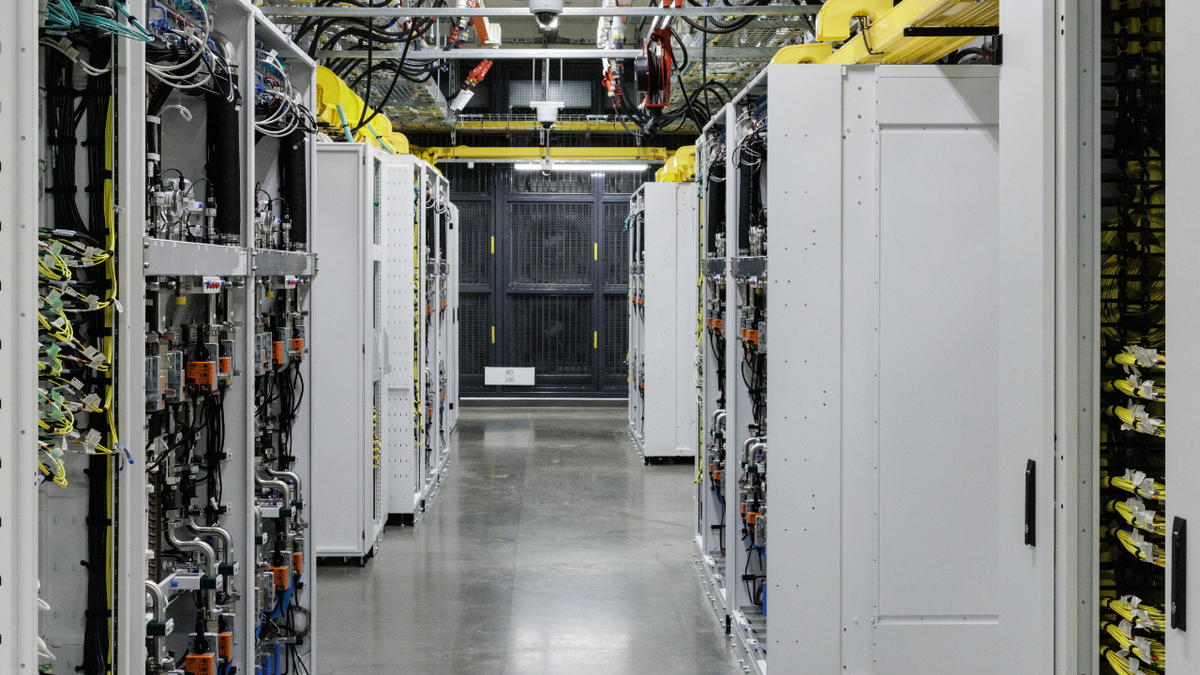
Data center development is surging across Texas, with North Texas taking the top spot in a new global ranking of the industry’s leading markets. (Yasuyoshi Chiba/Contributor/AFP/Getty Images)
But Sen. Martin Heinrich, D-N.M., the top Democrat on the Energy and Natural Resources Committee, stood in the way.
“It’s not enough for us to tell states to consider making data centers pay for grid updates, rather than voluntary pledges or suggestions to states,” said Heinrich. “Congress needs to pass real legislation with real teeth.”
The New Mexico Democrat then objected, blocking Husted’s entreaty on the spot. However, Republicans actually think the move by Heinrich could boost Husted, help Republicans and backfire on Democrats. In other words, a Democratic blockade might assist the GOP make the point that they’re for affordability and the other party is standing in the way. Especially on a bill which passed with such overwhelming support in the House.
“Now there’s a differentiation between Republicans and Democrats. Republicans are looking out for ratepayers. Democrats are not,” said Cramer.
Fox is told it’s possible the Senate could try again on the data center-related measure before senators leave the Capitol for the midterms. Another on-the-spot, unanimous consent request would take a matter of minutes to either pass or block the bill (again). But a customary debate accompanied by multiple procedural votes likely consumes a week – even if there’s support for the plan. That said, some lawmakers from both sides wouldn’t mind a roll call vote where they’re documented as supporting the issue. Or, a vote where Republicans dare Democrats to go on the record opposing it.
CLICK HERE TO DOWNLOAD THE APP
What that means is that the Senate likely leaves town for the midterms without addressing “affordability.” Republicans can blame Democrats — a little. Specifically on the Ratepayer Protection Act. But Democrats aren’t in the majority. They can upbraid Republicans for not addressing some of those pocket book concerns.
That’s the “message” ahead of November. As Kennedy suggested, it might fall flat on both sides. Or, as is sometimes said these days, “mid.”
After all, it is the midterms.