






Quick facts
What it is: The largest 3D map of the universe ever created
Where it is: The universe, as seen from Earth
When it was shared: April 17, 2026
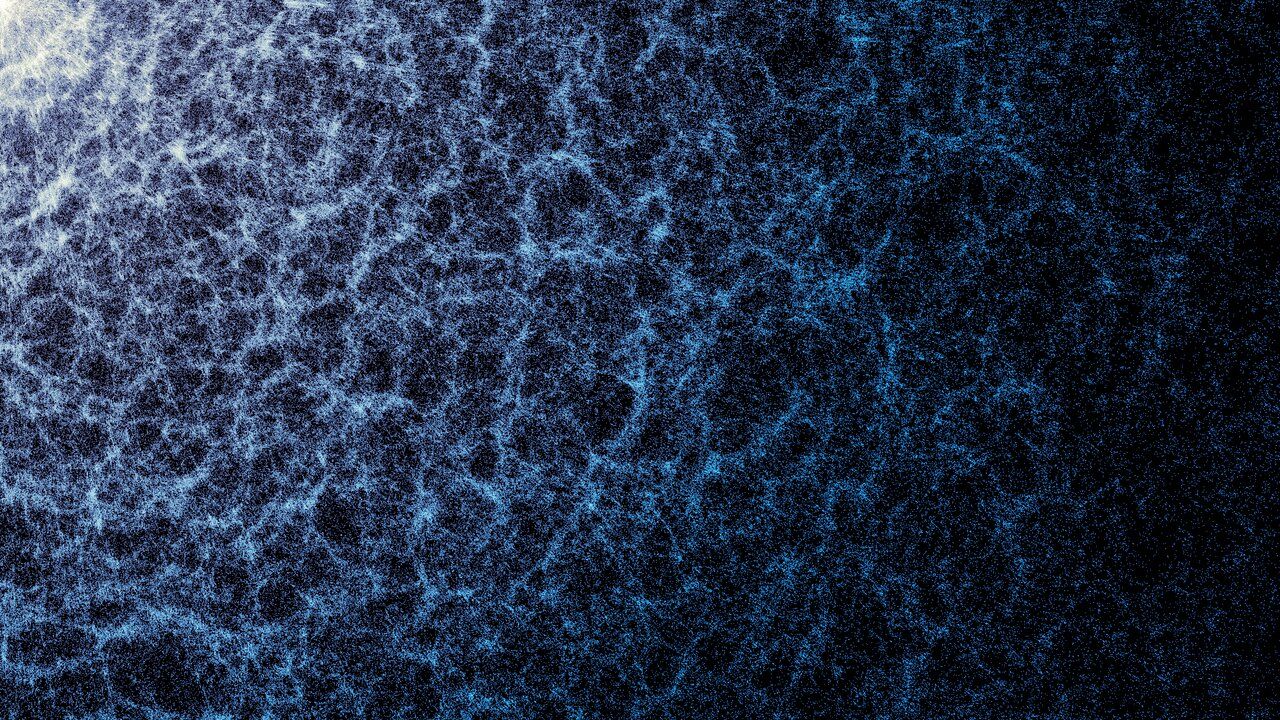
This snapshot is just a small part of one of the most comprehensive and spectacular views yet of the universe — a web-like structure formed by millions of galaxies, stretching back to near the dawn of time.
The five-year survey was supposed to gather data on 34 million galaxies and quasars (the bright cores of distant young galaxies). In practice, it detected over 47 million, along with more than 20 million nearby stars in the Milky Way. A visualization published alongside DESI’s map shows how it has grown over those five years.
Some of the light captured in this image took billions of years to reach Kitt Peak, so it allows scientists to look back in time to reconstruct how the universe evolved. The result is a three-dimensional view that not only shows where galaxies are but also how they have moved and clustered over time.
Beyond its visual impact, the image plays a crucial role in probing mysterious dark energy, the name physicists have given to a force that appears to be driving the universe’s accelerated expansion. It makes up roughly 70% of the universe, and its nature and distribution are among the biggest questions in physics.
By comparing the distribution of galaxies across different epochs, researchers can track how dark energy has influenced the structure of the universe over the past 11 billion years. Early DESI data has already hinted that dark energy may evolve through cosmic history — a breakthrough that would fundamentally reshape scientists’ understanding of the universe and its ultimate fate.
The image is the result of a massive international collaboration. More than 900 researchers from over 70 institutions contributed to the project, which was led by Lawrence Berkeley National Laboratory and funded by the U.S. Department of Energy Office of Science.
DESI will continue observing the sky through 2028, expanding its map by about 20%. Future observations will target fainter and more distant galaxies, as well as harder-to-observe regions near the Milky Way (where stars get in the way) and in the southern sky (which requires the telescope to peer through more of Earth’s atmosphere). The first results from the full dataset are anticipated in 2027.