





NEWYou can now listen to articles!
As antisemitism rises across the U.S., Jewish summer camps are ramping up security, with some introducing additional charges while working to combat threats before they arise.
FBI crime data shows that between March 2025 and March 2026, the U.S. recorded 2,421 religion-based hate crime incidents, 1,395 of which targeted Jews. There are hundreds of Jewish summer camps across North America serving tens of thousands of children each year.
A recent attack on a Michigan synagogue highlighted the dangers facing Jewish institutions and the people who rely on them, including children.
On March 12, Ayman Muhammad Ghazali, a 41-year-old Lebanon-born American, allegedly rammed his vehicle into Temple Israel, a large reform synagogue in West Bloomfield, at approximately 12:30 p.m. before exiting the vehicle with a rifle and exchanging gunfire with a security guard, who shot and killed him. Preschool students and staff were forced to evacuate for their safety.
An active shooter was reported at the Temple Israel, a synagogue in Michigan, on Thursday, March 12, 2026. (WJBK)
AFTER MICHIGAN ATTACK, JEWISH TEENS SHOW ANTISEMITISM WON’T DEFINE THEM
In the wake of the attack, police departments across the country increased patrols at houses of worship, Jewish institutions and other vulnerable sites. With summer approaching, camps across the country are preparing themselves so they can give children a fun and safe summer.
Secure Community Network (SCN) National Director and CEO Michael Masters told Digital that the response to the attack in Michigan was the product of “years of preparedness” and investments in security.
“That investment paid off in lives saved,” Masters said.
SCN, which works with Jewish institutions across North America, launched an initiative focused on summer camps in April 2024. The organization told Digital that since the initiative’s launch, it has trained over 5,000 camp-related individuals, conducted over 100 facility assessments and walkthroughs and secured $2.2 million in federal funding.
Masters also spoke about SCN’s recently-released list of 10 questions to ask camps before sending children off for the summer and encouraged parents to “be persistent” when asking about safety. The questions cover a variety of topics, such as missing camper procedures, availability of first aid kits and tourniquets and how the camp controls access to its facility, among others.
“Parents should ask, ‘was your camp one of those that got an assessment?’ ‘Was your camp, one of the those that got trained?’ ‘Do your counselors know what to do?’ And the camp should be able to answer that question,” Masters said. He added that SCN provides its trainings to institutions for free.
“At the end of the day, a summer camp is still the most vulnerable space that we need to provide security for consultation and guidance,” SCN Director of National Programs Jim Tarasca told Digital.
Tarasca, who worked in the FBI for over 25 years and served as the Special Agent in Charge of the bureau’s Detroit Field Office, noted that many camps are located in rural areas, presenting challenges such as communications barriers, including bad cellphone service. He also underscored the importance of empowering staff to see safety as “everyone’s responsibility,” rather than the job of designated security workers.
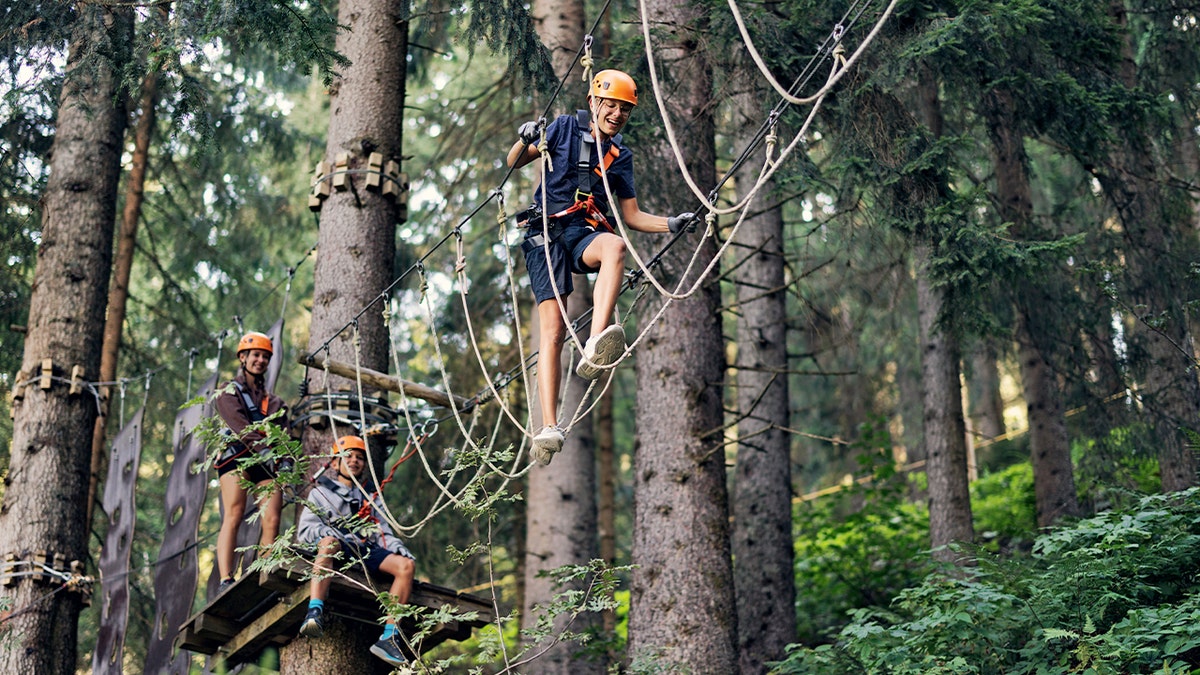
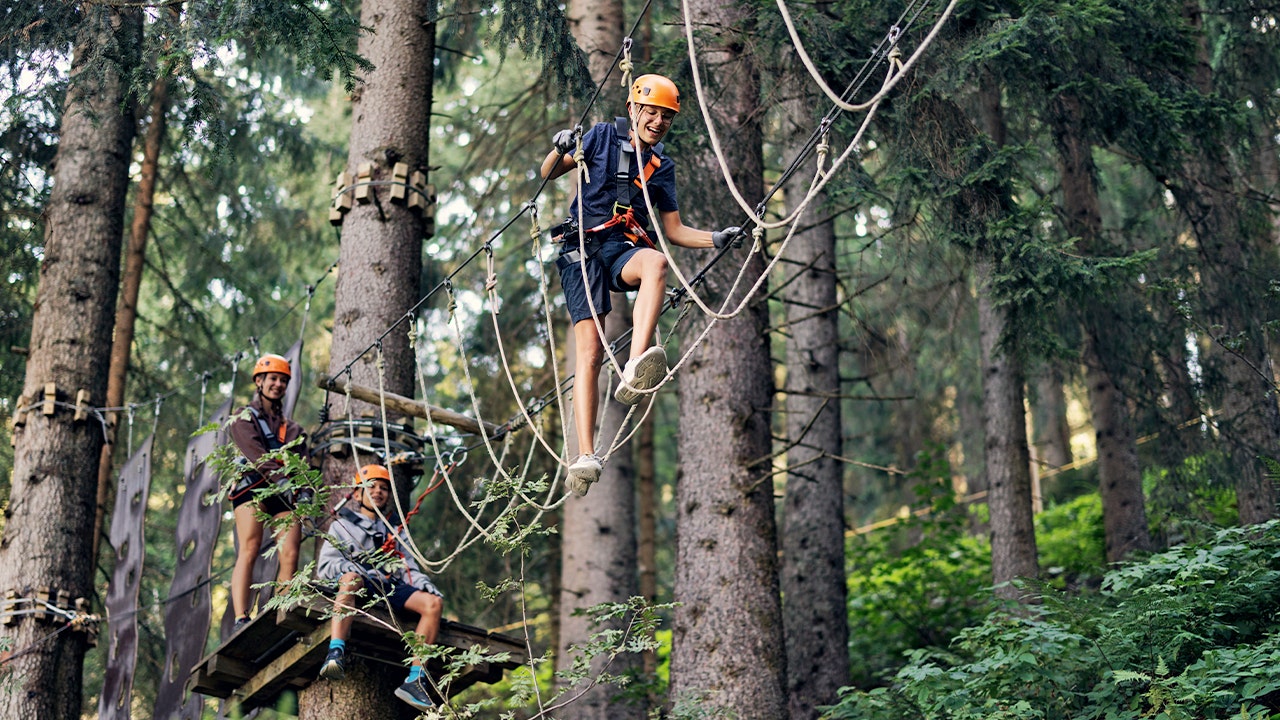
Teens wearing helmets and harnesses while walking on an outdoors ropes course. (Imgorthand via Getty Images)
JEWISH SECURITY ORGANIZATION WORKING TO KEEP ITS COMMUNITY SAFE AMID ELEVATED TERROR THREAT
While some camps have included security fees in their tuition, others make it a separate line in their lists of session dates and costs. Some camps that list the security fee separately note that the additional charge is meant to offset rising costs of protecting the campers and staff. While security fees vary widely based on several factors, such as session length and whether it is a day or overnight camp, the charges reviewed by Digital went as high as $250, highlighting the growing costs.
National Conference of Synagogue Youth (NCSY) Summer Director Elliot Tanzman told Digital that while the organization has always had security protocols, it has become “much more of a focus” in recent years, with the group adding new measures.
As part of its safety measures, NCSY has made changes to its apparel and giveaways because “we’re trying not to scream that we are a Jewish group,” according to Tanzman. While he acknowledged that the dress codes could be signals to some that the participants are Jewish, Tanzman also said that they are making an effort to “not be extra identifiable.”
“It hurts to say something like that where instead of having the word ‘Israel’ on some of our T-shirts, which we’ve had in the past because it’s part of the program name, we’ve shortened it just to say ‘NCSY’ or ‘JSU’ or one of our other brands in order to not bring up any forms of antisemitism that we wouldn’t want to experience over the summer,” Tanzman said.
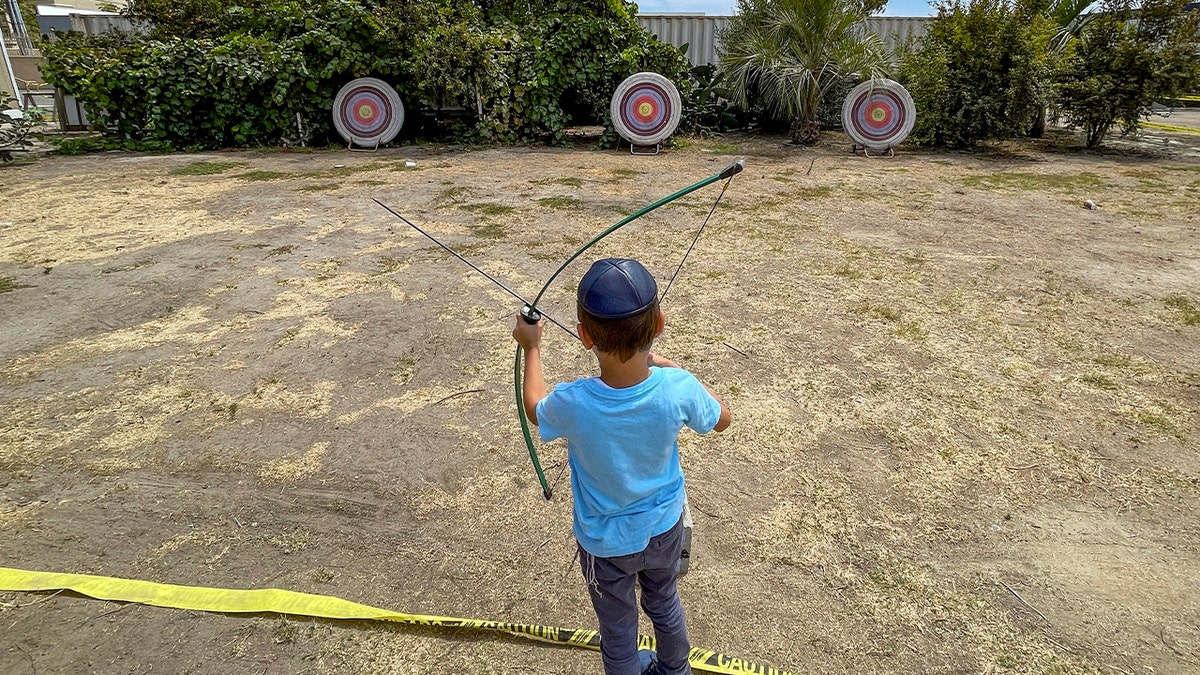
A child prepares to take aim on the archery range at Camp Silver Gan Israel in Huntington Beach, Calif., on Tuesday, Aug. 16, 2022. (Jeff Gritchen/MediaNews Group/Orange County Register via Getty Images)
CLICK HERE TO DOWNLOAD THE APP
Jamie Simon, CEO of Foundation for Jewish Camp, said in a statement provided to Digital that safety and security were a top priority for summer camps. The foundation, according to Simon, can provide guidance from security partners, crisis communications resources and more to help camps continue to operate while keeping kids and staff safe.
“As new challenges emerge, the field is not starting from scratch: camps are experienced, prepared, and deeply committed to the well-being of every young person in their care,” Simon said. “This is a pivotal moment for Jewish life, and Jewish camp offers a joyful, immersive, and proven space where young people develop pride in their Jewish identity, deep friendships, and a sense of belonging that lasts a lifetime.”
Summer camp has played a large role in Jewish American life for more than 120 years. Sunrise Lake Camp, which was founded in 1902, is one of the oldest in the country. The Museum of Jewish Heritage in New York noted that Sunrise Lake Camp was initially founded to give boys in urban areas the chance to experience nature and escape the city heat. Sunrise Lake Camp alumni includes several celebrities, such as Neil Diamond, Jerry Stiller and Gene Simmons.
Digital’s Eric Mack contributed to this report.