

Close Menu
  • Home
  • United States
  • World
  • Politics
  • Business
  • Lifestyle
  • Entertainment
  • Health
  • Science
  • Tech
  • Sports
  • More
    • Web Stories
    • Editor’s Picks
    • Press Release

Subscribe to Updates

Get the latest USA news and updates directly to your inbox.

What's On
Justice Department speeds up Camp Lejeune settlements after 5M surge

Justice Department speeds up Camp Lejeune settlements after $175M surge

March 10, 2026
Cody Simpson Reflects on ‘1st Love’ Gigi Hadid, Dating Kylie Jenner and Miley Cyrus

Cody Simpson Reflects on ‘1st Love’ Gigi Hadid, Dating Kylie Jenner and Miley Cyrus

March 10, 2026
How Taylor Swift inspired Travis Kelce to run it back with Chiefs after retirement speculation

How Taylor Swift inspired Travis Kelce to run it back with Chiefs after retirement speculation

March 10, 2026
Facebook X (Twitter) Instagram
Trending
  • Justice Department speeds up Camp Lejeune settlements after $175M surge
  • Cody Simpson Reflects on ‘1st Love’ Gigi Hadid, Dating Kylie Jenner and Miley Cyrus
  • How Taylor Swift inspired Travis Kelce to run it back with Chiefs after retirement speculation
  • Pre-Inca culture acquired Amazonian parrots from hundreds of miles away to use their feathers to decorate the dead, new analysis reveals
  • Controversial breast cancer treatment increases your risk of dying by 400%
  • Live Nation CEO urged by frustrated judge to settle with states after stunning deal with feds: ‘tickle on the wrist’
  • San Francisco Mayor Daniel Lurie blamed for wild brawl that injured his bodyguard: cops
  • Meet the NYPD officers that stopped alleged ISIS-inspired terror attack
  • Privacy
  • Terms
  • Advertise
  • Contact Us
Join Us
USA TimesUSA Times
Newsletter Login
  • Home
  • United States
  • World
  • Politics
  • Business
  • Lifestyle
  • Entertainment
  • Health
  • Science
  • Tech
  • Sports
  • More
    • Web Stories
    • Editor’s Picks
    • Press Release
USA TimesUSA Times
Home » James Webb telescope spots ‘monster stars’ leaking nitrogen in the early universe — and they could help solve a major mystery
James Webb telescope spots ‘monster stars’ leaking nitrogen in the early universe — and they could help solve a major mystery
Science

James Webb telescope spots ‘monster stars’ leaking nitrogen in the early universe — and they could help solve a major mystery

News RoomBy News RoomDecember 11, 20252 ViewsNo Comments

Scientists using the James Webb Space Telescope (JWST) have spotted the first evidence of “monster stars” in the early universe — offering new clues to how supermassive black holes grew so big after only a billion years of the universe’s history.

The team spotted these gargantuan stars — each with a mass of between 1,000 and 10,000 times our sun — in a galaxy called GS 3073, which formed roughly about a billion years after the Big Bang. It is believed that monster stars like these led to the formation of these early supermassive black holes.

The study was co-led by scientists from the Harvard-Smithsonian Center for Astrophysics (CfA) and the University of Portsmouth in the U.K., and was published Nov. 12 in Astrophysical Journal Letters.


You may like

“Our latest discovery helps solve a 20-year cosmic mystery,” study co-author Daniel Whalen, from Portsmouth’s Institute of Cosmology and Gravitation, said in a statement. “These cosmic giants would have burned brilliantly for a brief time, before collapsing into massive black holes, leaving behind the chemical signatures we can detect billions of years later.”

“A bit like dinosaurs on Earth, they were enormous and primitive,” Whalen added. “And they had short lives, living for just a quarter of a million years, a cosmic blink of an eye.”

The research’s implications include learning about the first generation of stars, as well as literally shedding light on the “cosmic dark ages”, or the period of time when the first stars came to light and the chemistry of the universe began to change.

A peculiar signature

The stars in GS 3073 had an unusual and “extreme” imbalance of nitrogen to oxygen (a ratio of 0.46) not usually found in stars or stellar explosions, according to the team. The signature, however, matched something predicted in models: “primordial stars thousands of times more massive than our sun,” study co-author Devesh Nandal, a postdoctoral fellow at the CfA’s Institute for Theory and Computation, said.

Get the world’s most fascinating discoveries delivered straight to your inbox.

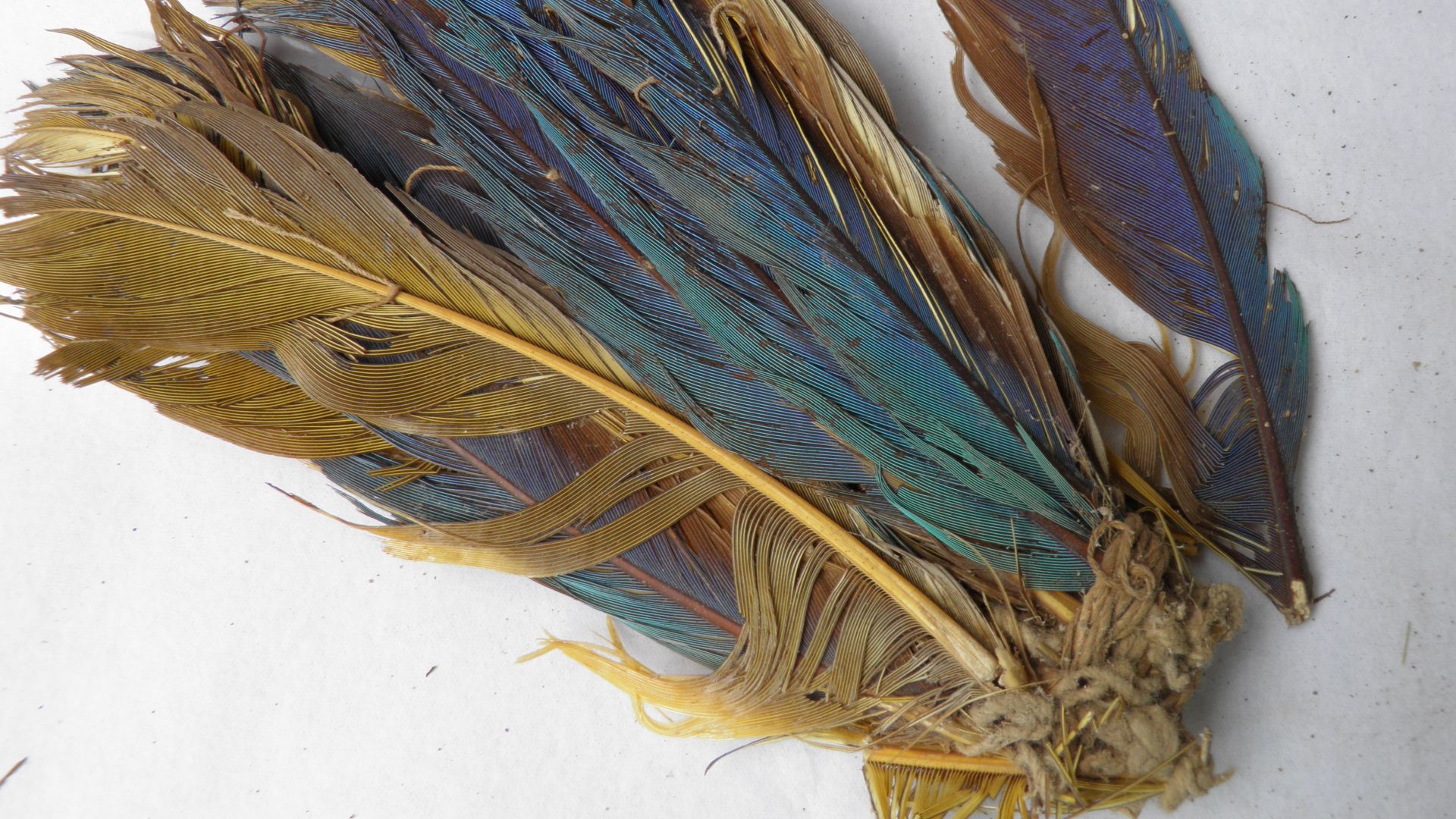
How did these stars produce so much nitrogen? The researchers said it’s a three-step process. Stars are constantly burning elements in their cores. As these large stars in GS 3073 burned helium, the chemical reactions created carbon. Eventually, carbon began to invade an outside shell of material, where hydrogen was burning. In that outside shell, the carbon and hydrogen then mixed to create nitrogen.

This simulated image from the team’s study shows the birth of an ancient quasar, or extremely bright and active black hole, made possible by the collapse of a giant ‘monster star’. (Image credit: Nadal et al.)

As the nitrogen was produced, convection currents within the star began to distribute it throughout the star’s body. Over time, the nitrogen left the star and flowed into space. In the case of GS 3073, this process lasted millions of years.

“The study also found that this nitrogen signature only appears in a specific mass range,” the researchers noted. “Stars smaller than 1,000 solar masses, or larger than 10,000 solar masses, don’t produce the right chemical pattern for the signature, suggesting a ‘sweet spot’ for this type of enrichment.”

The big black hole mystery

Based on their models, the researchers further suggested that when these monster stars reach the end of their lives, they don’t explode into supernovas. What happens next is instead a big collapse, generating some of the universe’s earliest supermassive black holes.

Adding more fuel to this idea: GS 3073 does appear to have an actively feeding black hole at its center, “potentially the very remnant of one of these supermassive first stars,” the statement noted. “If confirmed, this would solve two mysteries at once: where the nitrogen came from and how the black hole formed.”

The origin of the universe’s first supermassive black holes remains one of the biggest mysteries in astrophysics. Some theories suggest they collapsed directly from ultra-dense clouds of gas shortly after the Big Bang and then formed galaxies around them; other theories point to more exotic explanations, such as dark matter interactions or the collapse of monster stars. Ultimately, more research is needed to solve this ancient puzzle.

Share. Facebook Twitter LinkedIn Telegram WhatsApp Email

Keep Reading

Pre-Inca culture acquired Amazonian parrots from hundreds of miles away to use their feathers to decorate the dead, new analysis reveals

Pre-Inca culture acquired Amazonian parrots from hundreds of miles away to use their feathers to decorate the dead, new analysis reveals

Our favorite Garmin running watch has dropped to its lowest-ever price

Our favorite Garmin running watch has dropped to its lowest-ever price

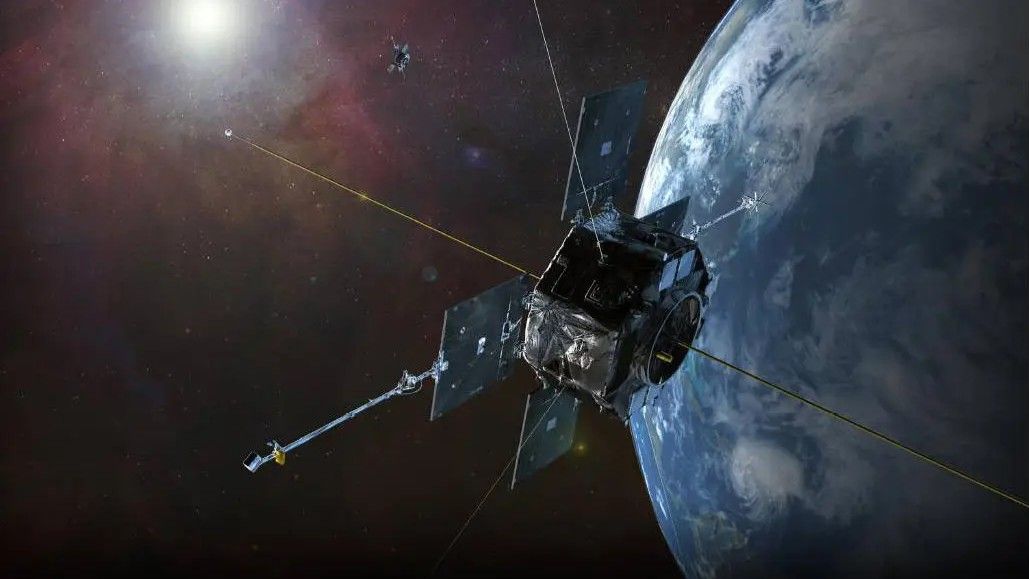
1,300-pound spacecraft will crash to Earth today following intense solar activity, NASA warns

1,300-pound spacecraft will crash to Earth today following intense solar activity, NASA warns

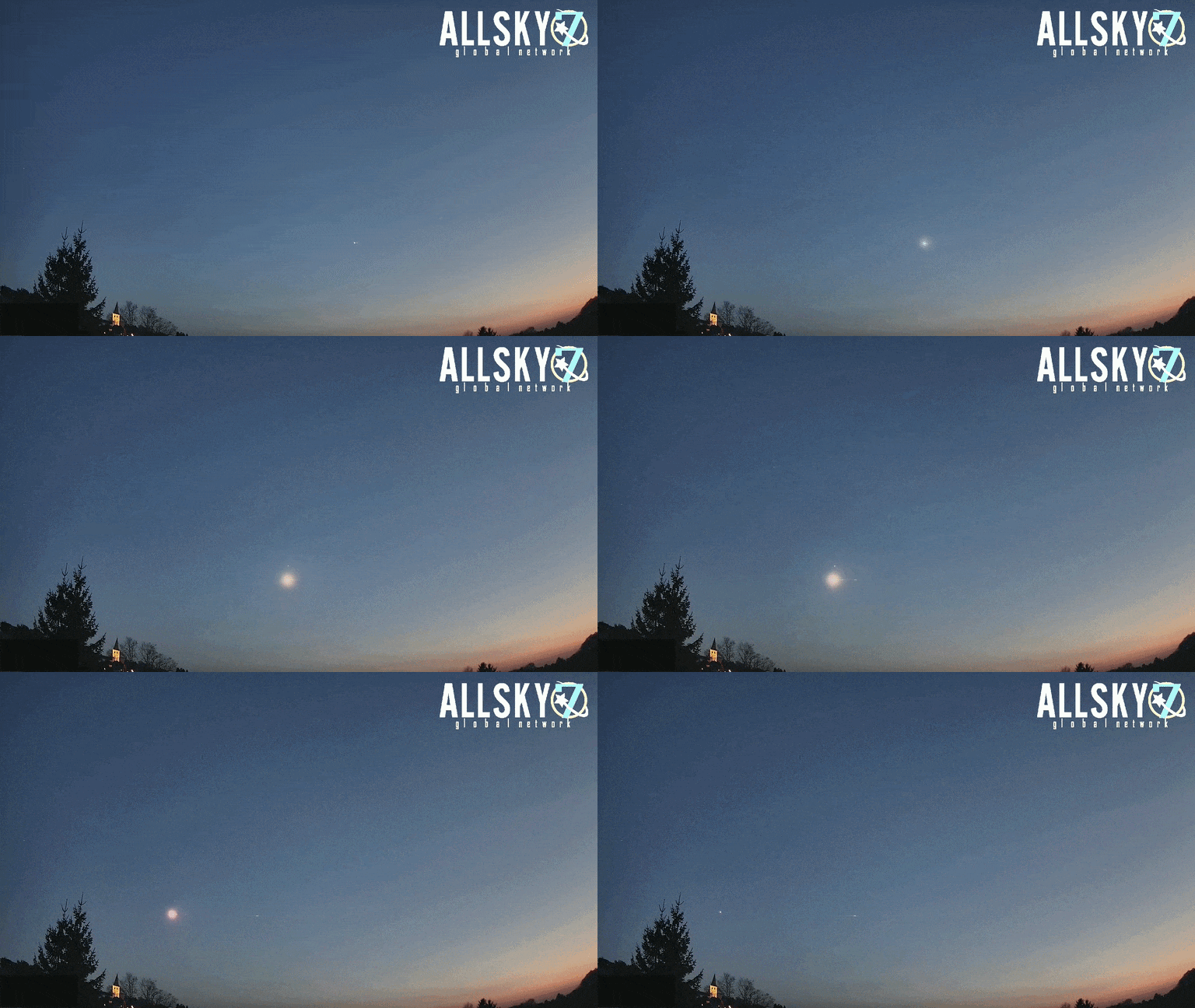
Falling meteorite smashes hole in roof of German house after spectacular ‘fireball’ explosion over Europe

Falling meteorite smashes hole in roof of German house after spectacular ‘fireball’ explosion over Europe

Gemstone-filled river and striped mountain ridge form massive ‘Y’ in China’s revitalized desert — Earth from space

Gemstone-filled river and striped mountain ridge form massive ‘Y’ in China’s revitalized desert — Earth from space

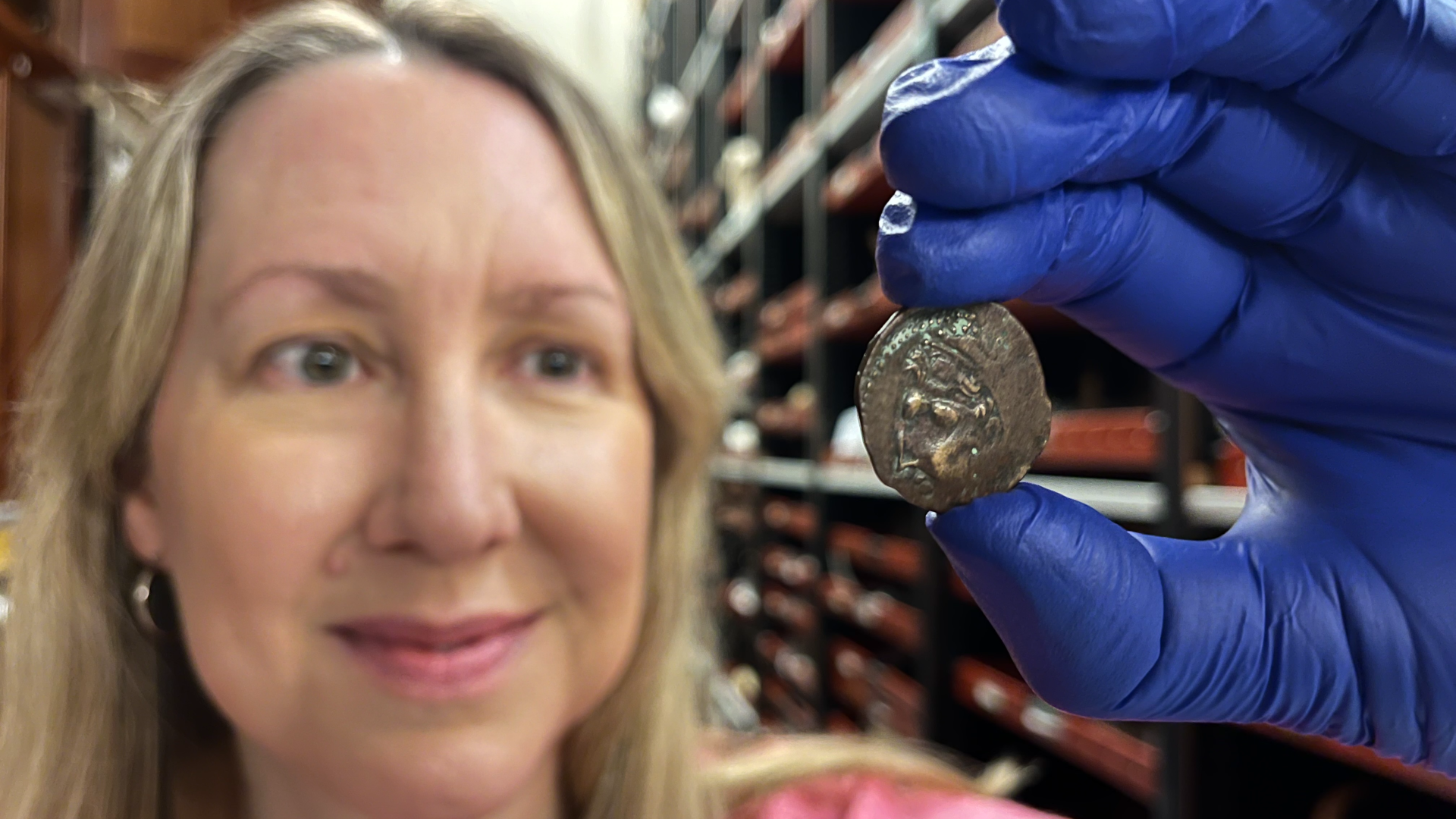
2,000-year-old Phoenician coin was used as bus fare in England, but ‘how it got there will always be a mystery’

2,000-year-old Phoenician coin was used as bus fare in England, but ‘how it got there will always be a mystery’

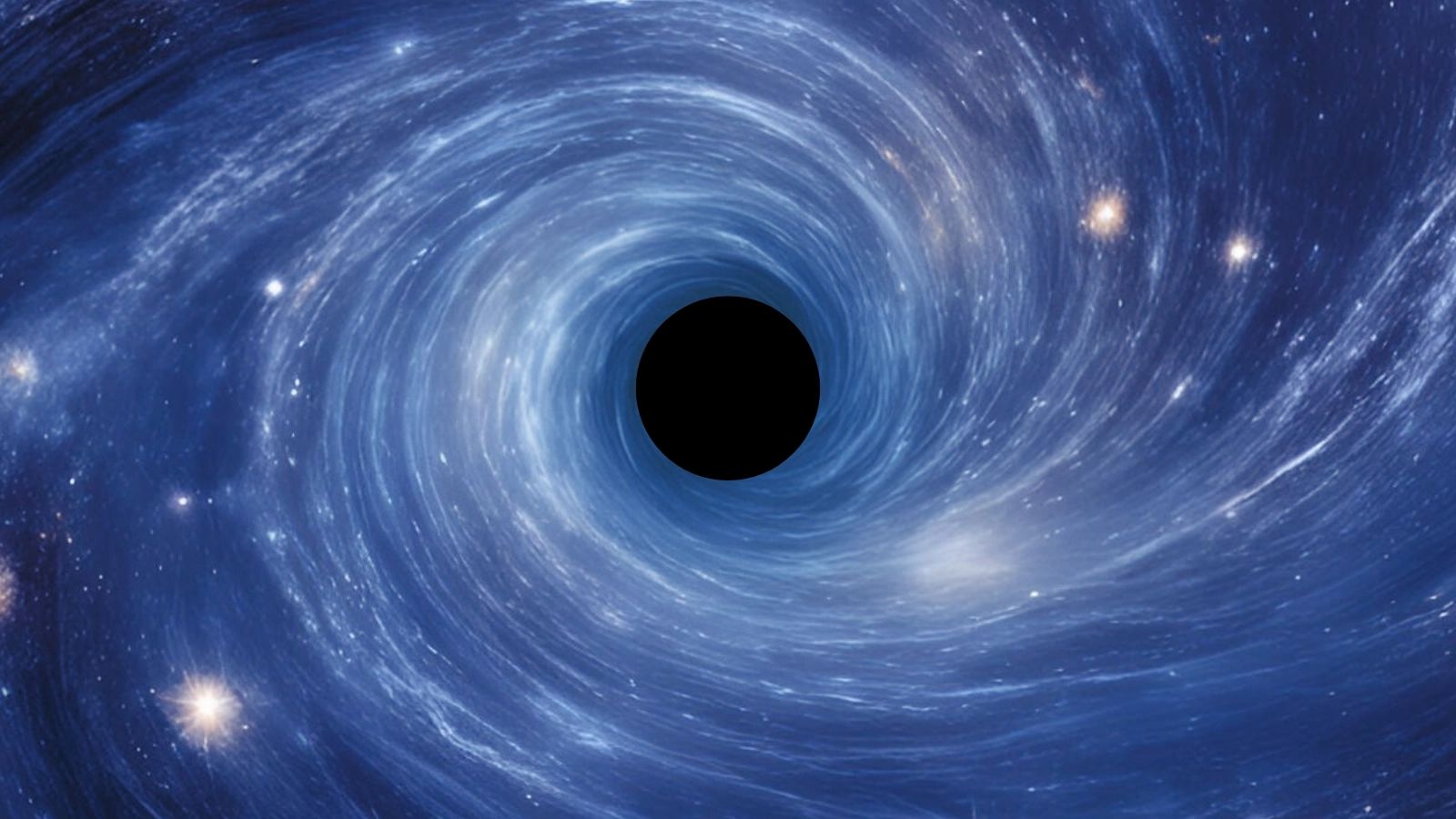
Exotic prime numbers could be hiding inside black holes

Exotic prime numbers could be hiding inside black holes

In people with epilepsy, sleeping after a seizure may trigger more seizures

In people with epilepsy, sleeping after a seizure may trigger more seizures

Wildfire season is shifting, but its new time windows vary across Canada and the US drought-prone West

Wildfire season is shifting, but its new time windows vary across Canada and the US drought-prone West

Add A Comment
Leave A Reply Cancel Reply

Editors Picks

Cody Simpson Reflects on ‘1st Love’ Gigi Hadid, Dating Kylie Jenner and Miley Cyrus

Cody Simpson Reflects on ‘1st Love’ Gigi Hadid, Dating Kylie Jenner and Miley Cyrus

March 10, 2026
How Taylor Swift inspired Travis Kelce to run it back with Chiefs after retirement speculation

How Taylor Swift inspired Travis Kelce to run it back with Chiefs after retirement speculation

March 10, 2026
Pre-Inca culture acquired Amazonian parrots from hundreds of miles away to use their feathers to decorate the dead, new analysis reveals

Pre-Inca culture acquired Amazonian parrots from hundreds of miles away to use their feathers to decorate the dead, new analysis reveals

March 10, 2026
Controversial breast cancer treatment increases your risk of dying by 400%

Controversial breast cancer treatment increases your risk of dying by 400%

March 10, 2026

Subscribe to News

Get the latest USA news and updates directly to your inbox.

Latest News
Live Nation CEO urged by frustrated judge to settle with states after stunning deal with feds: ‘tickle on the wrist’

Live Nation CEO urged by frustrated judge to settle with states after stunning deal with feds: ‘tickle on the wrist’

March 10, 2026
San Francisco Mayor Daniel Lurie blamed for wild brawl that injured his bodyguard: cops

San Francisco Mayor Daniel Lurie blamed for wild brawl that injured his bodyguard: cops

March 10, 2026
Meet the NYPD officers that stopped alleged ISIS-inspired terror attack

Meet the NYPD officers that stopped alleged ISIS-inspired terror attack

March 10, 2026
Facebook X (Twitter) Pinterest WhatsApp TikTok Instagram
© 2026 USA Times. All Rights Reserved.
  • Privacy Policy
  • Terms
  • Advertise
  • Contact

Type above and press Enter to search. Press Esc to cancel.