Close Menu
  • Home
  • United States
  • World
  • Politics
  • Business
  • Lifestyle
  • Entertainment
  • Health
  • Science
  • Tech
  • Sports
  • More
    • Web Stories
    • Editor’s Picks
    • Press Release

Subscribe to Updates

Get the latest USA news and updates directly to your inbox.

What's On
Chase Matthew’s bassist arrested and charged with child sex crimes

Chase Matthew’s bassist arrested and charged with child sex crimes

May 12, 2026
Late Night Hosts Roast Jimmy Kimmel Over Recent Drama With Donald and Melania Trump

Late Night Hosts Roast Jimmy Kimmel Over Recent Drama With Donald and Melania Trump

May 12, 2026
Brandon Clarke’s death being investigated as possible drug overdose

Brandon Clarke’s death being investigated as possible drug overdose

May 12, 2026
Facebook X (Twitter) Instagram
Trending
  • Chase Matthew’s bassist arrested and charged with child sex crimes
  • Late Night Hosts Roast Jimmy Kimmel Over Recent Drama With Donald and Melania Trump
  • Brandon Clarke’s death being investigated as possible drug overdose
  • Hantavirus-carrying rodents are expected to expand their range, climate models find
  • STI we nearly eradicated in the ‘90s has surged in recent years — and it’s raising heart attack risk
  • Goldman Sachs exec touts plans to automate ‘human assembly line’ with AI ‘robots’– and vows no mass layoffs
  • Lightsaber-wielding Spencer Pratt gets the ‘Star Wars’ treatment in latest action-packed video
  • Navy SEAL Senate candidate says Minnesota fraud will flip the state
  • Privacy
  • Terms
  • Advertise
  • Contact Us
Join Us
USA TimesUSA Times
Newsletter Login
  • Home
  • United States
  • World
  • Politics
  • Business
  • Lifestyle
  • Entertainment
  • Health
  • Science
  • Tech
  • Sports
  • More
    • Web Stories
    • Editor’s Picks
    • Press Release
USA TimesUSA Times
Home » Hantavirus-carrying rodents are expected to expand their range, climate models find
Hantavirus-carrying rodents are expected to expand their range, climate models find
Science

Hantavirus-carrying rodents are expected to expand their range, climate models find

News RoomBy News RoomMay 12, 20261 ViewsNo Comments

Climate change is likely to shift the distribution of virus-carrying rodents, potentially increasing the risk of spillover, when viruses make the jump from animals to humans.

This will likely expose populations to diseases that they haven’t encountered before and raise the risk of outbreaks, researchers warn.

The hantavirus cluster on the cruise ship MV Hondius has put the rodent-borne disease into the global spotlight. While countries in South America, especially Argentina and Chile, have been dealing with hantavirus for decades, there’s been a recent uptick in infections, according to the Argentine ministry of health. More than 100 cases of hantavirus disease were recorded between June 2025 and early May 2026, roughly double the number recorded in the previous year.


You may like

Hantaviruses are a family of rodent-borne viruses found across the Americas, Europe and Asia. “New world” hantaviruses cause hantavirus cardiopulmonary syndrome (HCPS), characterized by headache, fever and gastrointestinal symptoms, followed by potentially life-threatening respiratory problems. The Andes virus, responsible for the cluster of cases associated with the MV Hondius, is the only hantavirus known to be transmissible between people.

With a case mortality rate of up to 50%, HCPS is considered one of the most severe forms of hantavirus disease, while the infections that strike in Europe and Asia have lower fatality rates.

Climate change is affecting rodent host populations

Scientists studying hantavirus risk in southern South America have so far identified 11 genotypes linked to human disease across 13 native rodent species, said Juan Diego Pinotti, a postdoctoral researcher for Argentina’s National Council of Research, based at the Institute of Animal Diversity and Ecology at the National University of Córdoba. Each strain of the virus has evolved within a specific rodent species, enabling that species to carry the virus while not falling sick from it.

The natural “reservoir” for Andes virus, the long-tailed pygmy rice rat (Oligoryzomys longicaudatus), typically lives in the humid forests and shrublands of the southern Andes in Chile and Argentina. The virus is spread to humans primarily through contact with the urine, feces, or saliva of an infected rodent.

Get the world’s most fascinating discoveries delivered straight to your inbox.

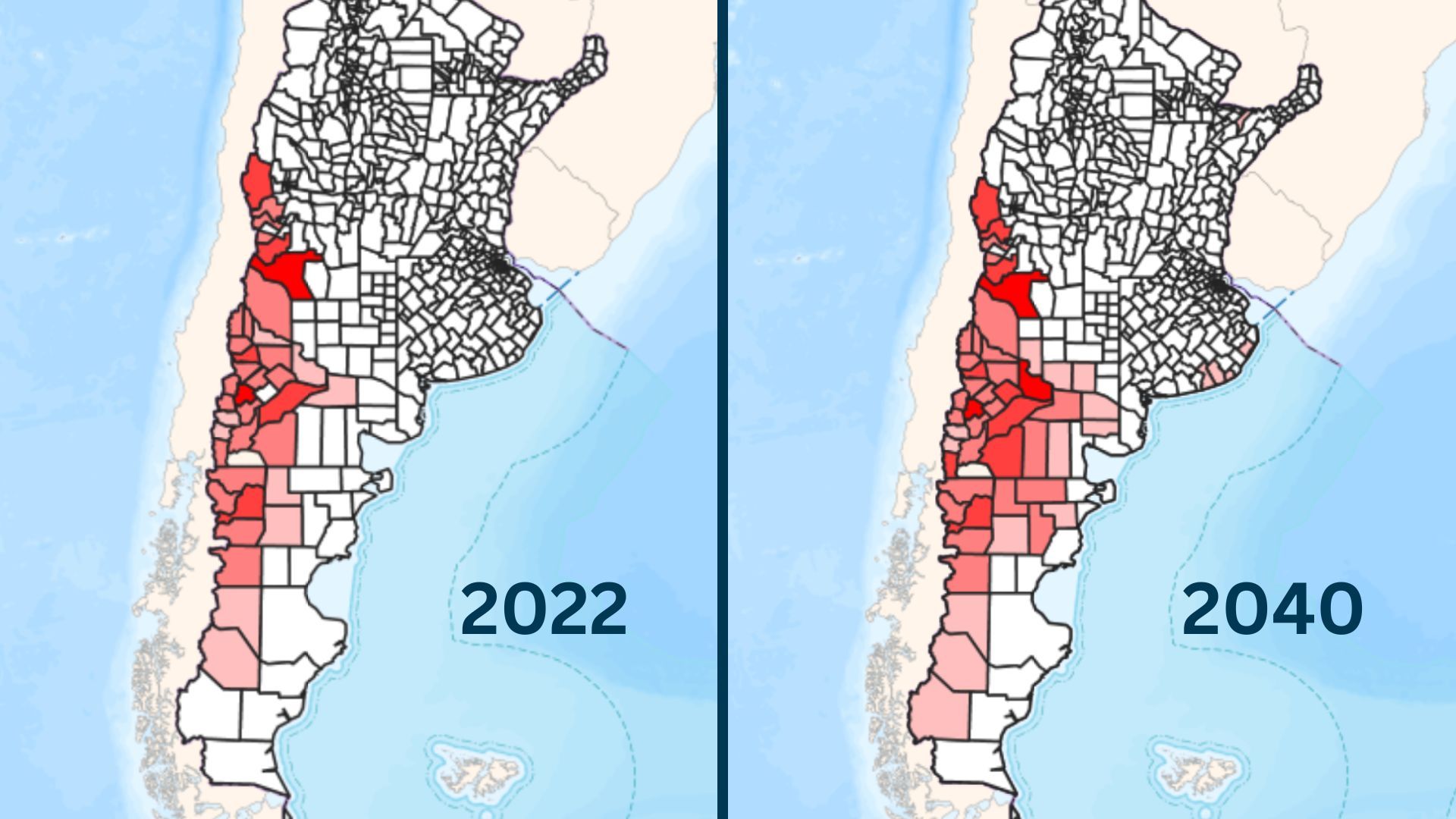
Climate models predict that changing weather patterns over the next few decades may expand the long-tailed pygmy rice rat’s habitat eastward, toward Argentina’s Atlantic coast, where the vast majority of the country’s people live.

“More intensive surveillance and testing are needed across provinces, because the virus might be reaching new areas without us finding out,” Pinotti, who worked on the models, told Live Science.

The long-tailed pygmy rice rat (Oligoryzomys longicaudatus) is the animal “reservoir” of the Andes virus.

(Image credit: Yamil Hussein E. via Wikimedia Commons, CC BY-SA 3.0)

El Niño-La Niña fluctuations may further reinforce this pattern. In central and southern Argentina, El Niño years usually bring increased rainfall, which stimulates vegetation growth, meaning rodents have access to abundant food sources and shelter, driving rapid population expansion.


What to read next

“That in turn interacts with what the winters are like,” said Veronica Andreo, a researcher for Argentina’s National Council of Research, working at the Gulich Institute. “If the winter is more severe, fewer mice might survive. If it’s a bit milder, more mice can survive and pass on to the next generation.”

Beyond hantavirus: other viruses on the rise

A recent study focusing on a different family of rodent-borne viruses, known as arenaviruses, drew similar conclusions. New World arenaviruses, which include Guanarito virus in Venezuela and Colombia, Machupo virus in Bolivia and Paraguay, and Junin virus in Argentina, can cause severe hemorrhagic fevers with high hospitalization rates. Fatality rates range from about 5% to 30%, depending on the virus strain and the patient’s overall health and healthcare access.

Researchers used machine learning to map how climate projections, changing rodent populations, and shifts in people’s land use could alter the distribution and transmission of arenaviruses in South America over the next 20 to 40 years. They found that climate-induced shifts in temperature and precipitation, coupled with the expansion of agriculture, will likely increase spillover risk as viruses spread into new regions.

The researchers hope the models will help public health officials understand the need to prepare for outbreaks of these diseases as climate change drives more extreme weather patterns.

Always the most important thing is prevention — epidemiological surveillance and education of the population.

Juan Diego Pinotti, postdoctoral researcher for Argentina’s National Council of Research

“These are high impact diseases, but they are fairly neglected in terms of how much research is ongoing about them, or whether they are on the radar of public health officials,” said study lead author Pranav Kulkarni, a veterinary epidemiologist at the University of California, Davis (UC Davis) Weill School of Veterinary Medicine.

Notably, the Centers for Research in Emerging Infectious Diseases, part of the U.S. National Institutes of Health, would have been researching these diseases but was shuttered last year.

Continued surveillance is critical

As climate change reshapes disease risk, data gathering and surveillance will be crucial for improving outbreak preparedness. Better regional coordination and data sharing could help countries identify shifting hotspots earlier and build more effective public health responses, said Kulkarni.

“If we can come up with that sort of infrastructure, especially in countries which will probably be affected by this, then there would be more robust modeling, more accurate predictions, and a more informative way of creating health policy,” Kulkarni told Live Science.

More research is needed to fully understand the diversity of viral genotypes and rodent species that exist in South America’s southern cone, said Andreo. “We still need to understand how all the different reservoirs and viruses interact, and whether the viruses can jump from one reservoir to another,” Andreo told Live Science. Some New World hantaviruses, such as the Laguna Negra genotype and the Lechiguanas genotype, are known to have multiple reservoirs.

Additionally, two new hantavirus genotypes have been identified in Argentina in recent years, added Pinotti.

“Always the most important thing is prevention — epidemiological surveillance and education of the population,” Pinotti told Live Science. Yet, funding cuts to Argentina’s health and science sectors have jeopardized disease surveillance programs, research capacity, and the ability to carry out large-scale, long-term studies into zoonotic and vector-borne diseases.

“When these teams see their operational capacity reduced,” Andreo said, “the entire early warning network that makes it possible to detect outbreaks before they escalate is weakened.”

This article is for informational purposes only and is not meant to offer medical advice.

Share. Facebook Twitter LinkedIn Telegram WhatsApp Email

Keep Reading

‘A combination of amazement and horror’: Hitchhiker fish hide in manta ray buttholes

‘A combination of amazement and horror’: Hitchhiker fish hide in manta ray buttholes

Physicists find evidence that the universe isn’t perfectly uniform, potentially unraveling 100-year-old model of cosmology

Physicists find evidence that the universe isn’t perfectly uniform, potentially unraveling 100-year-old model of cosmology

Eruption blows hole in sun’s atmosphere, unleashing solar flare and potentially triggering northern lights

Eruption blows hole in sun’s atmosphere, unleashing solar flare and potentially triggering northern lights

Once-in-a-century ‘super’ El Niño in the cards as ocean temperatures reach near record highs in April

Once-in-a-century ‘super’ El Niño in the cards as ocean temperatures reach near record highs in April

Shimmering silver ‘sunglint’ obscures Hawaii as hurricane approaches — Earth from space

Shimmering silver ‘sunglint’ obscures Hawaii as hurricane approaches — Earth from space

Hantavirus LIVE: American passengers from cruise reach specialized facilities in Nebraska as WHO chief says ‘we expect more cases.’

Hantavirus LIVE: American passengers from cruise reach specialized facilities in Nebraska as WHO chief says ‘we expect more cases.’

Microplastics absorb heat in the atmosphere and contribute to global warming — as if they weren’t bad enough

Microplastics absorb heat in the atmosphere and contribute to global warming — as if they weren’t bad enough

Goodbye PCOS: Polycystic ovary syndrome is getting a new name that doctors say better reflects the underlying disease

Goodbye PCOS: Polycystic ovary syndrome is getting a new name that doctors say better reflects the underlying disease

‘Insect apocalypse’ is already fueling malnutrition in some regions, first-of-its-kind study reveals

‘Insect apocalypse’ is already fueling malnutrition in some regions, first-of-its-kind study reveals

Add A Comment
Leave A Reply Cancel Reply

Editors Picks

Late Night Hosts Roast Jimmy Kimmel Over Recent Drama With Donald and Melania Trump

Late Night Hosts Roast Jimmy Kimmel Over Recent Drama With Donald and Melania Trump

May 12, 2026
Brandon Clarke’s death being investigated as possible drug overdose

Brandon Clarke’s death being investigated as possible drug overdose

May 12, 2026
Hantavirus-carrying rodents are expected to expand their range, climate models find

Hantavirus-carrying rodents are expected to expand their range, climate models find

May 12, 2026
STI we nearly eradicated in the ‘90s has surged in recent years — and it’s raising heart attack risk

STI we nearly eradicated in the ‘90s has surged in recent years — and it’s raising heart attack risk

May 12, 2026

Subscribe to News

Get the latest USA news and updates directly to your inbox.

Latest News
Goldman Sachs exec touts plans to automate ‘human assembly line’ with AI ‘robots’– and vows no mass layoffs

Goldman Sachs exec touts plans to automate ‘human assembly line’ with AI ‘robots’– and vows no mass layoffs

May 12, 2026
Lightsaber-wielding Spencer Pratt gets the ‘Star Wars’ treatment in latest action-packed video

Lightsaber-wielding Spencer Pratt gets the ‘Star Wars’ treatment in latest action-packed video

May 12, 2026
Navy SEAL Senate candidate says Minnesota fraud will flip the state

Navy SEAL Senate candidate says Minnesota fraud will flip the state

May 12, 2026
Facebook X (Twitter) Pinterest WhatsApp TikTok Instagram
© 2026 USA Times. All Rights Reserved.
  • Privacy Policy
  • Terms
  • Advertise
  • Contact

Type above and press Enter to search. Press Esc to cancel.