Close Menu
  • Home
  • United States
  • World
  • Politics
  • Business
  • Lifestyle
  • Entertainment
  • Health
  • Science
  • Tech
  • Sports
  • More
    • Web Stories
    • Editor’s Picks
    • Press Release

Subscribe to Updates

Get the latest USA news and updates directly to your inbox.

What's On
Caitlin Clark gets technical foul after tense interaction with referee in Fever win over Sparks

Caitlin Clark gets technical foul after tense interaction with referee in Fever win over Sparks

May 14, 2026
Stephen Colbert Spills on A-List Actress He Was ‘Wildly Attracted’ to Ahead of Final ‘Late Show’

Stephen Colbert Spills on A-List Actress He Was ‘Wildly Attracted’ to Ahead of Final ‘Late Show’

May 14, 2026
Dodgers’ offense backs up Shohei Ohtani’s latest gem in win over Giants

Dodgers’ offense backs up Shohei Ohtani’s latest gem in win over Giants

May 14, 2026
Facebook X (Twitter) Instagram
Trending
  • Caitlin Clark gets technical foul after tense interaction with referee in Fever win over Sparks
  • Stephen Colbert Spills on A-List Actress He Was ‘Wildly Attracted’ to Ahead of Final ‘Late Show’
  • Dodgers’ offense backs up Shohei Ohtani’s latest gem in win over Giants
  • CBS News sends Tony Dokoupil to Taiwan after failing to get China visa in time for Trump visit: ‘very sloppy’
  • Trump greets Xi in Beijing to kick off historic China summit with grand welcome ceremony
  • China rolls out red carpet for Trump ahead of high-stakes Xi showdown
  • Dog Owners Are Switching to This Personalized Meal Service — And the Results Are Impressive
  • Caitlin Clark takes technical foul after argument with ref in fiery Fever scene
  • Privacy
  • Terms
  • Advertise
  • Contact Us
Join Us
USA TimesUSA Times
Newsletter Login
  • Home
  • United States
  • World
  • Politics
  • Business
  • Lifestyle
  • Entertainment
  • Health
  • Science
  • Tech
  • Sports
  • More
    • Web Stories
    • Editor’s Picks
    • Press Release
USA TimesUSA Times
Home » ‘Food insecurity is no longer just about low-income countries’: Environmental economist explains how climate change is pushing agricultural systems to the brink
‘Food insecurity is no longer just about low-income countries’: Environmental economist explains how climate change is pushing agricultural systems to the brink
Science

‘Food insecurity is no longer just about low-income countries’: Environmental economist explains how climate change is pushing agricultural systems to the brink

News RoomBy News RoomMay 6, 20262 ViewsNo Comments

As the planet warms due to climate change, extreme heat is threatening global food security by harming crops and livestock and reducing the number of hours farmers can work.

A recent report by the U.N. Food and Agriculture Organization and the World Meteorological Organization warned that the impacts of extreme heat are pushing agricultural systems to the brink. The agencies found that half a trillion working hours are lost due to extreme heat each year — and the impacts will only worsen as global temperatures continue to climb.

The U.N.’s warning came the day after the Lancet Countdown ‪—‬ an international research collaboration that monitors key indicators of health and climate change ‪—‬ published its own report on health and climate change in Europe. Among its findings, the report highlighted that climate change is already causing heat-related deaths, unsafe working hours and food insecurity.


You may like

Live Science spoke with Shouro Dasgupta, an environmental economist and a co-author of the Lancet Countdown report, about extreme heat and agriculture in the wake of the new reports. Here’s what he had to say.


Patrick Pester: How does extreme heat impact food production?

Shouro Dasgupta: Our crops are productive when the temperature is within a certain range. With extreme heat, we often see this range being breached. The other part is that, with high heat, crops wither, so many of them don’t even get close to being harvested. Those are the two most common extreme heat impacts. Drought is another one. In many parts of the world, we now see prolonged droughts or droughts unprecedented in the history of that region.

Shouro Dasgupta is an environmental economist at the Euro-Mediterranean Center on Climate Change and a visiting senior fellow in the Grantham Research Institute at the London School of Economics and Political Science.

(Image credit: Shouro Dasgupta)

PP: What does the U.N. report reveal that we didn’t know already?

SD: This report is more for synthesis. It brings together the body of knowledge that currently exists, and it also focuses on several aspects of crop production. There are numerous case studies from all over the world — from the impact of heat on certain types of crops, all the way to livestock. It has a very detailed chapter on livestock, which is often not as well researched as crops.

PP: So animals aren’t as productive when it’s hot?

SD: Exactly, and it’s dangerous for their health. For millions of farmers, their livelihoods and income depend solely on livestock, and as extreme heat generally kills livestock around the world, it’s not just the supply of food that is being affected, but at a very human level, the livelihoods of these farmers are being destroyed.


What to read next

PP: And it’s going to be harder for farmers to work if it’s very hot.

SD: It reduces their productivity because they have to take frequent breaks to protect their health, which brings us to the fact that agricultural workers also tend to have the least amount of social protection. They don’t usually have contracts, and for millions of agricultural workers, unless they’re working, they’re not earning anything. So they often have to sacrifice their health in order to keep working.
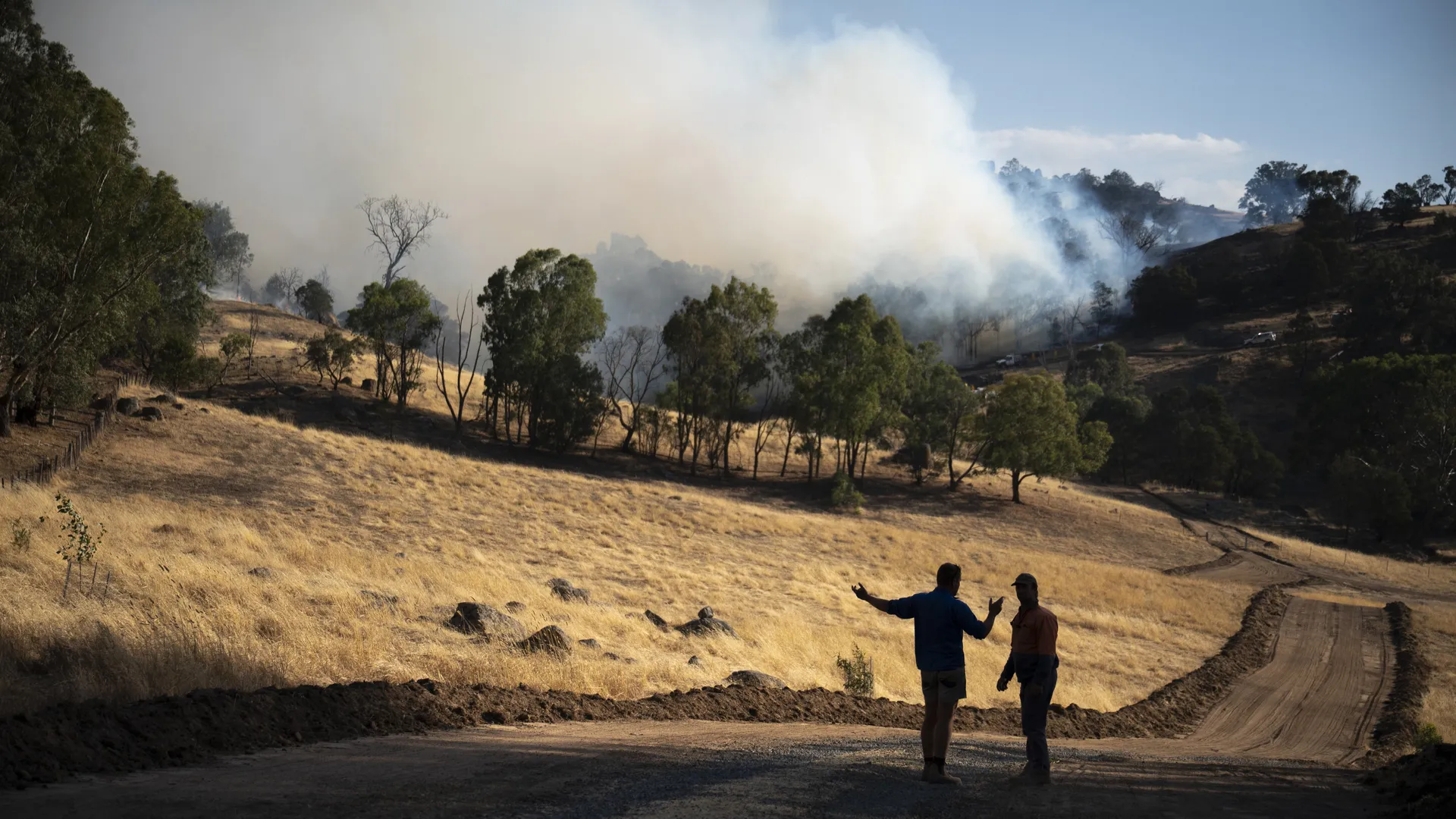
Two men stand on a road overlooking a burning property.

Farmers observe a fire burning close to a property in Victoria, Australia on January 10, 2026

(Image credit: Jay Kogler/SOPA Images/LightRocket via Getty Images)

PP: You published your Lancet report the same week as the U.N. report was released. What’s different about your report, and what have you found?

SD: The Lancet Countdown is focused on indicators. Two of the indicators are very relevant to the discussion we’re having. The first one is the impact on food insecurity in Europe, which is access to food. Our results show that compared to the 1981 to 2010 baseline, a higher frequency of heat waves and droughts has resulted in 1 million additional people becoming food insecure in 2023 alone. So the message is, food insecurity is no longer just about low-income countries. This is happening now in Europe.

The second indicator that I want to mention is the impact of warming on high-exposure sector workers. This is where we focus on working hours in agriculture and construction sectors in Europe. Our result shows that, due to warming between 2020 and 2023, on average, warming has resulted in a reduction of 24 hours per worker per year ‪—‬ so workers are having to reduce their working hours to protect their health. When they reduce their working hours, they earn less, which affects their livelihoods. And when they earn less, the profits of the company or the farm they work for also declines. This is transmitted to lower output and, eventually, lower economic growth.

PP: Is everyone going to be impacted by this if it’s a global issue?

SD: At some point, yes. There is a lag between shocks on the workforce and the price we pay in the supermarket. But eventually, these impacts will be transmitted through the supply chain. At the same time, food production itself is being affected by extreme heat, and the joint effect of this results in increasing prices.

PP: How do we address this? Can we address this?

SD: Yes. I think it’s important that we give a positive message.

There are policies that can be implemented to protect the agriculture sector and agricultural workers — safety nets. By safety nets, I mean proactive safety nets. We need to anticipate food insecurity events before they become famine. And safety nets — whether in the form of cash benefits, cash transfer or food assistance — have to be anticipated. We can no longer rely on reacting after an event has taken place.

Other policies, especially in the agricultural sector, would be investing in climate-resilient crops and salinity-resilient crops. In these cases, there can actually be learning from Global South to North. Countries such as Bangladesh, where I’m from, have more than three decades of experience in developing climate-resilient and salinity-resilient crops.

Editor’s note: This interview has been condensed and edited for clarity.

Share. Facebook Twitter LinkedIn Telegram WhatsApp Email

Keep Reading

New analysis finds ‘deep genetic links’ between Homo erectus and modern humans, raising the ‘question of whether we know what Homo erectus even is’

New analysis finds ‘deep genetic links’ between Homo erectus and modern humans, raising the ‘question of whether we know what Homo erectus even is’

Remnants of ancient galaxy called ‘Loki’ found inside the Milky Way

Remnants of ancient galaxy called ‘Loki’ found inside the Milky Way

The CDC has taken a back seat in the global hantavirus response — and that could be a problem in future outbreaks, epidemiologist says

The CDC has taken a back seat in the global hantavirus response — and that could be a problem in future outbreaks, epidemiologist says

SpaceX prepares to launch Starship V3, the tallest and most powerful rocket ever built

SpaceX prepares to launch Starship V3, the tallest and most powerful rocket ever built

‘Exceptional’ drilled tooth reveals Neanderthals practiced dentistry in Siberia 60,000 years ago

‘Exceptional’ drilled tooth reveals Neanderthals practiced dentistry in Siberia 60,000 years ago

Pollution may fuel depression, anxiety and other mental health problems, emerging research suggests

Pollution may fuel depression, anxiety and other mental health problems, emerging research suggests

Sony FE 200-600mm f/5.6-6.3 G OSS review

Sony FE 200-600mm f/5.6-6.3 G OSS review

Diagnostic dilemma: An infant’s brown eyes turned indigo after COVID antiviral treatment

Diagnostic dilemma: An infant’s brown eyes turned indigo after COVID antiviral treatment

AI self-replication hacks ‘no longer purely theoretical,’ study finds —‬ ‪but experts say it’s too soon to panic

AI self-replication hacks ‘no longer purely theoretical,’ study finds —‬ ‪but experts say it’s too soon to panic

Add A Comment
Leave A Reply Cancel Reply

Editors Picks

Stephen Colbert Spills on A-List Actress He Was ‘Wildly Attracted’ to Ahead of Final ‘Late Show’

Stephen Colbert Spills on A-List Actress He Was ‘Wildly Attracted’ to Ahead of Final ‘Late Show’

May 14, 2026
Dodgers’ offense backs up Shohei Ohtani’s latest gem in win over Giants

Dodgers’ offense backs up Shohei Ohtani’s latest gem in win over Giants

May 14, 2026
CBS News sends Tony Dokoupil to Taiwan after failing to get China visa in time for Trump visit: ‘very sloppy’

CBS News sends Tony Dokoupil to Taiwan after failing to get China visa in time for Trump visit: ‘very sloppy’

May 14, 2026
Trump greets Xi in Beijing to kick off historic China summit with grand welcome ceremony

Trump greets Xi in Beijing to kick off historic China summit with grand welcome ceremony

May 14, 2026

Subscribe to News

Get the latest USA news and updates directly to your inbox.

Latest News
China rolls out red carpet for Trump ahead of high-stakes Xi showdown

China rolls out red carpet for Trump ahead of high-stakes Xi showdown

May 14, 2026
Dog Owners Are Switching to This Personalized Meal Service — And the Results Are Impressive

Dog Owners Are Switching to This Personalized Meal Service — And the Results Are Impressive

May 14, 2026
Caitlin Clark takes technical foul after argument with ref in fiery Fever scene

Caitlin Clark takes technical foul after argument with ref in fiery Fever scene

May 14, 2026
Facebook X (Twitter) Pinterest WhatsApp TikTok Instagram
© 2026 USA Times. All Rights Reserved.
  • Privacy Policy
  • Terms
  • Advertise
  • Contact

Type above and press Enter to search. Press Esc to cancel.