



Follow us
Add us as a preferred source on Google
Subscribe to our newsletter
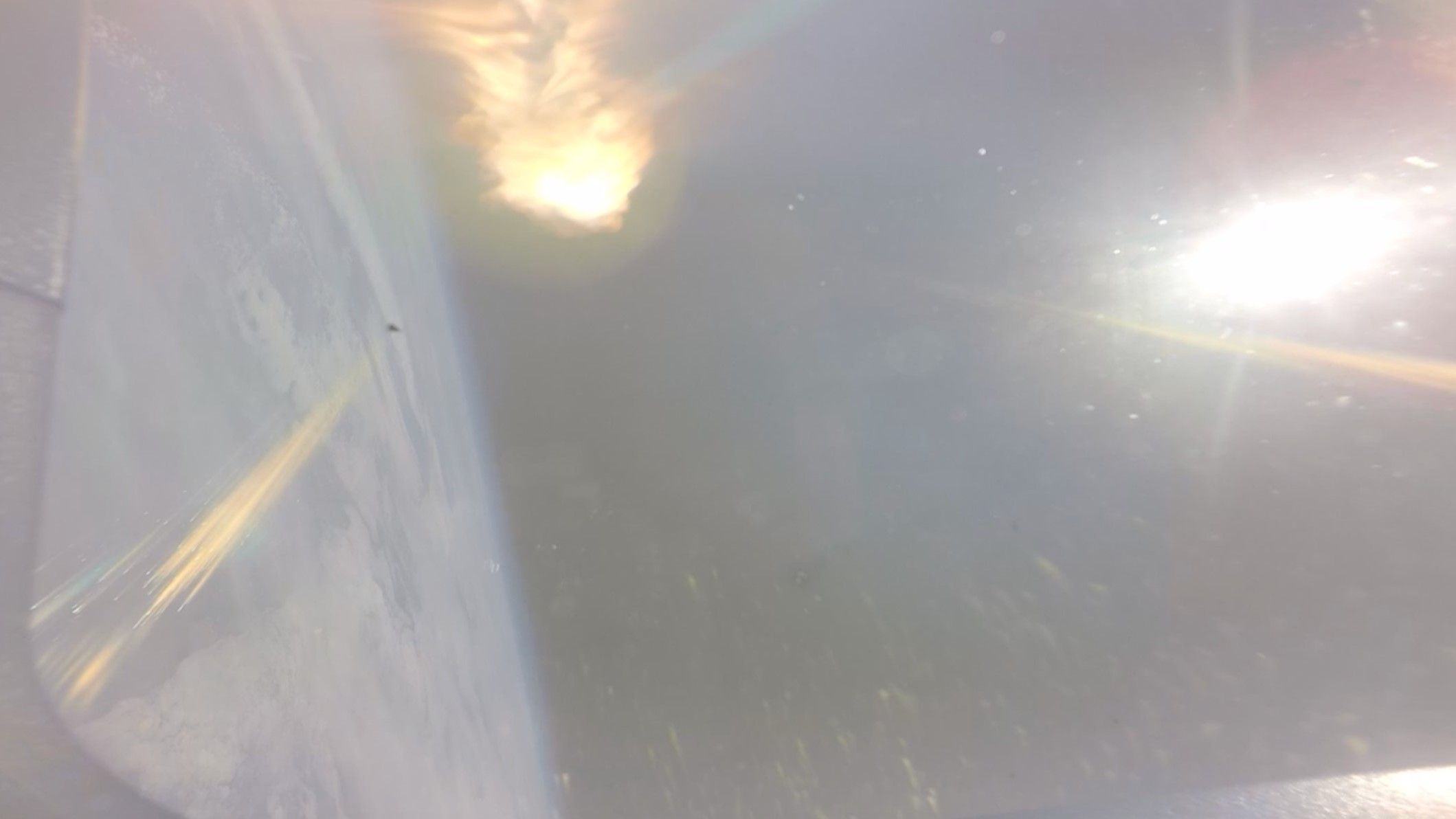
After nine days in space, the four crewmembers of NASA’s Artemis II mission looked out their capsule window on April 10, 2026, and saw the bright-blue Earth below them. The crew had traveled more than 250,000 miles (400,000 kilometers) from our planet — farther from Earth than any humans had ever gone — and now, home was just a few hundred miles straight down.
Only one milestone remained: splashdown, a fast and fiery plunge into the Pacific Ocean that would mark the end of humanity’s first crewed mission to the moon in more than 50 years.Mission specialist Jeremy Hansen, the lone Canadian Space Agency astronaut on the crew, had every reason to be confident that the team’s Orion crew capsule would hold up just fine. But this was Hansen’s first time in space, and his first time dropping through the sky like a fireball at 24,600 mph (39,600 kmh).
It wasn’t that he was afraid for himself, Hansen explains in “Earthrise: Inside Artemis II, the Groundbreaking Human Mission into Deep Space” (Hanover Square Press, 2026), which he co-wrote with John Larsen). Rather, he knew that his wife Catherine and three children would be among the millions of Earthlings watching the most dangerous moment of his mission from below.
In this excerpt from the book, Hansen describes the thrilling intensity of splashdown and the euphoria of knowing that he and his crewmates were going to make it back safely — and make history.
CSA astronaut Jeremy Hansen smiles inside the Orion crew capsule during the Artemis II lunar flyby.
(Image credit: NASA)
Immediately after jettisoning the European Service Module, and exactly half an hour before we were due to splashdown, Mission Control initiated the crew module raise burn. This nineteen-second burn was the first and only burn using the small thrusters built into our Orion capsule. It slightly shallowed our entry trajectory to put us right in the sweet spot while also providing some added distance from the service module, as we’d be hitting the atmosphere in near succession. It, too, went flawlessly. I tightened my straps; it was time for the fireworks.
A re-entry into the Earth’s atmosphere is absolutely on the short list of the most incredible experiences of my life. We slammed into it at 7:53 p.m., thundering down at over 10 kilometres [6.2 miles] per second. Per second.
The thrusters fired almost constantly to stabilize the capsule: loud thuds, as if Thor himself were hammering on our spacecraft, as the G-forces quickly began to build, aggressively scrubbing off the velocity we had added to our rocket nine days earlier. Within seconds, we saw plasma forming outside our windows, and the heat at the base of our capsule grew so intense that flames soon engulfed us. It started red and transformed into a bright, bluish-green, pulsating light. It was breathtaking, the bright colors igniting our senses.
It was insane to think about what we were doing. We all knew how this worked; we all knew the science. But deep inside, I also recognized that astronauts must have a screw loose to do this. Nobody in their right mind would strap themselves inside a metal canister that itself was sitting inside a giant fireball. But there was no other way down, and I had accepted the realities of this journey long in advance.
Although I was at peace, I felt guilty for the stress I was putting on my family. I had talked to them openly about the mission’s risks, and this was the highest-risk moment. I tried to send my love telepathically, telling them it was going great.

The Orion capsule drops toward the Pacific Ocean with all parachutes successfully deployed.
(Image credit: NASA/Joel Kowsky)
As we continued our freefall, it looked like a thousand camera flashes were exploding inside Integrity. I lowered the sun visor on my helmet. There were only centimeters of heatshield and aluminum separating me from the more than 2500°C heat outside. Almost instantly, the heat inside our cramped home also began to rise, an increase that engineers refer to as “thermally benign.” All I know is that I couldn’t feel it, blissfully wrapped in my thermally controlled garments.
As we continued to fall, the G-forces built up to nearly four times the pressure we feel on Earth. I wasn’t too worried, having endured more than five minutes of the same G-force, or more, in the NASA centrifuge trainer. I had half-expected the freefall back to Earth to seem short, but it was a long six minutes before the flames finally ceased and we re-established communications with Mission Control.
I loved every second of it.
It had already been a wild ride, but I also knew another crazy part — parachute deployment and the actual splashdown — lay ahead. My adrenalin kept pumping.
Within seconds, we saw plasma forming outside our windows, and the heat at the base of our capsule grew so intense that flames soon engulfed us.
“Integrity, Houston. Comms check, post-blackout,” we heard from Mission Control. It was music to our ears. It was exactly 8:00 p.m.
“Houston, Integrity,” Reid [Wiseman, mission commander], replied. “We have you loud and clear.”
This is when people the world over clapped, hugged, and, in some cases, cried. For the folks at NASA, it was clear that all had gone well during the descent — a small fleet of NASA and Air Force planes had captured it on high-resolution cameras. But, for me, it wasn’t over yet. I wouldn’t truly feel safe until our three main parachutes successfully deployed. If they didn’t, we’d be a chunk of metal slamming into the ocean at incredibly high speed, and the chances of surviving that would be somewhere between minimal and non-existent.
I’ve watched many of my close friends return from space, and I find the minutes after surviving the re-entry heat until the parachutes deploy to be the hardest part to watch. When I see a capsule plunge through the clouds with no chutes, I always worry they might not appear at all. That’s completely terrifying.

Jeremy Hansen arrives on the deck of the USS John P. Murtha after being recovered from the Orion capsule. All four crewmembers were in perfect health after splashdown.
(Image credit: NASA/Bill Ingalls)
I thought of Catherine and the kids, sending them a “don’t worry, gang” message in my mind. Catherine later told me that she had a very bad feeling about the heatshield, so when we emerged from blackout, she began crying and didn’t even focus on the parachutes.
Three minutes later, at an altitude of 7,100 metres, timed explosions released small chutes that pulled off the cover for two larger chutes, called drogues because they are intended to slow our acceleration to a speed that would allow our main parachutes to open without ripping. They did their job perfectly, but it was wild inside the capsule, jerking us back and forth like a ride at the fair.
This is when people the world over clapped, hugged, and, in some cases, cried.
One minute later, at only 1,500 metres above the ocean, the drogue chutes cut loose, and, for a few moments, we felt like we were falling backward. Then, in succession, the three main parachutes began deploying, blossoming slowly so they wouldn’t tear apart. The rate of our fall slowed as the red-and-white nylon canopies, each 35 metres in diameter, filled with air. The thrusters kept firing, aiming the capsule’s base directly toward the point of impact.
Exclusive to Live Science Pro
“Integrity, we see three good-looking parachutes,” we heard from our CAPCOM. Within seconds, our splashdown speed had reduced to 27 kilometres per hour.
That’s it, I said to myself. I’m pretty sure we can survive whatever else could be thrown at us now.
Christina [Koch, mission specialist] seemed to agree. We grabbed one another’s hands in a moment of celebration.
Excerpted from “Earthrise: Inside Artemis II, The Groundbreaking Human Mission Into Deep Space” by John Larsen with Jeremy Hansen. © 2026 by John Larsen, used with permission by HarperCollins/Hanover Square Press.
Help us improve Live Science Pro: We’re always trying to make our content better. Leave us feedback about Pro here.

Hanover Square Press
Earthrise: Inside Artemis Ii, the Groundbreaking Human Mission Into Deep Space
The dramatic, high-stakes account of Artemis II, the first human journey into deep space in fifty years, told from the perspective of astronaut Jeremy Hansen … A riveting and intimate account of the iconic achievement of Artemis II, Earthrise—written by author John Larsen and based on extensive interviews he conducted with Hansen—is a testament to what can be achieved with unity, teamwork, and a bold belief in humanity’s ability to reach for the stars.
TOPICS