




NEWYou can now listen to articles!
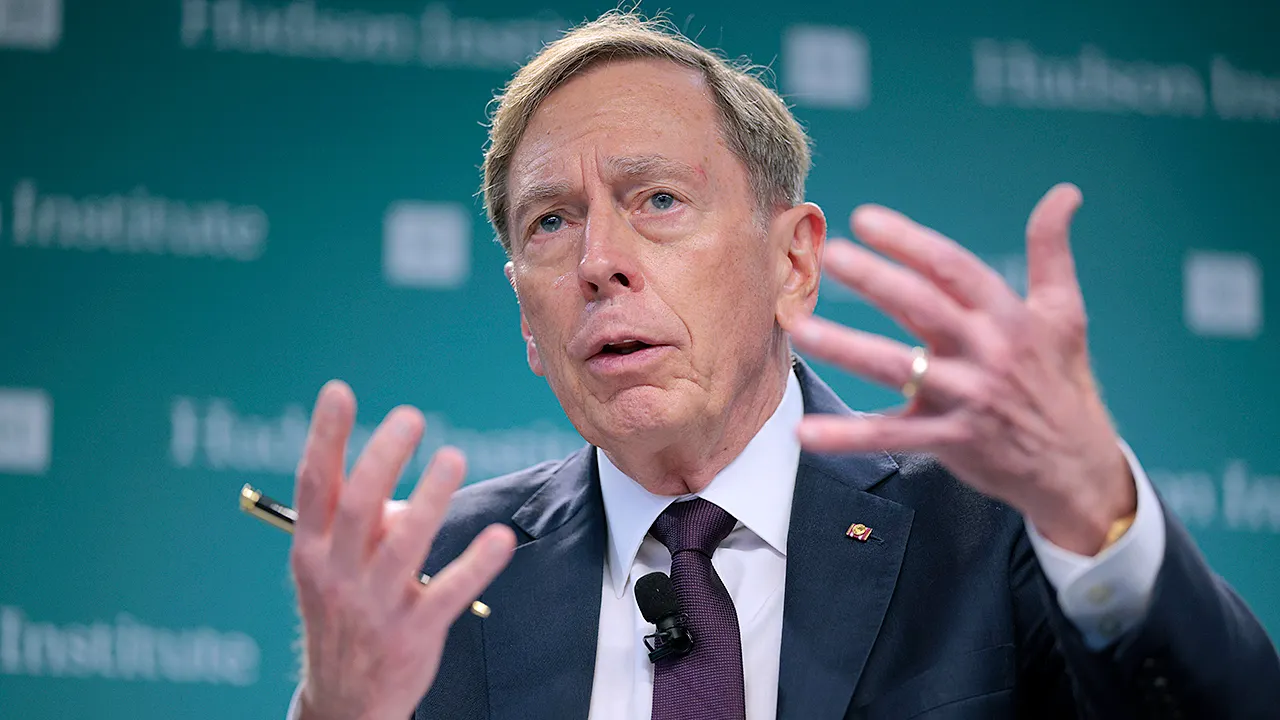
Ret. U.S. Army Gen. David Petraeus said assassinating more of Iran’s leadership will not end ongoing issues while warning against a U.S. ground operation to seize Iran’s stockpile of enriched uranium.
“This would be a very, very tall order, it would be exceedingly risky. And the casualties could potentially be quite substantial,” he said Monday on “Jesse Watters Primetime.”
“Assassinating a few more leaders is not going to bring this issue to a close,” he added.
Petraeus’ comments come as the two-week ceasefire between the U.S. and Iran is set to expire Wednesday, with President Donald Trump asserting an extension is “very unlikely.”
US SEIZES IRANIAN SHIP AFTER OPENING FIRE; PAKISTAN TALKS IN DOUBT
When War Secretary Pete Hegseth was asked this week whether U.S. forces would ever move to secure enriched uranium reportedly stored at Iran’s Isfahan nuclear complex, he declined to say, citing operational security. (Guvendemir/Getty Images)
The former CENTCOM commander, who led troops into battle during the American-led invasion of Iraq in 2003, said the deployment of U.S. ground troops to Iran would be very risky.
“We’re not really sure where these canisters are, of this thousand pounds of 60 percent enriched uranium,” he said. “They’re going to have to excavate very, very substantially. And by the way, that’s what makes the idea of a forced ground operation very, very challenging.”
Petraeus noted that while Iran has felt the damage of the United States’ military campaign, the regime is not hopeless.
“They’ve seen lots and lots of damage that we can inflict,” he said.
“They know what we can do… They’re also trying to figure out how much they can give on these other issues that traditionally have been very, very difficult to negotiate.”
IRAN REVERSES COURSE ON OPENING STRAIT OF HORMUZ AS HARDLINERS TAKE FRONT SEAT IN TEHRAN
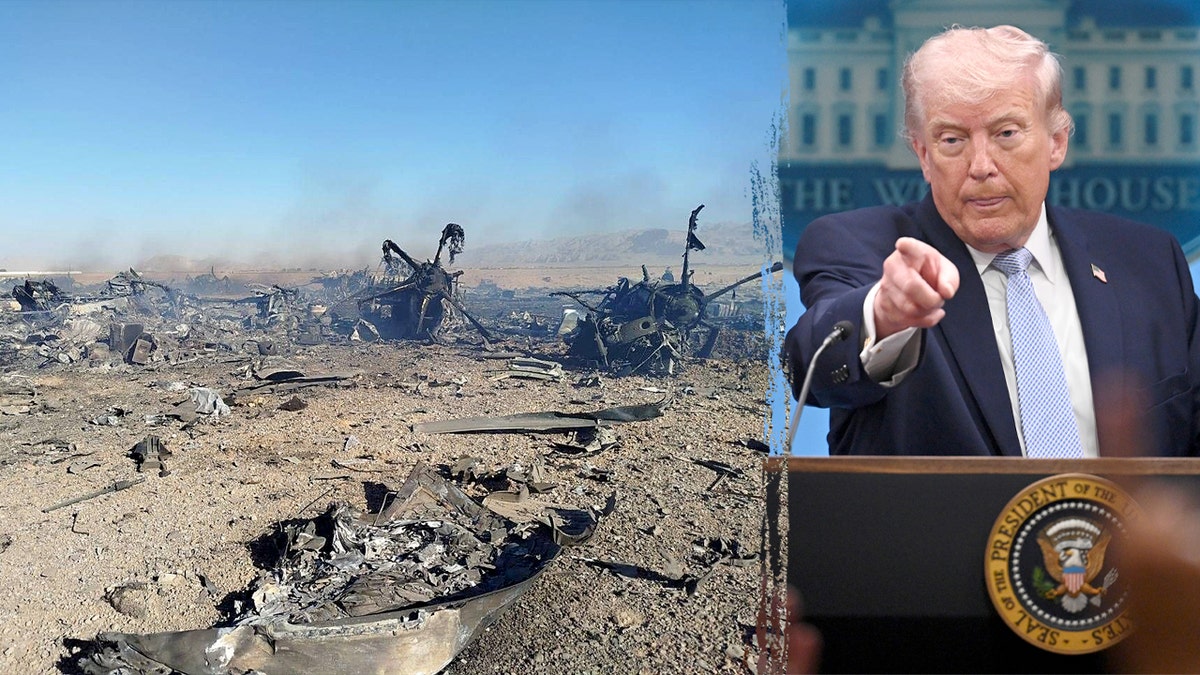
A split image shows wreckage from what Iranian authorities say is a U.S. military helicopter in Iran on April 5, 2026, and President Donald Trump speaking at a press conference in Washington, D.C., on April 6, 2026. (Iran’s Ministry of Culture and Islamic Guidance/Chen Mengtong/Getty Images)
Trump said he will enforce the U.S. naval blockade on Iranian ports until a deal is reached. However, Petraeus said the economic pressure has not made Iran completely hopeless.
“They’re not at the point of desperation,” he argued.
The former CIA director argued that both the U.S. and Iran want the war to end, citing economic challenges that both nations have experienced amid the 52-day conflict.
“I don’t think that either side really wants to return to full-on combat,” Petraeus said. “There has been damage to infrastructure in the Gulf states. And we certainly don’t want to see more of that.”
Vice President JD Vance and senior White House officials are set to depart for Pakistan on Tuesday for a new round of peace talks, though recent reports from Iranian state media cast doubt on such meetings.
CLICK HERE TO DOWNLOAD THE APP
“I think both sides, frankly, really do want an agreement,” Petraeus said. “Obviously, there are challenges domestically for us if this continues. Obviously, there are huge challenges for them [Iran] economically and financially if it continues.”
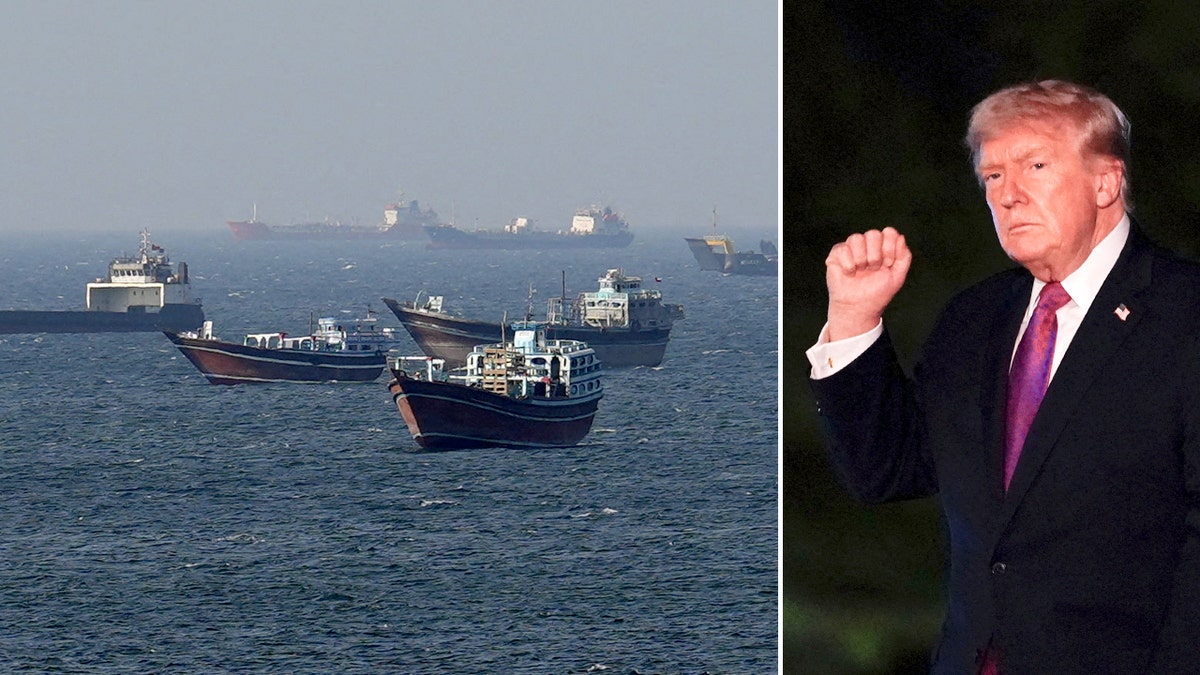
Ships and tankers in the Strait of Hormuz off the coast of Musandam, Oman, April 18, 2026. (Reuters)
The former CENTCOM commander said the two main points of discussion in the talks will be Iran’s uranium enrichment and the restoration of freedom of navigation in the Strait of Hormuz.
“We’ll see if there is trade space,” he said.