



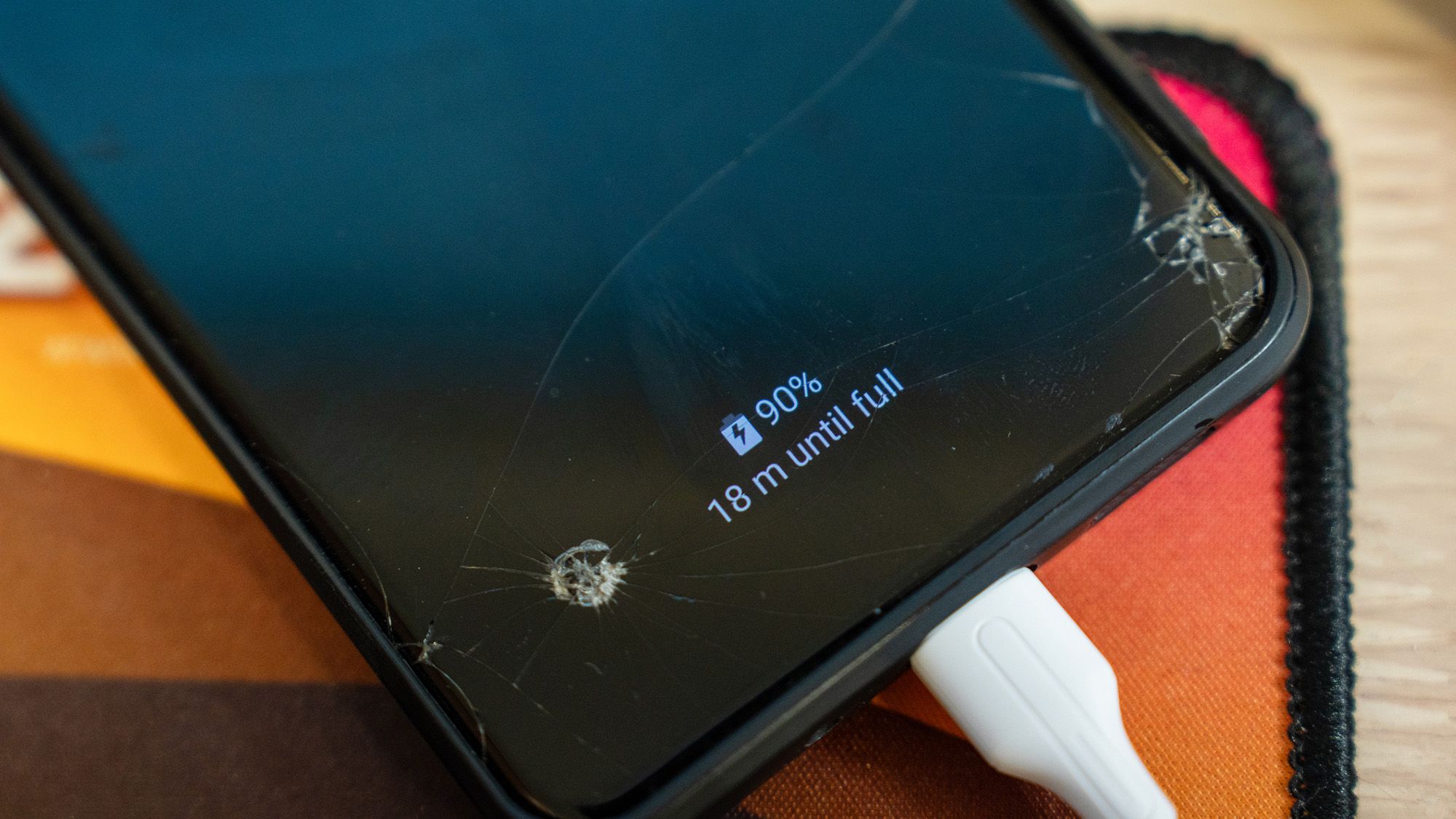

Fast charging seems to be almost everywhere. Many smartphones can go from nearly empty to more than 50% charged in about half an hour, while some electric vehicles can add hundreds of miles of range during a quick charging stop.
But batteries aren’t perfect; their capacity degrades over time. Given that fast charging delivers more power in a shorter amount of time, does fast charging damage batteries?
Scientists say the answer is yes, but it’s more complicated than you might think. Fast charging can accelerate some types of battery degradation, but modern batteries are designed with safeguards to help limit the damage.
How does fast charging work?
Rechargeable lithium-ion batteries — the most common battery type in the world — work by moving lithium ions between two electrodes called a cathode and an anode. During charging, lithium ions travel through the battery and are stored in the anode until the battery is used again.
The main difference between fast charging and regular charging is how quickly those ions move. Compared with regular charging, which can take hours, fast charging can refill a battery in an hour or less.
This diagram shows the inside of the battery as lithium ions move through the circuit from being more concentrated to less concentrated.
(Image credit: Kenna Hughes-Castleberry/Live Science)
“Regular charging applies a lower current, allowing lithium ions to intercalate [move into microscopic holes] into the anode gradually, which generates little heat and causes minimal mechanical stress,” Zhiyuan Jiang, an associate professor in the Department of Chemical Engineering and Technology at Xi’an Jiaotong University in China, told Live Science via email. “Fast charging increases the current [and] power significantly to shorten charging time.”
Sign up for our newsletter

(Image credit: Marilyn Perkins / Future)
Sign up for our weekly Life’s Little Mysteries newsletter to get the latest mysteries before they appear online.
Not all batteries are designed for fast charging. A battery’s ability to handle high charging speeds depends on its materials, internal structure and battery management system, Jiang explained. Fast-charging batteries often use specialized electrode materials or thinner electrodes and electrolytes that allow the lithium ions to move more easily. Manufacturers may also redesign the battery’s internal architecture to reduce resistance and heat buildup.
Stanislaw Zankowski, a battery researcher at the University of Oxford, compared the process to traffic moving through a city.
“You could think about charging a battery as transporting people through roads, intersections and buildings,” Zankowski told Live Science. “Fast charging is really a question of how efficiently you can move all that traffic without creating bottlenecks.”
What type of damage could fast charging cause?
All lithium-ion batteries lose capacity over time, even when they are treated carefully. But fast charging can speed up some of the chemical processes responsible for that aging.
One of the biggest concerns is a process called lithium plating. During rapid charging, lithium ions may not have enough time to settle properly inside the anode. Instead, some lithium can accumulate as metallic deposits on the electrode’s surface. These deposits can reduce the amount of lithium available to store energy, thereby lowering the battery’s capacity. In extreme cases, the lithium can form needle-like structures called dendrites that puncture internal battery components and create safety hazards.
Fast charging can also generate more heat. Heat is a natural byproduct of electrical resistance in the battery. The faster a battery charges, the more heat it produces.
“For charging a small battery with a small current, that amount of heat will be also relatively small,” Zankowski said. “So, it’s not really a safety problem, but as we increase the size of the battery, the amount of current that we’ll be pushing during charging and the amount of heat will also increase quite a lot. And as a result, we can’t really charge larger batteries as quickly, mostly because of the safety margin.”
Higher temperatures can accelerate chemical reactions that gradually degrade battery materials. In some extreme cases, overheating can cause batteries to swell, catch fire or even explode — a process known as thermal runaway.

Some batteries, like those used in electric vehicles, have a management system that helps them charge safely without overheating.
(Image credit: Witthaya Prasongsin via Getty Images)
Fortunately, most modern smartphones, laptops and electric vehicles contain sophisticated battery management systems that monitor voltage, current and temperature during charging. That’s why you may get a heat warning from your smartphone if you leave it in the sun. If temperatures climb too high, these systems automatically slow charging to protect the battery.
Best tips for battery life
So what’s the best way to protect a battery while charging it quickly?
Both Zankowski and Jiang emphasized that temperature is key. It’s best to avoid charging devices in hot environments, such as inside a parked car or in direct sunlight. Extremely cold temperatures can also be harmful because they make it harder for the lithium ions to move through the battery.
“Ideally, the temperature range should be around 20 to 25 degrees Celsius [68 to 77 degrees Fahrenheit] for charging,” Zankowski said. “So, just like a comfortable temperature for a human being, right?”
Experts also recommend that you avoid keeping devices like laptops constantly plugged in, as this can degrade battery performance. Jiang suggested implementing the “shallow charge, shallow discharge” habit.
“Keep your battery between 20% and 80% for daily use,” he said. “It is not necessary to charge to 100% every time.”
Can you match these ancient devices to their pictures? Find out with our computing quiz!
TOPICS