





Alzheimer’s disease, the most common form of dementia, has beaten back potential treatments for decades. Past research suggested it was a complicated, multifactorial disease in which a patchwork of biological and lifestyle factors combined to increase or decrease risk.
But a new study published in January in the journal Nature suggests the risk of developing the disease is determined largely by one key gene, called apolipoprotein E (APOE). Lifestyle and environmental factors can dial the risk up or down modestly in people with susceptible gene variants, but those who have protective versions of the APOE gene are extremely unlikely to develop Alzheimer’s. And a staggering 99% of the population carries at least one disease-fueling version of the gene.
Article continues below
There are more than 900,000 people in the United States who have the highest-risk form of APOE, said Nolan Townsend, CEO of gene therapy company Lexeo Therapeutics, which is developing a therapy targeting the gene.
“There’s been no gene therapy to date that’s tried to address a population of that size,” Townsend told Live Science.
An elusive treatment
For decades, there were no good treatments for Alzheimer’s disease. No medicines actually slowed the disease’s progression until the advent of anti-amyloid antibodies like donanemab, which clear the characteristic amyloid plaques that are a hallmark of the disease. But these drugs, touted as the first disease-modifying treatments for the condition, have severe side effects, including swelling and microbleeds in the brain. The patients most at risk from Alzheimer’s are also most vulnerable to these side effects.
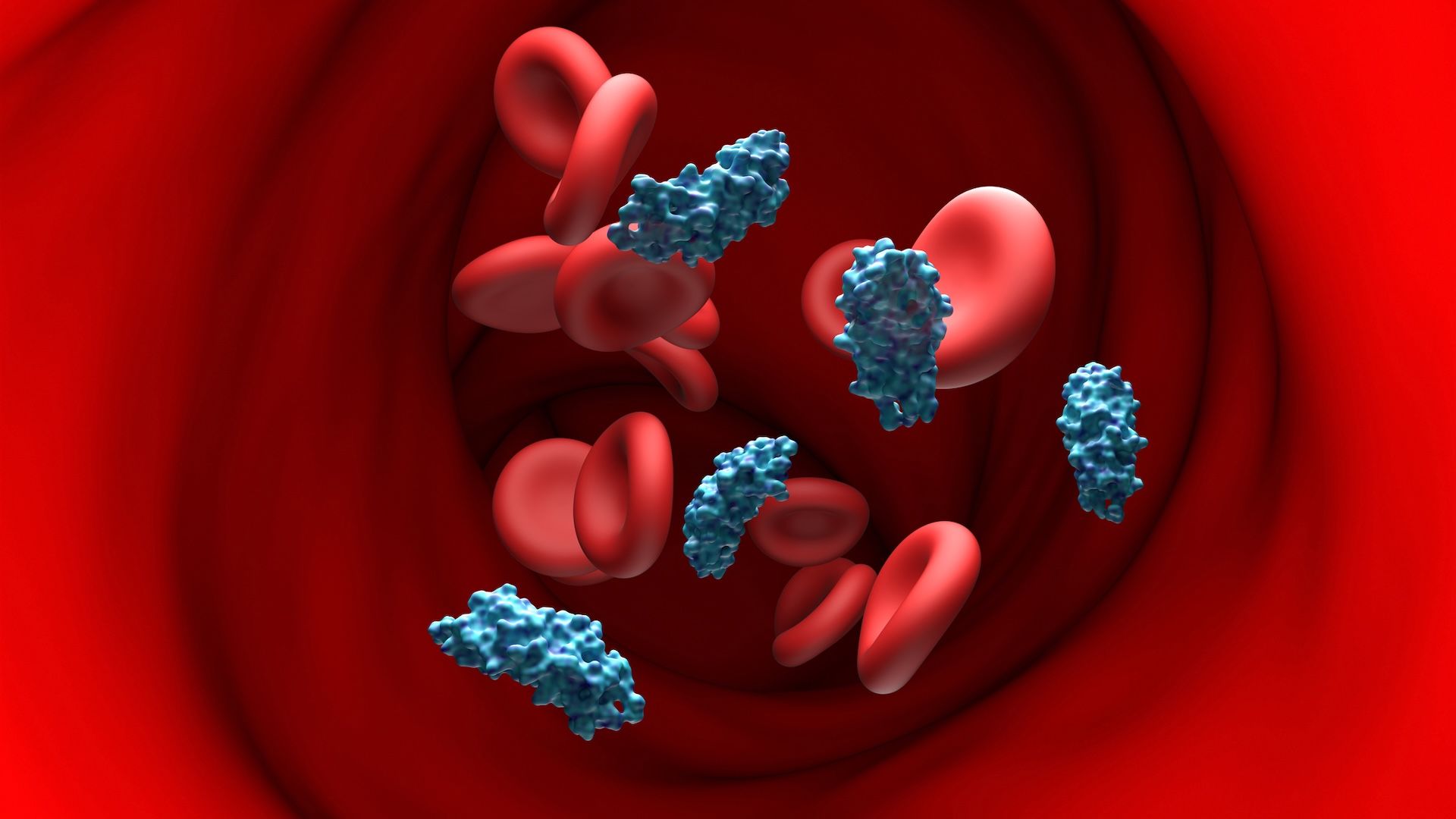
At first glance, the APOE gene wouldn’t seem very relevant to Alzheimer’s disease. The main role of the protein it codes for is to ferry fat molecules through the bloodstream. However, the APOE protein also closely interacts with what is considered the best-known molecular culprit in Alzheimer’s: the protein amyloid-beta, which aggregates into plaques that destroy connections between neurons and trigger inflammation.
There are three versions of the APOE gene — APOE2, APOE3 and APOE4 — and each codes for a slightly different version of the protein. For decades, researchers thought that APOE2 was a protective variant, while APOE4 increased the risk of the disease. APOE3 was thought to neither increase nor decrease the risk.
But in past work, APOE2 was underrepresented; the allele is present in less than 1% of the population. In the new Nature study, which looked at data from 450,000 people, the gene trio’s true contributions were revealed. APOE3 is not neutral, the study found; rather, it increases Alzheimer’s risk, albeit to a much lesser extent than APOE4 does. Carrying two copies of APOE2, meanwhile, made people almost immune to developing Alzheimer’s.
It’s not clear why, but other research in lab dishes shows that the highest-risk variant of APOE impairs the processing of fats in support cells called glia and that this can trigger dysfunction and neuro-inflammation. APOE4 also seems to increase cell death and impairs how well cells react to oxidative stress, a state of imbalance between antioxidants and reactive chemicals called free radicals. It also impairs synaptic plasticity, or the ability to adaptively strengthen or weaken connections between brain cells.
The study authors concluded that APOE3 and APOE4 together are responsible for between 72% and 93% of Alzheimer’s disease cases.
“Without strong underlying risks from APOE ε3 [APOE3] and ε4 [APOE4], almost all AD [Alzheimer’s disease] and half of all dementia would not occur,” the study authors noted in the paper.
That finding is buttressed by other work hinting that APOE2 is strongly protective. A 2020 study found that someone with two copies of APOE2 has a 200 times lower risk of developing Alzheimer’s than someone with two copies of APOE4. Carrying just one copy of the APOE2 gene lowers the risk 80-fold.
The research raises the possibility that people with higher-risk variants might stave off the disease if they had one or two copies of the APOE2 version of the gene.
Gene therapy for the masses
That’s where gene therapy comes in.
Gene therapies have transformed the lives of people with rare genetic disorders, such as the muscle-wasting disease spinal muscular atrophy (SMA) and a progressive form of blindness called retinal dystrophy. In these cases, the therapy involves delivering a copy of a healthy gene into a tissue that lacks it.
But these treatments target tiny populations; SMA, for example, affects about 1 in 15,000 live births in the United States. Some gene therapy approaches are customized for just a single patient.
By contrast, the study estimates that about 28% of the population carries at least one copy of the highest-risk versions of the APOE gene that could potentially benefit from this drug.
Mayur Parmar, a pharmacologist at NOVA Southeastern University in Florida, has conducted studies of APOE2 gene therapies in mice.
“As we have learned in recent years, APOE4 plays an important role in terms of amyloid beta, tau, neuroinflammation, and oxidative stress. It can be a potential target, Parmar told Live Science. APOE2 therapies could work by suppressing these effects, he added.
Now, these ideas are being put to the test. New York City-based Lexeo Therapeutics plans three safety and dosing clinical trials to increase protective APOE gene variants and reduce harmful APOE gene variants in people with the highest-risk gene APOE4/APOE4 gene combination who have early Alzheimer’s disease.
The first phase of their research is a combined safety and dosing study that incorporates the protective APOE2 gene variant into the brains of people with early Alzheimer’s. A second study, which has not yet reached the human testing phase, will instead add a version of APOE2 that has the ultrarare Christchurch mutation, a rare variant found in the brains of people who show no Alzheimer’s symptoms despite having severe amyloid plaque buildup.
Researchers think the Christchurch variant is like a souped-up version of APOE2 that will offer even more neuroprotection. Finally, the team is planning a trial combining the addition of APOE2 with using tiny snippets of RNA to suppress APOE4 gene expression, which they hope will enhance the therapeutic effect.
The company’s initial safety testing showed that the therapy was well-tolerated and reduced tau levels in most of the 15 participants recruited. Only topline results from the study have been published, although Townsend said that long-term cognitive data from the trial will eventually be released.

The ability of APOE gene therapies to target multiple disease pathways could offer patients significant benefits, but it will be tough to prove. Pharmaceutical companies like Lexeo must choose a clinical outcome, like better memory preservation or less amyloid buildup, to demonstrate to regulators that their therapies work. The most obvious signs that a therapy works are detected through behavioral and cognitive testing, but trials pegged to those outcomes are massive in scope and cost, said Townsend. That’s because it can take years for the effects of a promising treatment to manifest and because such testing is quite expensive on its own.
There’s been no gene therapy to date that’s tried to address a population of that size
Nolan Townsend, CEO of Lexeo Therapeutics
The pharma companies that developed anti-amyloid antibodies bypassed this need because the U.S. Food and Drug Administration (FDA) agreed to view reduced amyloid load in the brain as a proxy for cognitive improvement. However, this approach has been controversial because of the uncertain link between these molecular changes and cognitive benefits, and Townsend said the regulatory environment for genetic therapies is less permissive.
“There’s uncertainty in the regulatory frameworks and landscape to get to an accelerated approval of a genetic-focused approach in this area,” Townsend said.
Crossing the barrier
Another challenge is getting the gene into the brain cells that need it. Adeno-associated viruses (AAVs) have been the vector of choice for gene therapy. Viruses such as AAV9 can bypass the blood-brain barrier and access the brain. But scientists are still working out how to deliver AAV gene therapies to maximize blood-brain barrier penetrance.
Gene therapies can be injected directly into the brain, but this approach isn’t perfect either. An earlier gene therapy that used this approach to deliver neuroprotective nerve growth factor (NGF) into patients with mild to moderate Alzheimer’s disease passed safety tests but didn’t improve symptoms. Parmar said follow-up work showed the NGF therapy didn’t reach cholinergic neurons in the basal forebrain, the brain cells that needed it most. The vector failed to travel well within brain tissue, and the trial didn’t use tools that would have helped the clinicians assess whether they had injected the right areas of the brain.
Lexeo has instead delivered its gene therapy into patients’ cerebrospinal fluid, which circulates through the spinal cord — a technique that bypasses the blood-brain barrier and improves brain-wide delivery. The injection is a 40-minute outpatient procedure, Townsend said, and will meet their goal to “bathe the brain in the vector.”
The new study showing the negative effects of APOE3 opens the door to expanding the target population for these gene therapies, Townsend said.
“If the approach for suppressing E4 [APOE4] works, then there’s no reason why there could not be a parallel approach to suppressing E3 [APOE3],” Townsend said.
No silver bullet
Ultimately, gene therapies targeting APOE variants have excited the field because they could potentially benefit a vast number of people.
But no lone treatment is likely to be sufficient, said Dr. Shanshan Wang, an anesthesiologist at the University of California, San Diego. Wang is working on a separate gene therapy that she thinks may help protect damaged neurons. That’s because even if APOE does have an outsize role in Alzheimer’s risk, it’s not the whole story.
“When you think about cancer treatment or any other disease treatment, do you just use one therapy?” Wang said. Cancer treatment has thrived on targeting multiple disease facets simultaneously. “It’s always combinatory.”