





QUICK FACTS
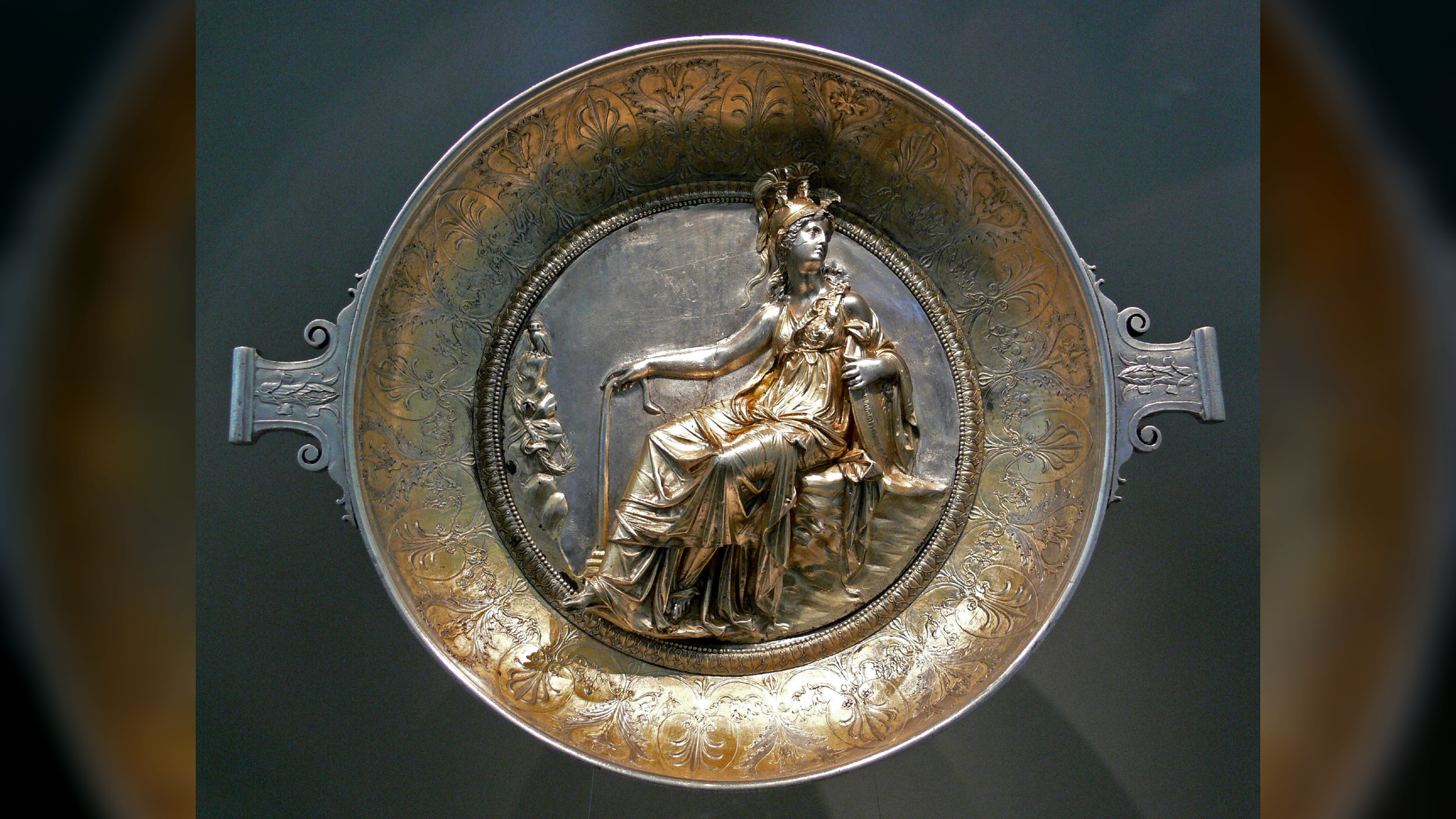
Name: Athena bowl
What it is: A silver bowl with gold accents
Where it is from: Hildesheim, central Germany
When it was made: Figure of Athena (second century B.C.), bowl (first century A.D.)
In 1868, soldiers from an Imperial Prussian Army regiment discovered a hoard of dozens of ancient silver artifacts while constructing a new shooting range near the city of Hildesheim in central Germany. The Hildesheim treasure included elaborate and expensive tableware, including the Athena bowl, that may have belonged to Publius Quinctilius Varus or another Roman military commander who fought against Germanic tribes in the first century.
The Athena bowl, also called the Minerva bowl after the goddess’s Roman name, is one of four bowls in the hoard with an ornate central emblem. According to the Altes Museum in Berlin, which has the Hildesheim treasure in its collection, the silver Athena bowl is roughly 10 inches (25.3 centimeters) in diameter and weighs a hefty 4.4 pounds (2 kilograms) — about as much as a 9-inch (23 centimeters) cast-iron skillet.
Athena, the Greek goddess of wisdom and youth, is seated on a rock with a shield under her arm and a plumed helmet on her head. Her famous aegis (shield) hangs like a sash to protect her while she gazes behind. In front of Athena is a rock encircled by an olive wreath, with her sacred owl perched atop. While most of the bowl is silver, there are gold accents on her dress, aegis and owl, as well as on the two rock formations, according to archaeologist Gertrud Platz-Horster.
The Athena emblem was likely crafted in the second century B.C., according to the Altes Museum, and a new bowl was created for the emblem in the first century A.D. Many of the Hildesheim treasure vessels had traces of wear and repair, according to Platz-Horster, which suggests that the tableware was collected over time.
Given the first-century date for the hoard and its discovery in central Germany, some experts think the tableware once belonged to an important Roman military commander, who may have hidden it from the enemy. (Or the hoard may represent booty that the Germanic tribes stashed after stealing it.)
MORE ASTONISHING ARTIFACTS
Perhaps the most famous Roman general fighting Germanic tribes under Emperor Augustus was Publius Quinctilius Varus, who lost three entire Roman legions at the Battle of the Teutoburg Forest in A.D. 9. The Roman historian Suetonius reported that Augustus was so upset about the loss that he yelled, “Quintili Vare, legiones redde!” — meaning “Quinctilius Varus, give me back my legions!” After the loss, Varus died by suicide rather than facing his ruined political career, and Augustus ended his campaign of expansion into Germany.
Regardless of whether the Athena bowl belonged to Varus, the Hildesheim treasure is renowned for being the largest collection of Roman silver found outside the imperial frontier.
For more stunning archaeological discoveries, check out our Astonishing Artifacts archives.
TOPICS