




When the United States and the Soviet Union signed the Outer Space Treaty in 1967, both nations agreed not to place nuclear weapons or other weapons of mass destruction in orbit around Earth. Specifically, Article IV of the treaty was designed to keep the Cold War’s nuclear arms race from extending into space — a goal both superpowers shared.
The problem, then and now, is that neither side has ever had a reliable way to confirm that the other is keeping its word.
After nearly 60 years of uncertainty, a recent feasibility study from MIT physicist Areg Danagoulian proposes a possible solution: a satellite-based sensor that could search for the signature of nuclear material aboard another spacecraft, using high-energy protons trapped by Earth’s magnetic field as a probe. The telltale sign of a warhead in space would be a large burst of neutrons scientists expect to be produced when these highly energetic protons interact with radioactive elements, like uranium, inside a warhead. A detector roughly the size of an encyclopedia and equipped with specialized sensors could identify neutrons emanating from the direction of a possible warhead from about 2.5 miles (4 kilometers) away after roughly a week of observation, according to the study’s calculations. At closer range, the detection could come much faster.
Latest Videos FromLive Science
The consequences of a space-based nuclear detonation are dire. But whether a detection system will prevent nuclear detonation in space will depend on several factors, some of which are technical but many of which are not, experts told Live Science.
What a nuclear blast does in space
On Earth, nuclear weapon tests leave telltale signals — like seismic waves, radioactive debris, and intense bursts of light and heat — that scientists have spent decades learning to detect. However, a warhead could be hidden inside an ordinary-looking satellite, potentially for decades, with nothing on the outside to give it away. If such a weapon were to detonate, it could jeopardize thousands of commercial, scientific and military satellites in a single blast, littering orbit with dangerous debris.
An image from the Starfish Prime nuclear test in 1962, which lit up the magnetosphere with an eerie red glow.
For most of the Outer Space Treaty’s history, the missing verification mechanism has been a theoretical gap rather than an urgent one — in part because the world had already seen what a nuclear detonation in orbit does, and largely avoided repeating it.
The clearest example is Starfish Prime, one of a dozen high-altitude nuclear tests the U.S. ran between 1958 and 1962. On July 9, 1962, the U.S. detonated a 1.45-megaton warhead roughly 250 miles (400 km) above the Pacific.
Get the world’s most fascinating discoveries delivered straight to your inbox.
The blast knocked out radio communications for hours, produced artificial auroras visible from Hawaii, and eventually damaged or destroyed eight of the 24 satellites in orbit at that time — including Telstar 1 and Britain’s Ariel 1 satellite. Radiation from the blast lingered in orbit for about five years, leaving parts of near-Earth space hazardous for spacecraft. According to eyewitness accounts from the time, the radiation also knocked out roughly 300 streetlights in Honolulu and set off burglar alarms across Oahu.
The Soviet Union conducted its own series of high-altitude nuclear tests, known as Project K, in 1961 and 1962. Those explosions also produced damaging effects on the ground, including disruptions to power and communications in what is now Kazakhstan.
“It was one of the earliest instances where we began to have an understanding of the ways in which the space environment and the terrestrial environment are coupled together,” John Barentine, an astronomer who has studied the environmental consequences of Cold War-era activities in space, told Live Science.
Diplomatic issues
Clearly, the impacts of a nuclear detonation in space are significant, and the new paper solves a long-standing problem by providing a way to detect weapons in space.
But is detection likely to work in practice? Getting a satellite close enough to observe another — and keeping it there for a week — would mean maintaining satellites closer than they ordinarily would be, experts say. That could raise suspicions about being spied on or attacked.
“Satellite operators get really freaked out,” Thomas González Roberts, an assistant professor at the Georgia Institute of Technology who studies how space powers engage with outer space governance, told Live Science. “If another satellite is spending too much time next to you, you might think that they’re spying on you.”
Any such workable system would require the cooperation of the country whose satellite was being inspected, and that raises a separate set of questions about the international norms for when and how such inspections could take place, according to Brian Weeden, director of civil and commercial policy for the Center for Space Policy and Strategy at Aerospace Corp.
“In my experience, the policy problems are always the bigger challenge than the technical problems,” Weeden told Live Science.
There’s very few examples of nuclear damage in space because it’s so obviously a bad idea. These weapons are not really designed to be used, if you ask me.
Thomas González Roberts, assistant professor at the Georgia Institute of Technology
Solution in search of a problem?
There’s also a question of whether this is a solution in search of a problem. Despite those early tests, deliberate nuclear damage to satellites has stayed rare for good reason, Roberts said. An attacker might have one target in mind, he said, but “you’re going to take out more than just that target, and you have limited control over which satellites are affected.”
That creates a strategic problem for any spacefaring nation: Any state capable of destroying other countries’ satellites with a nuclear weapon “also has a relatively large fleet themselves,” Roberts said — meaning the attacker would likely damage their own spacecraft, too.
“There’s very few examples of nuclear damage in space because it’s so obviously a bad idea,” Roberts said. “These weapons are not really designed to be used, if you ask me.”
The stakes are higher than ever
In theory, then, rational actors should shy away from launching or detonating nuclear weapons in space. No country has detonated a nuclear weapon in orbit since the 1960s, and it remains unclear how many, if any, nuclear weapons are currently stationed in space undetected.
But the possibility became harder to dismiss in 2024, when U.S. officials said they had evidence that Russia was developing a nuclear anti-satellite weapon — a claim Moscow has denied. The alleged spacecraft, based on media reports, is the Russian military radar satellite Kosmos-2553, which in 2022 launched into a radiation-heavy orbit that most other communication spacecraft avoid, Mallory Stewart of the U.S. State Department said in a 2024 interview. .
While Russia said the mission was meant for accelerated testing of how onboard electronics handle radiation, U.S. officials said the radiation level at that altitude was not high enough for such testing. The satellite was later observed tumbling and making erratic movements. This behavior raised suspicions that the spacecraft could be maneuvering toward a target satellite to detonate as a nuclear weapon, given Russia’s “demonstrated willingness to target US and allied on-orbit objects,” U.S. Space Command representatives said, according to a report from The Guardian.
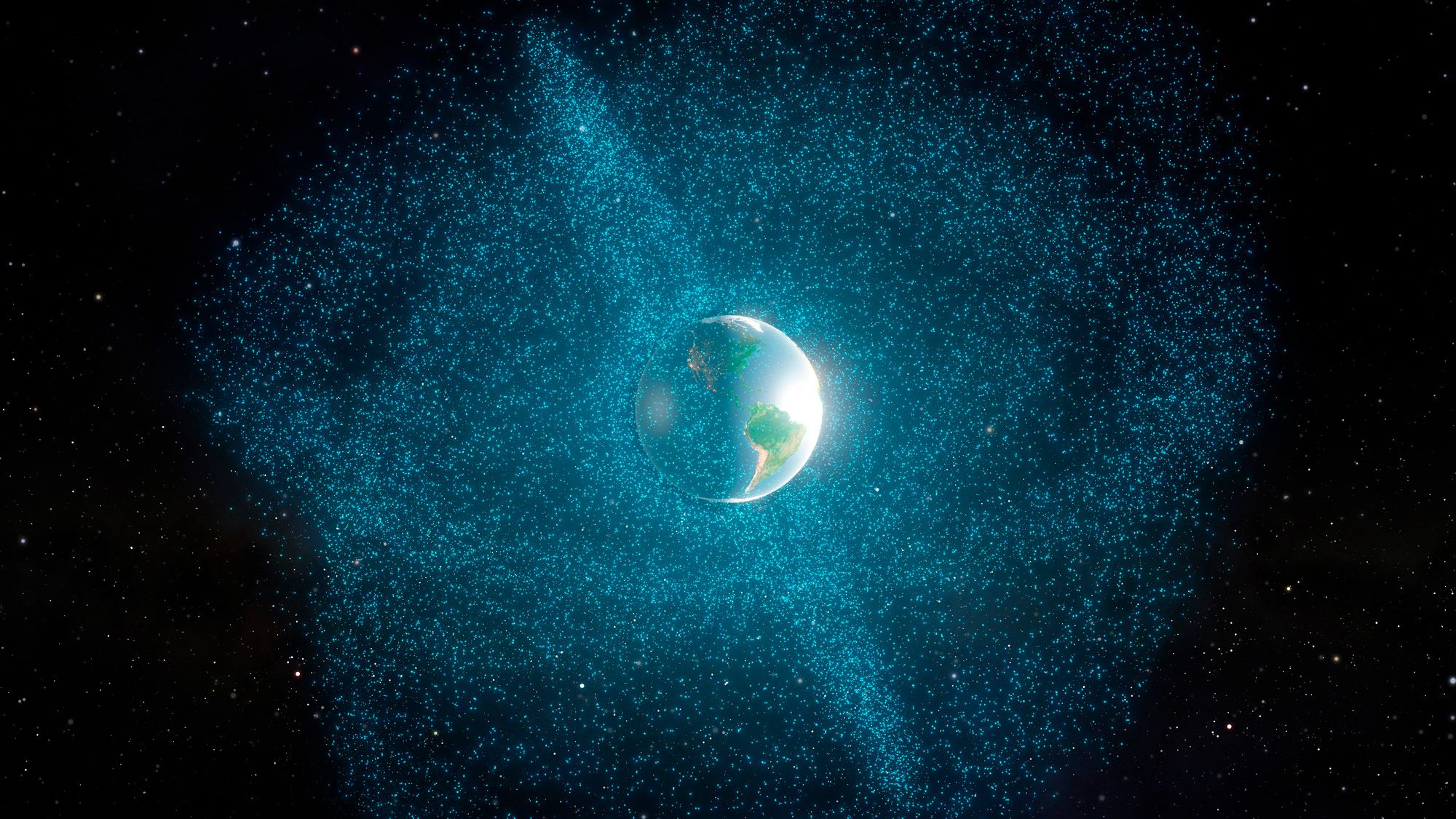
The stakes are higher now than they were decades ago. All three experts interviewed for this story agreed that a space-based nuclear detonation today would be catastrophic — largely because of Earth’s cluttered orbit. In 1962, 24 satellites, operated by two countries (the U.S. and the Soviet Union), were in orbit. According to a tracker maintained by astronomer Jonathan McDowell, more than 48,000 objects launched by more than 190 countries are tracked in space today; together, they support the communications, navigation, weather forecasting, Earth observation and military systems the world now runs on.
Even satellites that aren’t in the blast radius could be damaged by a nuclear explosion in orbit. Modern satellites are built with off-the-shelf, low-cost electronics to keep pace with commercial demand, and they “are probably not hardened against the kinds of radiation you would get from a nuclear detonation of space,” Weeden said. “I think that is the biggest concern.”
A federal government study had found that a single high-altitude nuclear blast could raise radiation in low Earth orbit enough to disable nearly all unhardened satellites within weeks to months, with direct financial damages approaching $500 billion and the total economic impact potentially topping $3 trillion. The potential losses have only grown as the number of satellites has exploded and the world’s dependence on them has increased. At the same time, declining launch costs have lowered the barrier to entry for spaceflight, opening orbit to nonstate actors without sizable satellite fleets of their own. That dynamic makes it more attractive for such actors to exploit major powers’ deep economic and military reliance on space, Roberts said.
“It’s most attractive for a rogue state like North Korea,” he added. “It’s not attractive for a spacefaring state like Russia. Doesn’t mean they won’t do it; it’s just that there’s enormous amounts of cons to that type of attack.”
Ultimately, whether space-based nuclear weapon detection methods like those proposed by the MIT study wind up being useful is a policy question, Weeden said.
Implementing such a detection system “would raise a whole bunch of new discussions about on-orbit inspections and what are the international norms around that,” Weeden said.