





Over the past decade, there’s been a revolution in archaeology as we integrate the science of ancient genomics into the study of humanity — and it is upending our traditional views of the role of women in the past.
When archaeologists first excavated a 4,000-year-old grave near Stonehenge in 1801, they identified the well-furnished remains inside as that of a man. This misidentification persisted for over two centuries, until ancient-DNA analysis revealed unequivocally that this skilled goldsmith was a woman. The discovery, announced in July, is just one example of many in recent years where DNA science is revealing a more complex pattern of gender roles in our prehistoric past.
But traditional views are hard to shed. In 2017, when analyses revealed that the classic Viking warrior leader whose remains were found in Birka, Sweden, was a woman, some challenged the science, while others questioned the interpretation of the findings, leading researchers to respond in a rebuttal. It was hard for researchers to believe that women could have been powerful.
The assumption that past societies were typically male-dominated only really emerged in the late 19th century. Ancient historians of the 1860s, recognizing numerous accounts of political and war-waging women in classical texts, had proposed instead that patriarchal societies became more typical around the time of the ancient Greeks and that, prior to Rome, female-led communities were more common. But this notion was rejected by U.K. researchers by the 1880s. For the next century, the social role of past women was largely minimized.
Rachel Pope
Rachel Pope is a professor of European prehistory at the department of archaeology, classics, and Egyptology (University of Liverpool, UK). Pope is Vice President of the Prehistoric Society and Fellow of the Society of Antiquaries of London. Her research is developing data-led archaeological method (big data and contextual analysis of mortuary and settlement data) towards an improved understanding of prehistoric social organization in Europe before Rome, and the mechanisms involved in social change. She has directed major excavation projects at early hillfort sites in western Britain and is committed to both transdisciplinary dialogue and public science communication.
This bias shaped archeologists’ understanding of their findings. In 1972, David Clarke, Britain’s leading archaeological thinker at the time, described hillforts as “territorial centers for the exchange of lower order goods, stock and women.” In other words, women were essentially traded like animals. In 1986, Peter Hinton, who helmed the U.K.’s Chartered Institute for Archaeology for 20 years, said grave goods buried with women do not reveal high status as they do with men, as a matriarchal society had never existed. Instead, he argued that “the woman is being used to display her husband’s wealth,” and that “a richly ornamented woman is a status symbol for a man.”
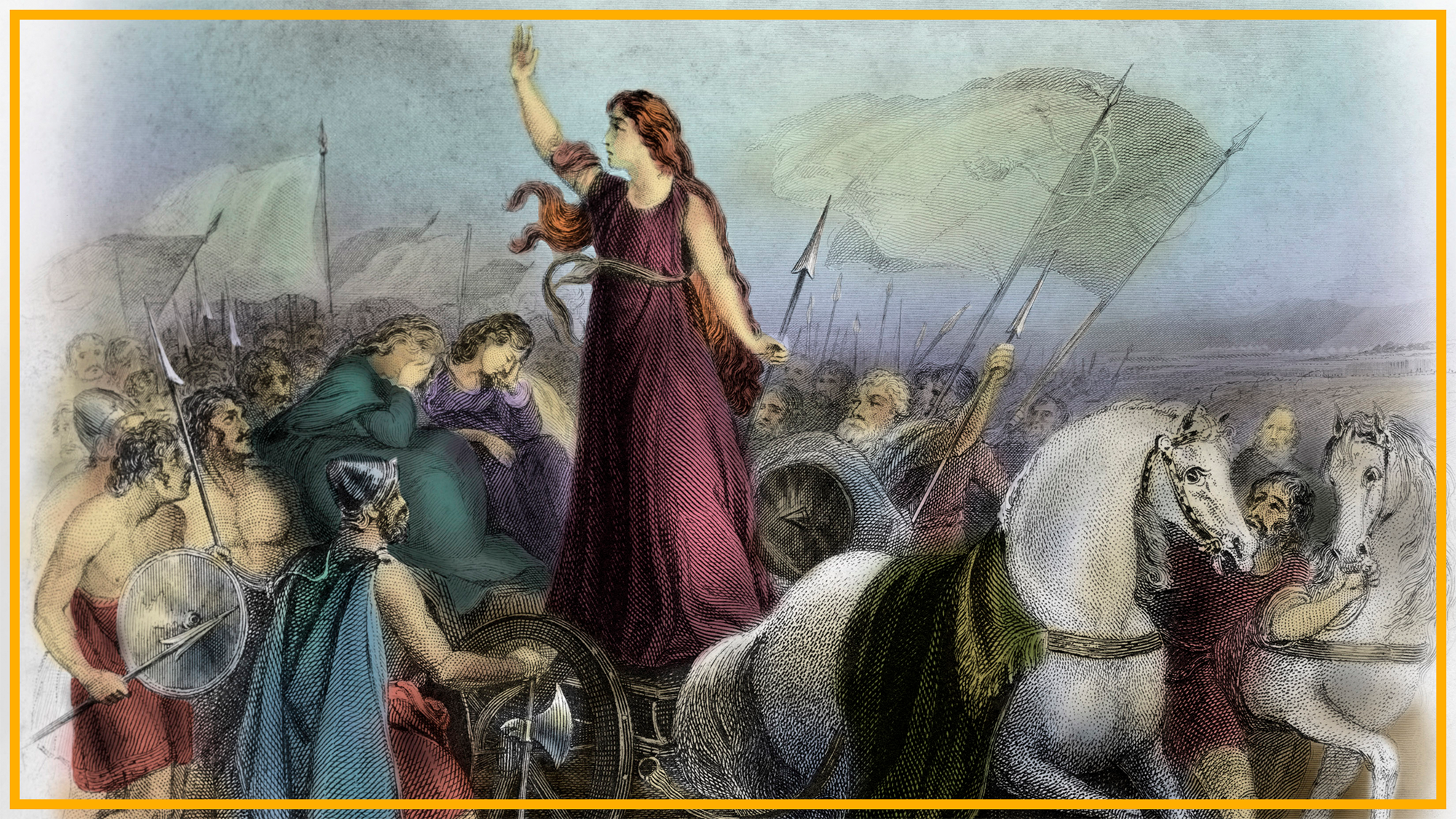
By the 1970s, however, German archaeologists had begun to recognize that the archaeology of Early Iron Age Europe bears evidence of very-high-status women — most notably, the apex high-status women of The Heuneburg hillfort in Germany and also in what was then eastern Gaul in the generations after 600 B.C. By the 2000s, archaeological analyses of later Iron Age cemeteries in the Paris Basin and East Yorkshire revealed relative gender parity in how men and women were treated at death. At the same time, skeletal analysis was showing that some women actually fought Rome — the backdrop to the Roman historian Tacitus’ writings on Boudica.

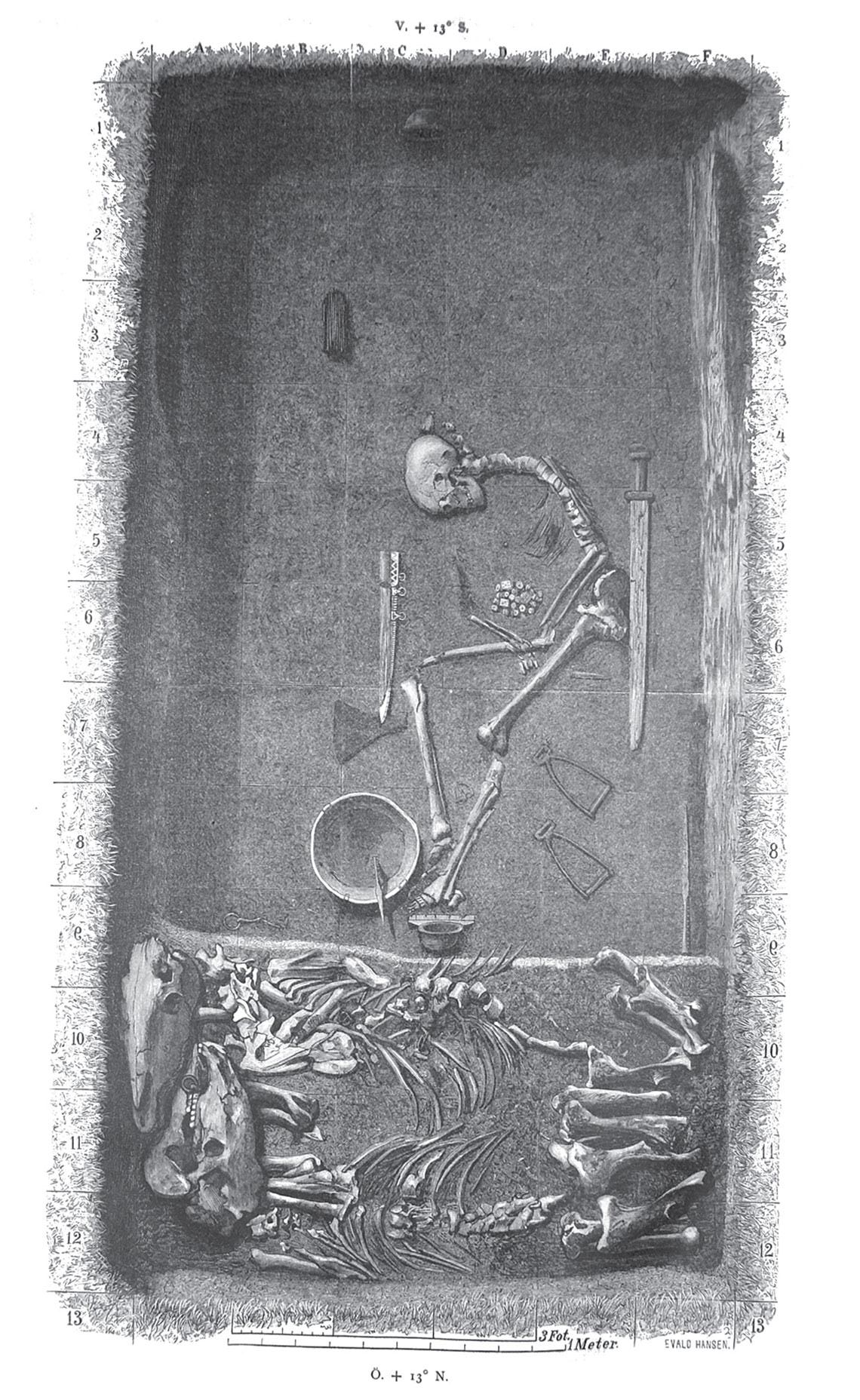
A tomb unearthed in Birka, Sweden in the 1800s was laden with weapons and warlike accessories. It was originally thought to be a warrior man, but genetic analysis revealed the burial held the remains of a woman.
(Image credit: By Evalo Hansen – Public Domain, via Wikimedia Commons)
Now, as the science of ancient genetics further challenges traditional perspectives, the variability in women’s social roles throughout history is becoming clearer.
In 2025, a team of nearly 50 scientists revealed evidence for female lineages at Neolithic Çatalhöyük (7000 to 6000 B.C.), a site known as one of the first crop-producing communities. Put another way, burial traditions prioritized female offspring and descendants, suggesting that inheritance worked through the female line. This discovery was a surprise — but perhaps it shouldn’t have been.
Throughout the 1960s and 1970s, Marija Gimbutas, a scholar of Neolithic society and professor at Harvard and UCLA, argued that the archaeological evidence from sites like Çatalhöyük was pointing to a prehistoric ‘matriarchal’ society. Yet, my generation of U.K. archaeologists learned from Cambridge professors that Gimbutas was fundamentally wrong.
Late 20th century archaeological theory suggested instead that Neolithic crop production signified the onset of a “domestication” of both women and animals. Viewed from that lens, Neolithic figurines found at Çatalhöyük and other sites were interpreted as representing pregnancy, with female fertility as women’s primary role. Women scholars soon pointed out that it was in fact the menopausal body that was often represented, or women as elders.

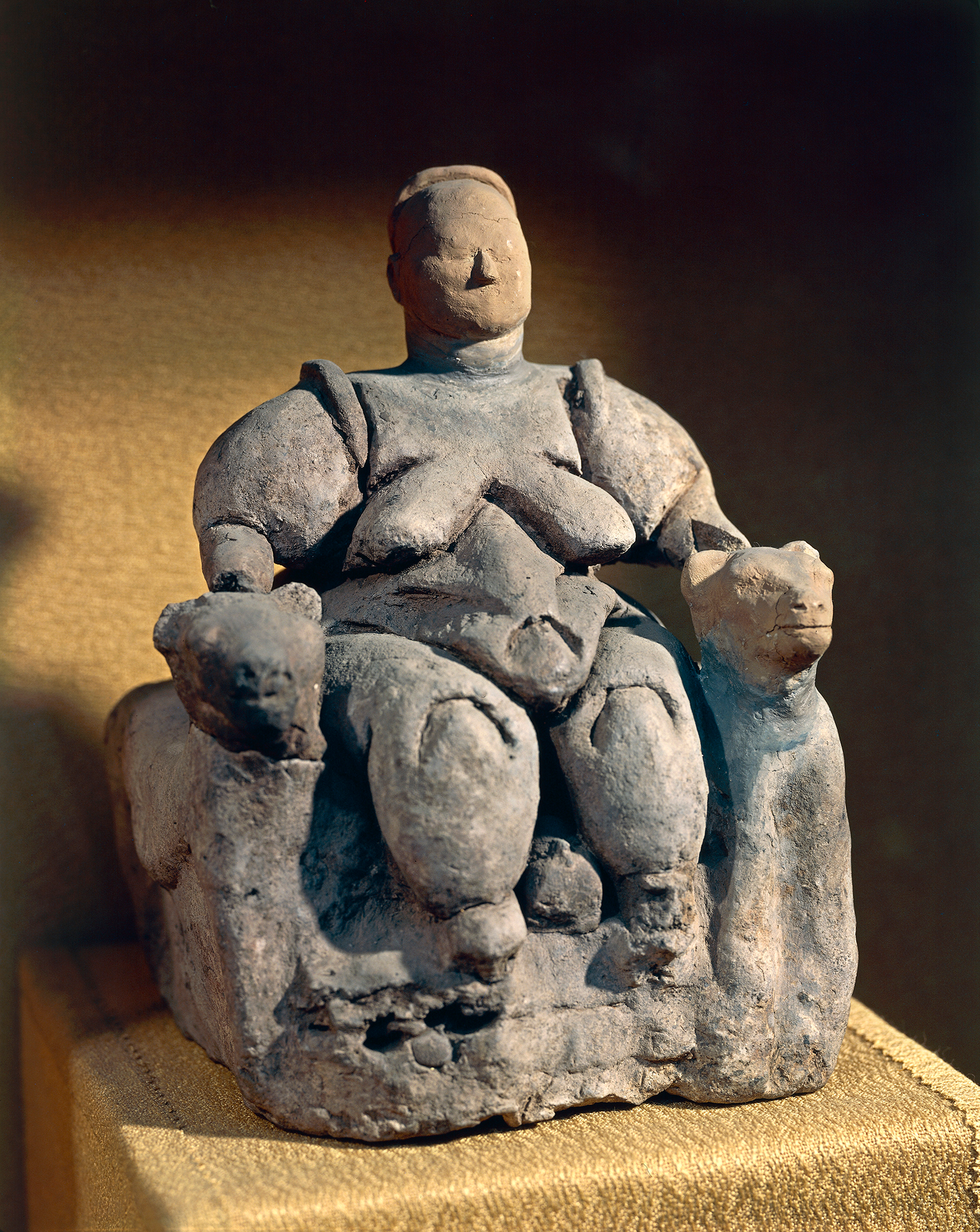
Terracotta figurines from Çatalhöyük were originally thought to represent women in pregnancy. But newer interpretations suggest they could represent menopausal bodies.
(Image credit: DEA / M. SEEMULLER via Getty Images)
Only recently, in the face of genetic evidence, is the academic reputation of Gimbutas being restored. The evidence for female lineages at Çatalhöyük opens up the possibility that the Neolithic agricultural revolution, which required the successful marshaling of communal labor in production, may have instead been linked to female land rights.
But women-led societies were not universal. Further west, where agriculture was still relatively small-scale, we find different social norms. For instance, in 2022, analysis of the Hazleton North long barrow in Gloucestershire, England (3700 to 3600 B.C.) revealed evidence for Neolithic polygyny — DNA from offspring reveals four women buried with their shared male sexual partner. That same year, Bronze Age sites on Orkney revealed descent as traced through the male line and it was women who moved outside their natal communities. The past is proving a more complex picture than originally thought.
The evidence for a matrilineal Iron Age keeps piling up. In 2024, scientists at the Max Planck Institute for Evolutionary Anthropology in Germany revealed the first scientific evidence for Early Iron Age matrilineal dynastic succession, in which both lineage and land go through the female line. In 2025, researchers found matrilocality and matrilineal descent in Late Iron Age Dorset. We now have 13 generations of matrilineal descent evidenced in third-century-B.C. Yorkshire, and five more sites with matrilineal descent in Late Iron Age Britain, and others without.
Our task is to remember that, as author L.P. Hartley once said: “the past is foreign country; they do things differently there.” As the picture of different male-focused and female-focused societies builds through time, we will likely find a patchwork of different social forms.
Prehistoric societies are smaller than traditionally assumed — valleys, coasts and peninsulas with shared values on a regional scale, at most. While some cemeteries reveal matrilineal descent, others do not. While some hillforts show women in combat, others show only men.
The challenge is to remain as objective as we can, and to expect the unexpected.
Opinion on Live Science gives you insight on the most important issues in science that affect you and the world around you today, written by experts and leading scientists in their field.