An American spy satellite deployed during the Cold War has exploded above our planet without warning — and, so far, scientists can’t explain why. The debris cloud from this sudden fragmentation, which experts are still trying to measure, could pose a very “real threat” to other spacecraft in a highly crowded region of low Earth orbit (LEO), experts warn.
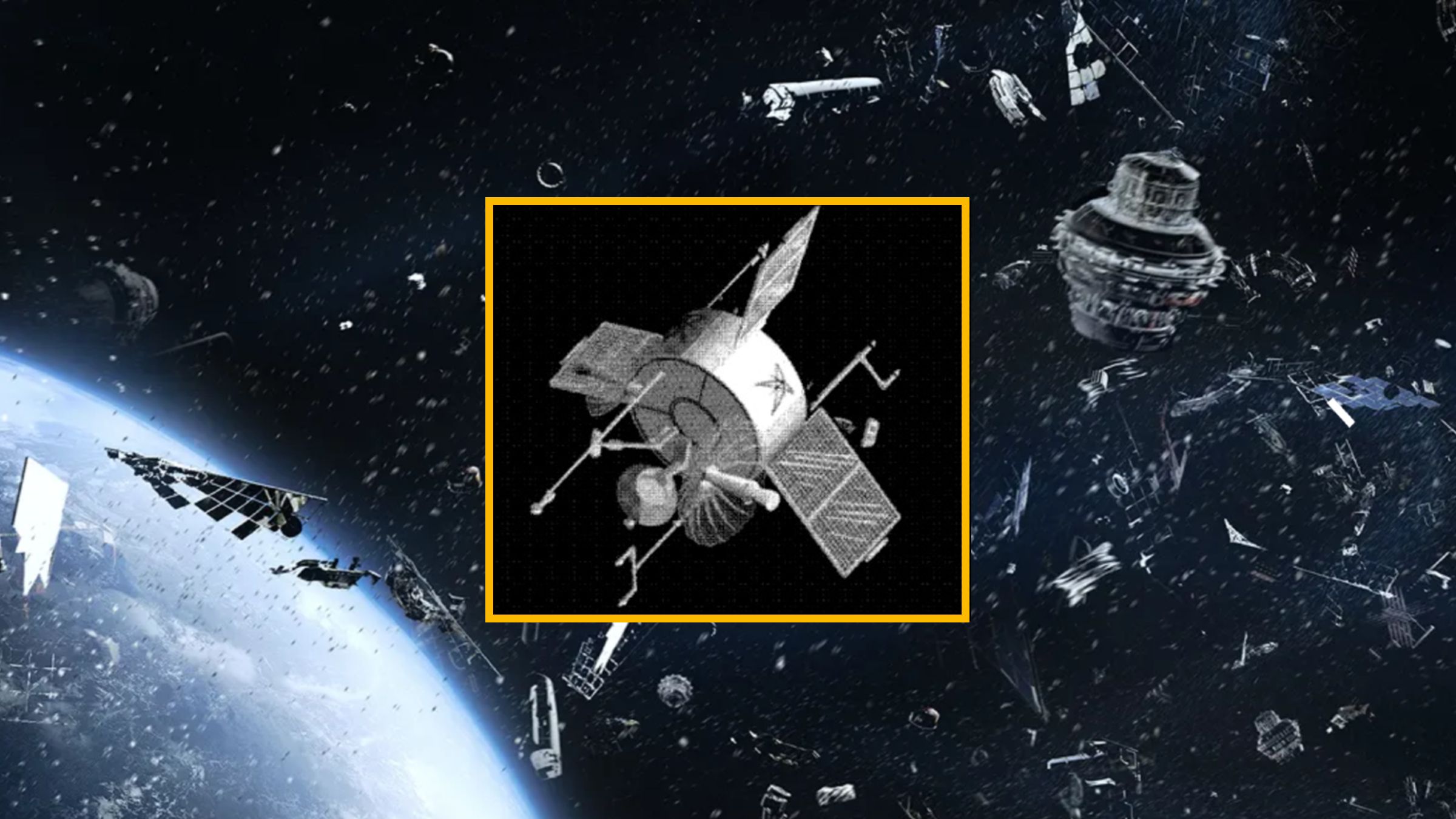
The spacecraft, known as USA 32 or Farrah III, was launched by the National Reconnaissance Office (NRO) in 1988. Its mission, which was only fully declassified earlier this year, was to intercept Soviet radar and radio signals from space, according to Futura. The cylindrical spacecraft, whose shape has been described as a giant “tuna can,” likely stopped functioning decades ago and has been silently circling Earth ever since. (It was nicknamed after actor Farrah Fawcett, in line with the NRO’s former custom of naming its satellites after famous figures from the 1970s and ’80s.)
On Sept. 17, Space-Track — the satellite observation arm of the U.S. Space Force — announced that USA 32 suffered a sudden “fragmentation” event four days earlier, on Sept. 13. This essentially means the spacecraft exploded, potentially breaking apart into dozens, hundreds or even thousands of pieces. However, the agency did not specify what had caused this explosion or how many pieces of debris were created. And, as of Sept. 28, no one else has been able to answer either question.
Latest Videos FromLive Science
Other organizations have since confirmed the fragmentation event, including the private satellite-tracking company s2a systems, which photographed the largest remaining piece of USA 32 in orbit.
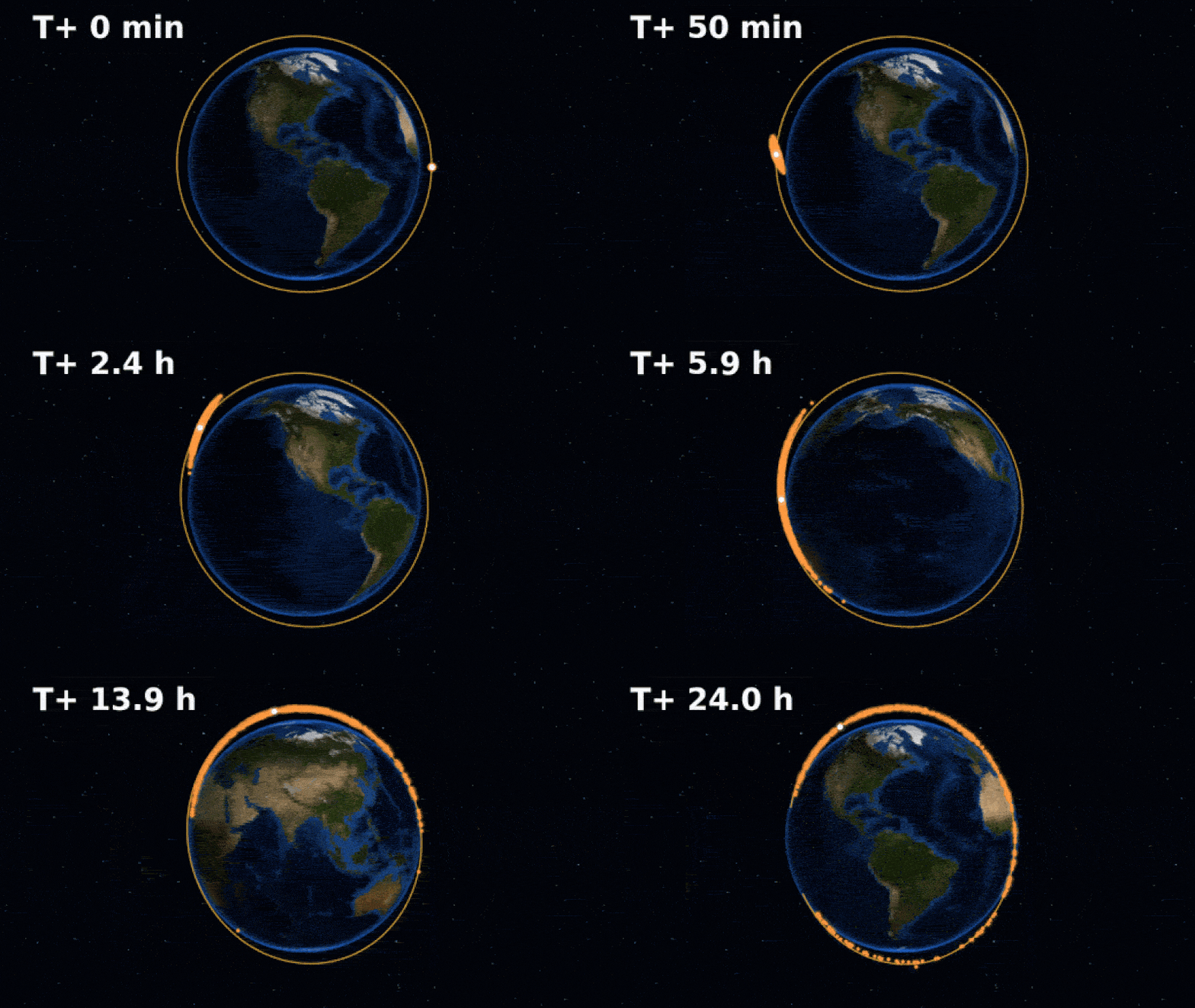
The explosion occurred 480 miles (775 kilometers) above Earth’s surface, according to Spaceweather.com. Considering the satellite’s speed, the resulting debris likely spread into a giant ring around Earth within 24 hours after the spacecraft’s sudden breakup, a simulation from the website suggests.
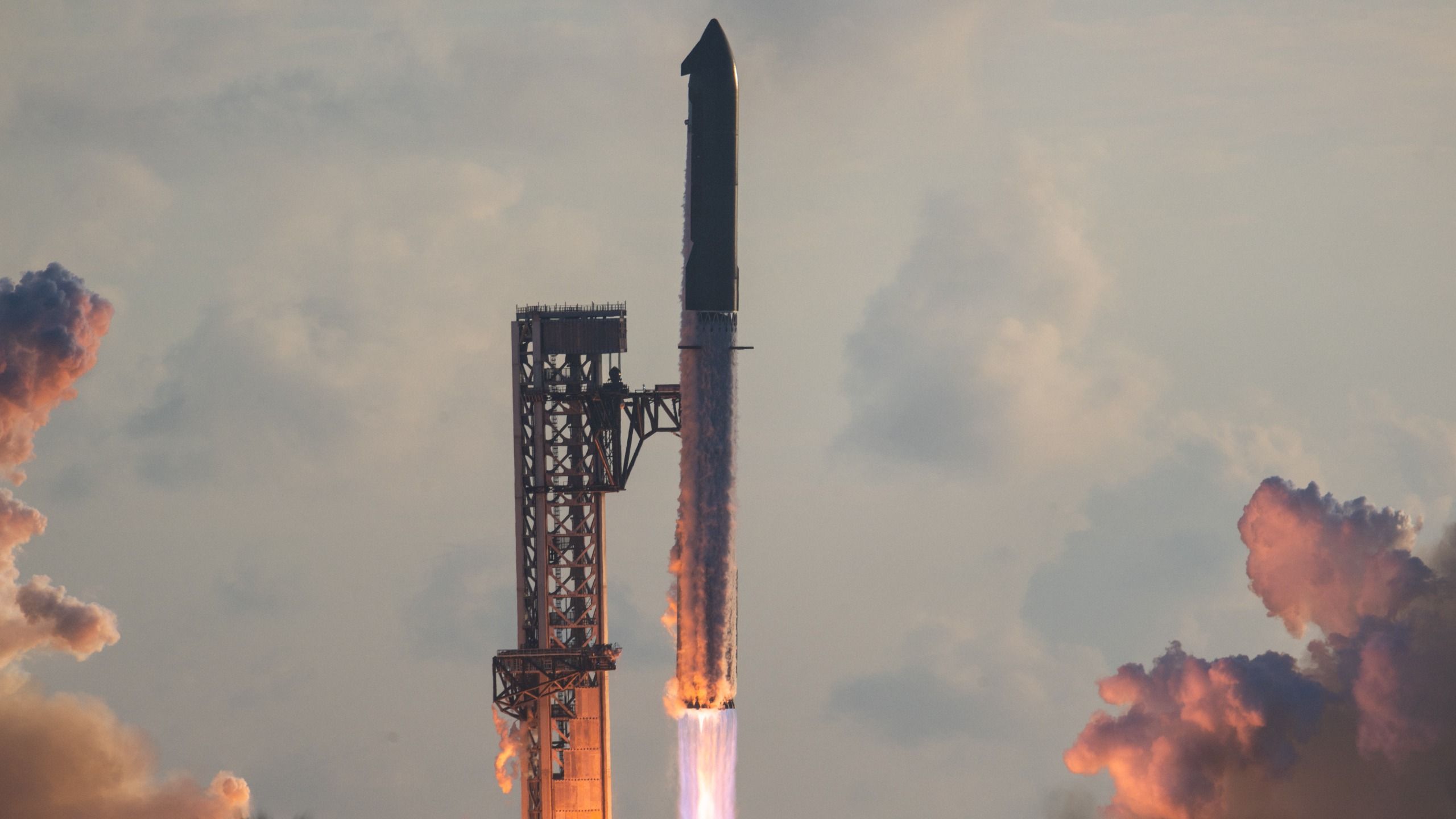
USA 32 was launched on a Titan II rocket, similar to the one in this photograph, which launched astronauts on board NASA’s Gemini 11 mission in 1966.
(Image credit: NASA)
What happened to USA 32?
It is still unclear what happened to the Cold War-era spacecraft, but there are several potential explanations.
Collisions with other satellites or smaller pieces of space junk are one of the most common causes of satellite breakups. But no one has reported any other spacecraft being impacted, and researchers can often predict potential space junk collisions days or weeks in advance, making these scenarios unlikely. However, it is possible that an undetected space rock struck the satellite at high speeds instead.
Get the world’s most fascinating discoveries delivered straight to your inbox.
Another leading theory is that the satellite died of old age. It was likely not designed for long-term spaceflight, and after nearly four decades of being exposed to the harsh conditions of LEO, the spy craft may have simply broken down, similar to the demise of the NOAA-17 satellite in 2021.
“Old spacecraft carry batteries and leftover propellant,” Spaceweather.com representatives wrote. “After 38 years of heating and cooling, a pressurized tank or a battery cell on USA 32 may have simply ruptured.”
But it is also too soon to rule out that the satellite was hit by some form of anti-satellite weaponry, according to Spaceweather.com. Earlier this month, U.S. Air Force Secretary Troy E. Meink revealed, for the first time, that the U.S. had launched unspecified weapons into orbit, and experts have long suspected that other countries, including China and Russia, possess similar technologies. (The latter country has already destroyed one satellite using Earth-based weaponry.)
A simulation from Spaceweather.com suggests that the debris from the explosion could have dispersed across the satellite’s orbital pathway within 24 hours of its breakup.
(Image credit: Spaceweather.com)
However, there is currently no evidence that anti-satellite weapons were used in this instance, so “there may be nothing sinister about this event,” Spaceweather.com representatives wrote.
Researchers will likely be able to establish the cause of the satellite’s breakup by reverse-engineering the incident — first by identifying the resulting fragments, and then by retracing those pieces’ trajectories back to the original explosion. However, this could take months, if not years. (For example, scientists are still trying to piece together what happened to the Boeing-made Intelsat 33e satellite, which similarly shattered out of nowhere in 2024.)
“The collision threat is real”
Regardless of the recent explosion’s cause, experts are now concerned about the potential knock-on effects of its fallout.
The region of LEO where USA 32 exploded is thought to be home to at least 200 other satellites, and it is already littered with debris from a 2009 collision between American and Russian satellites. As a result, “the collision threat is real” for spacecraft in this area, Spaceweather.com representatives wrote, especially as the newly created fragments remain unquantified.
So far, the incident has not caused any issues or affected the launch of new spacecraft. For example, Russia went ahead with the Sept. 16 launch of a resupply mission to the International Space Station (ISS), which orbits about 250 miles (400 km) above our planet, or roughly half the exploded satellite’s altitude. (SpaceX also launched classified missions for the U.S. Space Force on Sept. 16 and Sept. 26, and it launched the first orbital test flight of its supersize Starship rocket on Sept. 28.)
As the number of Earth-orbiting spacecraft increases, so too does the risk that they will start colliding with one another.
(Image credit: ESA/AFP via Getty Images)
Although the ISS and China’s Tiangong space station are currently out of reach of the debris field, the fragments may shift over time as Earth’s gravity and atmospheric drag pull them closer to our planet. In that case, the stations may have to carry out maneuvers to dodge the debris, as they have done dozens of times before.
Could it happen again?
As LEO becomes increasingly crowded with newly launched spacecraft, the risk that they will smash into one another or get struck by space junk has also shot up, which strongly suggests that this will not be the last fragmentation event.
Additionally, the longer these new spacecraft remain in orbit, the higher the chances they’ll break apart suddenly due to accumulated wear and tear, as USA 32 may have. Previous research has also shown that if satellites were knocked offline, either due to a software malfunction or a powerful solar storm, they could start crashing into one another within days. And there’s also the threat that they could be destroyed by anti-satellite weaponry — a scenario that “worries” Live Science readers.
Some experts warn that, if we continue on our current path, we may be doomed to reach an irreversible tipping point, known as the Kessler syndrome, where the accumulation of space junk means we can no longer launch anything into space.