




Archaeologists in Scotland have discovered the remains of a Roman “fortlet” that was built beside a massive wall that ran across Scotland.
Known as the Antonine Wall, the defensive border separated what is now southern Scotland, which had been conquered by the Romans, from the unconquered northern Scotland. The 38-mile-long (62 kilometers) wall was made largely of turf, or earthen materials, and its construction started in A.D. 142 on the orders of Roman emperor Antoninus Pius (reign A.D. 138 to 161) following the Roman conquest of southern Scotland.
Article continues below
The newly discovered fortlet dates to the mid-second century to the mid-third century A.D., radiocarbon dating revealed. It was built on the southern side of the Antonine Wall in the town of Bearsden, about 5 miles (8 km) northwest of Glasgow, and spans the gardens of three private residences on an “area of high ground right next to the Antonine Wall,” archaeologists from Guard archaeology said in a statement. “It had commanding views over the landscape, particularly to the north, which was beyond Roman control.”
The fortlet also had a good view of a nearby Roman fort and could potentially have signalled the garrison if they spotted an enemy force. Most fortlets along the Antonine Wall could house between 20 and 50 soldiers at a time, the team noted.
Archaeologists initially discovered the fortlet in 2017 in the backyard of a private residence that was having an archaeological survey done ahead of construction work. The team later conducted a larger excavation and recently published the findings in the journal Archaeology Reports Online.
The fortlet was built on a stone base, the archaeologists wrote in the journal article. There was also a ditch located just outside the fortlet that may have helped defend it.
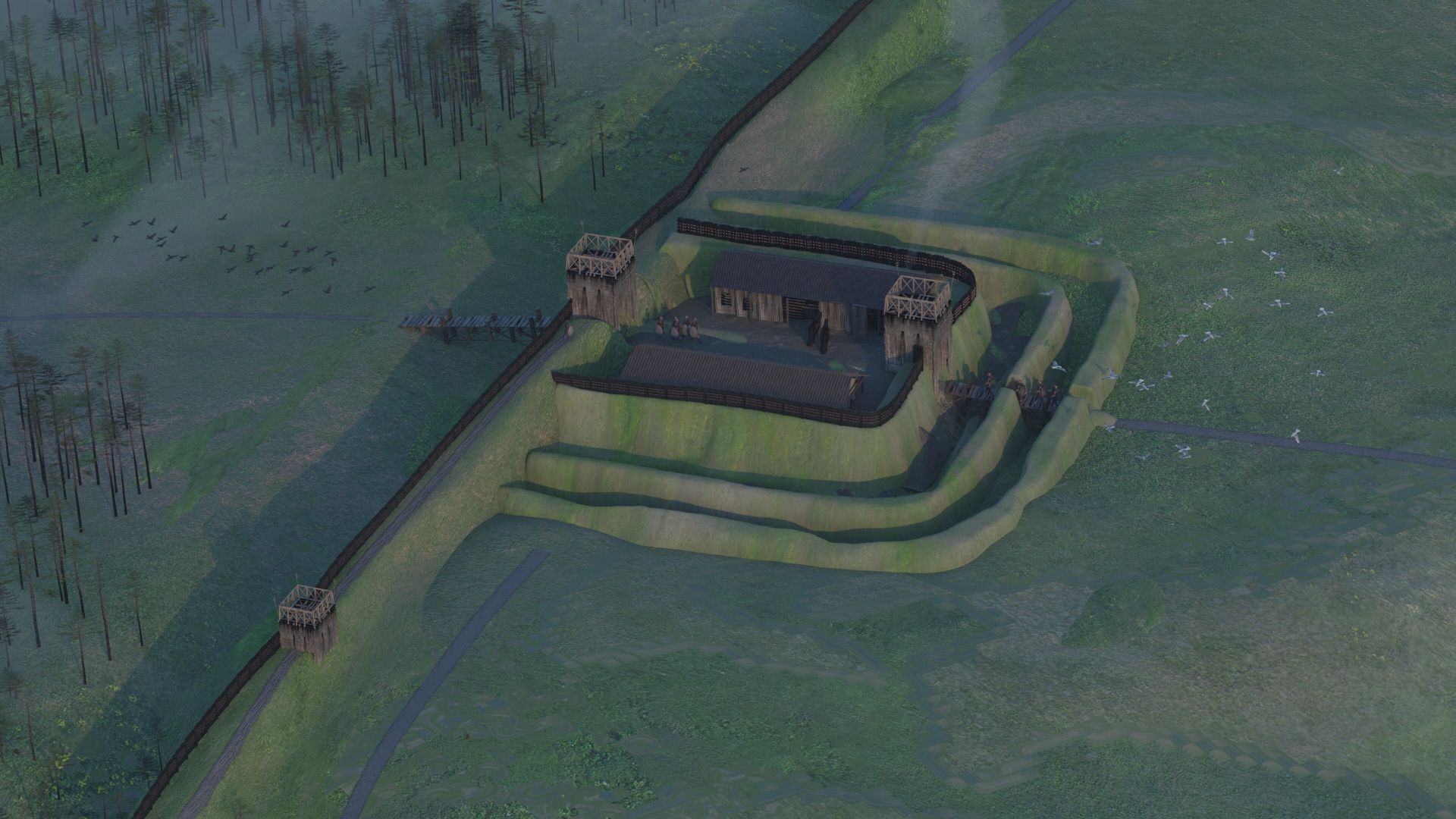
Guard Archaeology created a digital reconstruction of the fortlet, which shows two buildings that could house a small garrison of Roman troops along with two watchtowers and a series of ditches and walls to protect them.
The fortlet would likely have been “an integral part of the Roman Wall defences which included forts and fortlets along its length” the archaeological team wrote in the journal article.