
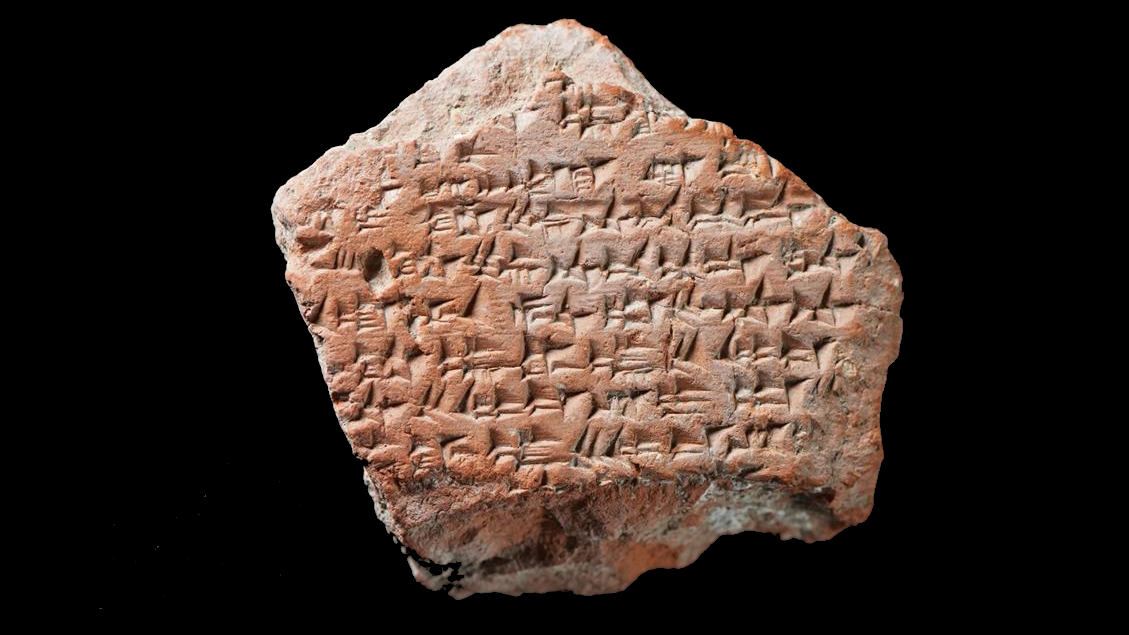





Archaeologists have discovered a 3,400-year-old fragment of the world’s oldest known peace treaty, the Turkish Ministry of Culture and Tourism has announced.
The agreement, known as the Treaty of Kadesh, was signed around 1269 B.C. by Egyptian pharaoh Ramesses II and Hittite king Hattusili III. Other parts of the treaty have already been found, but the new fragment was unearthed during an excavation at Hattusha, in north-central Turkey.
“We have found traces of peace, thousands of years old, in the soil of Anatolia,” Mehmet Nuri Ersoy, Turkey’s minister of culture and tourism, said in a Sept. 21 translated statement. The newly discovered cuneiform tablet fragment contains text from a section of the treaty related to the treatment of refugees, according to the statement. “It reminds us of our responsibility to protect human life and dignity,” Ersoy said.
Latest Videos FromLive Science
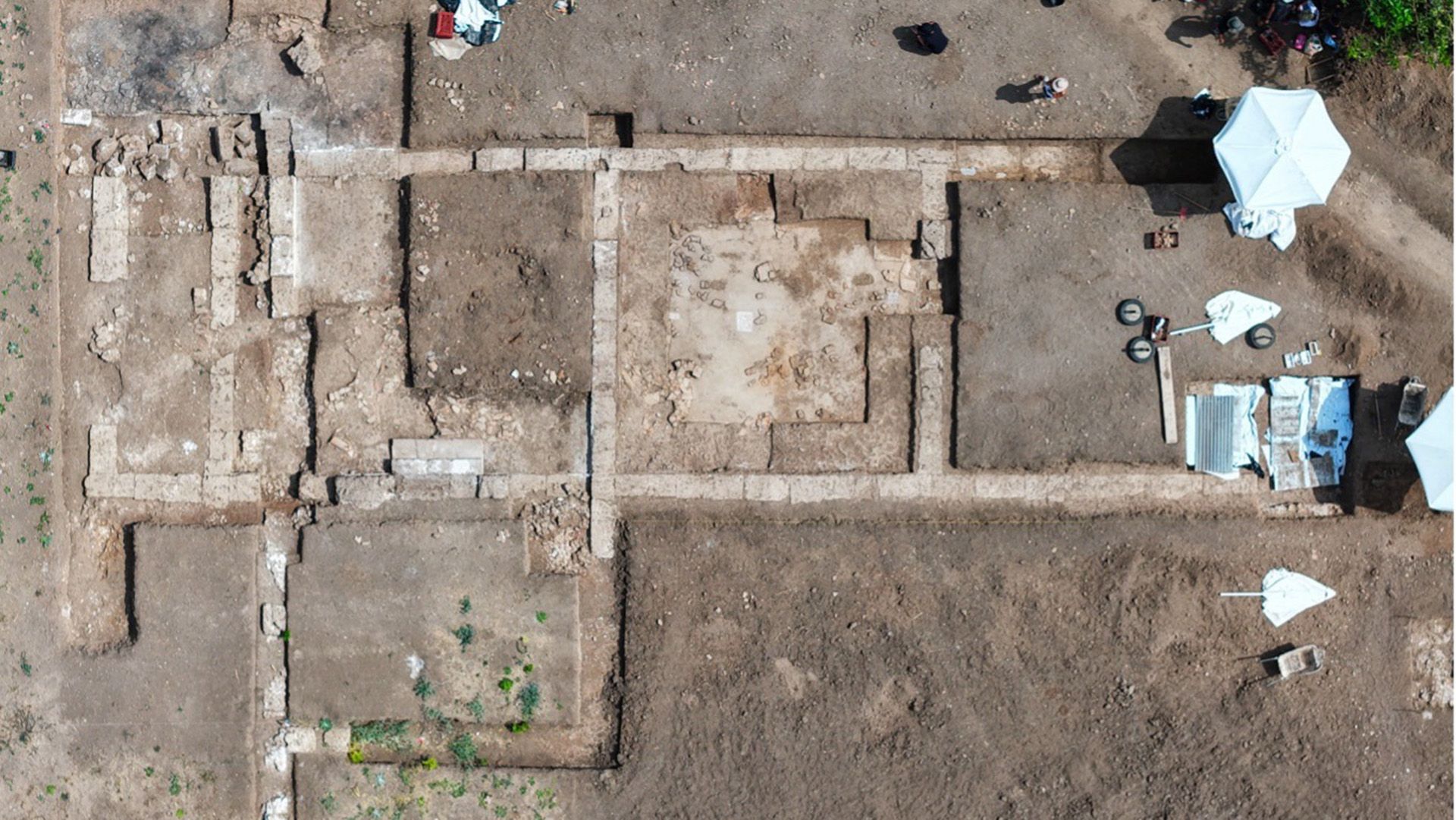
Archaeologists unearthed the fragment from a building in the ancient Hittite capital of Hattusha. The Hittite Empire controlled central Anatolia from about 1650 to 1200 B.C. during the Bronze Age. Archaeologists have discovered numerous examples of diplomatic documents at Hattusha that were written in Akkadian, the earliest documented Semitic language, including other fragments of the Treaty of Kadesh.
The royal leaders signed the treaty around 1269 B.C. to mark the end of a lengthy war between the ancient Egyptians and the Hittite Empire, and it is regarded as the world’s oldest known peace treaty. Although known as the Treaty of Kadesh, the document does not actually mention the Battle of Kadesh, which occurred several years earlier, so it is also called the Egyptian-Hittite peace treaty, the Eternal Treaty or the Silver Treaty.
The treaty was preserved by inscriptions in two ancient cities. In the early 19th century, archaeologists first discovered the treaty inscribed in hieroglyphics on the walls of a temple dedicated to Ramesses II in Thebes (modern Luxor). Fragments of the Akkadian cuneiform text of the treaty were first identified at Hattusha in the early 20th century.
Marking the end of a two-century-long war over lands in the eastern Mediterranean, the Treaty of Kadesh marks a military détente between Ramesses II and Hattusili III. According to a translation of the treaty provided by the Turkish Ministry of Culture and Tourism, it includes lines like, “He is a brother to me and he is at peace with me; and I am a brother to him and I am forever at peace with him,” referring to the two leaders. “The country of Egypt and the country of Hatti [Hittite Empire] will be forever in a state of peace and of fraternity as it is with us.”
Get the world’s most fascinating discoveries delivered straight to your inbox.
The treaty has further provisions for coming to a country’s aid if it was invaded and on how to treat refugees. The text mentions that any refugee from Egypt to Hattusha will be returned to Egypt, and any Hattusha refugee to Egypt will be returned to Hattusha, as fleeing was considered a crime.
However, the treaty specifically forbids punishing refugees: “Their tongue and their eyes are not to be pulled out; their ears and their feet are not to be cut off; their houses with their wives and their children are not to be destroyed.” Part of this text appears on the newly discovered cuneiform fragment. Ongoing excavations may help uncover the remaining parts of the treaty, according to the statement.
A copper replica of the Treaty of Kadesh is displayed prominently today in the United Nations Conference Building in New York City. According to the U.N., “the treaty pledges eternal friendship, lasting peace, territorial integrity, nonaggression, extradition, and mutual help. The pledges in this treaty are similar to the United Nations ideals.”
Are you a fan of mummies and hieroglyphs? Find out with our ancient Egypt quiz!